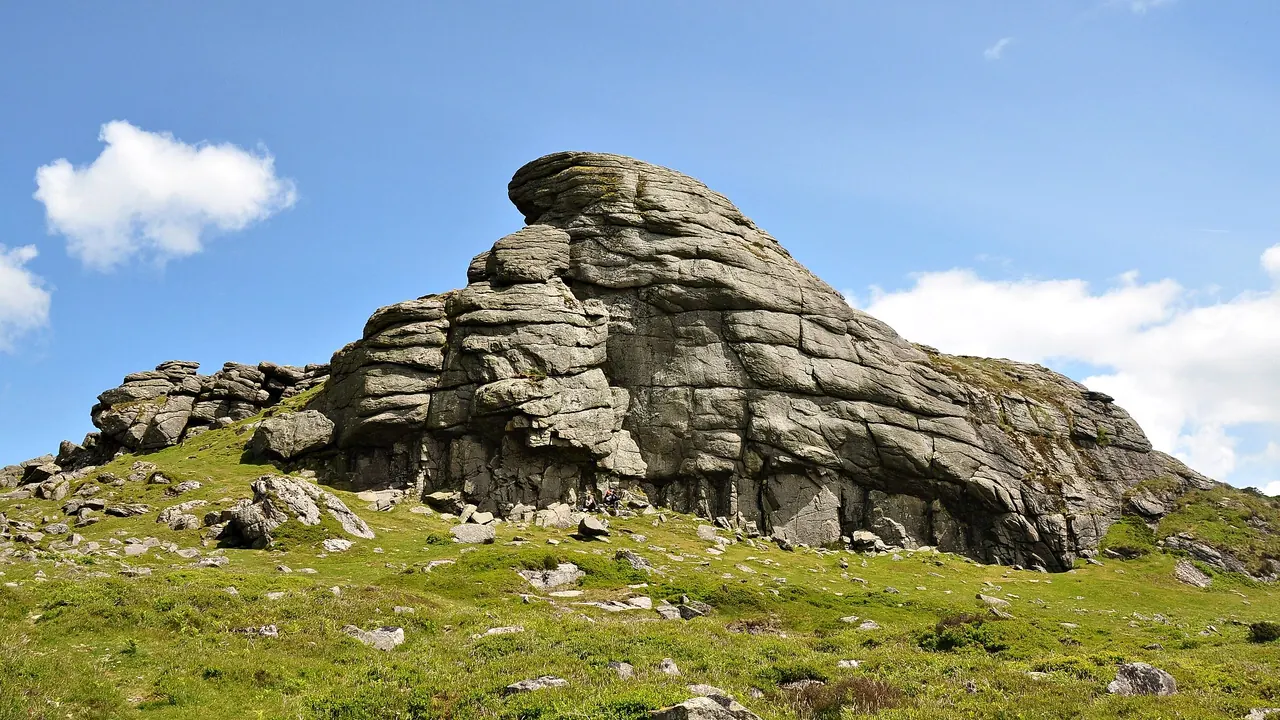
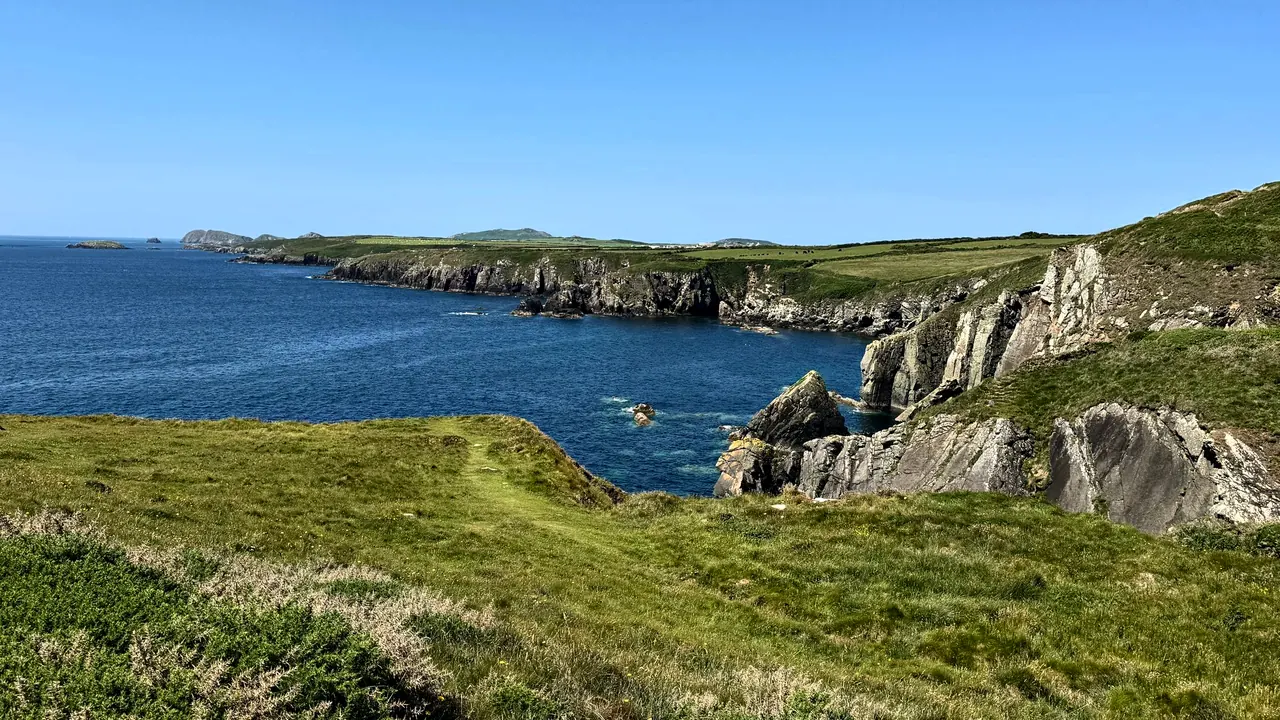
Photos: Devon by Nilfanion, CC BY-SA 3.0, cropped; Pembrokeshire by Petra Nesti, Pexels License.
Devon or Pembrokeshire?
Our verdict in twelve categories, each scored against the same fixed benchmark cities, and the climate month by month, so you can choose for your trip.
Choose Devon for
- day trips
- live music and the arts
- wellness
Devon suits a vacation with variety. It has two very different coasts, two moors and real cities in Exeter and Plymouth, and its harbour towns eat better. Its day trips also reach much further, from Bath to the Cornish coast. Families who need plans for wet days, and couples who want a theatre or a good restaurant in the evening, will find more to work with here.
Choose Pembrokeshire for
- beaches
- culture and sights
- getting around
Choose Pembrokeshire if the coast is the whole point of the trip. Its beaches are finer, and its history, from St Davids to the ring of Norman castles, makes a clearer story. The puffins, seals and gannets offshore are the wildlife people remember. It is smaller, simpler to get around and a little cheaper, but the evenings are quiet and there are fewer outings beyond the county.
Scoreboard
Twelve categories on one fixed scale from 0 to 100. The shaded stretch is the gap between the two.
Your match
Pick a travel style or drag the sliders, and both match scores follow your weighting.
Wins on day trips and live music and the arts with your weighting.
Wins on beaches and culture and sights with your weighting.
What matters to you?
Category by category
What the scores mean for a trip.
Beaches & swimming
Pembrokeshire has the finer sand, and plenty of it for its stretch of coast. There is Barafundle, reached on foot, the long sweeps of Newgale and Whitesands, and the sheltered bays around Dale and Marloes, with enough choice to find a quiet beach in August. Devon's beaches are more mixed: Atlantic surf sand at Woolacombe and Croyde, and on the south coast estuary beaches, shingle coves and the red-cliffed resort fronts of Torbay and Sidmouth.
The sea gives neither an edge, since both reach only about 17°C at the end of summer and wetsuits are normal. Devon suits a traditional seaside day with a promenade, while in Pembrokeshire the beach itself is the reason to go.
Food & drink
Devon has more good local food and more places to eat it. Fish landed at Brixham, Salcombe crab, clotted cream and farmhouse cider are served in harbour towns such as Dartmouth and along the Exe, and Exeter and Plymouth widen the range.
Pembrokeshire's produce is just as good, with crab and lobster, salt-marsh lamb and early potatoes. But the good restaurants are limited to a few places such as St Davids and Narberth, and menus elsewhere repeat themselves. Both are good for self-caterers, with farm shops and markets.
Culture & sights
Pembrokeshire's history is the more rewarding to explore. St Davids has its cathedral in a hollow beside the ruined Bishop's Palace. Pembroke Castle, where Henry VII was born, is the largest of a ring of Norman fortresses, and in the Preseli Hills is the country that gave Stonehenge some of its bluestones. Together they fill a few days well.
Devon has the grandest single building in Exeter Cathedral, Plymouth's Elizabethan Barbican, and country houses such as Castle Drogo and Greenway. But its sights are spread across a much larger county and feel more like separate stops than a connected story.
Nightlife
Neither is a place for a big night out, and the difference is mostly one of scale. Devon has two real cities, with student crowds in Exeter and weekend crowds on Plymouth's Barbican and Union Street, while Pembrokeshire's liveliest scene is the pubs around Tenby harbour on a summer Saturday. Away from those, both come down to the village inn: a harbourside pint in Dartmouth, or a folk session after a day on the Pembrokeshire coast path.
Nature & outdoors
Both are excellent walking country, but each has its own focus. Much of Devon's wild country is inland: Dartmoor's tors and clapper bridges, and Exmoor's high cliffs and red deer. The Jurassic Coast runs along its eastern edge, and the Tarka Trail gives easy cycling.
Pembrokeshire is almost all about the coast, a national park shoreline of arches and sea stacks. Its best moments are offshore: puffins on Skomer, seal pups on Ramsey and gannets on Grassholm. This is where coasteering began, and its sheltered waters are good for sea kayaking.
Day trips
Devon reaches much further. From Exeter you can get to Bath, Wells and Bristol, and Lyme Regis is just to the east. From Plymouth, the Eden Project and the Cornish coast open up, and within the county there are Clovelly, Lundy and the river trip down the Dart.
Pembrokeshire's outings are smaller in scale: the monks' island of Caldey, Aberaeron's painted harbour, and Dylan Thomas's boathouse at Laugharne, with the Gower about two hours away. They make pleasant days, but none is a major destination.
Good for families
Both are traditional British family destinations, with lifeguarded sand and rock pools. Devon has more to fall back on: Paignton Zoo, the National Marine Aquarium, the steam railway to Kingswear, and Dartmoor's ponies and tors for older children.
Days in Pembrokeshire are simpler: crabbing off harbour walls, boat trips to see seals and puffins, and a farm park or soft-play centre when it rains. Its strong point is Tenby and Saundersfoot, where young children can walk to the beach without getting in the car.
Getting around
You need a car in both, and both have hedge-lined lanes where you pull in to let others pass. Pembrokeshire is the easier of the two because it is compact, about an hour from one side to the other, and seasonal coastal buses let you walk the path one way and ride back. Devon is much larger and its roads jam on summer weekends. Its main railway links Exeter, Plymouth and Torbay along the Dawlish sea wall, but buses thin out quickly beyond it.
Shopping & style
Neither is a place to go for shopping, and the best buys are different. In Devon they are Totnes's independent high street, the antiques of Honiton, and cider and clotted cream to take home, with chain stores in Exeter and Plymouth. Pembrokeshire's best buy is a Welsh blanket or throw from its working woollen mills, alongside Narberth's delis and interiors shops and local art from the St Davids galleries.
Affordability
Both charge peak British rates during the school summer break, and both get noticeably cheaper in spring and early autumn. Pembrokeshire is a little easier on the wallet, with moderately priced pubs and cafés and short drives. In Devon the harbour towns and surf villages push costs up, so Torbay, Plymouth and the inland villages give better value.
Live music & performing arts
Devon has much more on stage. Plymouth's Theatre Royal hosts touring musicals, opera and ballet, Exeter adds the Northcott Theatre and choral evensong in the cathedral, and Dartington Hall has its tradition of summer music. Pembrokeshire has little beyond the classical music festival at St Davids Cathedral in early summer, small theatres in Milford Haven and Fishguard, and folk sessions in pubs.
Wellness & relaxation
Neither has a bathing tradition, so in both the rest comes from the slow pace. Devon adds more to that: spa hotels in country houses and on cliff tops, the Art Deco saltwater Tinside Lido below Plymouth Hoe, and groups of year-round swimmers at the south coast coves.
Pembrokeshire has only a handful of hotel spas and a few farmhouse retreats. What makes it restful is the emptiness of its lanes and coast outside August.
When should you go?
Pick your month. The climate figures are measured averages, not a forecast.
Devon in July
Pembrokeshire in July
Daytime high, °C
Rainfall in the month, mm
Where the figures come from
Devon's temperatures are measured 31 km from the centre, at Exeter Airport.
Devon has no rain gauge within 25 km of the centre, so its rainfall comes from a gridded climate dataset read at the destination rather than from a gauge further away.
Devon's sunshine is measured 44 km from the centre, at Plymouth.
Pembrokeshire's temperatures are measured 46 km from the centre, at Aberporth.
Pembrokeshire has no rain gauge within 25 km of the centre, so its rainfall comes from a gridded climate dataset read at the destination rather than from a gauge further away.
Temperature and rainfall are climate normals, averaged over the years shown. Devon: 1973-2025 (sunshine 1981-2010, rainfall 1991-2020) normals, Exeter Airport (31.1 km from centre). Pembrokeshire: 1991-2020 normals, Aberporth (46.2 km from centre).
Devon is at its best from May to September. It reaches about 22°C at the height of summer, June is its driest month and July its sunniest, so summer beach days are reliable by British standards. Pembrokeshire is cooler, peaking near 18°C, and its good weather comes earlier. May is its driest month, May and June are its sunniest, and from June the rain climbs steadily through July and August. In both, the sea is warmest in August and September at about 17°C, so swims stay short. Late spring is the best time for the Pembrokeshire coast, while Devon keeps its summer weather longer, into a drier September.
From October both turn wet, with around 100mm of rain or more each month until the end of the year, and Pembrokeshire is the wetter of the two in October and November. Neither ever gets too hot for walking. The winter months are short, grey and damp, better for boots on the moor or the cliffs than for the beach.
Which traveller are you?
On a beach and sun trip, Pembrokeshire is better for a week spent on the sand. Stay near St Davids or in Tenby and drive to a different bay each day. Go in late summer, when the sea is warmest, and bring a wetsuit.
For a food and nightlife trip, Devon is clearly the better choice. Dartmouth and the Exe estuary eat better than almost anywhere in Pembrokeshire, and Exeter and Plymouth offer real evenings out, which village inns and Tenby in summer cannot match.
On a tight budget, Pembrokeshire is the slightly easier choice. Avoid the school summer break and go in May or September. Book a campsite or a self-catering cottage, and spend the days walking and on the beach rather than at paid attractions.
Before you go
| Measure | Devon | Pembrokeshire |
|---|---|---|
| Official language | English | English |
| Currency | Pound Sterling (GBP) | Pound Sterling (GBP) |
| Sockets | G230 V, 50 Hz | G230 V, 50 Hz |
| Driving side | Left | Left |
| Time zone | UTC, UTC+1 in summer | UTC, UTC+1 in summer |
| Emergency number | 112 or 999 | 112 or 999 |
| Main airport | Exeter International Airport (EXT)25 non-stop destinations | Cardiff International Airport (CWL)32 non-stop destinations |
| Public holidays this year | 8 days | 8 days |
By the numbers
| Measure | Devon | Pembrokeshire |
|---|---|---|
| Population | 1,209,773 | 125,818 |
| People per km² | 180 | 78 |
| Swim season, months above 21 °C | None | None |
Where else could you go?
Every comparison below shares a destination with this one, so you can follow Devon or Pembrokeshire somewhere new.
- Jurassic Coastvs Devon
- Cornwallvs Devon
- Cornwallvs Pembrokeshire
- Isle of Wightvs Devon
- Snowdoniavs Pembrokeshire
- Jurassic Coastvs Pembrokeshire