United Kingdom
Isles of Scilly
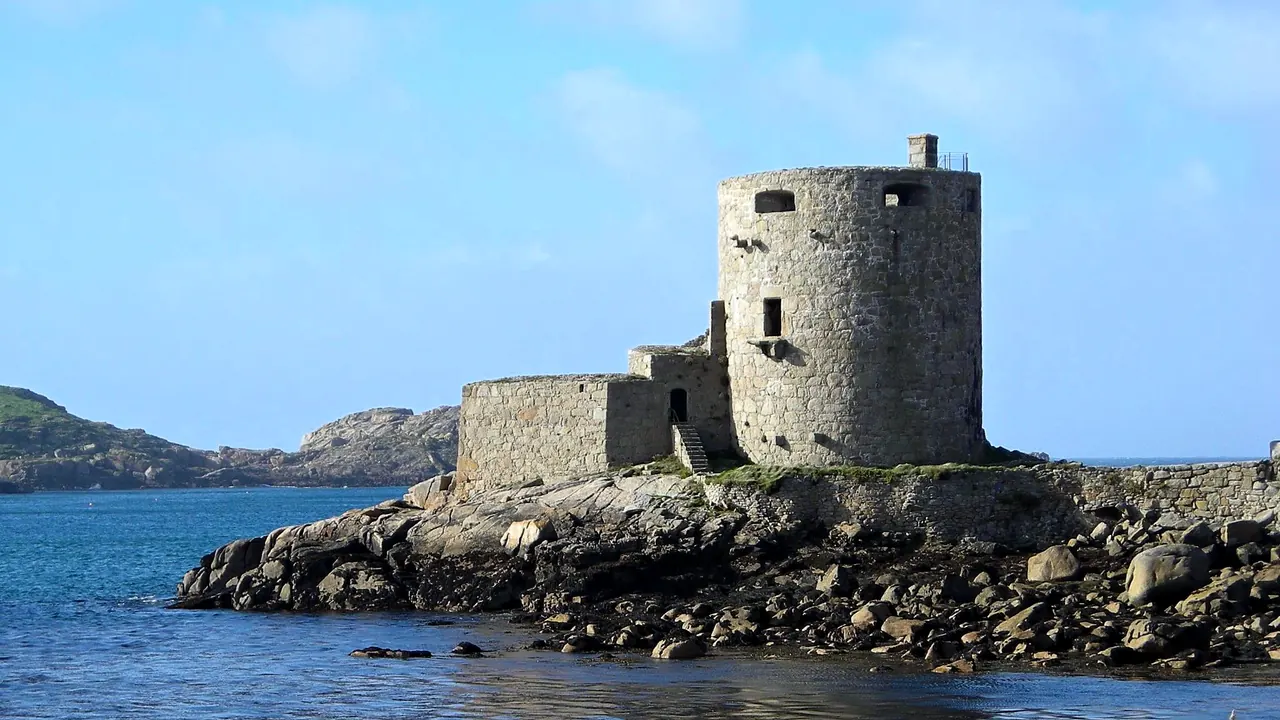
Cromwell's Castle on Tresco by New Grimsby Sound
- Nature & outdoors62
- Families55
- Getting around52
Photo: Mark Percy, CC BY-SA 2.0, cropped
Match
34
Every category weighted equally
- Beach & sun37
- Culture & arts31
- Food & nightlife28
- Family trip41
- Outdoors40
- Relax & unwind39
- Shopping & style31
- On a budget32
Isles of Scilly in twelve categories
Our verdict on each, scored 0 to 100 against the same fixed benchmark cities, so a score means the same thing on every page.
Beaches & swimming. Scores 50 out of 100.
Food & drink. Scores 34 out of 100.
Culture & sights. Scores 35 out of 100.
Nightlife. Scores 8 out of 100.
Nature & outdoors. Scores 62 out of 100.
Day trips. Scores 32 out of 100.
Good for families. Scores 55 out of 100.
Getting around. Scores 52 out of 100.
Shopping & style. Scores 15 out of 100.
Affordability. Scores 18 out of 100.
Live music & performing arts. Scores 7 out of 100.
Wellness & relaxation. Scores 42 out of 100.
Isles of Scilly category by category
Beaches & swimming
50The beaches look tropical: pale shell sand, sheltered bays and water so clear that the seabed shows through several metres of green and turquoise. St Martin's has the long, empty sweeps of Par Beach and Great Bay, Tresco has Pentle Bay and Appletree Bay, Bryher has the calm crescent of Rushy Bay, and St Mary's has Porthcressa in Hugh Town and Pelistry, where a sandbar runs out to Toll's Island at low tide. Crowds are rare even in August.
The catch is the temperature. This is the Atlantic, and the sea rarely rises above 17°C even in late summer, so swims are brisk and short, and a wetsuit helps. The season for bathing runs from about June to September, with the shallow, sun-warmed bays the most comfortable.
Food & drink
34Eating here is simple and rooted in what the islands produce: crab and lobster landed by local boats, island-reared beef, early potatoes, farm ice cream and bread from small island bakeries. Roadside honesty stalls selling eggs, vegetables and fudge are part of the experience, and a crab sandwich on a café terrace above a beach is the classic lunch.
The choice is small. Hugh Town on St Mary's has most of the pubs and restaurants, each of the off-islands has a pub or hotel dining room and a café or two, and a few places aim higher with seafood-led menus. Many visitors self-cater, and outside the main season the options thin out sharply.
Culture & sights
35The heritage is small in scale but unusually dense for such a tiny place. On St Mary's, the Garrison above Hugh Town is ringed by centuries of artillery walls around Star Castle, built in 1593, and the island is scattered with prehistoric remains: the Bronze Age entrance graves at Innisidgen and Porth Hellick and the Iron Age village at Halangy Down. Tresco has Cromwell's Castle and the ruined King Charles's Castle above New Grimsby Sound.
Tresco Abbey Garden is the islands' best-known sight, a subtropical garden among priory ruins. Within it, the Valhalla collection displays figureheads salvaged from the many ships wrecked on these rocks, and that seafaring story runs through the rest of the islands too: the churchyard at Old Town on St Mary's holds memorials to drowned sailors and passengers, the old white lighthouse of 1680 still stands on St Agnes, and the Bishop Rock lighthouse is visible far out to the west. Two or three days cover it all, and none of it is grand, which is part of its appeal.
Nightlife
8Evenings are quiet. Hugh Town has a few pubs where locals and visitors share the same bar, and each off-island has a pub or hotel bar, but there are no clubs and little after closing time. On summer evenings the main social event is watching the pilot gig crews race in the harbour, followed by a pint on the quay. Late-night visitors staying on the off-islands are also bound by the last boat home.
Nature & outdoors
62This is a low granite archipelago of heath, wind-sculpted tors, bulb fields and countless rocky islets, all protected as a designated landscape. Coastal paths circle every inhabited island and can be walked in a few hours each, with the wildest scenery on the north end of Bryher at Hell Bay and the downs of St Martin's.
Wildlife is the real draw. Boat trips run out to the Western Rocks and the Eastern Isles for grey seals, and puffins nest on Annet and the outer islets from spring to midsummer, alongside shearwaters and storm petrels. In October the islands fill with birdwatchers chasing rare migrants blown off course. Kayaking, snorkelling with seals, sailing and pilot gig rowing make good use of the sheltered channels.
Day trips
32The day out here is island-hopping. From St Mary's, small passenger boats run to Tresco, Bryher, St Martin's and St Agnes, and each feels different: Tresco manicured, Bryher wild on its Atlantic side, St Martin's long and quiet, and St Agnes, reached across a sandbar to Gugh at low tide, the most remote and old-fashioned. A day on any of them means a walk, a beach, a pub or café lunch and the boat back.
Beyond that there is little. The off-islands hold hamlets rather than towns, and the Cornish mainland is too far by sea for a comfortable return trip in a day.
Good for families
55Families come back to these islands for years because children can roam freely: there is barely any traffic, the villages are tiny and the beaches shelve gently into calm, clear water. Rock pooling, crabbing from quays, building dams in the sand, boat trips to see seals and picnics on a different island each day fill a week easily, and self-catering cottages suit families well.
There is nothing made for children, though: no attractions, no play centres and few rainy-day options when the Atlantic weather closes in. The cold sea limits long swims, and toddlers on the boats need watching.
Getting around
52On the islands themselves, getting around is easy and unhurried. Visitors do not bring cars, and none are needed: Hugh Town is compact, St Mary's has a small bus and taxis, bikes and electric buggies are available, and the off-islands are small enough to walk end to end in an hour or two.
Boats are the real transport. Launches link St Mary's with the off-islands several times a day in the main season, but landings shift with the tide, crossings are cancelled in rough weather, and services thin out in winter. Reaching the islands is the harder part: a long ferry crossing from Penzance in the main season, or short flights from Cornwall and Devon that are often delayed by fog.
Shopping & style
15Shopping is limited to Hugh Town's short main streets, with a few gift shops, outdoor clothing, a bookshop and the essentials, plus a scattering of small galleries and craft studios on the off-islands selling paintings, pottery, jewellery and island-made gin and perfume. Scented narcissi from the island flower farms, posted home in winter and spring, are the most characteristic thing to buy.
Affordability
18These are expensive islands to visit. Beds are few and book up early for summer, island hotels charge a premium, and Tresco is the costliest of all. Everything arrives by sea, so food and drink cost more than on the mainland, and the journey out by plane or ferry, plus a boat fare for each day on another island, adds noticeably to the bill. Self-catering cottages and the campsites on St Mary's, St Martin's, St Agnes and Bryher are the ways to keep costs down.
Live music & performing arts
7There is no theatre, concert hall or regular music venue. Live music means the occasional folk session or band in a pub, a small concert in a church or community hall, and the odd summer event staged outdoors. Visitors who want performances plan their evenings around the walks and the sunset rather than a programme.
Wellness & relaxation
42Rest here comes from the pace, not from spas. There are no thermal baths or bathing traditions, and treatments are limited to a few hotel spas and leisure pools, mostly on Tresco and St Mary's. What the islands offer instead is quiet: no traffic, no crowds, days set by tides and boat times, and evenings watching the light fade over the outer rocks. Visitors looking to switch off find it easy; those wanting a proper spa break will find very little.
Where to stay in Isles of Scilly
Most first-time visitors stay on St Mary's, usually in Hugh Town. The ferry and flights arrive here, the boats to every other island leave from its quay, and it has nearly all the islands' pubs, restaurants and shops. It suits a first visit, self-catering families on a budget and anyone who wants an evening pint on the quay after the gig racing. Quieter spots near Pelistry or Old Town give more space, with Hugh Town a short bus or bike ride away.
The off-islands suit a second visit, or travellers who want real quiet from the start. Tresco is the most manicured and the most expensive, with the Abbey Garden close by and calm beaches for families. Bryher suits walkers drawn to the wild Atlantic coast at Hell Bay. St Martin's has the longest empty beaches and suits beach days and families, while St Agnes is the most remote and old-fashioned, for a stay set entirely by the tides. Each has a pub and a café or two, and all but Tresco have a campsite.
One base is enough for a week, as launches from St Mary's reach every inhabited island. On an off-island, plans depend on boat times and the weather, and evenings mean the local pub.
When should you go?
Pick a month to see what it is like. The climate figures are measured averages, not a forecast.
Isles of Scilly in July
Daytime high, °C
Rainfall in the month, mm
The whole year
Shaded against this destination’s own year: the deepest cell is its best month for that figure and the palest its weakest.
Where the figures come from
Isles of Scilly has no rain gauge within 25 km of the centre, so its rainfall comes from a gridded climate dataset read at the destination rather than from a gauge further away.
Isles of Scilly's sunshine is measured 78 km from the centre, at Camborne.
Temperature and rainfall are climate normals, averaged over the years shown. Isles of Scilly: 1991-2020 normals, Scilly, Saint Mary'S (0.7 km from centre).
Before you go
| Measure | Isles of Scilly |
|---|---|
| Official language | English |
| Currency | Pound Sterling (GBP) |
| Sockets | G230 V, 50 Hz |
| Driving side | Left |
| Time zone | UTC, UTC+1 in summer |
| Emergency number | 112 or 999 |
| Main airport | St. Mary's Airport (ISC)2 non-stop destinations |
| Public holidays this year | 8 days |
By the numbers
| Measure | Isles of Scilly |
|---|---|
| Population | 2,281 |
| People per km² | 140 |
| Swim season, months above 21 °C | None |
Compare Isles of Scilly with
Every comparison with a written verdict behind it.
- Azores
- Brittany
- Cornwall
- Cotswolds
- Devon
- Isle of Skye
- Isle of Wight
- Jurassic Coast
- Lake District
- Normandy
- Northumberland
- Orkney
- Peak District
- Pembrokeshire
- Scottish Highlands
- Snowdonia
- Yorkshire Dales