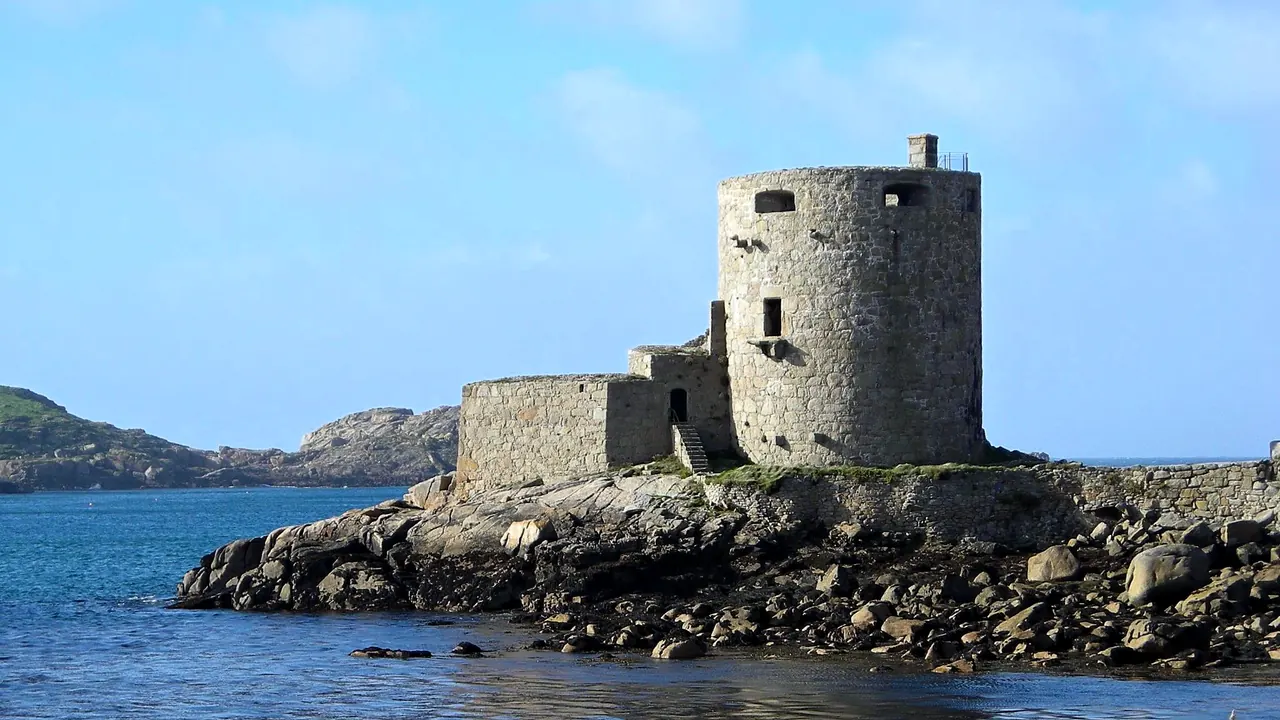
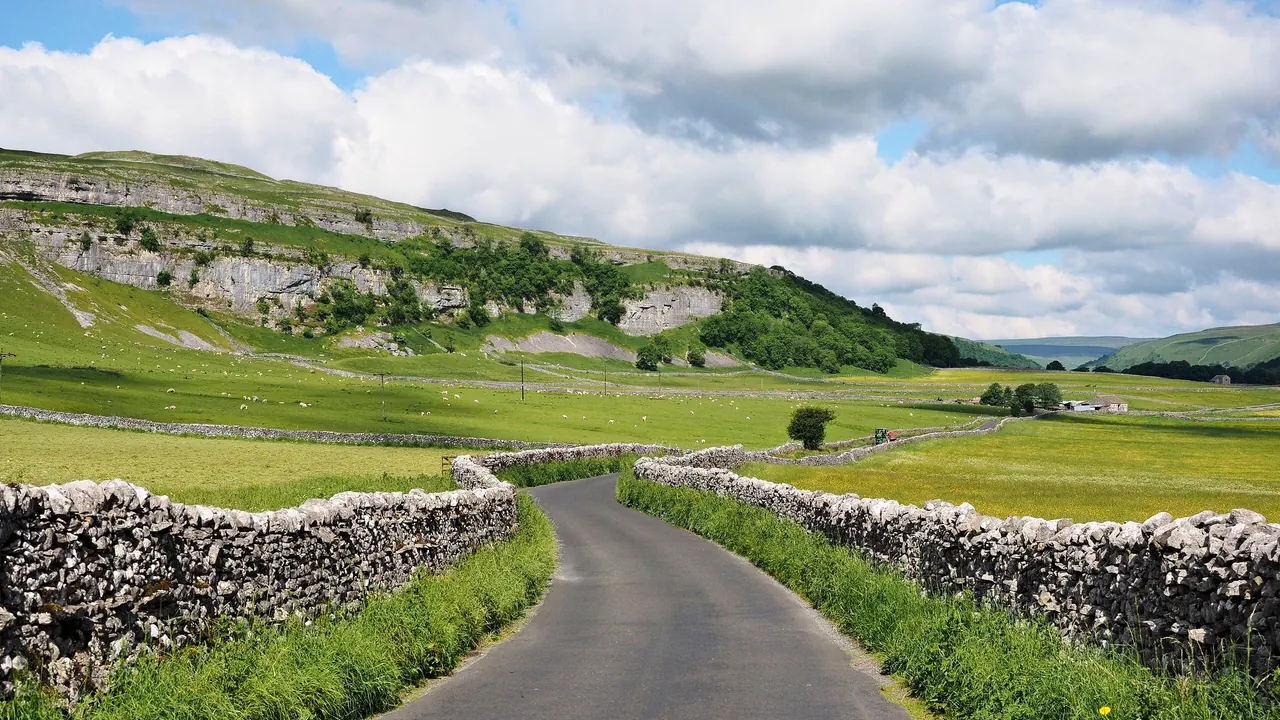
Photos: Isles of Scilly by Mark Percy, CC BY-SA 2.0, cropped; Yorkshire Dales by Kreuzschnabel, CC BY-SA 3.0, cropped.
Isles of Scilly or Yorkshire Dales?
Our verdict in twelve categories, each scored against the same fixed benchmark cities, and the climate month by month, so you can choose for your trip.
Choose Isles of Scilly for
- beaches
- getting around
The Isles of Scilly suit a traveller who wants to stay by the water and slow right down. You get pale sand bays on St Martin's and Tresco, boat trips out to seals and puffins, and days shaped by the tide and the launch timetable. It's a self-contained escape. In return for empty beaches and no traffic you accept a few pubs, a small choice of food and a bigger bill.
Choose Yorkshire Dales for
- day trips
- prices
- nature and the outdoors
Walkers, and anyone who likes to head somewhere different each day, will get more from the Yorkshire Dales. The limestone around Malham, the Three Peaks and the caves near Ingleton make it the bigger landscape, and from a cottage base you can drive to York, Fountains Abbey, Durham and Haworth. It costs less, has more castles and abbeys to see and holds a summer festival or two. There's no beach, though, and you'll want a car.
Scoreboard
Twelve categories on one fixed scale from 0 to 100. The shaded stretch is the gap between the two.
Your match
Pick a travel style or drag the sliders, and both match scores follow your weighting.
Wins on beaches and getting around with your weighting.
Wins on day trips and prices with your weighting.
What matters to you?
Category by category
What the scores mean for a trip.
Beaches & swimming
Only one of these has beaches at all. The Isles of Scilly have pale shell sand and clear water at Par Beach on St Martin's, Pentle Bay on Tresco and Rushy Bay on Bryher, and these are usually close to empty. The Atlantic keeps swims short, so a wetsuit is welcome.
The Dales are inland, and the nearest sand is a long drive away on the Yorkshire coast or at Morecambe Bay. Swimming there means a cold dip in a river pool, on the Wharfe near Burnsall or under the Swale falls at Keld. That's pleasant on a hot day but no reason to pick the region.
Food & drink
Both regions cook simply from local produce, but the Dales give you a bit more choice. Wensleydale cheese from Hawes, Masham's bitter, Dales lamb and a handful of ambitious dining pubs in Wharfedale make eating out more varied, and Harrogate and York are close by for a change.
Scilly's strength is seafood: crab and lobster from local boats, eaten at a café above a beach. Honesty stalls add eggs, vegetables and fudge. Most of the pubs and restaurants are in Hugh Town, each off-island has only one or two places, and many visitors cook for themselves.
Culture & sights
The Dales have more to see, spread across stone market towns and valleys. There's Skipton Castle, Bolton Castle above Wensleydale, Richmond's Norman castle and cobbled square, and the ruins of Bolton Priory and Jervaulx. The Ribblehead Viaduct and the lead-mining remains in Swaledale show the working past.
Scilly's heritage is smaller and takes two or three days to see, but it is packed close together and bound up with the sea. On St Mary's there are the Garrison walls around Star Castle and Bronze Age entrance graves. Tresco Abbey Garden holds figureheads from ships wrecked on the islands' rocks.
Nightlife
Neither is a place for a night out, and the evenings differ only in setting. On Scilly the main event is watching the pilot gig races in Hugh Town harbour, followed by a pint on the quay, and the last boat home sets the limit if you're staying on an off-island. The Dales have more village pubs, with fires and walkers going over the day's route, and Skipton is a little livelier at weekends. For clubs you'd have to go to Leeds.
Nature & outdoors
The Dales have the bigger and more varied outdoors. Malham Cove, Gordale Scar and the limestone pavement, the Three Peaks above Ribblesdale and the Pennine Way give you days of walking. The caves around Ingleton and Gaping Gill, and climbs like the Buttertubs pass for cyclists, add more.
Scilly's walks are shorter, a few hours around each island, and its draw is wildlife and water. You can see grey seals at the Western Rocks, puffins on Annet in spring and rare migrant birds in October, and kayak or snorkel in the sheltered channels. It suits someone happier watching from a boat than climbing a fell.
Day trips
Day trips are where the two differ most. From Scilly the outings are to the other islands, each with its own character: Tresco well kept, Bryher wild, St Agnes remote. A day out means a walk, a beach, lunch and the boat back. The mainland is too far for a comfortable return trip in a day.
The Dales have a long list within reach. There's Fountains Abbey and Studley Royal, Harrogate and Ripon, York about an hour away and Durham from Richmond. Haworth and Saltaire are to the south and the Lake District to the west. The Settle to Carlisle railway is a day out in itself.
Good for families
Both suit families who enjoy being outdoors, but in different ways. Scilly gives children freedom: almost no traffic, gently shelving beaches, rock pools, crabbing from the quays and a boat to a different island each day. Nothing there is built for children, though, and a wet day is hard to fill.
The Dales have more planned outings: show caves near Ingleton and Clapham, the steam railway near Skipton, farm parks and castles. Older children can try caving or gorge scrambling. The trade-off is driving everywhere and having no sand to dig in.
Getting around
Once you've arrived, Scilly is the easier place to manage without a car. Hugh Town is compact, the off-islands can be walked end to end, and launches link them all, although tides and rough weather change the plan. Getting there is the hard part: a long ferry from Penzance or short flights often delayed by fog.
The Dales are simpler to reach but need a car for most plans. The lanes are narrow and walled, and they clog at Malham and Bolton Abbey on summer weekends. The Settle to Carlisle line helps in the western dales, but buses into the higher valleys are few.
Shopping & style
Neither is somewhere to go shopping, but the Dales have more to browse. There's Skipton's street market, the weekly markets in Richmond and Hawes, outdoor-gear shops, antiques and wool crafts, with Harrogate and York nearby for anything more. Scilly has a few gift shops and a bookshop in Hugh Town, plus galleries and craft studios on the off-islands. The most typical thing to buy there is a box of scented narcissi, posted home in winter and spring.
Affordability
The Dales are clearly cheaper. The main pleasure, walking among hills, waterfalls and ruins, costs nothing. Hostels, bunkhouses and campsites keep costs down, even though cottages and inns fill up in summer.
Scilly is expensive from the start. You pay for the flight or ferry out and a boat fare for every day on another island. Beds are few, Tresco is the dearest island, and food costs more because it all arrives by sea. Self-catering cottages and the campsites on four of the islands are the ways to soften the bill.
Live music & performing arts
The Dales at least have something to book. The Georgian Theatre Royal in Richmond is a tiny playhouse from 1788 that still stages plays and concerts. Skipton has a small arts venue, and in summer the Swaledale and Grassington festivals put on concerts in churches and halls. Scilly has no theatre or concert hall, only the odd folk session in a pub or a concert in a church, and the sunset over the outer rocks takes the place of a programme.
Wellness & relaxation
Both offer rest through a slow pace rather than spas, and what differs is the setting. On Scilly it's tides, boat times and no traffic, with a few hotel spas and pools on Tresco and St Mary's. The Dales add dark night skies for stargazing and pub fires after a long walk. A short drive also takes you to the Victorian Turkish Baths in Harrogate, the nearest thing either place has to a bathing tradition.
When should you go?
Pick your month. The climate figures are measured averages, not a forecast.
Isles of Scilly in July
Yorkshire Dales in July
Daytime high, °C
Rainfall in the month, mm
Where the figures come from
Isles of Scilly has no rain gauge within 25 km of the centre, so its rainfall comes from a gridded climate dataset read at the destination rather than from a gauge further away.
Isles of Scilly's sunshine is measured 78 km from the centre, at Camborne.
Yorkshire Dales's temperatures are measured 40 km from the centre, at Leeming.
Yorkshire Dales's station stands 153 m below the place it is measured for, so that place is likely a little cooler than the figures say.
Yorkshire Dales has no rain gauge within 25 km of the centre, so its rainfall comes from a gridded climate dataset read at the destination rather than from a gauge further away.
Temperature and rainfall are climate normals, averaged over the years shown. Isles of Scilly: 1991-2020 normals, Scilly, Saint Mary'S (0.7 km from centre). Yorkshire Dales: 1991-2020 normals, Leeming (39.7 km from centre).
The Isles of Scilly have the milder winters and the cooler summers, with highs of around 19°C in July and August. Beach weather comes in a short window. The sea peaks at 17°C in August, so June to September is the time for swimming. May and June are the sunniest months, and June is the driest. From October the rain and Atlantic wind come back, and winter is damp rather than cold.
The Dales swing further through the year. July reaches about 21°C, good for long days on the hills, but winter highs fall to 7°C. The rain never really lets up: the summer months are wetter than on Scilly, and December is the wettest month at 144mm. May, June and September give the best mix of light, warmth and firmer ground for walking. From November to February the fells are cold and wet, and the days are short.
Which traveller are you?
For a beach and sun trip, choose the Isles of Scilly. The shell-sand bays on St Martin's, Tresco and Bryher are clear, sheltered and rarely crowded. The Dales have no beach at all, only cold river pools. Bring a wetsuit, though, because the Atlantic stays cool.
On an outdoors trip, the Yorkshire Dales give you more. Malham Cove, the Three Peaks, the long-distance paths and the caves around Ingleton fill days of serious walking and caving. On Scilly each island's coastal path takes a few hours, and the real draw there is seals and seabirds.
On a tight budget, the Dales are the better choice. Walking and most of the sights are free, and hostels, bunkhouses and campsites are easy to find. Scilly adds the crossing out, boat fares between islands and island prices for food and beds.
Before you go
| Measure | Isles of Scilly | Yorkshire Dales |
|---|---|---|
| Official language | English | English |
| Currency | Pound Sterling (GBP) | Pound Sterling (GBP) |
| Sockets | G230 V, 50 Hz | G230 V, 50 Hz |
| Driving side | Left | Left |
| Time zone | UTC, UTC+1 in summer | UTC, UTC+1 in summer |
| Emergency number | 112 or 999 | 112 or 999 |
| Main airport | St. Mary's Airport (ISC)2 non-stop destinations | Leeds Bradford Airport (LBA)69 non-stop destinations |
| Public holidays this year | 8 days | 8 days |
By the numbers
| Measure | Isles of Scilly | Yorkshire Dales |
|---|---|---|
| Population | 2,281 | - |
| People per km² | 140 | - |
| Swim season, months above 21 °C | None | None |
Where else could you go?
Every comparison below shares a destination with this one, so you can follow Isles of Scilly or Yorkshire Dales somewhere new.
- Lake Districtvs Yorkshire Dales
- Peak Districtvs Yorkshire Dales
- Cornwallvs Isles of Scilly
- Northumberlandvs Yorkshire Dales
- Snowdoniavs Yorkshire Dales
- Devonvs Isles of Scilly