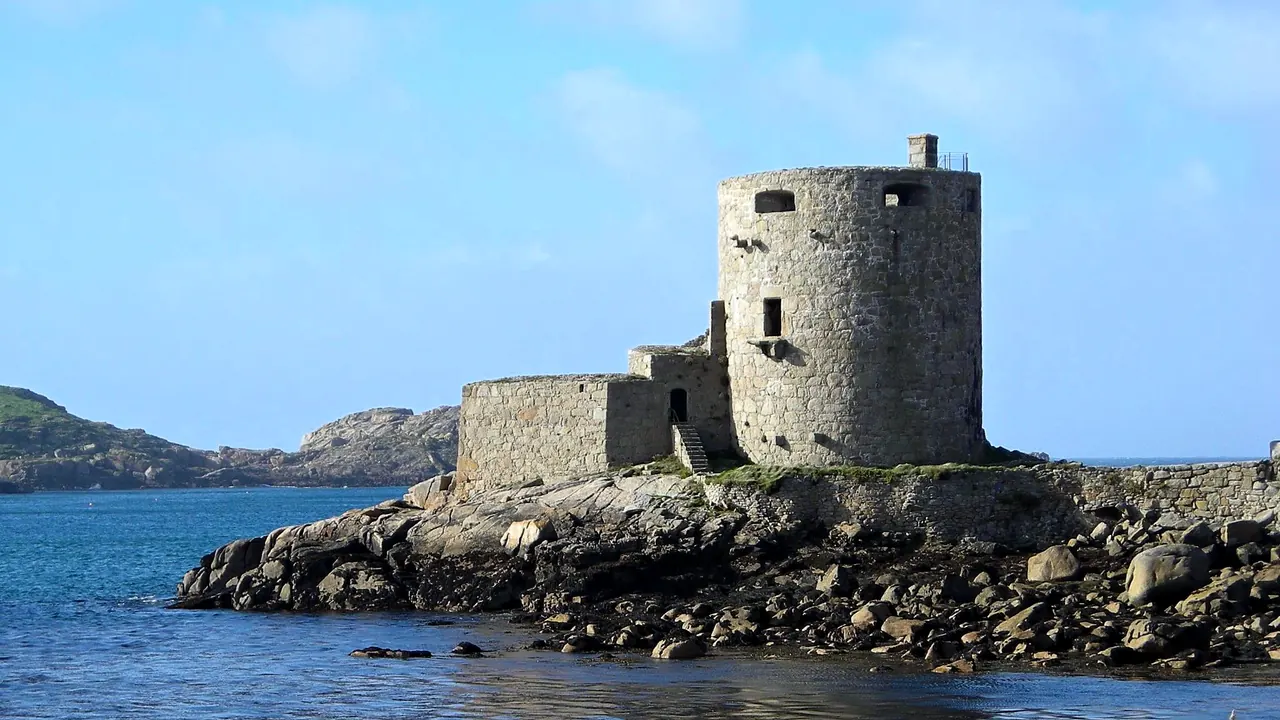
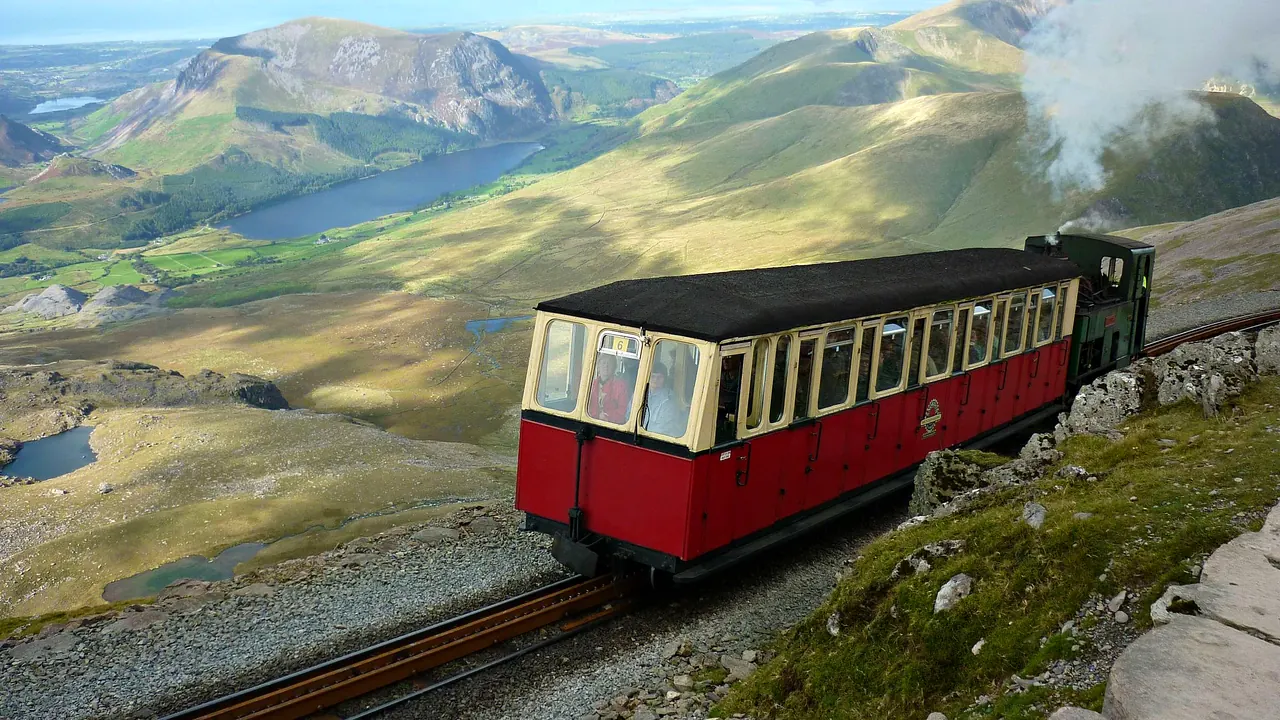
Photos: Isles of Scilly by Mark Percy, CC BY-SA 2.0, cropped; Snowdonia by Porius1, CC BY-SA 3.0, cropped.
Isles of Scilly or Snowdonia?
Our verdict in twelve categories, each scored against the same fixed benchmark cities, and the climate month by month, so you can choose for your trip.
Choose Isles of Scilly for
- beaches
- getting around
- wellness
The Isles of Scilly suit a slow, self-contained trip by sea. You get pale sandy bays with clear water, seals and seabirds seen from small boats, and days set by tides and boat times on a cluster of islands where nobody needs a car. They are the better choice for switching off and for a beach-led week in a British summer, as long as the budget can cover an expensive journey and island prices.
Choose Snowdonia for
- day trips
- prices
- nature and the outdoors
Walkers, climbers and anyone who wants a full, active itinerary should pick Snowdonia. Its mountains are among the finest in Britain. The castles, the slate heritage and the steam railways give wet days a purpose, and Conwy, Caernarfon and Anglesey are all within easy reach of the valleys. It costs less, especially if you camp or use hostels, but expect rain and plan on having a car.
Scoreboard
Twelve categories on one fixed scale from 0 to 100. The shaded stretch is the gap between the two.
Your match
Pick a travel style or drag the sliders, and both match scores follow your weighting.
Wins on beaches and getting around with your weighting.
Wins on day trips and prices with your weighting.
What matters to you?
Category by category
What the scores mean for a trip.
Beaches & swimming
Scilly is the stronger beach destination by some way. Its bays of pale shell sand are clear, sheltered and rarely busy, from Par Beach on St Martin's to Rushy Bay on Bryher and Pelistry on St Mary's. The Atlantic there is also a little warmer in late summer.
Snowdonia's coast along Cardigan Bay is better than its reputation, with the dune-backed sands at Harlech and Black Rock Sands near Porthmadog. Even so, the wind and the cold Irish Sea make it an afternoon out rather than the point of the trip. In both places swims are brisk and a wetsuit helps.
Food & drink
Neither is a place to plan a trip around eating, and the two are close. The difference is in what is on the plate. Scilly's food comes from the sea and the island farms: crab and lobster from local boats, farm ice cream and roadside honesty stalls. Most of the choice is in Hugh Town, and many visitors self-cater.
Snowdonia eats like walking country: Welsh lamb and cawl in the pubs, bara brith in tea rooms and big breakfasts in Llanberis and Betws-y-Coed. Conwy mussels and Menai oysters come in from its edges. In both places the choice shrinks outside summer.
Culture & sights
Snowdonia has more to see, and on a larger scale. Harlech Castle, the slate landscape and the National Slate Museum at Llanberis, the Ffestiniog and Snowdon Mountain railways and the oddity of Portmeirion fill several good days. Welsh, still spoken every day in the villages, gives the place a living identity.
Scilly's heritage is small and close together: the Garrison and Star Castle above Hugh Town, Bronze Age graves on St Mary's, and the figureheads from shipwrecks in Tresco Abbey Garden. Its advantage is that two or three days cover it all on foot, while Snowdonia's sights are spread across the valleys.
Nightlife
Both are early-to-bed places with no clubs, where evenings end at the pub. On Scilly the summer ritual is watching the pilot gig races in the harbour, then a pint on the quay, and anyone staying on the off-islands has to catch the last boat home. In Snowdonia it means climbers drying out by the fire in the inns of Llanberis or Capel Curig, which can get cheerful on summer weekends.
Nature & outdoors
Snowdonia is the bigger outdoor destination, with real mountains: Yr Wyddfa at 1,085m, the scrambles on Tryfan, historic climbing cliffs, mountain biking, white water on the Tryweryn and sailing on Llyn Tegid. The price is the weather, with cloud and rain often closing in on the summits.
Scilly is lower and gentler, with granite heath and coastal paths that take a few hours to walk round each island. Its strength is wildlife close to the sea: grey seals at the Western Rocks, puffins nesting on Annet in spring and the rare migrant birds that arrive each October.
Day trips
Snowdonia is far better placed for outings. Conwy and Caernarfon with their castles and town walls, Beaumaris and Anglesey, Victorian Llandudno, Bodnant Garden and even Chester are all within reach, especially by car.
On Scilly the day trip is the next island: Tresco's gardens, wild Bryher, quiet St Martin's or remote St Agnes. Each one means a walk, a beach and lunch before the boat back. It is charming, but over a long stay the days start to repeat, and the mainland is too far for a return trip in a day.
Good for families
Both work well for families, in different ways. Scilly offers freedom: almost no traffic, gently shelving beaches, rock pools and crabbing from the quays. There is nothing built for children, though, and little to do when the Atlantic weather closes in.
Snowdonia offers organised fun: steam railways, underground slate tours, cavern courses and long zip lines, plus paddling in the lakes and the sands at Harlech. The trade-off is rain and the driving between valleys. On Scilly, the cold sea and boat trips with toddlers need care.
Getting around
Once you arrive, Scilly is simpler. Nobody brings a car, Hugh Town is compact, the off-islands can be walked from end to end, and launches link them all. Tides and rough weather can upset plans, though. The hard part is getting there: a long ferry from Penzance or a short flight that fog often delays.
Snowdonia is easier to reach, but most visitors drive. The roads are narrow, jam on summer weekends and lead to trailhead car parks that fill early. The Conwy Valley and Cambrian Coast railway lines and the Sherpa'r Wyddfa buses help, but getting between valleys without a car is slow.
Shopping & style
Neither is a shopping destination. Scilly's best buys are made on the islands: gin, perfume, pottery and the scented narcissi posted home in winter and spring. Snowdonia's shopping is more practical, with the outdoor gear shops of Betws-y-Coed, Welsh woollen blankets, slate crafts and Portmeirion pottery.
Affordability
Snowdonia is much easier on the wallet. The mountains and beaches are free, and campsites, bunkhouses and hostels let walkers keep costs low, though cottages in the popular villages are dear during school vacations.
Scilly is expensive from the start. You pay for the flight or ferry, a boat fare for each island you visit, and food that has to arrive by sea. Camping on St Mary's, St Martin's, St Agnes or Bryher and self-catering are the only real savings, and Tresco is the costliest island of all.
Live music & performing arts
Snowdonia has the edge, modest as it is. Male voice choirs welcome visitors to their rehearsals, local eisteddfodau bring singing, harp and poetry, and the arts centres in Bangor and Caernarfon and the theatre in Llandudno offer an evening or two with a Welsh flavour. Scilly has no venue at all, only the odd folk session in a pub or concert in a church, and the sunset is the main show.
Wellness & relaxation
Neither has a spa culture, but Scilly is the more restful. With no traffic, few crowds and days set by the tides, switching off happens almost by itself, and a few hotel spas on Tresco and St Mary's add some pampering.
Snowdonia's calm comes from being tired after a day on the hills: log burners in stone cottages and slow weeks in Beddgelert or by the Mawddach. What sets it apart is cold-water swimming in its lakes and rivers.
When should you go?
Pick your month. The climate figures are measured averages, not a forecast.
Isles of Scilly in July
Snowdonia in July
Daytime high, °C
Rainfall in the month, mm
Where the figures come from
Isles of Scilly has no rain gauge within 25 km of the centre, so its rainfall comes from a gridded climate dataset read at the destination rather than from a gauge further away.
Isles of Scilly's sunshine is measured 78 km from the centre, at Camborne.
Snowdonia's temperatures are measured 52 km from the centre, at Valley.
Snowdonia has no rain gauge within 25 km of the centre, so its rainfall comes from a gridded climate dataset read at the destination rather than from a gauge further away.
Temperature and rainfall are climate normals, averaged over the years shown. Isles of Scilly: 1991-2020 normals, Scilly, Saint Mary'S (0.7 km from centre). Snowdonia: 1991-2020 normals, Valley (51.8 km from centre).
Both are at their best from May to September, and their summer highs are almost the same, at about 19°C in July and August. The difference is rain. On Scilly, May and June are the driest months and among the sunniest. By August the sea has warmed to about 17°C, and the sheltered bays are pleasant for short swims from June to September. Winters on the islands are mild but wet and dull, with little to recommend them beyond the quiet.
Snowdonia's weather, measured in the valleys, gets wet sooner. Summer there is already noticeably rainier than on Scilly, and by November rainfall reaches about 134mm, with real mountain conditions on the tops. Late May and June bring the longest sunny spells for the hills, and September is often a good second chance before the autumn rains. Winter is colder than on the islands and is a season for experienced hill walkers rather than casual visitors.
Which traveller are you?
For a beach and sun trip, choose the Isles of Scilly. You can take the boat to a different island each day and spend it on near-empty sand, with short swims in sheltered water. In Snowdonia, a day on the beach depends on the forecast.
On an outdoors trip, Scilly offers easy coastal walks and boat trips out to the wildlife, but soon runs out of new ground. Snowdonia can fill a week of hard days in the mountains, as long as you accept wet gear and summits lost in cloud.
On a tight budget, Scilly is hard going. The journey out uses up much of the money before you arrive, and even campers end up rationing their island hops. In Snowdonia, a cheap bed and free hills make a full week affordable, especially in spring or autumn.
Before you go
| Measure | Isles of Scilly | Snowdonia |
|---|---|---|
| Official language | English | English |
| Currency | Pound Sterling (GBP) | Pound Sterling (GBP) |
| Sockets | G230 V, 50 Hz | G230 V, 50 Hz |
| Driving side | Left | Left |
| Time zone | UTC, UTC+1 in summer | UTC, UTC+1 in summer |
| Emergency number | 112 or 999 | 112 or 999 |
| Main airport | St. Mary's Airport (ISC)2 non-stop destinations | Liverpool John Lennon Airport (LPL)75 non-stop destinations |
| Public holidays this year | 8 days | 8 days |
By the numbers
| Measure | Isles of Scilly | Snowdonia |
|---|---|---|
| Population | 2,281 | - |
| People per km² | 140 | - |
| Swim season, months above 21 °C | None | None |
Where else could you go?
Every comparison below shares a destination with this one, so you can follow Isles of Scilly or Snowdonia somewhere new.
- Cornwallvs Isles of Scilly
- Peak Districtvs Snowdonia
- Lake Districtvs Snowdonia
- Yorkshire Dalesvs Snowdonia
- Pembrokeshirevs Snowdonia
- Cotswoldsvs Snowdonia