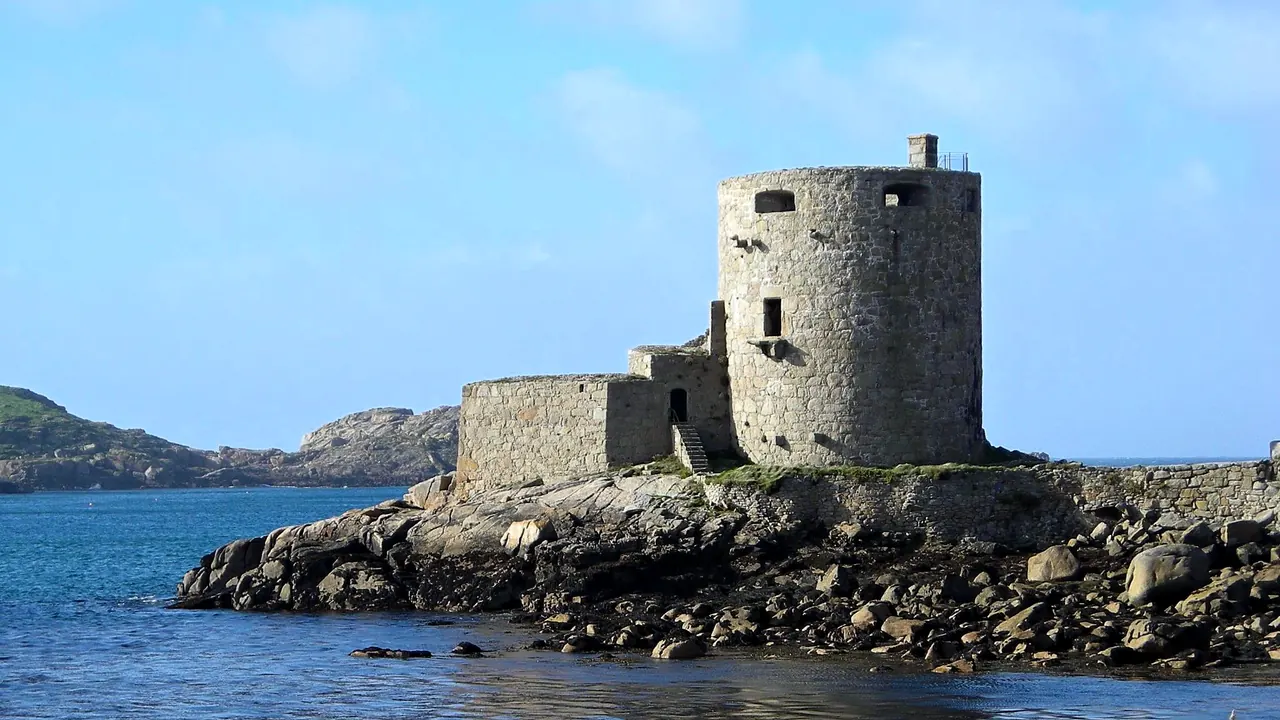
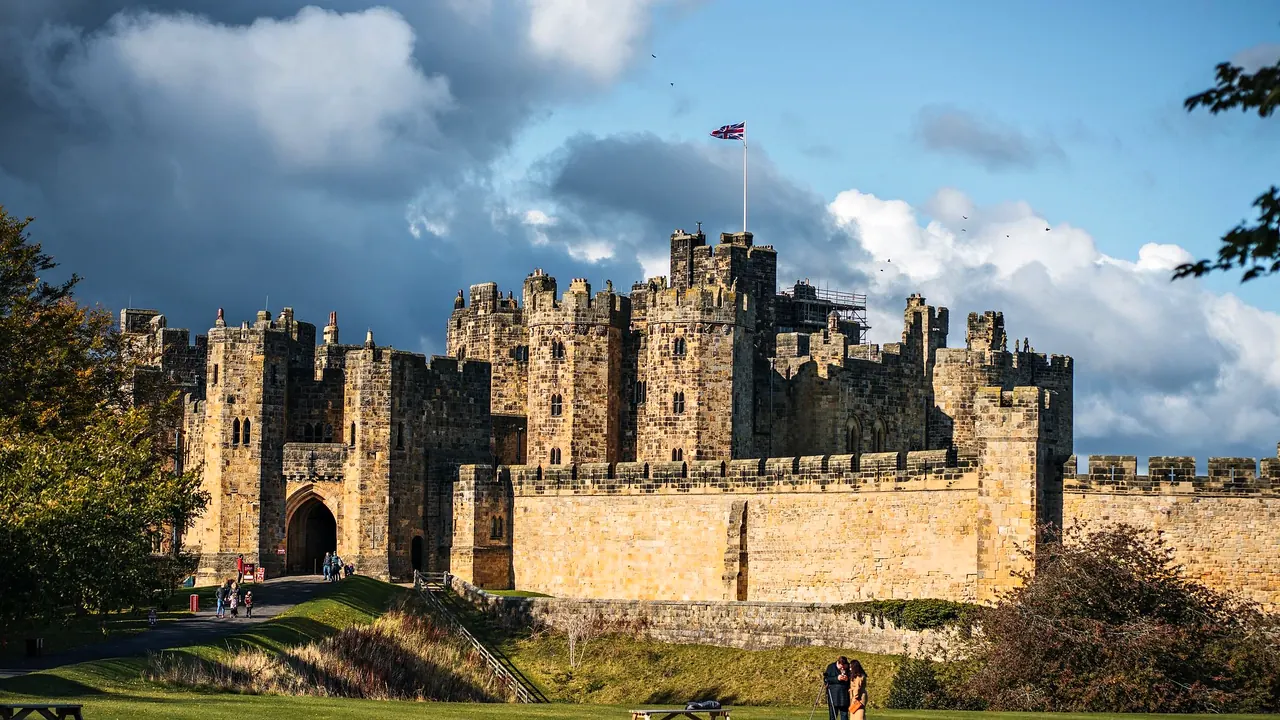
Photos: Isles of Scilly by Mark Percy, CC BY-SA 2.0, cropped; Northumberland by Clément Proust, Pexels License.
Isles of Scilly or Northumberland?
Our verdict in twelve categories, each scored against the same fixed benchmark cities, and the climate month by month, so you can choose for your trip.
Choose Isles of Scilly for
- beaches
- wellness
- getting around
The Isles of Scilly suit travellers who want to park the car for good and live by the tides for a week. You get pale shell-sand bays clear enough to see the seabed, a different small island to walk each day, and evenings so quiet there's nothing to plan. In return you pay more, there are fewer sights, and once you've seen the off-islands there's nowhere else to go.
Choose Northumberland for
- day trips
- culture and sights
- prices
Northumberland is the better choice for a touring trip by car. Bamburgh, Alnwick and the other border castles, Hadrian's Wall, Holy Island and the Farne Islands give you far more to see, and Edinburgh, Durham and Newcastle are all within reach for a day. It costs less and the landscape is much bigger, from the coast to the Cheviots and Kielder. The trade-off is a colder sea that is better for walking beside than swimming in.
Scoreboard
Twelve categories on one fixed scale from 0 to 100. The shaded stretch is the gap between the two.
Your match
Pick a travel style or drag the sliders, and both match scores follow your weighting.
Wins on beaches and wellness with your weighting.
Wins on day trips and culture and sights with your weighting.
What matters to you?
Category by category
What the scores mean for a trip.
Beaches & swimming
Scilly is the place to actually get in the water. Par Beach on St Martin's, Pentle Bay on Tresco and Rushy Bay on Bryher are sheltered and shallow, with water so clear it turns turquoise over the sand. In summer the bays warm up enough for a short swim, especially in a wetsuit.
Northumberland's beaches are bigger and more dramatic: the wide sand below Bamburgh Castle, Embleton Bay under the ruins of Dunstanburgh, and the long curve of Druridge Bay. But the North Sea is a few degrees colder and the wind rarely stops. Most visitors walk, fly kites and paddle rather than swim.
Food & drink
Neither is a food destination, and both rely on the same idea: a crab sandwich near the shore. On Scilly, food means what the islands produce. Lobster and crab come from local boats, beef and potatoes from island farms, and eggs and fudge from honesty stalls by the road. Many visitors cook for themselves, because Hugh Town has most of the restaurants.
Northumberland has more regional character and a bit more choice. There are oak-smoked kippers at Craster, oysters from Lindisfarne, and upland lamb and game, eaten mostly in coaching inns and village pubs. When the country menus run out, Newcastle is close enough for a proper restaurant meal.
Culture & sights
Northumberland has far more history to see. A whole chain of border castles runs from Alnwick and Bamburgh to Lindisfarne and Chillingham. The Roman frontier at Housesteads and Vindolanda is the best part of Hadrian's Wall. Add Berwick's Elizabethan walls, Hexham Abbey and Cragside, and you can fill a week of driving between sites.
Scilly's heritage is small but packed close together. There are the Garrison walls around Star Castle, Bronze Age tombs at Innisidgen, and Tresco Abbey Garden, where the Valhalla collection holds figureheads from wrecked ships. It is a story about the sea and shipwrecks, and it fits into a few relaxed days.
Nightlife
Both places are quiet at night, and neither has clubs. On Scilly the highlight of a summer evening is watching the pilot gig crews race in the harbour and then having a pint on the quay. If you're staying on an off-island, the last boat home ends your night.
Northumberland's evenings are similar, spent by an inn fire or in a hotel bar in Alnwick or Hexham. The difference is that a big night out is still possible, because Newcastle is a short train ride away.
Nature & outdoors
Scilly's outdoors is all coast and channel. Its low heath and granite tors sit on islands small enough to walk round in an afternoon, and Hell Bay on Bryher is the wildest corner. The wildlife is close at hand: a short launch ride takes you among the seals off the Western Rocks or past the puffins on Annet. The sheltered water between the islands is good for kayaking and for snorkelling with seals, and in October birdwatchers arrive looking for rare birds blown in across the Atlantic.
Northumberland gives you far more room. Behind the coast are the rolling Cheviots, the Coquet valley and the rocky ridge that carries Hadrian's Wall, and beyond them the great forest and reservoir at Kielder, where you can cycle, sail and see a truly dark night sky. The seabird islands are bigger too. On the Farnes you walk among huge, noisy colonies of puffins, terns and guillemots, while on Scilly the puffins are fewer and you see them from a boat. The Farne seals are best known for pupping in autumn.
Day trips
Northumberland is far ahead here. From Berwick, Edinburgh is under an hour by train, and the abbeys of Melrose and Jedburgh are a short drive. From the south of the county, Durham's cathedral, Newcastle's quayside and the Beamish open-air museum are all easy days out.
On Scilly, the day trip is the next island: tidy Tresco, Bryher with its wild Atlantic side, long and quiet St Martin's, and remote St Agnes. Each is a lovely day, but once you've done all four there's nowhere else to go, because the Cornish mainland is too far to get there and back comfortably in a day.
Good for families
Both work for families who like beaches and boats more than rides, and both are short of things to do on wet days. Scilly's main appeal is freedom. There's hardly any traffic, so children can roam, and the gently shelving bays are good for rock pools, crabbing and dam-building. There is nothing built specially for children, though.
Northumberland has more organised activities: costumed activities and broomstick training at Alnwick Castle, the huge treehouse in the Alnwick Garden, and play trails at Kielder. It also has the adventure of racing the tide across the causeway to Holy Island. The cost is that you spend more time in the car.
Getting around
Both are easy to get around but in very different ways. On Scilly you leave the car behind. You walk the small islands and take launches between them, but sailings depend on tide and weather. Getting there is the hard part: a long ferry from Penzance or a short flight that fog often delays.
Northumberland is easy to reach, with main-line stations at Morpeth, Alnmouth and Berwick and the Tyne Valley line to Hadrian's Wall. Once you're there, though, most people need a car, since the buses are infrequent and the lanes into the Cheviots are slow.
Shopping & style
Neither is a place to go shopping, and there is little between them. On Scilly most of what you buy is made on the islands. Hugh Town has a few streets of gift shops and outdoor gear, and galleries and craft studios across the off-islands sell pottery, paintings and gin made on the islands. The most Scillonian thing to take home is a box of narcissi from the flower farms, posted from the islands in winter or spring.
Northumberland's shopping is in its market towns. Hexham and Alnwick have proper high streets with local traders, food shops and market days, and the old railway station at Alnwick, now full of second-hand books, is worth the trip by itself. Along the coast there are farm shops and smokehouse counters, and Newcastle is close by if you need a city centre.
Affordability
Northumberland is clearly cheaper. It is priced like rural England, and the beaches and most of Hadrian's Wall are free. Staying inland around Hexham and the Tyne Valley costs less than the coast near Bamburgh. Fuel and castle admission fees are the main extra costs.
Scilly is expensive from the moment you travel. You pay for the plane or ferry out, a boat fare for each day on another island, and food that has all come by sea. Tresco is the dearest island. Self-catering cottages and the campsites on four of the islands are the only real ways to save.
Live music & performing arts
Northumberland has a living tradition and some venues to go with it. The Northumbrian smallpipes are still played in pub sessions and at small festivals, Hexham and Berwick have arts centres with touring shows, and Alnwick has a small playhouse. For orchestras or big touring productions, Newcastle and Gateshead are close by.
Scilly has no theatre or regular music venue. You might find an occasional folk night in a pub or a concert in a church hall, and most evenings end with the sunset.
Wellness & relaxation
Scilly is the easier place to switch off. Visitors leave their cars behind, there is barely any traffic, the days follow the tides and boat times, and evenings end with the light fading over the outer rocks. Treatments are limited to a few hotel spas and pools on Tresco and St Mary's, and there are no thermal baths.
Northumberland has a similar quiet, in cottages and villages that go to bed early, along with a handful of spas in country-house and coastal hotels. But a trip there usually means driving between sights, so it feels less like a complete break.
When should you go?
Pick your month. The climate figures are measured averages, not a forecast.
Isles of Scilly in July
Northumberland in July
Daytime high, °C
Rainfall in the month, mm
Where the figures come from
Isles of Scilly has no rain gauge within 25 km of the centre, so its rainfall comes from a gridded climate dataset read at the destination rather than from a gauge further away.
Isles of Scilly's sunshine is measured 78 km from the centre, at Camborne.
Northumberland has no rain gauge within 25 km of the centre, so its rainfall comes from a gridded climate dataset read at the destination rather than from a gauge further away.
Temperature and rainfall are climate normals, averaged over the years shown. Isles of Scilly: 1991-2020 normals, Scilly, Saint Mary'S (0.7 km from centre). Northumberland: 1991-2020 normals, Boulmer (7 km from centre).
Both places are cool, mild-summer destinations, and neither is ever too hot for walking. Both peak at about 19°C in July and August. On Scilly the bathing season runs from June to September, and the sea reaches 17°C at its warmest in August. Late spring is the sunniest time and early summer the driest. From October the rain builds up, reaching about 119mm a month in November and December, though winters stay mild and frosts are rare.
Northumberland is colder at both ends of the year, with January highs of about 7°C. Its sea only reaches about 15°C, so even in August swimming is for the hardy. On the coast, rain peaks twice, in August and again in late autumn. Overall it is less wet than Scilly in winter, but it is raw. June and September are the best walking months, mild and a little drier.
Which traveller are you?
For a beach and sun trip, the Isles of Scilly win. Sheltered bays on St Martin's, Tresco and Bryher have pale sand and calm, clear water, warm enough by late summer for a brisk, short swim. Northumberland's sands are for walking, not bathing.
For a culture and arts trip, choose Northumberland. It has castles at Bamburgh, Alnwick and Warkworth, the best stretch of Hadrian's Wall and Lindisfarne's priory, plus folk music and small arts centres. Scilly's heritage is charming but takes only two or three days.
On a tight budget, Northumberland is much easier. Inland market towns like Hexham keep beds affordable, and the beaches and most of the Wall are free. On Scilly, everything arrives by sea, beds are scarce, and every day on another island adds a boat fare.
Before you go
| Measure | Isles of Scilly | Northumberland |
|---|---|---|
| Official language | English | English |
| Currency | Pound Sterling (GBP) | Pound Sterling (GBP) |
| Sockets | G230 V, 50 Hz | G230 V, 50 Hz |
| Driving side | Left | Left |
| Time zone | UTC, UTC+1 in summer | UTC, UTC+1 in summer |
| Emergency number | 112 or 999 | 112 or 999 |
| Main airport | St. Mary's Airport (ISC)2 non-stop destinations | Newcastle International Airport (NCL)80 non-stop destinations |
| Public holidays this year | 8 days | 8 days |
By the numbers
| Measure | Isles of Scilly | Northumberland |
|---|---|---|
| Population | 2,281 | 323,820 |
| People per km² | 140 | 65 |
| Swim season, months above 21 °C | None | None |
Where else could you go?
Every comparison below shares a destination with this one, so you can follow Isles of Scilly or Northumberland somewhere new.
- Cornwallvs Isles of Scilly
- Edinburghvs Northumberland
- Lake Districtvs Northumberland
- Yorkshire Dalesvs Northumberland
- Devonvs Isles of Scilly
- Pembrokeshirevs Isles of Scilly