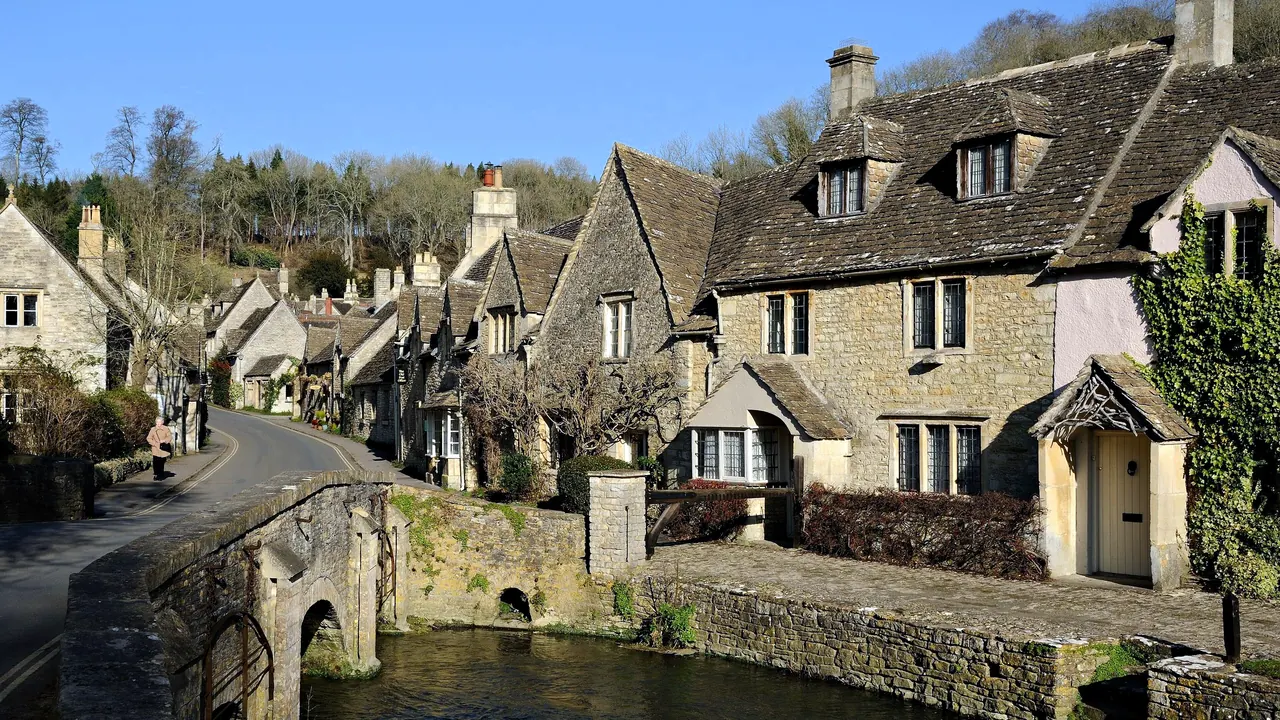
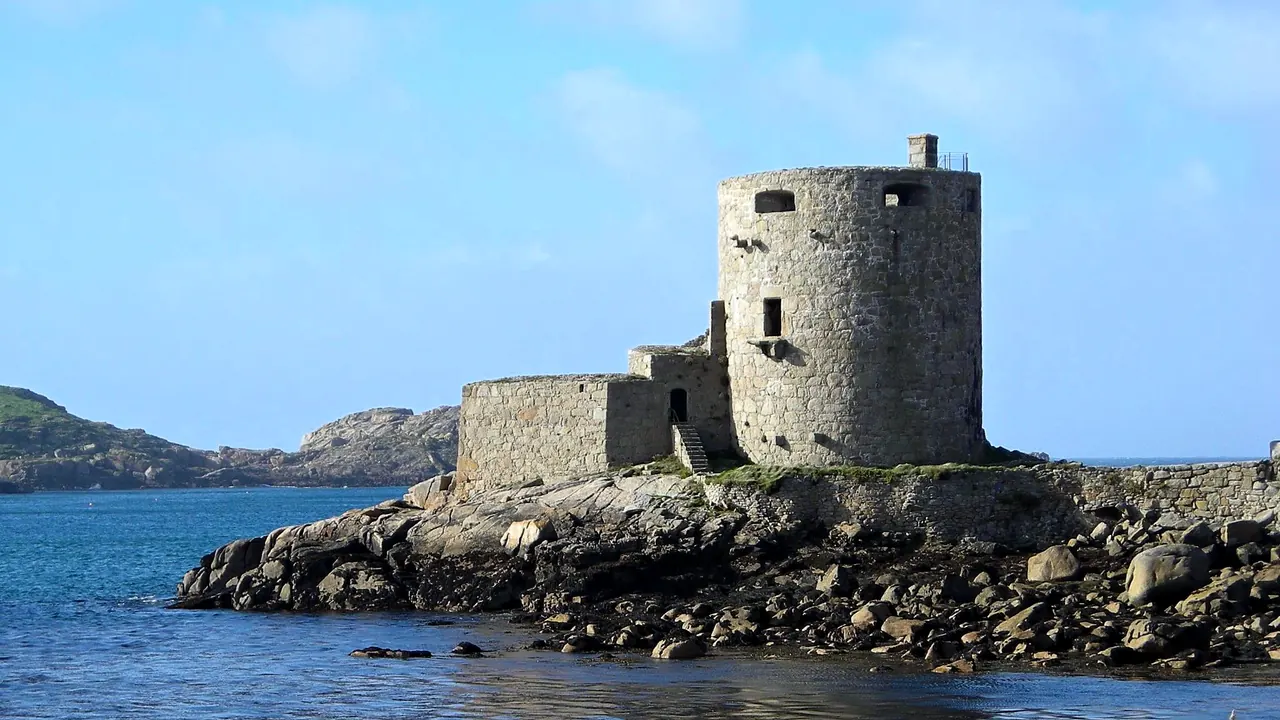
Photos: Cotswolds by Saffron Blaze, CC BY-SA 3.0, cropped; Isles of Scilly by Mark Percy, CC BY-SA 2.0, cropped.
Cotswolds or Isles of Scilly?
Our verdict in twelve categories, each scored against the same fixed benchmark cities, and the climate month by month, so you can choose for your trip.
Choose Cotswolds for
- day trips
- shopping
- live music and the arts
The Cotswolds suit a touring vacation of honey-stone villages, wool churches, great houses and long pub lunches, with Oxford, Bath and Stratford-upon-Avon all close enough for a day out. They are the better choice for anyone who wants plenty to see and do each day: theatre and festivals in Cheltenham, antique shops in Tetbury and Stow, a country-house spa to finish on. Bring a car, because the region is built for moving between villages.
Choose Isles of Scilly for
- beaches
- getting around
- nature and the outdoors
On the Isles of Scilly the appeal is the sea and the slow pace: white shell-sand bays, seals and puffins, and a different small island each day by boat. Pick it for an escape with no cars and very few distractions, where a beach walk and a crab sandwich make a full day. You give up variety, evening entertainment and easy access, and in return you get the clearest water and the emptiest beaches in England.
Scoreboard
Twelve categories on one fixed scale from 0 to 100. The shaded stretch is the gap between the two.
Your match
Pick a travel style or drag the sliders, and both match scores follow your weighting.
Wins on day trips and shopping with your weighting.
Wins on beaches and getting around with your weighting.
What matters to you?
Category by category
What the scores mean for a trip.
Beaches & swimming
If beaches matter to you, this is one of the biggest differences between the two. Swimming is barely possible in the Cotswolds: the Severn Estuary below the escarpment is all tidal mudflats and strong currents, and the nearest beach is the sandy lake shore at the Cotswold Water Park near Cirencester.
The Isles of Scilly have real beaches with turquoise water: the long, empty Par Beach on St Martin's, Pentle Bay on Tresco, and the sandbar from Pelistry out to Toll's Island. The Atlantic stays cold, so swims are short and a wetsuit helps, but the sand and the clear water are hard to beat in England.
Food & drink
The Cotswolds eat better and offer more choice. Stone inns around Stow and Chipping Campden serve local lamb and game, Stroud and Cirencester have farmers' markets, and Cheltenham's Montpellier quarter adds fine dining and international cooking.
On Scilly the food is simpler and comes from the sea: crab and lobster from island boats, honesty stalls with eggs and fudge, and farm ice cream. Most of the restaurants are in Hugh Town, the off-islands have only a pub or café each, and many visitors self-cater, especially outside summer.
Culture & sights
The Cotswolds have far more to see. The wool trade left Chipping Campden's High Street, Burford, Bibury's Arlington Row and some of the finest parish churches in England. Blenheim Palace, Sudeley Castle and Hidcote's gardens could fill several days.
Scilly's history is smaller and centres on the sea: the Garrison walls and Star Castle above Hugh Town, Bronze Age entrance graves, and the shipwreck figureheads in the Valhalla collection at Tresco Abbey Garden. It is all on a small scale, and two or three days cover the lot.
Nightlife
Neither place has much nightlife, but the Cotswolds have a little more, almost all of it in Cheltenham, where cocktail bars around the Promenade and Montpellier fill up at weekends and during race meetings. Elsewhere the villages are quiet by eleven. On Scilly a summer evening means watching the pilot gig crews race in the harbour and having a pint on the quay, and if you are staying on an off-island, the last boat home ends the night.
Nature & outdoors
Both offer a lot outdoors, but of very different kinds. The Cotswolds are farmland and woods: rolling wolds, dry-stone walls, beech woods full of bluebells in spring, and the 164km Cotswold Way along the escarpment, with views over the Severn Vale from Cleeve Hill and Broadway Tower.
Scilly is all granite and sea. Short coastal paths loop round each island, Hell Bay on Bryher is wild in an Atlantic gale, and boat trips go out to grey seals and nesting puffins. Kayaking and snorkelling with seals in the sheltered channels have no Cotswold equivalent.
Day trips
The Cotswolds win this easily. Oxford, Bath, Stratford-upon-Avon, Warwick Castle and the cathedrals of Gloucester, Worcester and Wells are mostly within an hour by car, and some can be reached by train, so a week can mix villages with some of England's best-known cities.
On Scilly a day out means a boat to another island: tidy Tresco, wild Bryher, quiet St Martin's or remote St Agnes. Each one is a pleasure, but they all follow the same pattern of walk, beach and lunch, and the mainland is too far away for a day trip.
Good for families
Both work well for families, but in different ways. The Cotswolds have attractions built for children: rhinos and giraffes at the Cotswold Wildlife Park, the model village at Bourton-on-the-Water, the steam railway from Winchcombe and Warwick Castle to the north. The cost is time spent in the car between them.
Scilly offers freedom instead. There is almost no traffic, so children can roam, go rock pooling, crab from the quays and watch seals from a boat. There is nothing built for children, though, and little to do when Atlantic weather sets in.
Getting around
Once you have arrived, Scilly is easier to get around. You don't need a car, Hugh Town is compact, the off-islands can be walked end to end, and launches link them. The hard parts are getting there, with a long ferry from Penzance or short flights often held up by fog, and crossings that depend on the tide and the weather.
The Cotswolds are easy to reach by train from London to Moreton-in-Marsh or Kingham, but once there you need a car on narrow lanes, rural buses are rare, and parking in Bibury or Bourton is difficult in summer.
Shopping & style
Antiques and country interiors are the reason to shop in the Cotswolds. Dealers in Tetbury and Stow-on-the-Wold sell furniture, silver and old prints, and Burford, Broadway and Chipping Campden add galleries and cookware shops. For clothes, Cheltenham has the region's only real high street, with Regency arcades on the Promenade and independent boutiques in Montpellier.
Scilly has little beyond what a short stay needs: a few gift, book and outdoor clothing shops in Hugh Town, and small studios on the off-islands selling paintings, pottery and island-made gin. The souvenir unique to the islands is a box of scented narcissi from a flower farm, posted home in winter or spring.
Affordability
Both are expensive, and Scilly is the more expensive of the two. In the Cotswolds you pay a lot for inns, manor hotels and good pub meals, but shared cottages, chain hotels in Cheltenham and picnics from farm shops help.
On Scilly the journey alone costs more, food is dearer because everything comes by sea, and each day on another island adds a boat fare. Self-catering and the island campsites are the main ways to save.
Live music & performing arts
For a play or a concert during your stay, only the Cotswolds will do. Cheltenham's Everyman Theatre puts on touring drama and opera, the town's festivals bring jazz in late spring and classical music in early summer, and in summer Longborough stages Wagner in a converted barn. From the northern villages, the Royal Shakespeare Company at Stratford is about half an hour away.
Scilly has nothing like this. With no stage of its own, live music there comes down to luck, so anyone who would miss a night at the theatre will be happier in the Cotswolds.
Wellness & relaxation
The Cotswolds are better for a spa break. Country-house hotels have spas in old barns, often with outdoor pools, and Bath's rooftop thermal pool, fed by Britain's only natural hot springs, is close to the southern wolds.
Scilly helps you relax in a different way: no traffic, days set by the tides, evenings watching the light over the sea. Spa treatments are limited to a few hotel spas on Tresco and St Mary's, so it suits switching off rather than pampering.
When should you go?
Pick your month. The climate figures are measured averages, not a forecast.
Cotswolds in July
Isles of Scilly in July
Daytime high, °C
Rainfall in the month, mm
Where the figures come from
Cotswolds has no rain gauge within 25 km of the centre, so its rainfall comes from a gridded climate dataset read at the destination rather than from a gauge further away.
Cotswolds's sunshine is measured 46 km from the centre, at Lyneham.
Isles of Scilly has no rain gauge within 25 km of the centre, so its rainfall comes from a gridded climate dataset read at the destination rather than from a gauge further away.
Isles of Scilly's sunshine is measured 78 km from the centre, at Camborne.
Temperature and rainfall are climate normals, averaged over the years shown. Cotswolds: 1961-1990 (sunshine 1991-2020, rainfall 1991-2020) normals, Fairford Royal Air Force Base (22.5 km from centre). Isles of Scilly: 1991-2020 normals, Scilly, Saint Mary'S (0.7 km from centre).
The Cotswolds have a clear inland rhythm. Summer is the only properly warm stretch, with July highs around 22°C, and winters are raw, close to 5°C in January. Rain is spread fairly evenly through the year, but late autumn and early winter are the wettest and darkest. May to September is the best time for walking between villages and for long evenings outside a pub, and the early autumn colour is a good reason to go in September or October.
The Isles of Scilly, measured on St Mary's, change much less through the year. Winters are mild at about 10°C but much wetter and windier, with up to 119mm a month in November and December, when boats are more often cancelled. Summers stay cooler than in the Cotswolds, and the sea only reaches about 17°C in August, so June to September is the swimming season and swims stay brisk. Both places get their sunniest weather from May to July, and late spring is especially good on the islands, which are drier then and have nesting puffins.
Which traveller are you?
For a beach and sun trip, the Isles of Scilly are the clear choice. Bays such as Par Beach on St Martin's and Rushy Bay on Bryher have pale sand and clear water. The Cotswolds have only a lake beach at the Water Park and the muddy shore of the Severn.
On a culture and arts trip, the Cotswolds win easily. The wool villages, Blenheim Palace and Chedworth Roman Villa are on the doorstep, Oxford and Bath are a day trip away, and evenings can mean Cheltenham's festivals or the Royal Shakespeare Company at Stratford.
Birdwatchers and wildlife lovers should head for the Isles of Scilly. Puffins nest on Annet, boat trips go out to the grey seals on the Western Rocks, and in October rare migrants bring birders in numbers. The Cotswolds' gentle farmland and beech woods can't offer anything like this.
Before you go
| Measure | Cotswolds | Isles of Scilly |
|---|---|---|
| Official language | English | English |
| Currency | Pound Sterling (GBP) | Pound Sterling (GBP) |
| Sockets | G230 V, 50 Hz | G230 V, 50 Hz |
| Driving side | Left | Left |
| Time zone | UTC, UTC+1 in summer | UTC, UTC+1 in summer |
| Emergency number | 112 or 999 | 112 or 999 |
| Main airport | Bristol Airport (BRS)117 non-stop destinations | St. Mary's Airport (ISC)2 non-stop destinations |
| Public holidays this year | 8 days | 8 days |
By the numbers
| Measure | Cotswolds | Isles of Scilly |
|---|---|---|
| Population | - | 2,281 |
| People per km² | - | 140 |
| Swim season, months above 21 °C | - | None |
Where else could you go?
Every comparison below shares a destination with this one, so you can follow Cotswolds or Isles of Scilly somewhere new.
- Cornwallvs Isles of Scilly
- Isle of Wightvs Cotswolds
- Peak Districtvs Cotswolds
- Jurassic Coastvs Cotswolds
- Snowdoniavs Cotswolds
- Devonvs Cotswolds