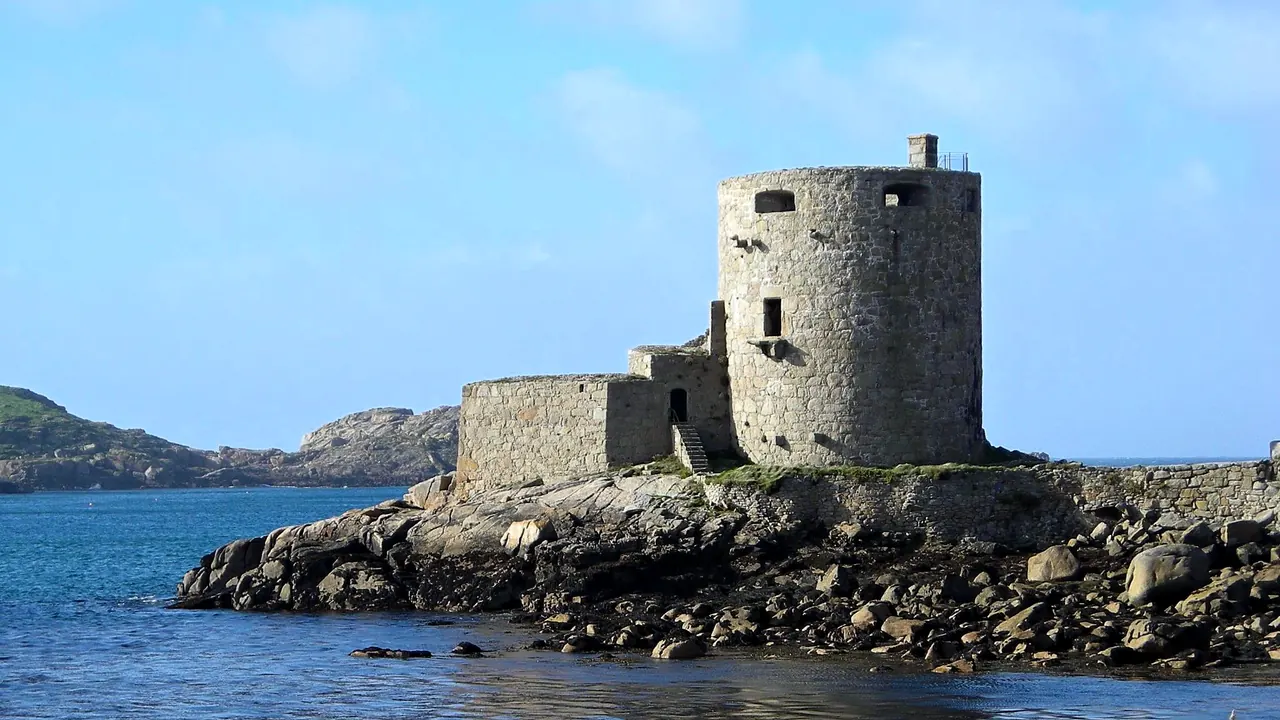
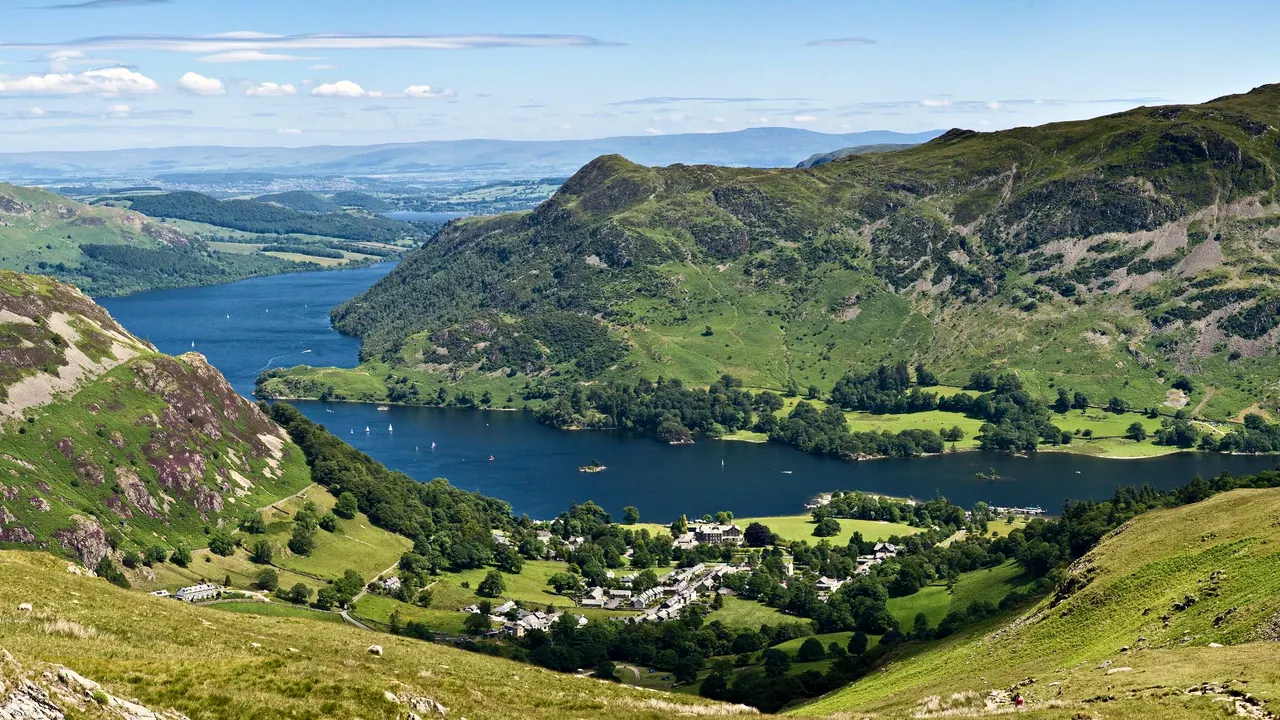
Photos: Isles of Scilly by Mark Percy, CC BY-SA 2.0, cropped; Lake District by Diliff, CC BY-SA 3.0, cropped.
Isles of Scilly or Lake District?
Our verdict in twelve categories, each scored against the same fixed benchmark cities, and the climate month by month, so you can choose for your trip.
Choose Isles of Scilly for
- beaches
- getting around
The Isles of Scilly suit a slow, car-free week built around sand, clear water and a boat to a different island each morning. Choose them if you want pale shell beaches with almost nobody on them, seals and seabirds from small launches, and evenings that end with a pint on the quay. In return you accept a thin choice of places to eat, almost nothing to do after dark, and one of the costlier trips in Britain.
Choose Lake District for
- day trips
- nature and the outdoors
- live music and the arts
Walkers and anyone who wants to be active should pick the Lake District. It has real mountains, lakes to sail and paddle, country pubs with proper cooking, and a literary trail from Wordsworth to Beatrix Potter. There are also market towns and Hadrian's Wall within a day's drive. The trade-off is rain, a lot more of it than on Scilly, and lake shores of shingle rather than beaches.
Scoreboard
Twelve categories on one fixed scale from 0 to 100. The shaded stretch is the gap between the two.
Your match
Pick a travel style or drag the sliders, and both match scores follow your weighting.
Wins on beaches and getting around with your weighting.
Wins on day trips and nature and the outdoors with your weighting.
What matters to you?
Category by category
What the scores mean for a trip.
Beaches & swimming
The Isles of Scilly have proper beaches. There are long empty sweeps of shell sand on St Martin's, sheltered coves on Tresco and Bryher, and Pelistry on St Mary's, where a sandbar runs out to Toll's Island at low tide. The Atlantic is cold, but the shallow, sun-warmed bays make a short swim a real pleasure from June to September.
The Lake District has no beaches to compare. Swimming there means lakes and tarns, entered from shingle or a jetty on Windermere or Buttermere, and the water is just as cold. The Cumbrian coast's sands are for walking. A swim is something to add to a day on the fells, not a reason to go.
Food & drink
You will eat better in the Lake District. Slate-floored pubs serve Herdwick lamb, Cumberland sausage and Cumbrian ales, and around Cartmel and Windermere there is country-house and farm-to-table cooking that people travel across Britain for. Gingerbread from Grasmere and sticky toffee pudding add local flavour.
On Scilly, the food is simpler and much more limited. Crab and lobster from island boats, farm ice cream and eggs from honesty stalls are the pleasures, and a crab sandwich above a beach is the classic lunch. Most restaurants are in Hugh Town, many visitors cook for themselves, and choice drops sharply out of season.
Culture & sights
The Lake District has more to see, and much of it is literary. There is Wordsworth's Dove Cottage at Grasmere, Beatrix Potter's Hill Top near Hawkshead and Ruskin's Brantwood above Coniston Water. Older sites include the Castlerigg stone circle and the Roman fort on Hardknott Pass. These places are spread across separate valleys, so seeing them takes several days and some driving.
Scilly's heritage is smaller and closer together. The Garrison walls around Star Castle, Bronze Age entrance graves on St Mary's and Tresco Abbey Garden, with its figureheads from wrecked ships, can all be seen in two or three days, mostly on foot.
Nightlife
Both are places for an early night, though the Lake District has slightly more going on. Ambleside, Keswick and Bowness have several pubs and a few livelier bars in summer, and Kendal adds a little more. On Scilly, a summer evening means watching the pilot gigs race in the harbour and having a drink on the quay, and if you stay on an off-island the last boat sets your curfew.
Nature & outdoors
The Lake District is the stronger choice for landscape and activity. It has England's highest mountains rising above long glacial lakes, ridge walks such as Striding Edge and the Fairfield Horseshoe, crags where British rock climbing began, and wild western valleys like Wasdale and Ennerdale. You do have to accept fast-changing weather and days spent in cloud.
Scilly is low granite heath, and each island's coast path takes a few hours, so it offers little to a serious walker. Its strength is wildlife. Boat trips go out to grey seals on the Western Rocks, puffins nest on Annet, and in October birdwatchers arrive for rare migrants. The sheltered channels are also good for snorkelling and kayaking.
Day trips
The Lake District has far more within reach. There are market towns such as Kendal, Cockermouth and Cartmel, and a steam railway from Ravenglass into Eskdale. Beyond the boundary, Carlisle's castle and cathedral, Hadrian's Wall and the Yorkshire Dales are all a day out, though most need a car.
On Scilly, a day trip means hopping to another island: neat Tresco, wild Bryher, quiet St Martin's or remote St Agnes. Each makes a good day, but the mainland is too far to visit and come back the same day.
Good for families
Both work well for families who like being outdoors, but in different ways. Scilly suits younger children who are happy on a beach. There is hardly any traffic, and the sand slopes gently into calm water, so a week of rock pooling, crabbing from the quay and seal trips fills itself.
The Lake District has more organised outings, such as the lake steamers, the Eskdale miniature railway, the Beatrix Potter connection and an aquarium on Windermere. It also has climbing and ghyll scrambling for older children. Neither has much to offer indoors on a wet day.
Getting around
Once you are on Scilly, getting around is simpler. Nobody brings a car, Hugh Town is compact, the off-islands can be walked end to end, and launches link them several times a day in summer. Getting there is the hard part: a long ferry crossing or a short flight that fog often delays, and rough seas can cancel the inter-island boats.
The Lake District is easy to reach by rail at Windermere or Penrith, and buses and steamers make a car-free stay in the central Lakes possible. The western valleys, though, mean a car and the steep Hardknott and Wrynose passes, and summer traffic around Windermere and Keswick can be slow.
Shopping & style
Neither place is worth visiting for the shopping, but the Lake District has more of it. Ambleside and Keswick are full of shops selling boots, waterproofs and climbing gear, and Kendal has an ordinary high street. Scilly has a few short streets in Hugh Town and small galleries on the off-islands. Its most memorable buy is scented narcissi from the flower farms, sent home in winter and spring.
Affordability
Neither is cheap, but the Scilly bill grows faster. Every meal and drink has come by sea, the plane or ferry out costs extra, a day on another island means a boat fare, and Tresco is the most expensive of all. Self-catering and the island campsites help.
The Lake District's high-season cottages and pub meals add up too. However, the fells cost nothing, and there are plenty of youth hostels and bunkhouses. Prices also fall noticeably in winter and outside school breaks.
Live music & performing arts
Live performance is limited in both, but the Lake District at least has a programme. Theatre by the Lake in Keswick runs a season of plays beside Derwentwater, Kendal's arts centre mixes theatre, music and film, and the town's mountain festival brings films and talks each November. Scilly has no venue at all, only the odd folk session in a pub or a concert in a church hall.
Wellness & relaxation
Both are good places to unwind, though each relaxes you in a different way. The Lake District does a spa weekend better: lakeside hotels on Windermere and Ullswater have pools and treatment rooms with views over the water, and a day's walk followed by a long soak is a well-worn routine.
Scilly has only a few hotel spas, on Tresco and St Mary's. Its calm comes from having no traffic and no crowds, with days shaped by tides and boat times and evenings spent watching the sun set over the outer rocks.
When should you go?
Pick your month. The climate figures are measured averages, not a forecast.
Isles of Scilly in July
Lake District in July
Daytime high, °C
Rainfall in the month, mm
Where the figures come from
Isles of Scilly has no rain gauge within 25 km of the centre, so its rainfall comes from a gridded climate dataset read at the destination rather than from a gauge further away.
Isles of Scilly's sunshine is measured 78 km from the centre, at Camborne.
Lake District's temperatures are measured 37 km from the centre, at Walney Island.
Lake District has no rain gauge within 25 km of the centre, so its rainfall comes from a gridded climate dataset read at the destination rather than from a gauge further away.
Lake District's sunshine is measured 90 km from the centre, at Leeming.
Temperature and rainfall are climate normals, averaged over the years shown. Isles of Scilly: 1991-2020 normals, Scilly, Saint Mary'S (0.7 km from centre). Lake District: 1991-2020 normals, Walney Island (36.8 km from centre).
On Scilly the warm season is mild rather than hot. Daytime highs reach only the high teens in July and August, and the sea is at its warmest in August at about 17°C. That makes June to September the time for swimming, and even then swims are brisk. Late spring is the driest and sunniest stretch, with June rainfall down to around 54mm. From October the islands turn wet and grey, though winter days stay mild at about 10°C.
The Lake District's summer highs are about the same as Scilly's, but its winters are much colder and wetter. Winter days reach only about 7°C, and December brings over 200mm of rain. April to June is the driest window and the best time for the high fells, and heavy rain sets in again from October. Neither place is ever too hot for walking. Through the year, Scilly is drier and sunnier in every month, and from autumn to early spring it is clearly the milder of the two.
Which traveller are you?
On a beach and sun trip, the Isles of Scilly are the clear choice. They have sheltered bays of white shell sand at Par Beach, Pentle Bay and Rushy Bay, and water clear enough to see the seabed. The Lake District offers cold lake swims from shingle shores.
For an outdoors trip, the Lake District wins easily. You can climb Helvellyn by Striding Edge or Scafell Pike from Wasdale, climb on historic crags, and sail or paddle Windermere and Ullswater. Scilly's coast paths take only a few hours per island, though its seals and puffins are a real draw.
On a tight budget, the Lake District gives you more room to plan. Take the train to Windermere, base yourself in one central village such as Ambleside or Keswick, and use the buses to reach walks, cooking most evenings. On Scilly, book a campsite early, pick one island and explore it on foot.
Before you go
| Measure | Isles of Scilly | Lake District |
|---|---|---|
| Official language | English | English |
| Currency | Pound Sterling (GBP) | Pound Sterling (GBP) |
| Sockets | G230 V, 50 Hz | G230 V, 50 Hz |
| Driving side | Left | Left |
| Time zone | UTC, UTC+1 in summer | UTC, UTC+1 in summer |
| Emergency number | 112 or 999 | 112 or 999 |
| Main airport | St. Mary's Airport (ISC)2 non-stop destinations | Manchester Airport (MAN)211 non-stop destinations |
| Public holidays this year | 8 days | 8 days |
By the numbers
| Measure | Isles of Scilly | Lake District |
|---|---|---|
| Population | 2,281 | - |
| People per km² | 140 | - |
| Swim season, months above 21 °C | None | None |
Where else could you go?
Every comparison below shares a destination with this one, so you can follow Isles of Scilly or Lake District somewhere new.
- Yorkshire Dalesvs Lake District
- Cornwallvs Isles of Scilly
- Northumberlandvs Lake District
- Peak Districtvs Lake District
- Snowdoniavs Lake District
- Devonvs Isles of Scilly