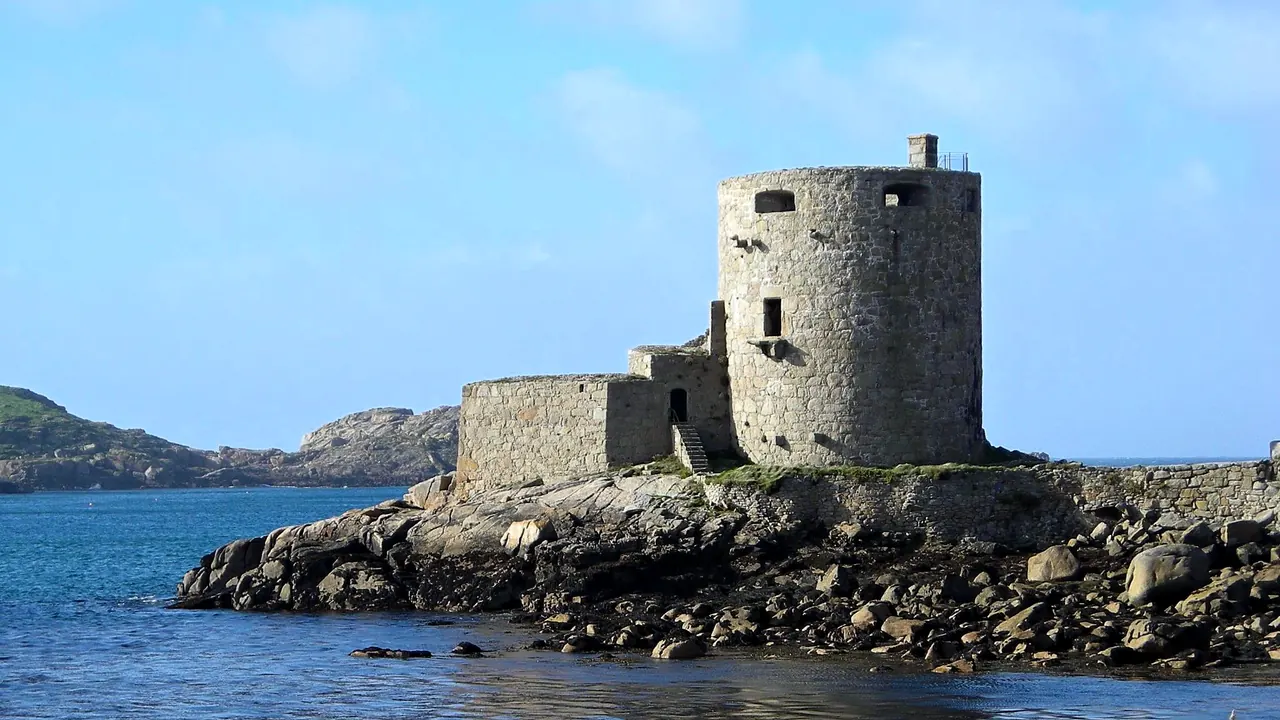
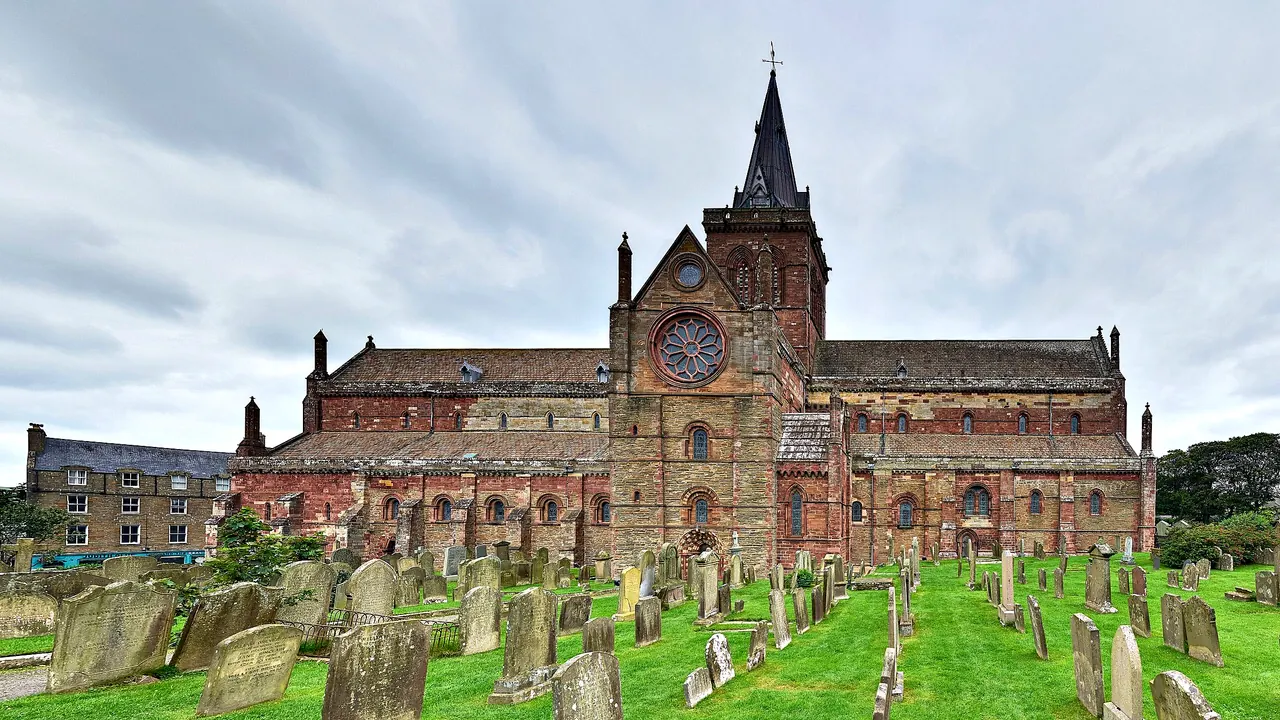
Photos: Isles of Scilly by Mark Percy, CC BY-SA 2.0, cropped; Orkney by Virtual-Pano, CC BY-SA 4.0, cropped.
Isles of Scilly or Orkney?
Our verdict in twelve categories, each scored against the same fixed benchmark cities, and the climate month by month, so you can choose for your trip.
Choose Isles of Scilly for
- beaches
- wellness
- families
The Isles of Scilly suit a slower, softer island vacation: pale sand bays and clear shallow water, a car-free week walking from one small island to the next, and children free to roam. They are the warmer and sunnier of the two, and the better choice for beach days and for switching off. In return the trip costs more, and the evenings are very quiet.
Choose Orkney for
- culture and sights
- live music and the arts
- prices
Choose Orkney if you want plenty to see as well as somewhere to walk. Skara Brae, Maeshowe, the Brodgar stones and St Magnus Cathedral give it a depth of history that Scilly cannot match. The North Isles, the silver jewellers, the fiddle sessions and the summer festivals add more to fill the days. Bring a car and expect stronger wind and a colder sea, but the trip will cost less.
Scoreboard
Twelve categories on one fixed scale from 0 to 100. The shaded stretch is the gap between the two.
Your match
Pick a travel style or drag the sliders, and both match scores follow your weighting.
Wins on beaches and wellness with your weighting.
Wins on culture and sights and live music and the arts with your weighting.
What matters to you?
Category by category
What the scores mean for a trip.
Beaches & swimming
Both island groups have pale shell sand, turquoise shallows and beaches you often have to yourself. Only the Isles of Scilly make a real beach vacation, though. Par Beach and Great Bay on St Martin's, Pentle Bay on Tresco and Rushy Bay on Bryher are sheltered, and by late summer the sea is warm enough for short swims, especially in the shallow bays.
Orkney's beaches at Waulkmill Bay and Birsay, and on Sanday, are just as lovely to look at. The water there stays several degrees colder, though, and the wind blows more often. On Orkney the beach is for walking, collecting shells and watching seals, not for spending the day in the water.
Food & drink
Neither is a place to travel to for its restaurants, and the two are much alike. Each has a small choice of places in its main town and a pub or café on the other islands, and many visitors cook for themselves. The difference is in what you eat. On Scilly that means crab and lobster from local boats, island beef, early potatoes and farm ice cream, roadside honesty stalls, and the classic crab sandwich above a beach.
Orkney leans more towards meat, cheese and drink. It has grass-fed beef and lamb, hand-dived scallops and bere bannocks. Kirkwall's two long-established whisky distilleries, along with local beer and gin, turn a stay there into something of a tasting tour.
Culture & sights
Here Orkney is in another league. The West Mainland holds Skara Brae, Maeshowe and the stone circles of Brodgar and Stenness, a Neolithic landscape of European importance. Kirkwall adds St Magnus Cathedral and the Earl's and Bishop's Palaces, and the Italian Chapel and the wartime remains around Scapa Flow tell a twentieth-century story. Seeing it properly takes several days and a car.
Scilly's heritage is charming but small: Star Castle and the Garrison walls on St Mary's, Bronze Age entrance graves, the castles above New Grimsby Sound and the shipwreck figureheads in Tresco Abbey Garden. Two or three days cover it all.
Nightlife
Neither has clubs or much going on after closing time. Orkney still gives you a little more to do. Kirkwall and Stromness have several pubs and hotel bars where fiddlers sometimes start a session, and talk runs on into the light midsummer nights.
On Scilly an evening out means a pint in Hugh Town or in an island pub, or watching the summer gig races in the harbour. If you are staying on one of the other islands, the last boat home ends the night early.
Nature & outdoors
Both are low island groups where wildlife and coast are the main reason to come, and they are equally good for it. The scenery is what differs. Scilly is the gentler of the two, all heath, granite tors and sheltered channels. Boats take you out to the grey seals on the Western Rocks, puffins nest on Annet, rare migrant birds arrive each October, and you can snorkel, kayak and row gigs in calm water.
Orkney is bigger and starker, and its drama is in the sea cliffs: the Old Man of Hoy, St John's Head and the seabird colonies at Marwick Head and Noup Head. Divers know it for the scuttled German fleet in Scapa Flow, one of the best-known wreck sites in Europe.
Day trips
In both places the day out is island-hopping, but Orkney has more places to go. Car ferries reach Rousay with its chambered cairns, as well as Westray, Sanday, Shapinsay and Hoy, and Papa Westray has the ancient Knap of Howar. Stromness is an easy outing from Kirkwall, and a crossing of the Pentland Firth takes you to the Caithness coast.
From St Mary's on Scilly, boats run to four other islands, each with its own character, from manicured Tresco to remote St Agnes. Each makes a day of a walk, a beach and lunch rather than a full programme, and the mainland is too far for a day trip.
Good for families
Scilly is the easier place to bring children. With no visitors' cars on the islands and villages of only a few houses each, parents can loosen their grip, and the sheltered bays let small children paddle safely in clear, shallow water. A week falls naturally into a different island each day, with rock pools, sandcastles, crabbing in the harbour and a launch out to the seals, and a self-catering cottage as the base.\n\nOrkney gives children a similar outdoor freedom, with extras that suit older ones: puffins on the cliffs in early summer, the replica house at Skara Brae they can walk into, and the leisure centre pool in Kirkwall for a wet afternoon.
Neither has anything built for children, and a run of Atlantic weather leaves families with little to do indoors in either place. Orkney's colder sea and harsher wind make those lost days more likely, so it suits hardy families better than those with toddlers.
Getting around
The two are about equally easy to get around, but in different ways. Scilly is a vacation without a car. Hugh Town is compact, the other islands can be walked end to end, and launches from St Mary's do the rest, although tides and rough seas disrupt them and fog often delays the short flights out from the mainland.
Orkney is built for driving. On the Mainland the main sights are within half an hour of one another by car, but the buses run too rarely to rely on. The North Isles need booked car ferries or tiny planes, and both can be stopped by the weather.
Shopping & style
Orkney has more worth buying. On Albert Street in Kirkwall and the main street of Stromness, silver jewellers work Norse and Neolithic designs into their pieces, alongside shops selling knitwear, pottery and the straw-backed Orkney chair. A craft trail leads to workshops around the Mainland.
On Scilly, shopping means a few short streets in Hugh Town and small galleries and studios on the other islands. The most typical thing to buy is a box of scented narcissi from the flower farms, posted home.
Affordability
Neither is cheap, but Scilly costs more. Beds are few, Tresco is especially expensive, food arrives by sea and the boat fares to the other islands add up day by day. Camping or a self-catering cottage are the main ways to save.
In Orkney, eating out costs what it does elsewhere in the UK. Many of its finest sites, from the stone circles to the cliffs, are free, and local produce makes cooking for yourself easy. A hire car and the inter-island ferries still add to the bill.
Live music & performing arts
If live music matters to you, Orkney is clearly the better choice, as long as you time your visit well. The St Magnus International Festival, founded by Peter Maxwell Davies, brings classical music and drama to the cathedral around midsummer. The Orkney Folk Festival fills Stromness in late spring, and fiddle and accordion music is heard in pubs and at community dances.
Scilly has no venue at all, only the odd pub band or church concert, and evenings there revolve around the sunset.
Wellness & relaxation
What both offer is calm rather than pampering, since there are no thermal baths or spa resorts in either. Scilly does calm better. It has a few hotel spas and pools on Tresco and St Mary's, the climate is softer, and car-free days set by the tides make it easy to switch off.
Orkney is just as quiet, with empty roads and long summer evenings. But treatments barely go beyond a few hotels and the public pool in Kirkwall, and the weather is harder on anyone who just wants to sit outside.
When should you go?
Pick your month. The climate figures are measured averages, not a forecast.
Isles of Scilly in July
Orkney in July
Daytime high, °C
Rainfall in the month, mm
Where the figures come from
Isles of Scilly has no rain gauge within 25 km of the centre, so its rainfall comes from a gridded climate dataset read at the destination rather than from a gauge further away.
Isles of Scilly's sunshine is measured 78 km from the centre, at Camborne.
Temperature and rainfall are climate normals, averaged over the years shown. Isles of Scilly: 1991-2020 normals, Scilly, Saint Mary'S (0.7 km from centre). Orkney: 1991-2020 normals, Kirkwall Airport (4.9 km from centre).
Both island groups are at their best from May to September, and both turn wet and windy from October to January. The Isles of Scilly are the milder and brighter of the two. Summer highs reach 19°C in July and August and the sea warms to 17°C by August. May and June are the sunniest and driest months, ideal for walking. Bathing is realistic from June to September, best in the shallow bays.
Orkney is a few degrees cooler all year. Summer highs peak at 16°C and the sea gets no warmer than 13°C, so a beach day there means a walk rather than a swim. Its sunniest stretch is late spring, May above all. Its winters are clearly colder and darker than Scilly's, where even January stays mild.
Which traveller are you?
On a beach and sun trip, the Isles of Scilly are the only real choice of the two. You get softer, brighter summer days and bays where a short swim feels good rather than punishing. On Orkney you would spend your beach time walking and watching seals.
For a culture and arts trip, Orkney gives you far more to see. There are prehistoric villages, tombs and stone circles to fill several days, a medieval cathedral town and festival music in early summer. Scilly's castles and old graves take two or three days at most.
On a tight budget, Orkney hurts less, though neither is cheap. Most of what you come to see is open country with no entry charge, and meals out cost about the same as anywhere in Britain. On Scilly, island prices and daily boat fares make every day more expensive.
Before you go
| Measure | Isles of Scilly | Orkney |
|---|---|---|
| Official language | English | English |
| Currency | Pound Sterling (GBP) | Pound Sterling (GBP) |
| Sockets | G230 V, 50 Hz | G230 V, 50 Hz |
| Driving side | Left | Left |
| Time zone | UTC, UTC+1 in summer | UTC, UTC+1 in summer |
| Emergency number | 112 or 999 | 112 or 999 |
| Main airport | St. Mary's Airport (ISC)2 non-stop destinations | Kirkwall Airport (KOI)9 non-stop destinations |
| Public holidays this year | 8 days | 10 days |
By the numbers
| Measure | Isles of Scilly | Orkney |
|---|---|---|
| Population | 2,281 | 22,270 |
| People per km² | 140 | 22 |
| Swim season, months above 21 °C | None | None |
Where else could you go?
Every comparison below shares a destination with this one, so you can follow Isles of Scilly or Orkney somewhere new.
- Cornwallvs Isles of Scilly
- Scottish Highlandsvs Orkney
- Devonvs Isles of Scilly
- Pembrokeshirevs Isles of Scilly
- Isle of Skyevs Orkney
- Jurassic Coastvs Isles of Scilly