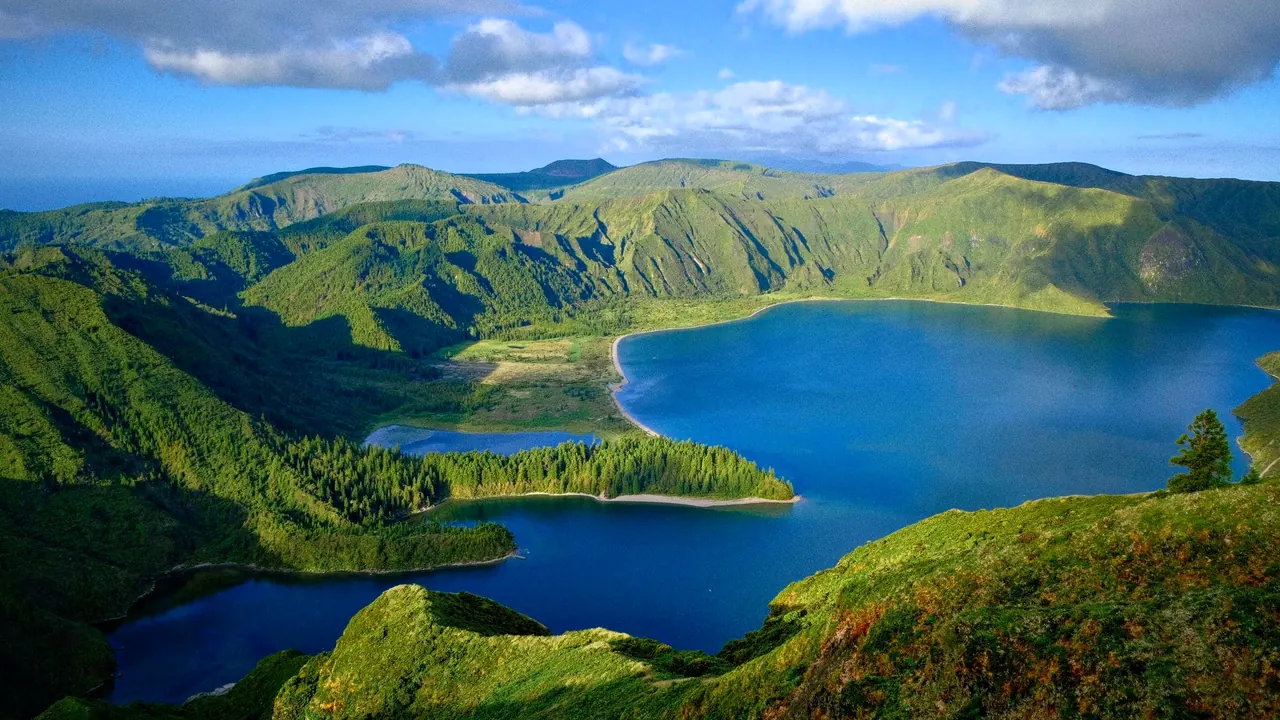
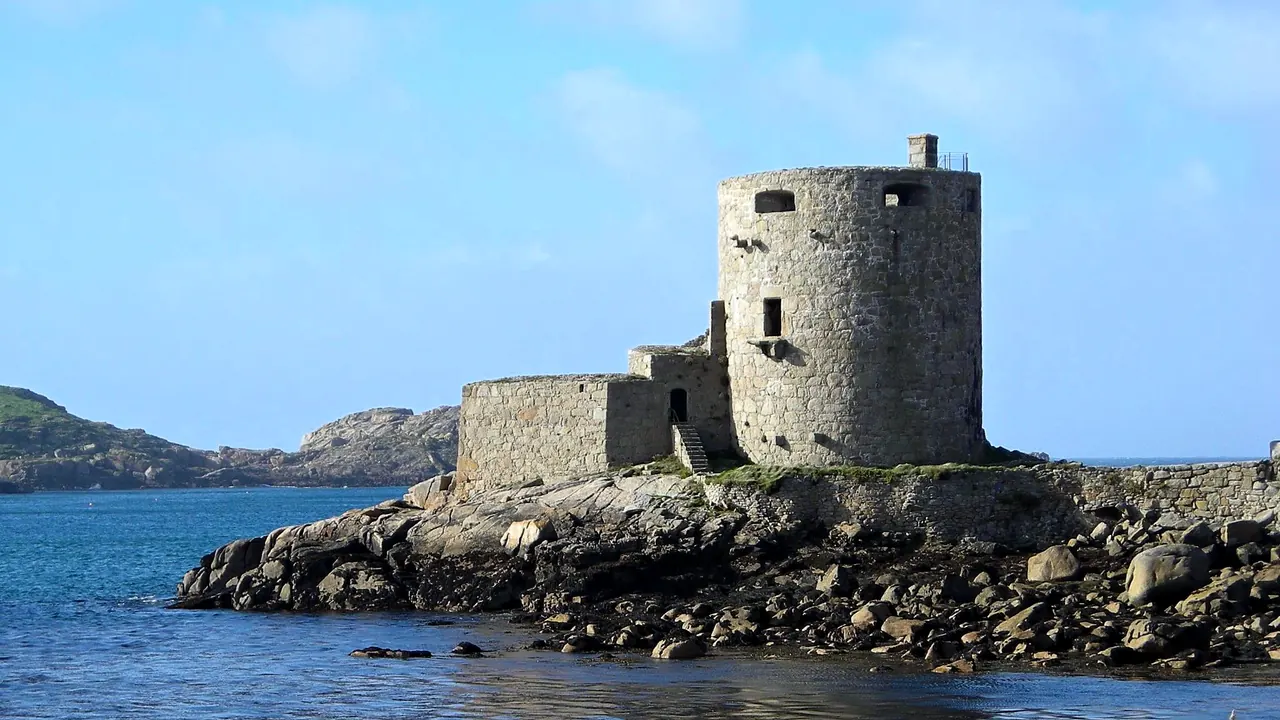
Photos: Azores by Leonardo Barucci, Pexels License; Isles of Scilly by Mark Percy, CC BY-SA 2.0, cropped.
Azores or Isles of Scilly?
Our verdict in twelve categories, each scored against the same fixed benchmark cities, and the climate month by month, so you can choose for your trip.
Choose Azores for
- prices
- wellness
- nature and the outdoors
The Azores suit travellers who want landscape on a grand scale: crater lakes, a volcano to climb, whales offshore and hot springs to soak in at the end of the day. The food is heartier and more varied, daily costs are lower, and the summer sea is far warmer. In return you need a hire car, flights or ferries between islands, and patience with beaches that are mostly black sand and rock pools.
Choose Isles of Scilly for
- getting around
- beaches
- families
For a gentler, more compact trip, the Isles of Scilly are the better pick. Pale-sand bays with clear water, no cars and a different island each day by launch make it easy for families with roaming children, and for anyone happy with short walks, seals, puffins and a pint on the quay. You accept a brisk sea, a thin choice of places to eat and a noticeably bigger bill.
Scoreboard
Twelve categories on one fixed scale from 0 to 100. The shaded stretch is the gap between the two.
Your match
Pick a travel style or drag the sliders, and both match scores follow your weighting.
Wins on prices and wellness with your weighting.
Wins on getting around and beaches with your weighting.
What matters to you?
Category by category
What the scores mean for a trip.
Beaches & swimming
Scilly has the better beaches to look at and lie on: pale shell sand at Par Beach on St Martin's, Pentle Bay on Tresco and Rushy Bay on Bryher, gently shelving, see-through water and rarely a crowd. Swimming in the Azores mostly means black volcanic sand, lava rock pools and concrete-edged sea pools at Caloura and Biscoitos, with pale sand only on Santa Maria.
The water tells a different story. The Azorean sea warms to about 23°C by late summer, while Scilly's barely reaches 17°C, so swims there are short and a wetsuit helps. For the beach itself Scilly wins. The Azores only come out ahead if longer swims matter more to you than the setting.
Food & drink
The Azores give you much more to eat. Cozido slow-cooked in the hot ground at Furnas, Terceira's alcatra braised in clay pots, aged São Jorge cheese, mineral Pico whites and tea from some of Europe's oldest plantations add up to a real regional cuisine. Ponta Delgada and Angra also have a decent choice of restaurants.
Scilly eats well but simply, with local crab and lobster, island beef, eggs from honesty stalls and a crab sandwich above a beach. Most restaurants are in Hugh Town, the off-islands have a pub and a café or two, and many visitors end up cooking for themselves.
Culture & sights
The Azores have more to see, led by Angra do Heroísmo, a World Heritage port town with a 16th-century street grid, a cathedral and the Monte Brasil fortress. Add Pico's stone-walled vineyards, Terceira's painted impérios and Ponta Delgada's basalt churches, though reaching them means flying between islands.
Scilly's history is smaller but packed close together. On St Mary's you have the Garrison walls around Star Castle and Bronze Age graves, on Tresco the Abbey Garden with its shipwreck figureheads, and lighthouses throughout. It is all reachable by launch and seen in two or three days.
Nightlife
Neither is a place to go out, but the Azores have a little more life after dark. Ponta Delgada has a small cluster of bars by the marina, ocean sailors fill Horta's flag-covered harbour bars, and summer festas like Angra's Sanjoaninas keep streets busy late. In Scilly the evening is a pub in Hugh Town or on an off-island, gig racing in the harbour, and the last boat home.
Nature & outdoors
This is where the Azores pull far ahead. They are volcanic and dramatic: crater lakes at Sete Cidades and Lagoa do Fogo, steaming fumaroles at Furnas, a 2,351m cone on Pico and waterfalls on Flores. Sperm whales live offshore all year, and divers come to Santa Maria for manta rays.
Scilly is low granite heath and rocky islets, and every coastal path can be walked in a few hours. Its strength is wildlife at close range: grey seals on the Western Rocks, puffins on Annet in early summer and rare migrant birds every October.
Day trips
On day trips the two are about level, but the outings are very different. Scilly's launches make island-hopping the daily routine, with manicured Tresco, wild Bryher and remote St Agnes each an easy return trip from St Mary's. In the Azores, outings mostly mean driving to landscapes and small towns such as Ribeira Grande. Island-hopping by day only works in the central group, from Horta across to Pico or São Jorge.
Good for families
Scilly is the easier place for children. With almost no traffic, tiny villages and calm, gently shelving bays, children can roam, crab off quays and picnic on a different island each day. Its weaknesses are a cold sea and very little to do when it rains.
The Azores give children bigger moments, such as whale boats, warm pools at Furnas and lunch lifted out of the ground, plus a science centre at Lagoa and a small aquarium in Horta. Winding drives, rock pools and Atlantic swell make the days harder work for parents, though.
Getting around
Once you arrive, Scilly is simpler. Nobody brings a car, the off-islands can be walked end to end in an hour or two, and launches link them in season. Getting there is the hard part, by a long ferry from Penzance or fog-prone flights.
In the Azores a hire car is close to essential, since buses run too rarely to rely on. Moving between islands means flights, or ferries within the central group, and Atlantic weather can cancel either, so plan some slack.
Shopping & style
Neither is a shopping destination, and both mainly sell things to take home. The Azores offer edible souvenirs, such as São Jorge cheese, north-coast tea and Pico wine, plus whaling scrimshaw and a produce market hall in Ponta Delgada. Scilly leans to art and craft, with off-island galleries, island gin and scented narcissi posted home from the flower farms.
Affordability
The Azores are much easier on the budget. Village restaurants serve big plates cheaply, local wine and cheese cost little, and the craters and trails are free. The costs come from the hire car, whale trips and inter-island flights, especially in July and August.
Scilly is expensive from the moment you leave the mainland. Beds are few, hotels charge a premium, Tresco most of all, and food costs more because it arrives by sea. Each boat to another island adds to the bill. Campsites and self-catering cottages are the only real savings.
Live music & performing arts
Live performance is thin in both, but the Azores have a tradition to hear. Parish filarmónica bands play at processions and festas, folk dances like the chamarrita turn up at village celebrations, and Angra has an autumn jazz festival and a historic theatre. Scilly has no venue at all, only the odd folk session in a pub or a concert in a church hall.
Wellness & relaxation
The Azores have a genuine bathing culture that Scilly lacks. You can soak in the iron-orange thermal pool at Terra Nostra in Furnas, the warm waterfall at Caldeira Velha or the hot springs pouring into the ocean at Ponta da Ferraria, even in the rain.
Scilly's restfulness comes only from its pace: no traffic, days set by the tides and evenings watching the light over the outer rocks. A few hotel spas on Tresco and St Mary's are all there is for treatments.
When should you go?
Pick your month. The climate figures are measured averages, not a forecast.
Azores in July
Isles of Scilly in July
Daytime high, °C
Rainfall in the month, mm
Where the figures come from
Isles of Scilly has no rain gauge within 25 km of the centre, so its rainfall comes from a gridded climate dataset read at the destination rather than from a gauge further away.
Isles of Scilly's sunshine is measured 78 km from the centre, at Camborne.
Temperature and rainfall are climate normals, averaged over the years shown. Azores: 1991-2020 normals, Ponta Delgada / Nordela Acores (2.3 km from centre). Isles of Scilly: 1991-2020 normals, Scilly, Saint Mary'S (0.7 km from centre).
The Azores are mild all year, so walking is never ruled out by cold or heat. The warm stretch runs from June to September, peaking around 26°C in August, and the sea reaches 23°C in August and September. Summer is also the driest part of the year, with July the driest month of all. From October the rain builds steadily to a December high of 170mm. Winter days stay mild but grey and showery, and spring is green but too cool for long swims.
Scilly is noticeably cooler in every month. July and August reach only about 19°C and the sea about 17°C, so beach days are for the hardy. May and June are the driest and sunniest months, the best time for coastal walks and seabirds. From November to March the islands are cool, wet and short of sunshine, so the Azores are the milder choice for a winter or spring trip.
Which traveller are you?
On an outdoors trip, choose the Azores. Base yourself on São Miguel for marked trails, canyoning and crater-lake kayaking, then add Pico if you want a serious summit day. Scilly's walks are lovely, but each island is done in an afternoon.
For a family trip with children, Scilly is the better pick, especially with younger ones who want freedom more than thrills. A self-catering cottage, buckets and spades and a launch each morning make an easy week. In the Azores, children spend more of each day in the car.
On a tight budget, go to the Azores. Come in spring or early autumn, stay in a rural guesthouse outside Ponta Delgada and spend your days walking. In Scilly, even campers still pay for the crossing and every boat fare.
Before you go
| Measure | Azores | Isles of Scilly |
|---|---|---|
| Official language | Portuguese | English |
| Currency | Euro (EUR) | Pound Sterling (GBP) |
| Sockets | CF230 V, 50 Hz | G230 V, 50 Hz |
| Driving side | Right | Left |
| Time zone | UTC-1, UTC in summer | UTC, UTC+1 in summer |
| Emergency number | 112 | 112 or 999 |
| Main airport | João Paulo II Airport (PDL)25 non-stop destinations | St. Mary's Airport (ISC)2 non-stop destinations |
| Public holidays this year | 15 days | 8 days |
By the numbers
| Measure | Azores | Isles of Scilly |
|---|---|---|
| Population | 236,440 | 2,281 |
| People per km² | 102 | 140 |
| Swim season, months above 21 °C | 4 months | None |
Where else could you go?
Every comparison below shares a destination with this one, so you can follow Azores or Isles of Scilly somewhere new.
- Cornwallvs Isles of Scilly
- Devonvs Isles of Scilly
- Pembrokeshirevs Isles of Scilly
- Jurassic Coastvs Isles of Scilly
- Brittanyvs Isles of Scilly
- Isle of Wightvs Isles of Scilly