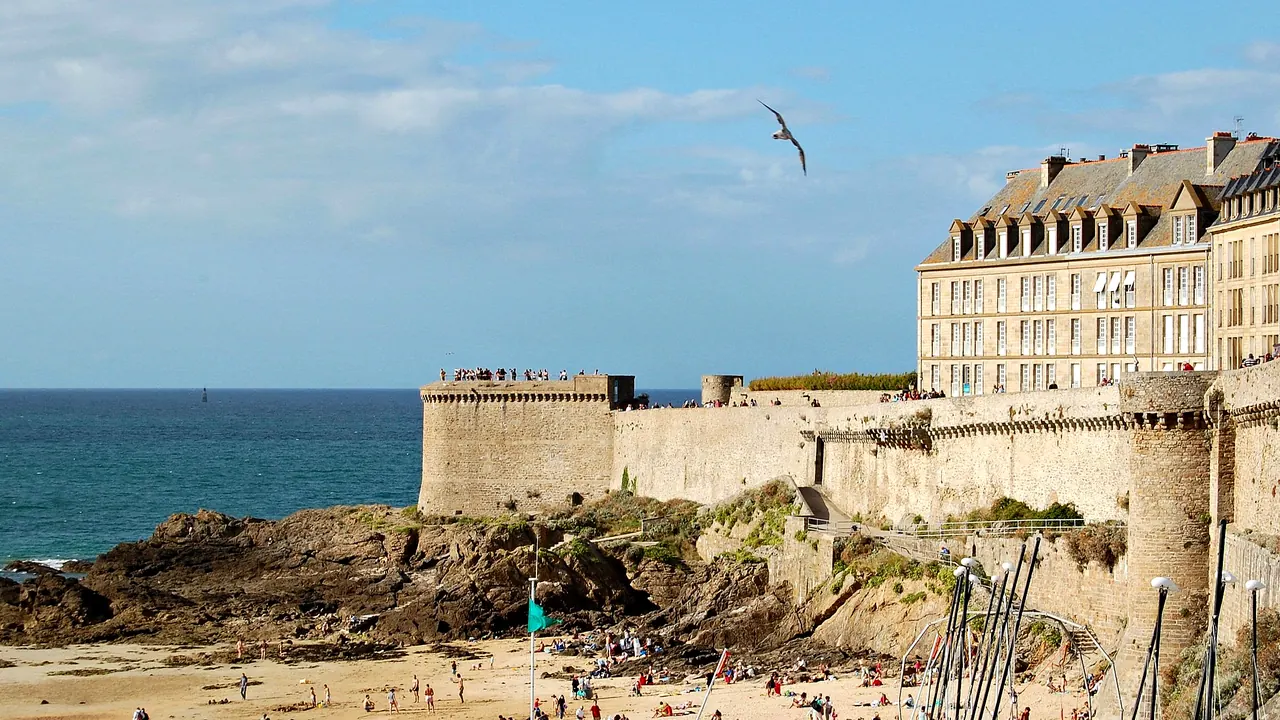
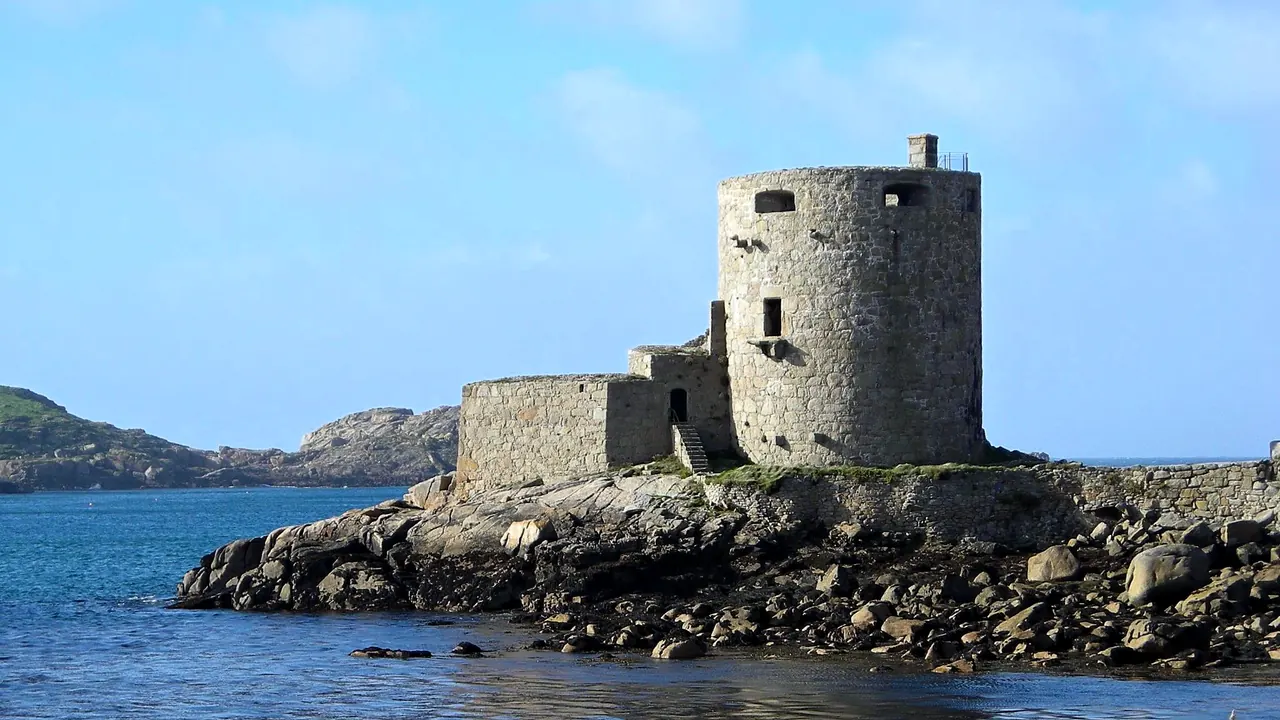
Photos: Brittany by Pline, CC BY-SA 3.0, cropped; Isles of Scilly by Mark Percy, CC BY-SA 2.0, cropped.
Brittany or Isles of Scilly?
Our verdict in twelve categories, each scored against the same fixed benchmark cities, and the climate month by month, so you can choose for your trip.
Choose Brittany for
- live music and the arts
- day trips
- food and drink
Brittany suits a touring vacation built around a car and one or two well-placed bases. Within a short drive you have the menhirs of Carnac, the walls of Saint-Malo, oyster beds at Cancale, sandy family bays, summer Celtic festivals and seafront thalassotherapy. The season is a little warmer and longer, and the costs are kinder.
Choose Isles of Scilly for
Isles of Scilly does not lead in any category we score.
The Isles of Scilly are for travellers who deliberately want less. A week here means taking the launch to a different small island each day, swimming in clear water off white shell-sand coves, watching seals and puffins, and spending quiet evenings in a pub on the quay. You pay more for it, eat simply and have very little to fall back on when the Atlantic weather closes in.
Scoreboard
Twelve categories on one fixed scale from 0 to 100. The shaded stretch is the gap between the two.
Your match
Pick a travel style or drag the sliders, and both match scores follow your weighting.
Wins on live music and the arts and day trips with your weighting.
Has no clear advantage with the weighting you have chosen.
What matters to you?
Category by category
What the scores mean for a trip.
Beaches & swimming
Brittany has much more beach and much more variety. You can choose between the wide sandy bays of Carnac, Quiberon and Bénodet, the pink granite coves of Ploumanac'h, the long strands of Crozon and the tidal resorts of Saint-Malo and Dinard. These are proper seaside towns with sailing schools on the sand, and the south-facing bays and the Gulf of Morbihan are slightly warmer to swim in.
Scilly's beaches are fewer and smaller but often lovelier: pale shell sand and turquoise water at Par Beach on St Martin's or Rushy Bay on Bryher, and almost nobody else there even in August. The water is a touch colder, though, so most people swim briefly or in a wetsuit.
Food & drink
Food is one of Brittany's main reasons to visit. You can eat Cancale oysters and Saint-Brieuc scallops in the harbour towns, buckwheat galettes with bowls of cider in any crêperie, and salted butter in everything from kouign-amann to caramel. Rennes and its Place des Lices market add depth.
Scilly eats well but simply. Local crab and lobster, island beef and farm ice cream are the highlights, and roadside honesty stalls are part of the charm. Most of the restaurants are in Hugh Town, though, the off-islands have a pub and a café or two, and many visitors end up cooking for themselves.
Culture & sights
Both have prehistory, but on very different scales. Brittany has the thousands of menhirs at Carnac and the dolmens of the Gulf of Morbihan, plus a whole spread of historic towns: corsair Saint-Malo, half-timbered Dinan and Vannes, the castles of Fougères and Josselin, and the parish closes of Finistère. You could tour for weeks.
On Scilly, the Bronze Age graves at Innisidgen, the Garrison walls around Star Castle and Tresco Abbey Garden with its shipwreck figureheads are absorbing. Still, two or three days cover all of it.
Nightlife
Neither is a party destination, but Brittany at least has a real night out in Rennes. Student bars line Rue Saint-Michel and a few clubs stay open late, the summer resorts stay busy into the evening, and a village fest-noz adds traditional dancing.
On Scilly, a night out means a pint on the quay after watching the pilot gig crews race. There are no clubs, and on the off-islands the last boat home sets the hour.
Nature & outdoors
Brittany has the bigger and more varied outdoors. The GR34 path follows almost the whole coast, past the cliffs of Cap Fréhel and the headlands of Pointe du Raz. There is surf in Finistère, kayaking among the islands of the Gulf of Morbihan, gannets at Sept-Îles, and moors and canal towpaths inland.
Scilly's nature is compact and close at hand. You can walk round each island in a few hours, Hell Bay on Bryher is wild, and boats take you out to grey seals and puffin islets. In October, rare migrant birds bring birdwatchers to the islands. It is wonderful wildlife on a small stage.
Day trips
Brittany gives you a long list of outings wherever you stay. From Saint-Malo, Mont-Saint-Michel is about an hour away, and Dinan and Cancale are closer still. Ferries cross to Belle-Île from Quiberon, and boats leave Vannes for the islands of the Gulf of Morbihan.
On the north coast, flower-covered Bréhat is a short crossing away, and in the west Quimper, Locronan and Concarneau make an easy loop. On Scilly, the only day trip is to another island. Each has its own character, from neat Tresco to remote St Agnes, but none has a town, and the mainland is too far for an easy day out.
Good for families
Brittany is built for family seaside vacations: sailing and kayak schools, crêpes, campsites and gîtes, short distances between sights, and Océanopolis or the Saint-Malo aquarium when it rains. The strong tides need watching.
Scilly offers something different: children can roam traffic-free islands, go crabbing from the quays and take a boat to see the seals. With no attractions at all, though, a run of wet days can drag.
Getting around
These are two quite different kinds of travel, with Brittany slightly easier overall. Fast trains reach Rennes from Paris and carry on to Saint-Malo and Quimper, but the coast and the megalith sites really need a car, and the summer roads get congested.
Scilly is the reverse. You need no car at all and can walk or cycle each island, but you depend on boats for everything. Crossings change with the tides and stop in rough weather, and getting there by ferry from Penzance or by fog-prone flights is the hardest part of the trip.
Shopping & style
Brittany is the better choice for bringing things home. Quimper faience, striped sailor tops, Guérande salt and salted caramels fill the old towns, the Place des Lices market is a real event, and Rennes has the high-street shops.
Scilly has a few gift shops in Hugh Town and craft studios on the off-islands. The most memorable purchase is a box of scented narcissi posted home from the flower farms.
Affordability
Brittany is moderately priced for France and has plenty of ways to keep costs down: campsites, gîtes, inland villages, crêperies, markets, and June or September instead of high summer. Seafood platters are where you spend more.
Scilly is costly from the start. You pay for the plane or ferry out, beds are scarce, food is shipped in, and every day on another island adds a boat fare. Tresco is the most expensive island, while the campsites and cottages are how you keep the total down.
Live music & performing arts
Brittany has a real music culture rooted in its Celtic tradition. In summer there are the Festival Interceltique in Lorient, Les Vieilles Charrues at Carhaix and the Festival de Cornouaille in Quimper, and bagad pipe bands play in the villages. Rennes keeps an opera house and a national theatre running all year.
Scilly has no venues at all. Live music means an occasional folk session in a pub or a small concert in a church.
Wellness & relaxation
Brittany helped invent thalassotherapy, which began at Roscoff, and its seawater spas at Quiberon, Carnac, Dinard and Perros-Guirec can be the focus of a whole stay, best outside the summer peak.
Scilly cannot offer that, with only a few hotel spas, mostly on Tresco and St Mary's. Its restfulness comes from having no traffic, no crowds and days set by the tide, which is the deeper kind of quiet if switching off matters more than treatments.
When should you go?
Pick your month. The climate figures are measured averages, not a forecast.
Brittany in July
Isles of Scilly in July
Daytime high, °C
Rainfall in the month, mm
Where the figures come from
Brittany has no rain gauge within 25 km of the centre, so its rainfall comes from a gridded climate dataset read at the destination rather than from a gauge further away.
Brittany's sunshine is measured 89 km from the centre, at Rennes.
Isles of Scilly has no rain gauge within 25 km of the centre, so its rainfall comes from a gridded climate dataset read at the destination rather than from a gauge further away.
Isles of Scilly's sunshine is measured 78 km from the centre, at Camborne.
Temperature and rainfall are climate normals, averaged over the years shown. Brittany: 2004-2020 (sunshine 1991-2020, rainfall 1991-2020) normals, Vannes-Meucon (8.1 km from centre). Isles of Scilly: 1991-2020 normals, Scilly, Saint Mary'S (0.7 km from centre).
Both have mild Atlantic climates, but Brittany warms up more. Around its main resort coast, summer days reach about 24°C in July, while on Scilly they stop at about 19°C, which is pleasant for walking but rarely hot. The sea is cool in both and best in August, at about 18°C off Brittany and 17°C around Scilly, so July to early September is the swimming window in each. Brittany also gets noticeably more sunshine through high summer.
Late spring is a strong time in both places, dry and bright, and on Scilly May is as sunny as any month. From October the rain builds steadily, peaking in Brittany at around 121mm in November, and Scilly stays just as wet into December. Winter is never cold, only grey and damp, and on Scilly that is also when boat services thin out.
Which traveller are you?
On a food and nightlife trip, Brittany is the clear choice. Base yourself in Rennes for the widest choice of restaurants and bars that stay open late, or in a port like Saint-Malo for shellfish suppers. Scilly's menus thin out outside high summer, and evenings end early.
For a trip on a tight budget, Brittany is the realistic choice. You can reach the coast by train from Paris, and most of the best days cost little: walking the GR34, beach afternoons and picnics bought at the weekly markets. On Scilly, staying on one island rather than hopping saves money.
On a family trip with children, Brittany suits families who want variety, especially with older children who can try surfing in Finistère or a day at Mont-Saint-Michel. Scilly is better for younger children who are happy with gently shelving beaches, sandbars at low tide and a picnic on a different island each day.
Before you go
| Measure | Brittany | Isles of Scilly |
|---|---|---|
| Official language | French | English |
| Currency | Euro (EUR) | Pound Sterling (GBP) |
| Sockets | CE230 V, 50 Hz | G230 V, 50 Hz |
| Driving side | Right | Left |
| Time zone | UTC+1, UTC+2 in summer | UTC, UTC+1 in summer |
| Emergency number | 112 | 112 or 999 |
| Main airport | Nantes Atlantique Airport (NTE)97 non-stop destinations | St. Mary's Airport (ISC)2 non-stop destinations |
| Public holidays this year | 11 days | 8 days |
By the numbers
| Measure | Brittany | Isles of Scilly |
|---|---|---|
| Population | 4,687,381 | 2,281 |
| People per km² | - | 140 |
| Swim season, months above 21 °C | None | None |
Where else could you go?
Every comparison below shares a destination with this one, so you can follow Brittany or Isles of Scilly somewhere new.
- Cornwallvs Isles of Scilly
- Devonvs Isles of Scilly
- Pembrokeshirevs Isles of Scilly
- Normandyvs Brittany
- Jurassic Coastvs Isles of Scilly
- Loire Valleyvs Brittany