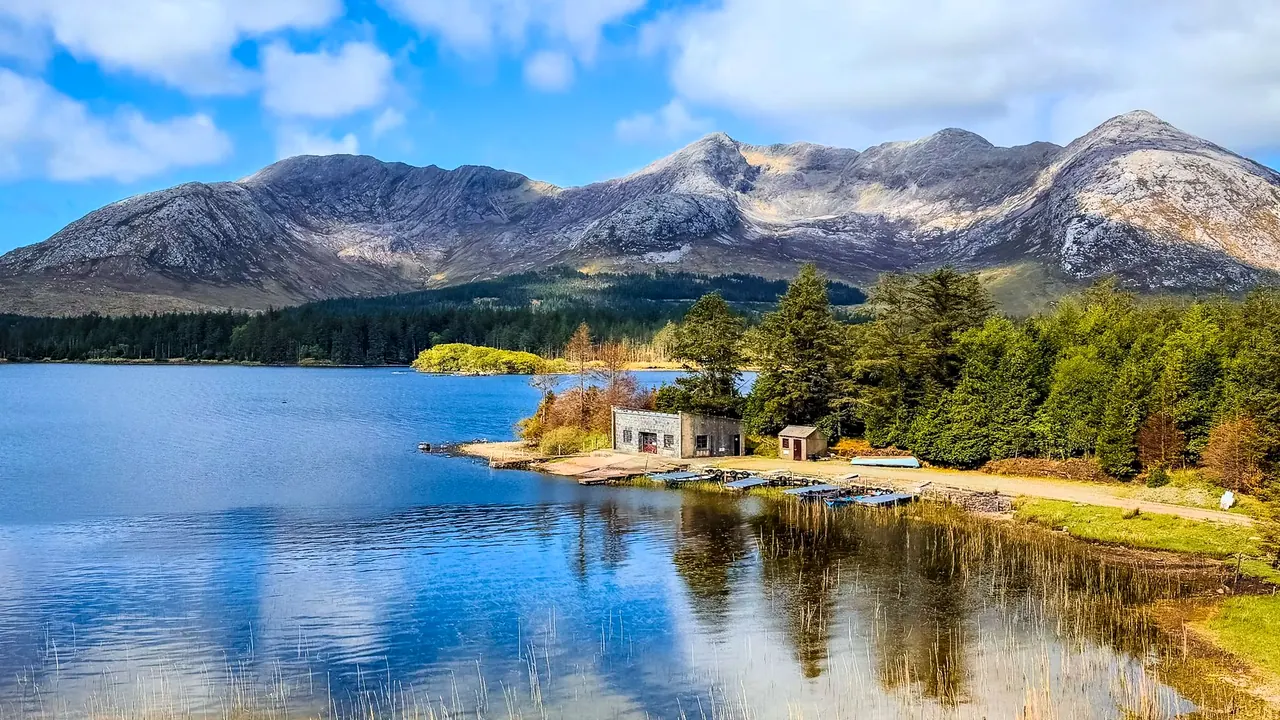
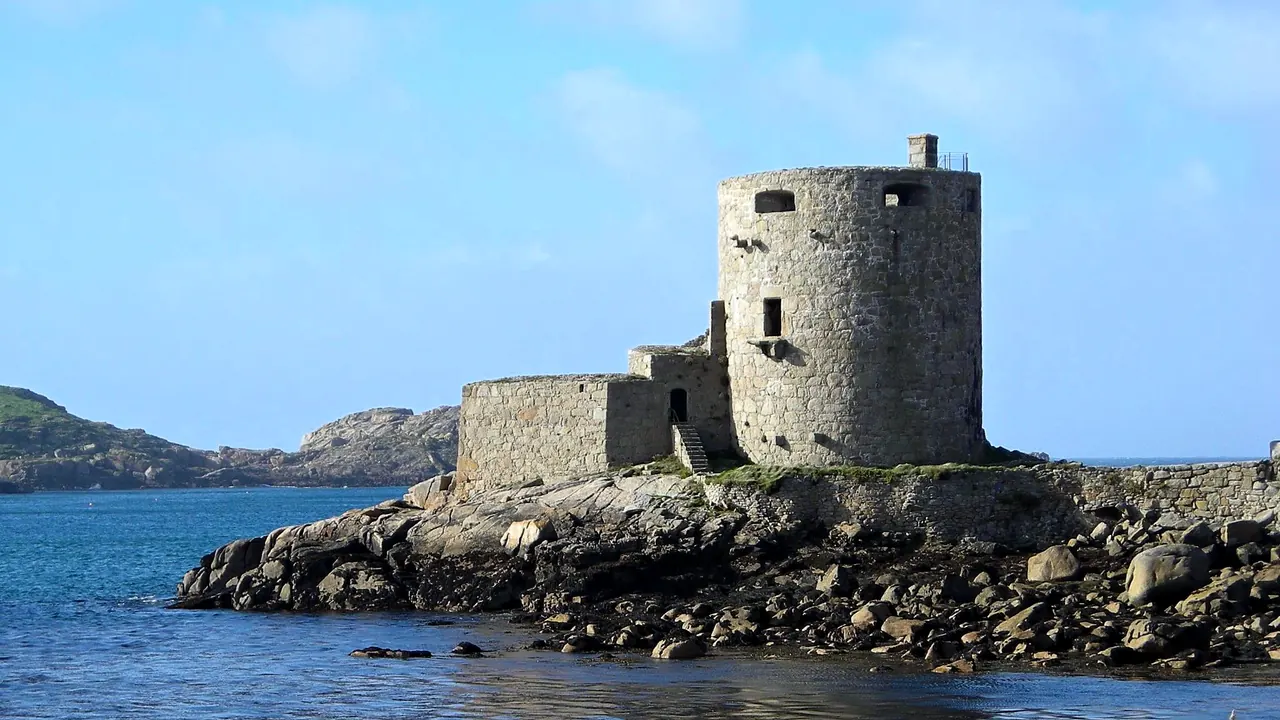
Photos: Connemara by Michael Deligan, CC BY-SA 4.0, cropped; Isles of Scilly by Mark Percy, CC BY-SA 2.0, cropped.
Connemara or Isles of Scilly?
Our verdict in twelve categories, each scored against the same fixed benchmark cities, and the climate month by month, so you can choose for your trip.
Choose Connemara for
- day trips
- live music and the arts
- nature and the outdoors
Connemara is for travellers who want mountains and a car. The Twelve Bens, the Maumturks and the fjord at Killary give real hillwalking, and the evenings bring trad sessions in Clifden's pubs. Galway city, the Aran Islands and Westport are all within a day's reach. It suits walkers, drivers and anyone curious about Irish-speaking country, as long as they accept rain in every season.
Choose Isles of Scilly for
- getting around
- beaches
- families
The Isles of Scilly suit a slower, car-free kind of trip. Your days are set by boats and tides, the beaches are calm and sheltered, and there are seals and seabirds on the outer rocks. Families with young children and couples who want quiet get the most from it. The price is the cost of getting there and the cost of staying, and evenings that end early.
Scoreboard
Twelve categories on one fixed scale from 0 to 100. The shaded stretch is the gap between the two.
Your match
Pick a travel style or drag the sliders, and both match scores follow your weighting.
Wins on day trips and live music and the arts with your weighting.
Wins on getting around and beaches with your weighting.
What matters to you?
Category by category
What the scores mean for a trip.
Beaches & swimming
Both have pale shell sand, clear water and an Atlantic chill, but Scilly makes the better beach base. Bays such as Par Beach on St Martin's, Pentle Bay on Tresco and Rushy Bay on Bryher are sheltered and shallow, so the sun warms them. The sea is also a little warmer in late summer, which means a beach day on Scilly is often the plan rather than a lucky break.
Connemara's strands look just as good, from the twin crescents of Dog's Bay and Gurteen to the crunchy maerl of the Coral Strand. They are more exposed to the weather, though, and they work best as a stop on a drive rather than a whole day.
Food & drink
The two are much alike: simple cooking built around local seafood, with little choice outside the main town. In Connemara you eat at a table. Killary mussels, hill lamb and oysters come in Clifden's few serious kitchens, country house dining rooms and pubs, and Galway city is close enough for a night of variety.
Scilly is more about the picnic and the self-catered kitchen. A crab sandwich above a beach is the classic lunch, and honesty stalls sell eggs and vegetables. Hugh Town has most of the restaurants, and there is no larger city within easy reach.
Culture & sights
Neither has major museums, and they offer heritage of different kinds. Connemara's highlights are spread out and you need a car to see them: Kylemore Abbey, the Marconi and Alcock and Brown sites on Derrigimlagh bog, and Pearse's Cottage. Its strongest culture is the Irish language still spoken across the south of the region.
Scilly's heritage is tightly packed. There are the Garrison walls and Star Castle above Hugh Town, Bronze Age graves, and the Valhalla figureheads in Tresco Abbey Garden, all connected by the story of shipwrecks. Two or three days cover it on foot.
Nightlife
Connemara has the livelier evenings. Clifden's main street of pubs fills up in summer, every village has a bar, and Galway city is close enough for a proper night out.
On Scilly, evenings mean a pint on the quay after watching the gig racing, and not much happens after closing time. Anyone staying on an off-island also has to catch the last boat home.
Nature & outdoors
Connemara has the grander landscape. Quartzite peaks rise from bog and lake, Killary Harbour cuts in like a fjord, and the hillwalking ranges from the easy Diamond Hill loop to pathless ridge days. The Sky Road and Roundstone add a coast full of inlets.
Scilly is low granite heath, and any of its coastal circuits can be walked in a few hours. Its strength is wildlife: grey seals at the Western Rocks, puffins on Annet in early summer and rare migrant birds in October.
Day trips
Connemara is a far better base for exploring further afield. Galway city is about an hour away, ferries cross to Inis Mór and Dún Aonghasa, and Inishbofin, Westport and the abbey at Cong are all within reach.
On Scilly, a day out means taking a launch to Tresco, Bryher, St Martin's or St Agnes, each with a different character. The Cornish mainland is too far away for an easy return trip in a day.
Good for families
Connemara suits outdoorsy families with a car, where children can ride Connemara ponies, scramble over rock pools, paddle near Roundstone and Renvyle and use the short trails and play area at the national park in Letterfrack. Much of it means time in the back seat on slow roads, though, and when the rain sets in for days, Galway city is the nearest place to escape to.\n\nScilly is the easier of the two with children.
Visitors leave their cars behind, so older children can be given a long leash, and a launch out to the seals turns an ordinary day into an outing. Neither has a zoo, a play centre or anything else built for children, and Scilly has no city to fall back on when the Atlantic weather closes in, so wet days take some planning and toddlers need watching on the boats.
Getting around
Once you arrive, Scilly is much simpler. Nobody brings a car, the off-islands can be walked end to end, and launches run between them several times a day in summer. Getting there is the hard part: a long ferry crossing from Penzance, or short flights that fog often delays.
Connemara is easy to reach by coach from Galway to Clifden. After that you really need a car, and its narrow, single-track roads make every journey slower than the map suggests.
Shopping & style
Neither is a place for shopping, and the souvenirs differ in kind. Connemara's are traditional crafts sold mostly in Clifden: green marble, hand-knitted sweaters and tweed. Galway city is there for anything more.
Scilly's are mostly made by island artists and growers, sold in small galleries and studios: paintings, pottery, island gin and boxes of scented narcissi posted home in winter.
Affordability
Neither is cheap, but Connemara costs noticeably less. Summer rooms and the hire car push the bill up, but family-run B&Bs, cottages and pub meals help, and the walking and national park are free.
Scilly costs more at every step. You pay for the journey out by sea or air, for food and drink shipped in, and for a boat fare every time you visit another island, and Tresco is the dearest of all. Campsites and self-catering are the main ways to save.
Live music & performing arts
Connemara has far more live music. In summer, trad sessions with fiddle and bodhrán fill Clifden's pubs most nights, the Irish-speaking south keeps sean-nós singing and set dancing alive, and the Clifden Arts Festival brings concerts and readings every September.
On Scilly, live music is occasional: a folk night in a pub or a concert in a church hall. Evenings are planned around the sunset, not a programme.
Wellness & relaxation
The two are level here. Both are places to switch off rather than to book a spa break, and each has only a few hotel spas. In Connemara, rest means a country house hotel by a lake, long summer evenings and a cold dip on the strand followed by a hot drink.
On Scilly, the quiet is more complete, with no traffic at all and days paced by tides and boat times. Most of the spa treatments are on Tresco and St Mary's.
When should you go?
Pick your month. The climate figures are measured averages, not a forecast.
Connemara in July
Isles of Scilly in July
Daytime high, °C
Rainfall in the month, mm
Where the figures come from
Connemara's temperatures are measured 83 km from the centre, at Belmullet.
Connemara has no rain gauge within 25 km of the centre, so its rainfall comes from a gridded climate dataset read at the destination rather than from a gauge further away.
Connemara's sunshine is measured 70 km from the centre, at Galway.
Isles of Scilly has no rain gauge within 25 km of the centre, so its rainfall comes from a gridded climate dataset read at the destination rather than from a gauge further away.
Isles of Scilly's sunshine is measured 78 km from the centre, at Camborne.
Temperature and rainfall are climate normals, averaged over the years shown. Connemara: 1991-2020 (sunshine 1981-2010) normals, Belmullet (82.8 km from centre). Isles of Scilly: 1991-2020 normals, Scilly, Saint Mary'S (0.7 km from centre).
The two have very similar temperatures, with summer highs of about 18°C in Connemara and 19°C on Scilly, but the rain falls differently. Connemara is driest and clearest in April and May. Rain then builds through the summer to around 110mm in August and keeps rising into a long, wet winter, so late spring is the best time for the hills. Scilly is at its driest in early summer, with about 54mm in June, and it gets noticeably more sunshine from April to September.
On both, the sea only gets comfortable for brisk swims in July and August. Scilly's water reaches about 17°C in late August, slightly warmer than Connemara's, which makes June to September its natural beach season. Winters are mild on both, never too cold for walking, but wet and windy. Scilly stays a degree or so warmer.
Which traveller are you?
On an outdoors trip, Connemara is the stronger choice. The Twelve Bens and the Glencoaghan horseshoe offer serious mountain days, and there are bog roads for cycling and inlets for kayaking. Scilly's walks are short coastal loops, and its real draw is wildlife watching: seals, puffins and migrant birds.
On a family trip with young children, the Isles of Scilly work better. With almost no traffic, children can roam freely, and the bays shelve gently into calm water. Crabbing from the quays and a boat to a different island each day fill a week without needing a car.
On a tight budget, neither is cheap, but Connemara is easier to manage. B&Bs, cottages and pub food keep the costs down, and the walking is free. On Scilly, the journey out and a boat fare for every island day add up before you have eaten anything.
Before you go
| Measure | Connemara | Isles of Scilly |
|---|---|---|
| Official language | English, Irish | English |
| Currency | Euro (EUR) | Pound Sterling (GBP) |
| Sockets | G230 V, 50 Hz | G230 V, 50 Hz |
| Driving side | Left | Left |
| Time zone | UTC, UTC+1 in summer | UTC, UTC+1 in summer |
| Emergency number | 112 | 112 or 999 |
| Main airport | Ireland West Airport Knock (NOC)18 non-stop destinations | St. Mary's Airport (ISC)2 non-stop destinations |
| Public holidays this year | 11 days | 8 days |
By the numbers
| Measure | Connemara | Isles of Scilly |
|---|---|---|
| Population | - | 2,281 |
| People per km² | - | 140 |
| Swim season, months above 21 °C | None | None |
Where else could you go?
Every comparison below shares a destination with this one, so you can follow Connemara or Isles of Scilly somewhere new.
- Cornwallvs Isles of Scilly
- County Kerryvs Connemara
- Devonvs Isles of Scilly
- Pembrokeshirevs Isles of Scilly
- Jurassic Coastvs Isles of Scilly
- County Kerryvs Isles of Scilly