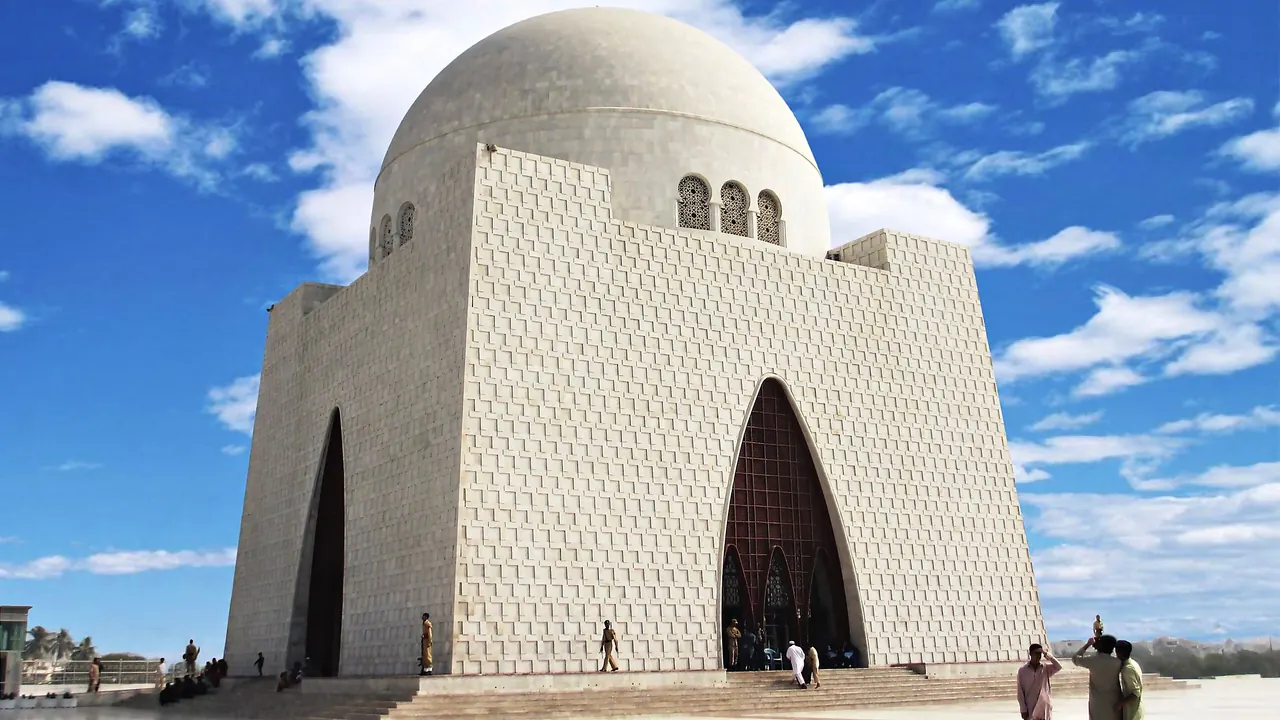
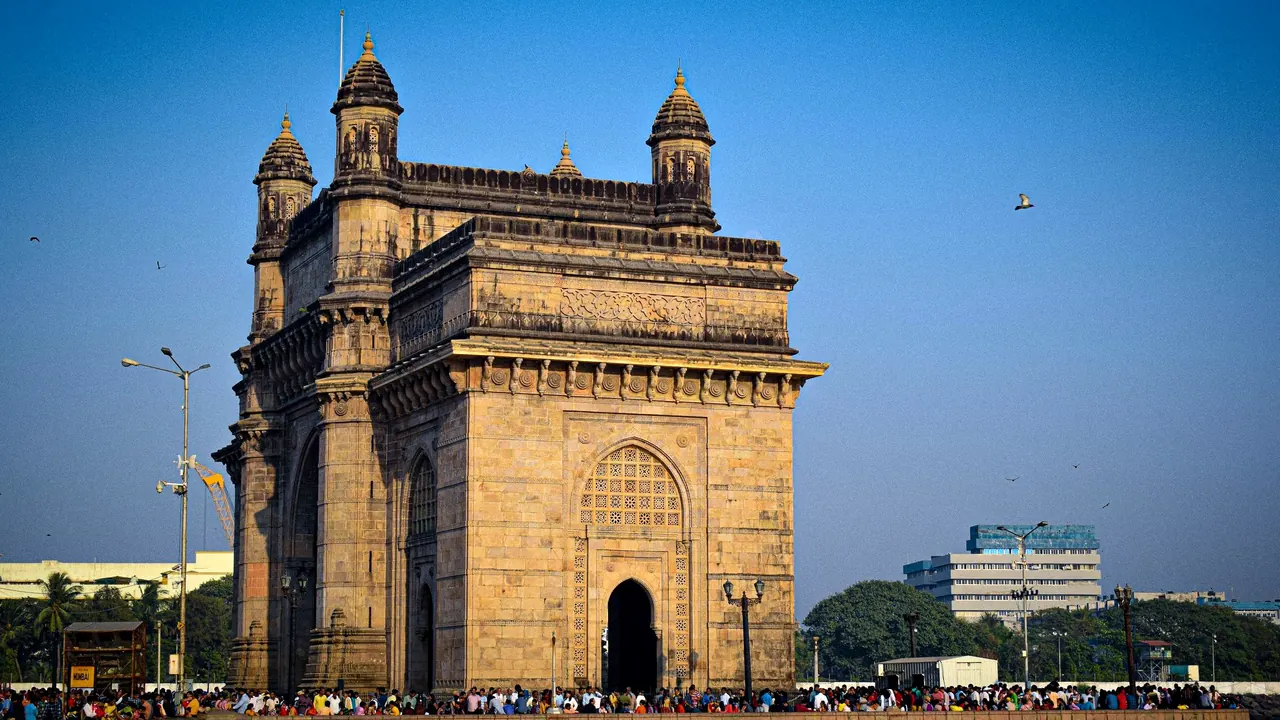
Photos: Karachi by M.irfan44, CC BY-SA 4.0, cropped; Mumbai by Shubam Bhasin, Pexels License.
Karachi or Mumbai?
Our verdict in twelve categories, each scored against the same fixed benchmark cities, and the climate month by month, so you can choose for your trip.
Choose Karachi for
- beaches
- prices
Karachi suits a traveller who comes mainly to eat, spends little and does not need a drink at the end of the day. Its late-night grills, nihari kitchens and seafood at Do Darya are the heart of a visit, the cost of almost everything is very low, and the coast west of the city at Hawke's Bay and Sandspit offers warm water within an hour's drive. Add the tomb fields of Makli and a family visit, and it makes a satisfying, if narrow, trip.
Choose Mumbai for
- nightlife
- culture and sights
- live music and the arts
Mumbai gives a first-time visitor to the region far more to fill the days. The Gothic and Art Deco streetscape around the Oval Maidan, serious museums, a working arts centre, cocktail bars in Bandra and Lower Parel, and leopard country inside the city limits make it the better all-round city break. It costs more, mostly for the room, but the extra range is worth it for culture, evenings out and the outdoors.
Scoreboard
Twelve categories on one fixed scale from 0 to 100. The shaded stretch is the gap between the two.
Your match
Pick a travel style or drag the sliders, and both match scores follow your weighting.
Wins on beaches and prices with your weighting.
Wins on nightlife and culture and sights with your weighting.
What matters to you?
Category by category
What the scores mean for a trip.
Beaches & swimming
Neither city's own seafront is for swimming. Clifton and Sea View in Karachi, like Juhu and Girgaum Chowpatty in Mumbai, are places for an evening stroll, snacks and the breeze above murky water, and in both the monsoon brings dangerous seas.
Karachi has the real advantage further out. Hawke's Bay, Sandspit and French Beach are about an hour west by road, with warm water and beach huts for the day, though bathing there is done fully clothed. From Mumbai, swimmers have to take the ferry to Alibaug and give up most of a day, so in practice the hotel pool does the job.
Food & drink
Both are excellent eating cities, and the difference lies in what arrives on the plate. Karachi cooks rich, meat-heavy food brought by migrants from across South Asia: slow-cooked nihari and haleem on Burns Road, spicy biryani with potatoes, and charcoal kebabs late into the night, finished with chai and paratha at a roadside stall. The cafés and smarter restaurants of Clifton and Defence cover sit-down dining, but meals come without a drink.
Mumbai's range is a little broader and lighter. Vada pav and pav bhaji from station carts, bun maska in the old Irani cafés, Malvani crab and pomfret in coconut curries, and Gujarati and Parsi kitchens all share the city. Bandra and Lower Parel pair modern restaurants with cocktail bars, a combination Karachi does not offer.
Culture & sights
Mumbai has much more to look at. The extravagant Gothic railway terminus, the Victorian buildings and Art Deco blocks facing each other across the Oval Maidan, and the sculpture and miniatures in the old Prince of Wales Museum make it one of Asia's great colonial cities, with the Kala Ghoda galleries and Haji Ali Dargah besides.
Karachi tells a shorter story, of a port that became Pakistan's first capital. The white Mazar-e-Quaid and its changing of the guard, Frere Hall, Empress Market and Mohatta Palace are worth seeing, and the National Museum covers the Indus Valley, but a few days is enough.
Nightlife
Mumbai has a genuine bar scene and Karachi does not. Cocktail bars, gastropubs and a few clubs fill Bandra, Khar and the old mill compounds of Lower Parel, and Colaba keeps an older traveller strip, though everything winds down around 1am.
In Karachi the evening is about food rather than drink. A late dinner, chai at a dhaba and a drive or a walk along the Clifton seafront with families out past midnight is the whole of it. Mumbai's seafront evenings are similar, but there the bars come as well.
Nature & outdoors
Mumbai has more green space and wilder land. Sanjay Gandhi National Park, inside the northern suburbs, has leopards, forest trails and the Kanheri caves, flamingos feed on the Sewri mudflats in winter, and the Western Ghats turn lush for monsoon hiking about two hours inland.
Karachi's outdoors is flat, dry and turned towards the sea. Its best moments are night crabbing in the mangrove creeks, green turtles nesting at Hawke's Bay and snorkelling or diving in the clear water around Churna Island, something Mumbai's coast does not offer.
Day trips
Karachi offers one fine route out of town, while Mumbai gives more choice and an easier headline outing. Karachi's route runs east along the National Highway: the vast carved necropolis at Makli, Thatta's tiled Shah Jahan Mosque and the Chaukhandi tombs fill a full day by hired car, best taken in winter.
From Mumbai, the hour-long boat from the Gateway of India to the Shiva carvings of Elephanta Island needs no car at all. The Buddhist caves at Karla and Bhaja and the forts of the Alibaug coast add further options, although road traffic keeps most visitors to one or two outings.
Good for families
Neither city is easy with children, but Mumbai gives a family more to do. The Nehru Science Centre in Worli is a good indoor stop, and a ferry from the Gateway or ice cream at Chowpatty fills an afternoon.
Karachi offers camel and pony rides on Clifton beach and play areas in the big malls, and little beyond that. In both cities children are warmly welcomed but long drives, heat and broken pavements wear everyone down.
Getting around
Mumbai is easier to move around. Its suburban railway runs the length of the city and is fast outside rush hour, the metro covers part of it, and the Fort, Kala Ghoda and Colaba area is pleasant to walk.
Karachi depends almost entirely on the road. Bus rapid transit covers only a few routes, pavements are rare outside parts of Saddar, and districts such as Clifton and Defence are built for cars, so ride-hailing, rickshaws and a hired driver do the work.
Shopping & style
The difference is breadth: Karachi is a place to buy clothes, Mumbai a place to browse almost anything. In Karachi, the boutiques of Zamzama and Clifton sell embroidered lawn and wedding wear, tailors make outfits within days, and Sindhi ajrak prints and rilli quilts are the things to take home, though international luxury brands are mostly missing.
Mumbai covers more ground. Crawford Market under its Victorian roof, the gold of Zaveri Bazaar, antiques and film posters in Chor Bazaar and the stalls of Colaba Causeway sit alongside designer and handloom boutiques in Kala Ghoda and the luxury malls.
Affordability
Karachi is the cheaper of the two. Food, rickshaws and modest hotels cost very little, and the main expense is the international hotels in secure compounds that many first-time visitors choose.
In Mumbai, street food, Irani cafés and trains are just as cheap, but rooms in the south of the city cost far more and good budget beds are scarce. Heavily taxed drinks in the smart bars add to the bill as well.
Live music & performing arts
Qawwali at the Sufi shrines on Thursday evenings is the performance to catch in Karachi, but for a regular programme Mumbai is well ahead. Karachi's Arts Council and National Academy of Performing Arts stage Urdu theatre, classical music and dance, with concerts mostly in the cooler months, and there is no regular orchestral or jazz scene.
At Nariman Point, the National Centre for the Performing Arts is home to the Symphony Orchestra of India and stages Hindustani music, jazz and dance, while the Prithvi Theatre in Juhu and the Marathi stages of Dadar keep theatre going through the year.
Wellness & relaxation
Neither is a restful city, but Mumbai offers more ways to unwind. Ayurvedic massage centres and yoga studios in Bandra, a dawn walk on Marine Drive or a quiet hour by the Banganga Tank help, and the hills at Lonavala are within reach for a proper retreat.
Karachi has little beyond hotel spas, salons and the head massage from a traditional barber. The sulphur springs at Manghopir are a pilgrims' folk cure in a crowded setting rather than anywhere to relax.
When should you go?
Pick your month. The climate figures are measured averages, not a forecast.
Karachi in July
Mumbai in July
Daytime high, °C
Rainfall in the month, mm
Temperature and rainfall are climate normals, averaged over the years shown. Karachi: 1991-2020 (sunshine 1961-1990) normals, Karachi Airport (13.2 km from centre). Mumbai: 1991-2020 (rainfall 1961-1990) normals, Bombay / Santacruz (5.4 km from centre).
Both cities are at their best from November to February, but they feel quite different then. Karachi is properly mild in winter, with January highs around 26°C and almost no rain, so this is the time for walking Saddar, visiting Makli or heading out to the turtle beaches. Mumbai stays warmer in the same months, around 31°C in January, though it is dry and sunny enough for long days outdoors.
From March to May both are hot, with Karachi the harsher of the two at about 36°C. The monsoon then separates them sharply. Karachi gets only a modest wet spell in July and August, peaking near 67mm, with cloudier skies and rough seas. Mumbai is drenched from June to September, with around 842mm in July alone, little sunshine and the sea closed to swimmers. The Arabian Sea is warm off both cities for most of the year, but the calm, sunny months either side of the monsoon are the realistic time for a swim.
Which traveller are you?
On a beach and sun trip, Karachi is the better of two limited choices. Its swimmable coves at Hawke's Bay, French Beach and Paradise Point are an hour's drive away with day huts to rent, while Mumbai's clean water means a long ferry crossing.
For a culture and arts trip, Mumbai is the clear pick. The station at Chhatrapati Shivaji Maharaj Terminus, the Fort district's museums and galleries, and concerts and theatre at the National Centre for the Performing Arts give far more than Karachi's few days of sights.
On a trip on a tight budget, Karachi stretches money further. Meals, rickshaws and guesthouses cost very little, whereas in Mumbai comfortable rooms are scarce and expensive, and the street food and trains alone cannot make up for the cost of a bed.
Before you go
| Measure | Karachi | Mumbai |
|---|---|---|
| Official language | Urdu, English | Hindi, English |
| Currency | Pakistan Rupee (PKR) | Indian Rupee (INR) |
| Sockets | CGM230 V, 50 Hz | CM230 V, 50 Hz |
| Driving side | Left | Left |
| Time zone | UTC+5 | UTC+5:30 |
| Emergency number | Police 15, ambulance 1122, fire 16 | 108 or 112 |
| Elevation | 8 m | 14 m |
| Main airport | Jinnah International Airport (KHI)16 km from centre36 non-stop destinations | Chhatrapati Shivaji Maharaj International Airport (BOM)2 km from centre123 non-stop destinations |
By the numbers
| Measure | Karachi | Mumbai |
|---|---|---|
| Population | 14,910,352 | 15,414,288 |
| People per km² | 4,227 | 25,563 |
| Museums within 10 km | 9 | 1 |
| UNESCO World Heritage sites within 50 km | 0 | 4 |
| Swim season, months above 21 °C | 12 months | 12 months |
Where else could you go?
Every comparison below shares a destination with this one, so you can follow Karachi or Mumbai somewhere new.