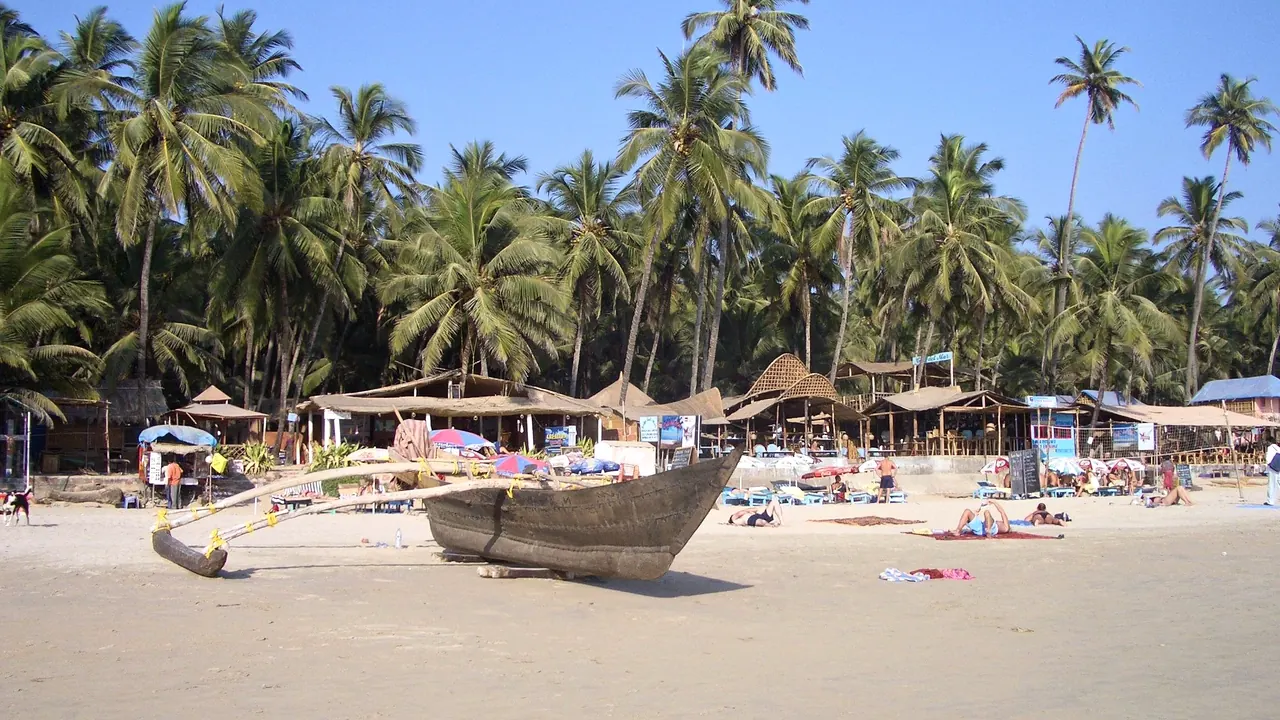
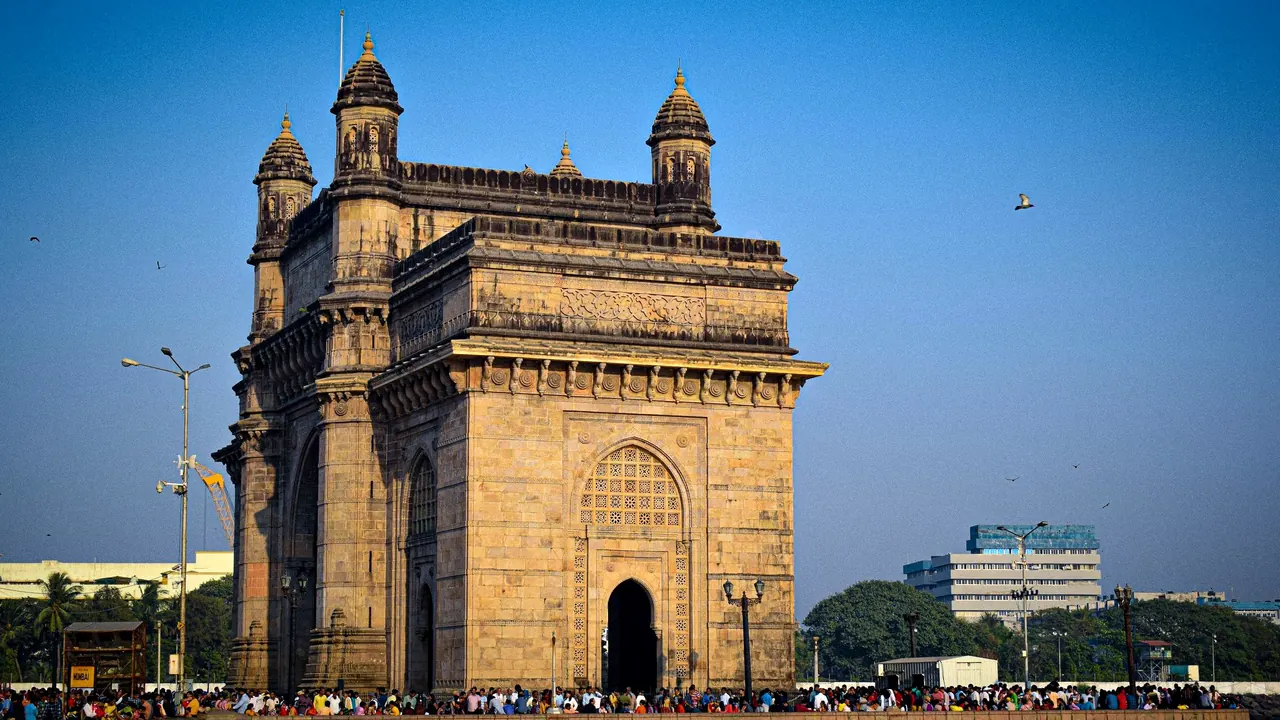
Photos: Goa by Klaus Nahr from Germany, CC BY-SA 2.0, cropped; Mumbai by Shubam Bhasin, Pexels License.
Goa or Mumbai?
Our verdict in twelve categories, each scored against the same fixed benchmark cities, and the climate month by month, so you can choose for your trip.
Choose Goa for
- beaches
- wellness
- nightlife
Goa is the choice for a beach vacation in the dry winter months. It has long sands and warm sea, yoga platforms and ayurvedic treatment centres in the quiet villages, and club nights on the north coast if you want them. It works best if you pick one stretch of coast and settle there, because moving around is slow, and you give up the museums, the big-city food and the shopping.
Choose Mumbai for
- shopping
- live music and the arts
- getting around
Travellers who want India's great commercial city should go to Mumbai. It is a place to eat your way through, from station-side vada pav to Malvani seafood. It has a Gothic and Art Deco skyline, bazaars and designer boutiques, and a real theatre and concert scene. What you give up is the sea: nobody swims here, and the city rarely lets you slow down.
Scoreboard
Twelve categories on one fixed scale from 0 to 100. The shaded stretch is the gap between the two.
Your match
Pick a travel style or drag the sliders, and both match scores follow your weighting.
Wins on beaches and wellness with your weighting.
Wins on shopping and live music and the arts with your weighting.
What matters to you?
Category by category
What the scores mean for a trip.
Beaches & swimming
For beaches, Goa is far ahead. The whole coast is sand, from the long open stretches of Colva, Benaulim and Varca to the wider, calmer beaches at Morjim and Ashwem, with the palm-backed coves of the south for the prettiest swimming. November to March is the swimming season, when the sea is warm and mostly gentle. Even then the water is seldom clear, and you should watch the lifeguards' flags on the busier beaches because currents can be strong on some days.
Mumbai has a seafront, not a beach. Juhu and Girgaum Chowpatty are good for a sunset walk, kites and snacks, but the water is murky and locals stay out of it. The cleaner sand across the harbour at Alibaug takes most of a day to reach, so in the city a hotel pool is the realistic answer.
Food & drink
The two share Konkan coastal cooking, fish and coconut curries, but Mumbai offers more and a wider range. Goa's strength is its own Portuguese-tinged cuisine: vindaloo, xacuti, sorpotel, bebinca, morning poi bread and feni. You eat it best in family restaurants in Panjim and Margao, or as fish grilled at a beach shack. The busy beach strips need care, as many menus there are generic tourist food.
Mumbai feeds you at every turn. There is vada pav and pav bhaji by the stations, bhel puri at Chowpatty, and bun maska and berry pulao in the old Irani cafés of Fort and Colaba. Malvani crab curries sit alongside Gujarati thalis and Parsi dhansak, and Bandra and Lower Parel add a polished modern tier.
Culture & sights
Mumbai has the stronger sightseeing. The Chhatrapati Shivaji Maharaj Terminus and the Victorian Gothic row facing Marine Drive's Art Deco across the Oval Maidan form one of Asia's great colonial streetscapes. Add serious museum collections of sculpture and miniatures, the Kala Ghoda galleries and the Banganga Tank.
Goa's heritage is quieter and more rural. Its high point is Old Goa, where the Basilica of Bom Jesus and the Sé Cathedral stand on open lawns. Beyond it are the painted lanes of Fontainhas in Panjim, the mansions of Chandor and Loutolim, the Ponda temples and the laterite sea forts. Both sets of sights are spread out, but Goa's are spread across a whole region rather than one city.
Nightlife
Goa is the better place for a night out, but only in season and only in the north. Baga and Calangute have packed club strips, and Anjuna and Vagator keep up the trance-party tradition with clifftop electronic venues. Between Christmas and New Year the north coast is loud every night. Many places close for the monsoon, and South Goa goes to bed early.
Mumbai's evenings are smarter and more spread out. There are cocktail bars and gastropubs in Bandra, Khar and the Lower Parel mill compounds, plus an older bar strip in Colaba. Places close around 1am and drinks are heavily taxed, so late dinners and the seafront often take the place of clubbing.
Nature & outdoors
For nature the two are about even, but the experience is different. Goa's green side lies inland: jungle trails in the Bhagwan Mahaveer and Cotigao sanctuaries, Dudhsagar Falls after the rains, and mangrove rivers to kayak, with hornbills and kingfishers in the dry months. Dolphin boats leave from Palolem and Sinquerim.
Mumbai's surprise is Sanjay Gandhi National Park, a leopard-inhabited forest with the Kanheri caves, inside the city's own suburbs. Flamingos gather at Sewri in winter. For proper hiking, Matheran and the Ghats hill forts are about two hours inland and at their greenest in the monsoon, which is when Goa's beaches shut.
Day trips
Neither is a great base for excursions, but Mumbai has one outing that is clearly a must-see. The boat from the Gateway of India to Elephanta's Shiva cave temples takes about an hour, and the Buddhist halls at Karla and Bhaja are further out. Leaving the city by road is slow.
Goa's outings are gentler and mostly stay inside the state: market day in Mapusa, spice farms near Ponda, the ferry to Divar island. Gokarna and the Sindhudurg sea fort are about two hours over the border. For both, the region's headline sites, Hampi for Goa and Ajanta and Ellora for Mumbai, need an overnight stay.
Good for families
Goa is the easier choice with children, as long as a beach and pool vacation is what you want. The resort hotels along the flat sands of Benaulim, Varca and Cavelossim have pools, and the winter sea is shallow and warm. There is almost nothing else laid on for children, and currents and road traffic need watching.
Mumbai does have proper outings, such as the Nehru Science Centre, the Byculla zoo and the Gateway ferries. Still, broken pavements, heavy traffic and constant humidity make every day hard work, and the water parks are a long drive out.
Getting around
Both are awkward to get around, and Goa more so. It stretches along about 100km of coast with buses that barely reach the beaches, so in practice you rent a scooter, hire a driver or stay in one area. A run from the northern beaches to the south can take two hours on narrow roads shared with cows.
Mumbai at least has a network. The suburban railway runs fast up the long spine of the city (avoid rush hour), the metro is clean but partial, and ride-hailing, taxis and rickshaws are everywhere. The Fort and Colaba district is pleasant on foot, though traffic can stretch any crossing of the city to an hour.
Shopping & style
Mumbai is much the better place to shop. Crawford Market, the gold lanes of Zaveri Bazaar and the antiques and film posters of Chor Bazaar sit alongside the street stalls of Colaba Causeway and Linking Road. Kala Ghoda and Bandra have designer boutiques and handloom shops, and the malls hold the luxury brands.
Goa's shopping comes down to its markets. The Anjuna flea market and the Arpora night market have shawls, silver and beachwear, much of it repeated from stall to stall, and Mapusa's Friday market sells cashews and chouriço. A few linen and tile boutiques around Assagao and Panjim are the limit of anything finer.
Affordability
Overall the two cost about the same, but the money goes in different places. In Goa, beds can be cheap: a hut in Mandrem or Agonda plus a scooter keeps costs very low. Room prices climb through the winter season, though, and steeply over Christmas and New Year, while taxis cost more than visitors expect.
In Mumbai it is the other way round. Street food, Irani café meals and trains cost almost nothing, but decent rooms are scarce and dear, India's most expensive. Smart-bar cocktails bring the bill close to Western levels.
Live music & performing arts
Mumbai has a genuine stage scene that visitors can join. The National Centre for the Performing Arts at Nariman Point hosts the Symphony Orchestra of India, Hindustani classical music, dance and jazz. Prithvi Theatre in Juhu anchors the Hindi and English stage, and Kala Ghoda's winter festival brings performance onto the streets of Fort.
Goa's traditions, tiatr musical theatre and the mando song, play mostly to local audiences. Apart from the Kala Academy in Panjim, the December arts festival and the Carnival parades, live music for most visitors means a cover band in a beach bar.
Wellness & relaxation
This is one of the widest gaps between the two. In Goa, where you stay decides what kind of rest you get. The quiet villages of the far north and the southern coves are where yoga and ayurveda take over. The polished resort spas sit around Cavelossim and Candolim, for anyone who wants treatments without the yoga, and the Baga and Calangute party belt is no place to unwind. Neither destination has a bathing or hammam tradition, so in both, wellness means massage, yoga and quiet.
Mumbai has massage centres and yoga studios in Bandra and the western suburbs, but the city is loud and humid from early morning. The calm moments are free ones, such as a dawn walk on Marine Drive or Bandstand, or a seat by the Banganga Tank. For a real retreat, Mumbai residents head out of the city to the hills at Lonavala.
When should you go?
Pick your month. The climate figures are measured averages, not a forecast.
Goa in July
Mumbai in July
Daytime high, °C
Rainfall in the month, mm
Temperature and rainfall are climate normals, averaged over the years shown. Goa: 1991-2020 normals, Goa / Panjim (9.4 km from centre). Mumbai: 1991-2020 (rainfall 1961-1990) normals, Bombay / Santacruz (5.4 km from centre).
The two share the same monsoon coast, so their year follows the same shape: dry, sunny and hot from November to May, then soaked from June to September. In Goa, November to April is the beach season. There is almost no rain, the sun shines nearly every day and the sea stays around 28°C. May turns sticky as the clouds build. The monsoon then shuts the beaches, with rain peaking at about 957mm in July and seas too rough to swim. October is still showery on the Goan coast.
Mumbai is best for walking from November to February. January is the mildest month, with highs around 31°C, and mornings and evenings on the seafront are pleasant. The heat and humidity build from March. The monsoon peaks at about 842mm in July, enough to flood streets and slow the trains. October dries out faster in Mumbai than in Goa, so it is a workable city month, though hot. Neither place ever really cools down, so plan midday indoors whenever you go.
Which traveller are you?
On a beach and sun trip, Goa is the obvious answer. Its coast offers everything from the sunbed strips of Calangute to the palm-backed coves of Palolem and Agonda. Mumbai's sands at Juhu and Chowpatty are for strolling, and swimming means a ferry to Alibaug.
For a relaxing and wellness trip, choose Goa. Arambol, Mandrem, Agonda and Patnem are full of yoga shalas, teacher-training courses and ayurvedic centres, all at a slow seaside pace. In Mumbai, rest mostly happens inside hotel spas, cut off from the noise and humidity outside.
For a short city break, Mumbai has far more to offer. You can fill a few days with street food and Irani cafés, the Fort district's Gothic buildings and museums, Kala Ghoda's galleries and the bazaars. Goa's sights are scattered across a region that needs a scooter or driver to see.
Before you go
| Measure | Goa | Mumbai |
|---|---|---|
| Official language | Hindi, English | Hindi, English |
| Currency | Indian Rupee (INR) | Indian Rupee (INR) |
| Sockets | CM230 V, 50 Hz | CM230 V, 50 Hz |
| Driving side | Left | Left |
| Time zone | UTC+5:30 | UTC+5:30 |
| Emergency number | 108 or 112 | 108 or 112 |
| Elevation | - | 14 m |
| Main airport | Goa Dabolim International Airport (GOI)24 non-stop destinations | Chhatrapati Shivaji Maharaj International Airport (BOM)2 km from centre123 non-stop destinations |
By the numbers
| Measure | Goa | Mumbai |
|---|---|---|
| Population | 1,458,545 | 15,414,288 |
| People per km² | 394 | 25,563 |
| Museums within 10 km | - | 1 |
| UNESCO World Heritage sites within 50 km | - | 4 |
| Swim season, months above 21 °C | 12 months | 12 months |
Where else could you go?
Every comparison below shares a destination with this one, so you can follow Goa or Mumbai somewhere new.