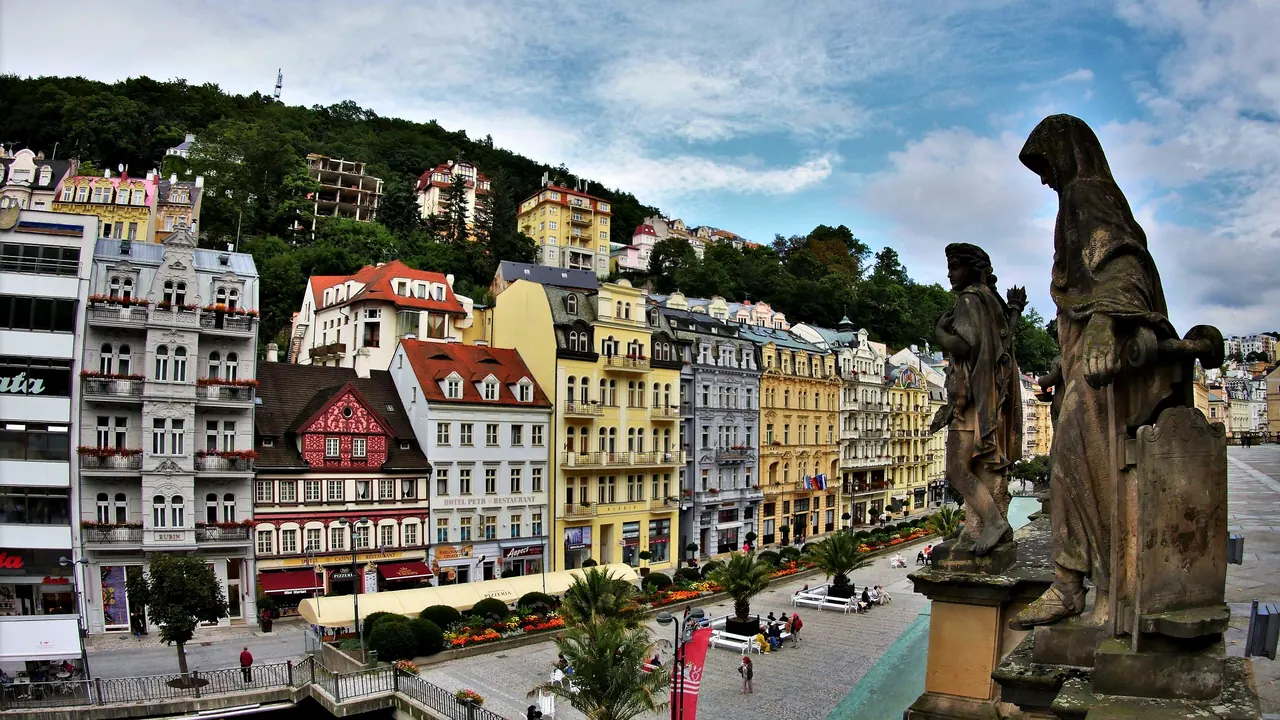
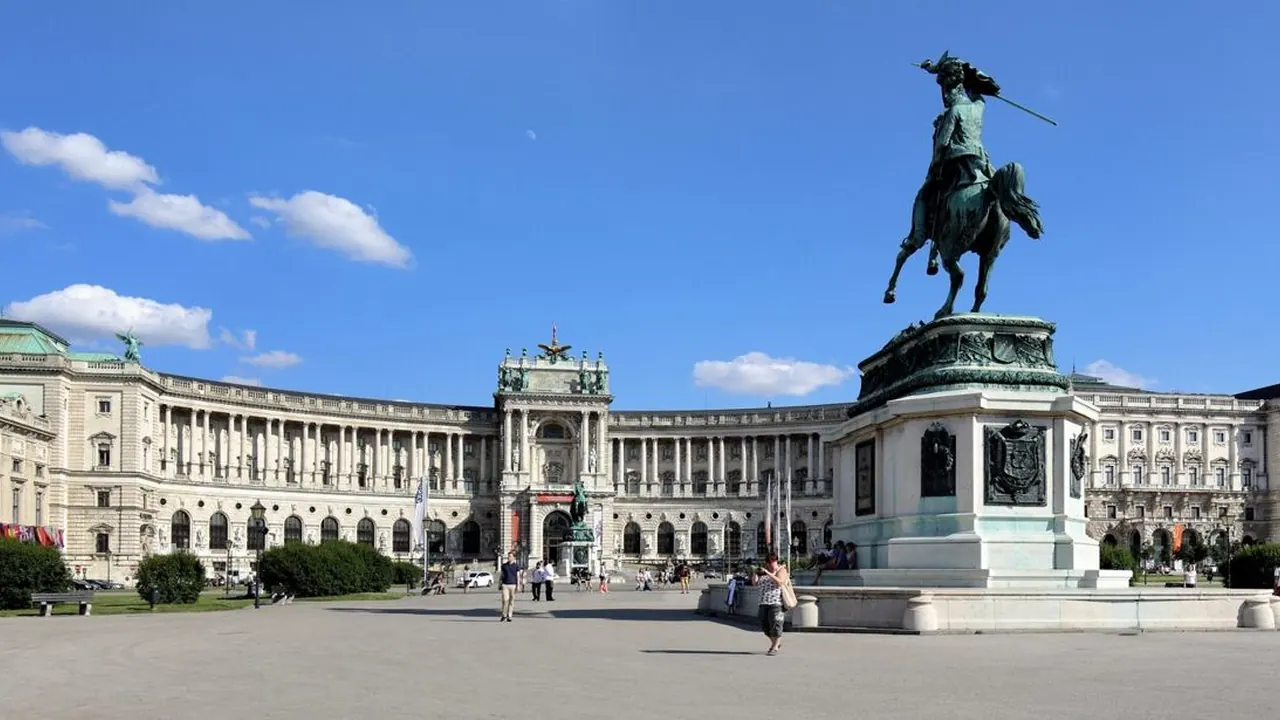
Photos: Karlovy Vary by Rolf Dietrich Brecher from Germany, CC BY-SA 2.0, cropped; Vienna by C.Stadler/Bwag, CC BY-SA 3.0 AT, cropped.
Karlovy Vary or Vienna?
Our verdict in twelve categories, each scored against the same fixed benchmark cities, and the climate month by month, so you can choose for your trip.
Choose Karlovy Vary for
- wellness
- prices
Karlovy Vary is for travellers who want to slow down and be looked after. Its whole reason for being is the cure: warm springs piped into colonnades, spa hotels with medical treatments, and gentle forest paths laid out for convalescents. It is quieter, smaller and easier on the wallet than Vienna, and it suits a restful week, or a couple with a few days who want rest more than sightseeing.
Choose Vienna for
- live music and the arts
- families
- nightlife
Choose Vienna if you want a great capital with plenty to fill every day and evening. Imperial palaces, first-rank art collections and the State Opera are the main draw, and on top of that come a real food culture of coffee houses and vineyard taverns, a zoo and a funfair for children, and transport that takes you almost anywhere without thinking. It costs more, but it gives a fuller trip for families, music lovers and anyone who wants a city that stays awake after dinner.
Scoreboard
Twelve categories on one fixed scale from 0 to 100. The shaded stretch is the gap between the two.
Your match
Pick a travel style or drag the sliders, and both match scores follow your weighting.
Wins on wellness and prices with your weighting.
Wins on live music and the arts and families with your weighting.
What matters to you?
Category by category
What the scores mean for a trip.
Beaches & swimming
Neither city has a coast, but Vienna is clearly better for swimming in summer. The Danube Island gives about 20km of free bathing spots and the Alte Donau has old lidos where locals swim after work, all reached by U-Bahn.
Karlovy Vary has no real equivalent. Lake Medard, a flooded mine half an hour away, and the warm spring-fed pools are the options, which is fine for a dip and no more.
Food & drink
Vienna has a cuisine of its own, while Karlovy Vary mostly serves solid Czech cooking. In Vienna you can move from schnitzel in a wood-panelled Beisl to Sachertorte in a grand coffee house, then on to Grüner Veltliner at a Heuriger among the city's own vineyards, with the Naschmarkt for casual meals.
Karlovy Vary offers roast pork, dumplings and svíčková, warm spa wafers from the colonnade stalls and Becherovka distilled in town. The riverside cafés suit a slow afternoon, but there is no market and few ambitious kitchens.
Culture & sights
Karlovy Vary is worth seeing as a whole townscape more than for any single building. Its UNESCO-listed spa quarter is one short valley of pastel hotels and colonnades, best taken in on a slow walk from the steaming Vřídlo up to the columns of the Mill Colonnade. Its museums are small and specialist, so after a couple of unhurried days there is little left to tick off.
Vienna has a fine ensemble of its own in the old town and along the Ring. On top of that it has things Karlovy Vary cannot match: the palaces of a ruling dynasty, and art collections of world standing, from Bruegel to Klimt and Schiele. It also covers two eras, Habsburg baroque and the Viennese Art Nouveau of around 1900, so a week of sightseeing never starts to feel repetitive.
Nightlife
Karlovy Vary goes to bed early. Outside the film festival week, an evening means a hotel bar, a Czech pub or a casino, and the promenades are quiet by eleven.
Vienna is no party capital, but it gives you real choices: late bars and small clubs under the Gürtel arches, the Bermuda Triangle in the old town, deckchair bars on the Danube Canal in summer, and formal balls in winter.
Nature & outdoors
These two are about level, and both have beech woods right on their doorstep. Karlovy Vary's forest rises straight out of the spa valley, with gentle paths up to the Diana tower, the Slavkov Forest moors nearby and skiing around Klínovec in winter.
Vienna's green land is more varied and more open. Vineyard trails lead up to the Kahlenberg, the Donau-Auen floodplain forest lies to the east, you can cycle along the flat Danube, and the Rax and Schneeberg give real mountains within reach.
Day trips
Karlovy Vary has good outings close by. Loket's castle on the Ohře is twenty minutes away, the sister spa towns of Mariánské Lázně and Františkovy Lázně are about an hour away, and you can see the reliquary at Bečov. Plzeň is also within reach, though Prague means a long coach day.
Vienna's position gives it the wider spread. Bratislava is an hour away by train or boat, the Wachau has Melk and Dürnstein along the river, and the abbeys, the Haydn palace at Eisenstadt and the Neusiedler See wine villages are easy days.
Good for families
Vienna is far easier with children. Schönbrunn Zoo, the Prater's Ferris wheel and rides, the dinosaurs at the Natural History Museum and the ZOOM children's museum fill days in any weather, and trams take prams easily.
Karlovy Vary is safe and pleasant, but it is built around adults taking cures. The geyser, the funicular to the Diana lookout, the thermal pool and a trip to Loket castle will keep children happy for a short stay, and the steep slopes are hard work with a pushchair.
Getting around
Vienna is one of the simplest cities in Europe to move around. It has a walkable old town inside the Ring, five U-Bahn lines, dense trams and one ticket for all of it, with night trains at weekends.
Karlovy Vary is easy on foot along its narrow river promenades, but the valley sides are steep, so you will use the buses and funicular. Regional trains to nearby towns are slow, and a car helps for the forests and villages.
Shopping & style
The gifts in Karlovy Vary are specific and worth buying: Moser crystal from its own showroom, local porcelain, Bohemian garnets and Becherovka. Beyond the boutiques on Stará louka there is little range and no market of note.
Vienna offers more variety. It has luxury houses on the Kohlmarkt and Graben, everyday fashion on Mariahilfer Strasse, independent designers in Neubau, Augarten porcelain and Loden coats, a Saturday flea market and Christmas markets.
Affordability
Karlovy Vary is the cheaper stay of the two. The colonnade restaurants and grand hotels charge for the setting, but one street back the pubs serve Czech food and beer at local prices, and the springs and promenades are free. Avoid the festival week, when rooms are dearest.
Vienna is a mid-to-upper Western European capital. Set lunches, sausage stands, free palace gardens and opera standing places help, but full museum admissions and hotels during the ball and Christmas market seasons add up.
Live music & performing arts
For live music, Vienna is in a different league. The State Opera stages a different work on most nights, the Philharmonic plays in the Musikverein's Golden Hall, and the Konzerthaus, Volksoper, Burgtheater and Vienna Boys' Choir complete a programme that runs all year.
Karlovy Vary offers a pleasant night out rather than a scene. Its symphony orchestra plays light classics, sometimes outdoors on the colonnades, and the Fellner and Helmer theatre takes touring drama and operetta.
Wellness & relaxation
Taking the cure is what Karlovy Vary was built for, and it does this far better than Vienna. You walk the colonnades sipping warm mineral water from a spouted porcelain cup, and dozens of spa hotels and sanatoria offer medical stays with treatments, massages and pools of spring water. There is also an outdoor thermal pool on the hillside. Public bathhouses are few, so book a spa stay to get the full experience.
In Vienna, rest is more casual. It comes from long coffee-house afternoons and walks in the palace gardens, with thermal pools at Therme Wien, the Art Deco Amalienbad and nearby Baden. But bathing sits alongside city life here rather than at its centre.
When should you go?
Pick your month. The climate figures are measured averages, not a forecast.
Karlovy Vary in July
Vienna in July
Daytime high, °C
Rainfall in the month, mm
Where the figures come from
Karlovy Vary's station stands 156 m above the city centre, so the centre is likely a little warmer than the figures say.
Karlovy Vary has no rain gauge within 25 km of the centre, so its rainfall comes from a gridded climate dataset read at the city rather than from a gauge further away.
Karlovy Vary's sunshine is measured 37 km from the centre, at Cheb.
Temperature and rainfall are climate normals, averaged over the years shown. Karlovy Vary: 1999-2020 (sunshine 1981-2010, rainfall 1991-2020) normals, Karlovy Vary (4.6 km from centre). Vienna: 1991-2020 normals, Wien / Hohe Warte (4.7 km from centre).
Both cities have cold, grey winters and warm, fairly short summers, but Vienna runs noticeably warmer and sunnier all year. Karlovy Vary sits in a wooded valley and reaches only about 22°C in July and August, which is comfortable for walking between springs and up forest trails but rarely hot. Summer is also its wettest stretch, with July bringing around 95mm, so expect showers. May, June and September are the best balance of mild days and long light, while from November to February it is near freezing and very dull, which suits only those staying indoors at a spa.
Vienna climbs to about 27°C in July and August, warm enough to swim in the Danube and the Alte Donau and occasionally a little sticky in the streets. It gets a good deal more sunshine than Karlovy Vary from spring to autumn. Late April to June and September are the most pleasant months for long days of sightseeing on foot. Its winters are slightly milder but still cold.
Which traveller are you?
On a culture and arts trip, Vienna wins easily. The Hofburg, Schönbrunn, the Kunsthistorisches Museum and the Belvedere could fill a week, and every night offers opera, the Philharmonic or theatre. Karlovy Vary's handsome spa architecture takes a day or two.
On a family trip with children, Vienna is much the better choice. Schönbrunn Zoo, the Prater rides, the aquarium in a flak tower and hands-on museums cover sunny and rainy days. Karlovy Vary has its geyser and funicular, but little else aimed at children.
For a relaxing and wellness trip, Karlovy Vary is the place. Drinking cures at thirteen springs, sanatoria with carbonated baths and peat wraps, and quiet forest walks shape the whole stay. Vienna offers coffee-house calm and Therme Wien, but bathing is an extra, not the point.
Before you go
| Measure | Karlovy Vary | Vienna |
|---|---|---|
| Official language | Czech | German, Austrian Sign Language |
| Currency | Czech Koruna (CZK) | Euro (EUR) |
| Sockets | CE230 V, 50 Hz | CF230 V, 50 Hz |
| Driving side | Right | Right |
| Time zone | UTC+1, UTC+2 in summer | UTC+1, UTC+2 in summer |
| Emergency number | 112 | 112 |
| Elevation | 447 m | 151 m |
| Main airport | Václav Havel Airport Prague (PRG)100 km from centre178 non-stop destinations | Vienna International Airport (VIE)18 km from centre202 non-stop destinations |
| Public holidays this year | 13 days | 16 days |
By the numbers
| Measure | Karlovy Vary | Vienna |
|---|---|---|
| City population | 49,073 | 2,028,289 |
| People per km² | 830 | 4,890 |
| Museums within 10 km | 2 | 152 |
| UNESCO World Heritage sites within 50 km | 3 | 4 |
Where else could you go?
Every comparison below shares a destination with this one, so you can follow Karlovy Vary or Vienna somewhere new.
- Bratislavavs Vienna
- Dresdenvs Karlovy Vary
- Brnovs Vienna
- Praguevs Karlovy Vary
- Leipzigvs Karlovy Vary
- Grazvs Vienna