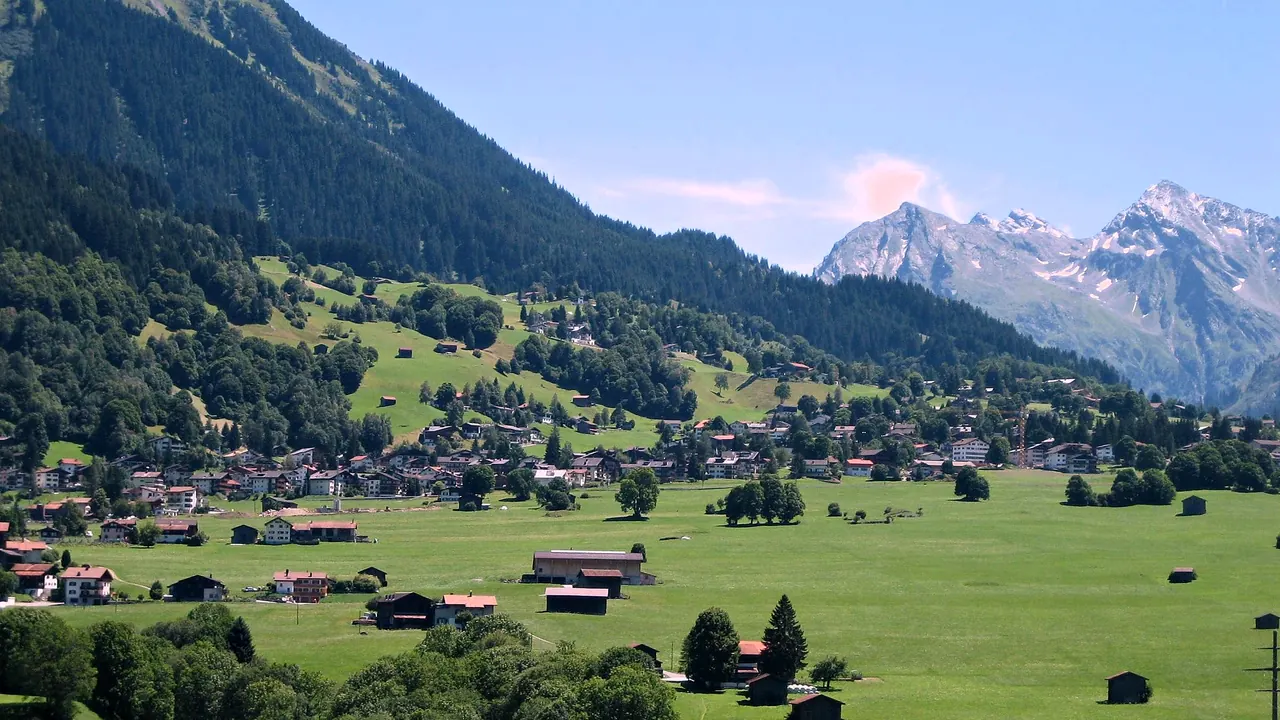
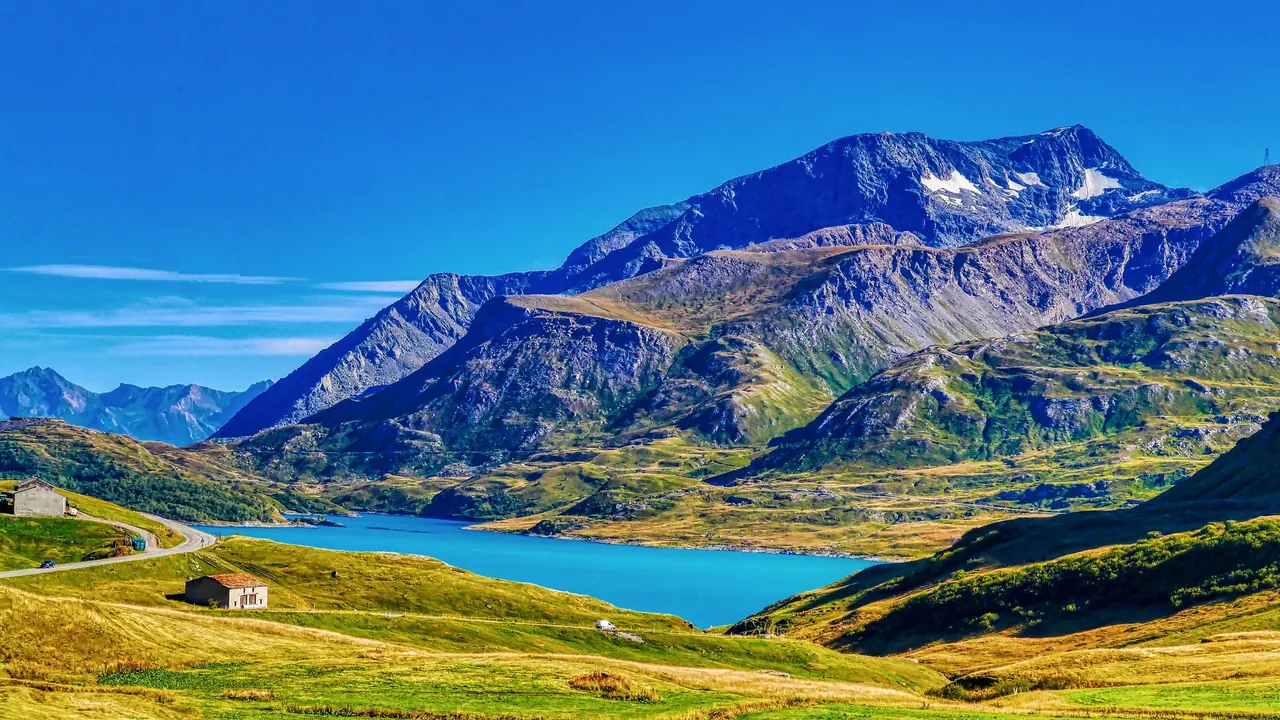
Photos: Klosters by Adrian Michael, CC BY-SA 3.0, cropped; Val Cenis by Zairon, CC BY-SA 4.0, cropped.
Klosters or Val Cenis?
Our verdict in twelve categories, each scored against the same fixed benchmark cities, and the climate month by month, so you can choose for your trip.
Choose Klosters for
- getting around
- wellness
- day trips
Klosters suits travellers who want a polished mountain stay without a car. Trains run from the village to Davos, Chur and the Engadine, the Gotschna cable car leaves from beside the station, and in the evening you can go to a hotel spa or make the short trip to the thermal baths at Scuol. It is for people happy to pay Swiss Alpine prices for that ease and comfort.
Choose Val Cenis for
- prices
- culture and sights
Val Cenis is the better pick if you are watching your spending and like to do things yourself. Most people rent an apartment, drive in, and spend their days in the Vanoise among ibex and marmots or skiing the long gentle runs. In summer you can drive over the pass into Italy. You give up much of the polish and transport, but the mountains are just as good for far less money.
Scoreboard
Twelve categories on one fixed scale from 0 to 100. The shaded stretch is the gap between the two.
Your match
Pick a travel style or drag the sliders, and both match scores follow your weighting.
Wins on getting around and wellness with your weighting.
Wins on prices and culture and sights with your weighting.
What matters to you?
Category by category
What the scores mean for a trip.
Beaches & swimming
Swimming hardly features in either place, and Klosters is only slightly better off. It has an outdoor pool in the village in summer, and the lake at Davos, half an hour away, has a bathing area, though the water stays cold. Val Cenis has only the Mont Cenis reservoir at nearly 2,000m, which is lovely for a walk but too cold for a swim, so here you swim in a hotel or village pool.
Food & drink
Both places serve hearty mountain food, much of it built on cheese, with a small choice of restaurants. The difference is regional. Klosters serves Graubünden dishes such as capuns wrapped in chard, pizokel and air-dried Bündnerfleisch, with Pinot Noir from the Bündner Herrschaft. It also has a few refined kitchens for its wealthy regulars.
Val Cenis serves Savoyard food: tartiflette, fondue, diots sausages and crozets. Its own prize is Bleu de Termignon, a rare blue cheese best bought from the farm or a cheese shop. There is no fine dining at all, and since many restaurants close between seasons, many visitors cook for themselves.
Culture & sights
Neither village is a sightseeing destination, but Val Cenis has more to look at. The early sixteenth-century fresco cycle in the chapel of Saint-Sébastien at Lanslevillard is a real highlight. Add the carved baroque altarpiece at Termignon and the stone villages under lauze roofs, and you have a worthwhile half day.
Klosters has the church of St. Jakob with its Augusto Giacometti windows and the small rural museum in the Nutli-Hüschi farmhouse. Otherwise its appeal lies in the timber chalets rather than in anything to visit.
Nightlife
Both are early-to-bed places. Klosters has a little more going on: hotel bars and a late spot or two fill up around Christmas, New Year and in February, and Davos is a short train ride away if you want more. In Val Cenis, après-ski in a few bars in Lanslebourg and Lanslevillard is usually the end of the evening, and outside the seasons there is close to nothing.
Nature & outdoors
Both are first-rate mountain bases, and the difference lies in the terrain. From Klosters the Gotschna cable car takes you into the Parsenn, which is shared with Davos and known for long runs down to the valley. The Madrisa area on the other side is gentler. In summer you can hike into the Silvretta, paraglide, or reach the Swiss National Park through the Vereina tunnel.
Val Cenis borders the Vanoise, France's oldest national park, where ibex and chamois are common sights. Its ski area climbs to about 2,800m, and one very long easy run lets beginners come down from high on the mountain. Summer brings hut-to-hut hiking and via ferrata, but the season at this altitude is short.
Day trips
Klosters has the wider choice, and you can reach all of it by train. Chur's old town and the wine villages around Maienfeld are close, and Vaduz in Liechtenstein is within reach. The sgraffito-painted houses of Guarda and Scuol are under an hour away through the Vereina tunnel, and St. Moritz on the UNESCO-listed Albula line makes a longer day.
The best outings from Val Cenis are in Italy: Susa with its Roman arch, the mountaintop abbey of the Sacra di San Michele, and Turin with its palaces and museums. Closer to home are Bonneval-sur-Arc, the painted chapels of Bessans and the Esseillon forts above Aussois. Winter cuts down the choice, because the Mont Cenis and Iseran passes close, but you can still reach Turin through the Fréjus tunnel in about an hour and a half.
Good for families
Both work well for families who come for the mountains and the snow, and neither has much to offer on a rainy day. Klosters has the edge for practical reasons. The Madrisa side has a summer adventure area for children, the village is traffic-calm, and without a car you get around by train.
Val Cenis wins on gentle skiing. Its long easy run builds a child's confidence, and summer walks to spot marmots are an easy success. With toddlers, though, the altitude and mountain roads take more planning.
Getting around
Klosters is far easier without a car. It has two stations on the Rhaetian Railway, with the Gotschna cable car next to Platz station, and the guest card covers local buses along the valley.
Val Cenis is a string of villages from Bramans to Lanslevillard. In winter, shuttles link the main resort villages, but the nearest train station is at Modane, half an hour away. Outside the ski season most visitors need a car to reach the walks and passes.
Shopping & style
Klosters has a short main street around Platz with ski shops, a few upmarket fashion and interior boutiques, and delicatessens selling Graubünden cured meats. For a proper shopping day you still go to Zurich. Val Cenis has only hire shops and grocers, and the things worth taking home are its cheese, honey and charcuterie.
Affordability
This is where the two differ most. Klosters is one of the most expensive places to stay in the Alps. Lodging, lift passes, lessons and meals all cost well above European norms, and self-catering and the guest card only take a little off the bill.
Val Cenis costs a good deal less. Apartments are the usual way to stay, lift passes and lodging cost less than at the big resorts in the neighbouring valleys, and summer is cheaper still, with hiking in the Vanoise free.
Live music & performing arts
Neither place has much live performance, and both depend on summer and the church. Klosters has a little more, with a classical concert series in the village each summer, occasional recitals in St. Jakob and Chur within reach for theatre. In Val Cenis it comes down to village festivals, summer concerts in the churches and resort entertainment.
Wellness & relaxation
Klosters is clearly better for unwinding. Several hotels have good pools, saunas and treatment rooms, Davos has a large public pool and sauna complex, and the thermal baths of Scuol are under an hour away.
Val Cenis offers calm rather than spa culture: a few hotel saunas and hot tubs, massage in season, and quiet villages with little traffic.
When should you go?
Pick your month. The climate figures are measured averages, not a forecast.
Klosters in July
Val Cenis in July
Daytime high, °C
Rainfall in the month, mm
Where the figures come from
Klosters's temperatures are measured 51 km from the centre, at S. Valentino Alla Muta.
Klosters's station stands 280 m above the city centre, so the centre is likely a little warmer than the figures say.
Klosters has no rain gauge within 25 km of the centre, so its rainfall comes from a gridded climate dataset read at the destination rather than from a gauge further away.
Val Cenis has no weather station within reach, so its figures come from a gridded climate model rather than a measured record, and read a broad area rather than one spot.
Temperature and rainfall are climate normals, averaged over the years shown. Klosters: 1991-2020 normals, S. Valentino Alla Muta (51.4 km from centre). Val Cenis: 2001-2020 normals, NASA POWER reanalysis grid, no weather station within 90 km.
Klosters is the milder of the two all year. From December to February daytime highs stay just above freezing, which is good skiing weather, and late winter and spring are its driest stretch. Summer afternoons reach about 20°C, pleasant for hiking the Silvretta, but May to September bring the most rain, with about 141mm in August, so expect afternoon showers. Autumn stays fairly wet and turns cold by November.
Val Cenis sits higher and is colder. Midwinter highs stay well below freezing, around -4°C in January, so the snow is reliable but the days are bitterly cold. July only reaches about 18°C and the walking season is short. Its rain falls differently: May is the wettest month at about 103mm, while July to September are drier than in Klosters. That makes late summer the best time to walk or cycle the high passes.
Which traveller are you?
For a relaxing and wellness trip, Klosters is the better fit. Rest feels easy there: no car to drive, a gentle walk in the morning and warm water in the afternoon. In Val Cenis, rest mostly means a quiet evening after a cold, high day outdoors.
On a tight budget, Val Cenis is the clear choice. Self-catering apartments, lift passes cheaper than at the bigger neighbouring resorts and free hiking in the Vanoise keep costs down. In Klosters every part of a stay, from lessons to dinner, is expensive.
Road cyclists should head to Val Cenis. The Mont Cenis and Iseran passes, two of the great climbs of the Alps, start from the valley. Klosters has good mountain-bike trails, but it has nothing to match those road climbs.
Before you go
| Measure | Klosters | Val Cenis |
|---|---|---|
| Official language | French, German, Italian, Romansh | French |
| Currency | Swiss Franc (CHF) | Euro (EUR) |
| Sockets | CJ230 V, 50 Hz | CE230 V, 50 Hz |
| Driving side | Right | Right |
| Time zone | UTC+1, UTC+2 in summer | UTC+1, UTC+2 in summer |
| Emergency number | 112 | 112 |
| Elevation | 1,179 m | 1,752 m |
| Main airport | Zürich Airport (ZRH)120 km from centre226 non-stop destinations | Turin Airport (TRN)59 km from centre65 non-stop destinations |
| Public holidays this year | 9 days | 11 days |
By the numbers
| Measure | Klosters | Val Cenis |
|---|---|---|
| Population | 4,499 | - |
| People per km² | 20 | - |
| Museums within 10 km | 3 | 0 |
| UNESCO World Heritage sites within 50 km | 1 | 1 |
Where else could you go?
Every comparison below shares a destination with this one, so you can follow Klosters or Val Cenis somewhere new.
- Davosvs Klosters
- Arosavs Klosters
- Val d'Isèrevs Val Cenis
- Tignesvs Val Cenis
- Val Thorensvs Val Cenis
- Courchevelvs Val Cenis