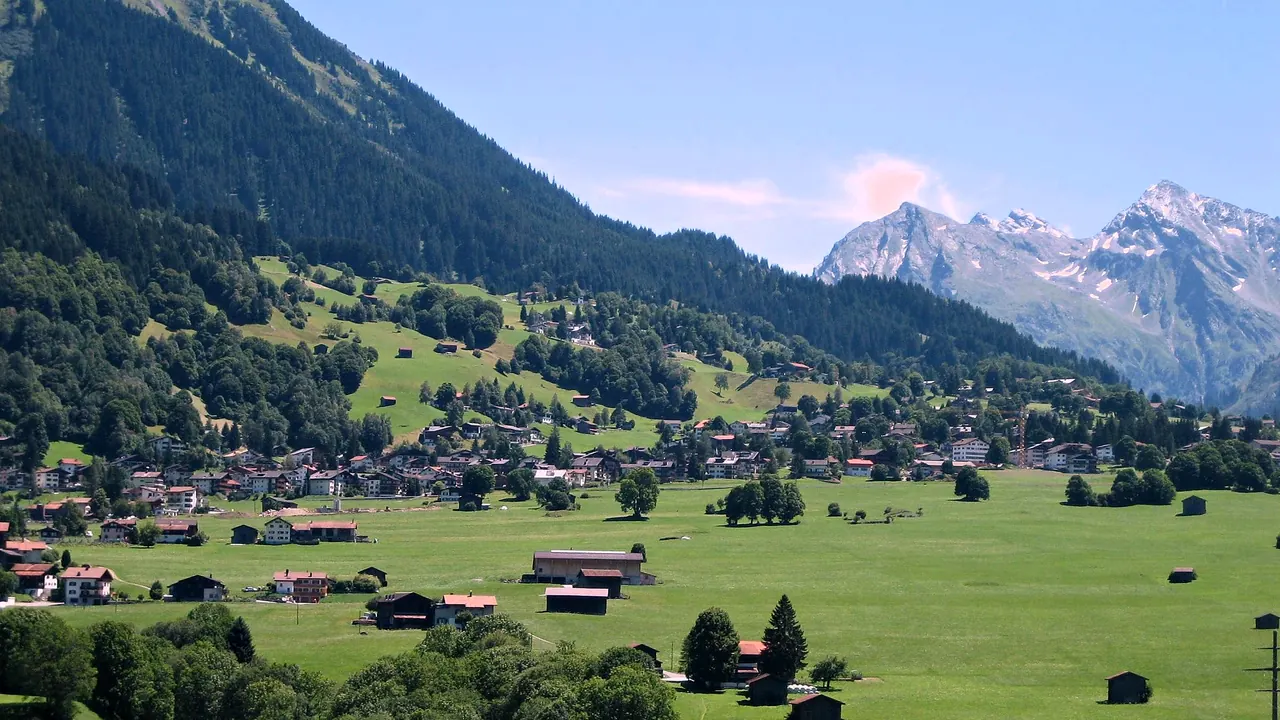
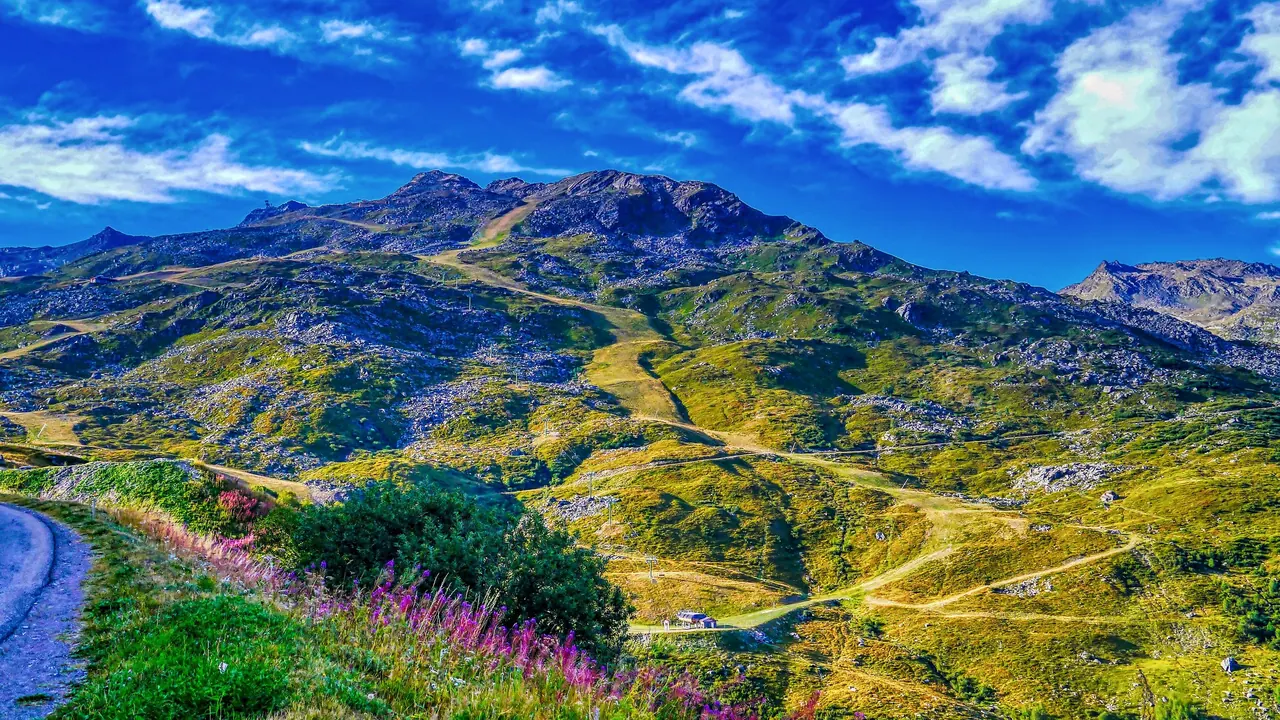
Photos: Klosters by Adrian Michael, CC BY-SA 3.0, cropped; Val Thorens by Zairon, CC BY-SA 4.0, cropped.
Klosters or Val Thorens?
Our verdict in twelve categories, each scored against the same fixed benchmark cities, and the climate month by month, so you can choose for your trip.
Choose Klosters for
- day trips
- families
- wellness
Klosters suits travellers who want the mountains with a quiet, traditional village around them. It is gentler on families, better for walking and summer days in green meadows, and the Rhaetian Railway lets you reach Chur, the Engadine or Liechtenstein without a car. Evenings by the fire and a sauna fit it better than late nights do.
Choose Val Thorens for
- nightlife
- food and drink
- prices
Val Thorens is the choice for groups who come to ski hard and stay out late. Its height keeps the snow reliable well into spring, the lifts open up the whole Three Valleys, and the après-ski and clubs have a young, loud crowd. It is still expensive, though a little less so than Klosters, but as a base for anything beyond skiing it offers very little.
Scoreboard
Twelve categories on one fixed scale from 0 to 100. The shaded stretch is the gap between the two.
Your match
Pick a travel style or drag the sliders, and both match scores follow your weighting.
Too close to call, 2 points apart
Wins on day trips and families with your weighting.
Wins on nightlife and food and drink with your weighting.
What matters to you?
Category by category
What the scores mean for a trip.
Beaches & swimming
You can't really swim outdoors in either place, but Klosters has a little more to offer. In summer it has an outdoor pool in the village and a bathing area on the lake at Davos, although the mountain water stays cool.
Val Thorens has nothing like that. Its glacier-fed lakes are too cold even in high summer, so swimming means the indoor pool at the sports centre or a hotel pool.
Food & drink
Val Thorens gives you more choice at the table. Fondue, raclette and tartiflette fill the wood-lined restaurants and slope-side huts, and a few gastronomic kitchens in the upmarket hotels give it a top end you might not expect from a purpose-built resort. Many menus repeat themselves across a week, though.
Klosters has a smaller range, but the cooking is distinctly Graubünden. In the old stuben you'll find capuns, pizokel, barley soup and air-dried Bündnerfleisch, served with Pinot Noir from the Bündner Herrschaft. Its best meal is often a terrace lunch on the mountain.
Culture & sights
Neither is a place to come for sights, but they differ in kind. Klosters is a real old village of timber chalets, with Augusto Giacometti's stained glass in St. Jakob and a small museum of Prättigau farm life in the Nutli-Hüschi. Val Thorens was built from scratch in the 1970s and has only its mountains to look at.
Nightlife
Val Thorens is the place for a night out. In winter the après-ski moves from dancing on mountain terraces into pubs and then into clubs, including a well-known underground one, that stay open until the early hours, with a crowd of students and groups of friends. It is still one small village, so a week brings the same few venues.
Klosters is the opposite. Evenings mean a drink by the fire or a hotel bar, with a brief stir around Christmas and February. For anything livelier, guests take the train to Davos.
Nature & outdoors
Both are first-rate mountain bases, but the mountains are not alike. Klosters has the Parsenn, shared with Davos and known for long runs down to the valley, plus the gentler Madrisa. In summer it turns green, with meadows, Silvretta hiking routes, mountain biking and paragliding, and the Swiss National Park is reachable through the Vereina tunnel.
Val Thorens is higher and harsher. It is Europe's highest ski resort, with lifts above 3,200m, glacier terrain, snow into May and the whole Three Valleys linked on skis. Above the treeline you get rock and snowfields rather than forest, and its short summer leads to high lakes and the edge of the Vanoise.
Day trips
Klosters is much the better base for exploring. The Rhaetian Railway takes you up the valley to Davos or down to Chur, one of the oldest town centres in Switzerland, in a little over an hour. The wine villages of the Bündner Herrschaft, the Heidi country around Maienfeld and Liechtenstein's capital, Vaduz, are all within reach by train and bus. Through the Vereina tunnel, Guarda and the villages around Scuol, with their sgraffito-painted houses, are under an hour away, and St. Moritz with the UNESCO-listed Albula line makes a longer day.
From Val Thorens, most outings are ski runs over to Méribel or Courchevel. Off the mountain there is only modest Moûtiers and the medieval quarter of Conflans above Albertville. Annecy and Chambéry, the best towns in the region, are around two hours away by car.
Good for families
Klosters is the easier choice with children. The Madrisa side is designed for them, with a summer adventure area and beginner slopes in winter, and the lower, traffic-calm village makes sledging and short hikes to farm huts simple to fit in. On a rainy day, though, there is little to fall back on.
Val Thorens handles the ski practicalities well, with a car-free centre, ski-in lodgings, children's clubs and a long toboggan run. The altitude is the drawback: cold, wind, closed lifts and broken sleep for small children, in a resort whose tone is set by a young, partying crowd.
Getting around
Klosters is easier from the moment you arrive. You don't need a car. Two Rhaetian Railway stations serve the village, the Gotschna cable car leaves beside the Platz station, and buses cover the long valley-floor village.
Val Thorens is compact, car-free and served by free shuttles, and many beds are ski-in, ski-out. Getting there is the hard part: about an hour of hairpin bends up from the station at Moûtiers, and there is little public transport once you want to leave.
Shopping & style
Neither is a shopping trip. Klosters adds a few upmarket fashion and interior boutiques along its main street, plus delicatessens selling Bündnerfleisch, but a serious shopping day still means going to Zurich. In Val Thorens it is ski gear, resort clothing, Savoyard cheese and small supermarkets for self-catering.
Affordability
Both are expensive, but Val Thorens is the slightly easier one on the budget. It is less exclusive than its smartest neighbours, and groups who share an apartment and cook can cut the cost a lot.
Klosters is among the dearest places to stay in the Alps, and its well-off regulars set the prices. The guest card for local transport and self-catering help only a little.
Live music & performing arts
You won't find a theatre or a concert hall in either village, but the music is of different kinds. Klosters has a classical concert series in summer and occasional recitals in the church. In Val Thorens live music means cover bands, DJs and events on the slopes. For a real concert from Klosters, you go down to Chur.
Wellness & relaxation
Klosters is the more restful stay. The village is quiet and unhurried, several hotels have good spas, Davos has a large public pool and sauna complex, and the thermal baths of Scuol are under an hour away through the Vereina tunnel.
Val Thorens offers good hotel spas and a public spa at the sports centre, plus the old spa town of Brides-les-Bains an hour down the road. Still, the resort is built around hard skiing and late après-ski, so a spa there is somewhere to recover, not the reason for the trip.
When should you go?
Pick your month. The climate figures are measured averages, not a forecast.
Klosters in July
Val Thorens in July
Daytime high, °C
Rainfall in the month, mm
Where the figures come from
Klosters's temperatures are measured 51 km from the centre, at S. Valentino Alla Muta.
Klosters's station stands 280 m above the city centre, so the centre is likely a little warmer than the figures say.
Klosters has no rain gauge within 25 km of the centre, so its rainfall comes from a gridded climate dataset read at the destination rather than from a gauge further away.
Val Thorens has no weather station within reach, so its figures come from a gridded climate model rather than a measured record, and read a broad area rather than one spot.
Temperature and rainfall are climate normals, averaged over the years shown. Klosters: 1991-2020 normals, S. Valentino Alla Muta (51.4 km from centre). Val Thorens: 1991-2020 normals, TerraClimate 4 km grid at the town, no weather station within 90 km.
Klosters is the milder of the two by some way. Winter highs sit around freezing and the drier months are in winter, which suits skiing and snowy walks. From May the rain picks up, and July and August are both the warmest months, at about 20°C, and the wettest, at around 140mm, so summer hiking means planning around wet days. Late spring and September give the best balance for walking in the valley. Neither place is ever warm enough for a beach trip.
Val Thorens is far colder. Highs stay below freezing from December to March, around -3°C in January, and even August reaches only about 16°C. Its heaviest precipitation comes in late autumn and early winter, about 180mm in November, much of it falling as snow at that height, which is why the season runs on into May. Summer there is short and cool. The high trails are open then, but you should pack for cold weather even in July.
Which traveller are you?
For a food and nightlife trip, Val Thorens is the clear pick. Après-ski starts with dancing on terrace tables and carries on into village bars and late clubs, and the Savoyard kitchens, including a few ambitious hotel restaurants, give you more choice than Klosters' small range.
On a family trip with children, Klosters is the safer bet. The Madrisa side has a children's adventure area and beginner slopes, and the village is traffic-calm and lower. In Val Thorens families face cold, windy days at altitude and a party crowd.
For a relaxing and wellness trip, Klosters fits far better. Its pace is slow and unshowy, hotel spas are good, and the thermal baths at Scuol are under an hour away. Val Thorens is built around hard skiing and loud evenings, and its hotel spas don't change that.
Before you go
| Measure | Klosters | Val Thorens |
|---|---|---|
| Official language | French, German, Italian, Romansh | French |
| Currency | Swiss Franc (CHF) | Euro (EUR) |
| Sockets | CJ230 V, 50 Hz | CE230 V, 50 Hz |
| Driving side | Right | Right |
| Time zone | UTC+1, UTC+2 in summer | UTC+1, UTC+2 in summer |
| Emergency number | 112 | 112 |
| Elevation | 1,179 m | 1,710 m |
| Main airport | Zürich Airport (ZRH)120 km from centre226 non-stop destinations | Geneva International Airport (GVA)111 km from centre150 non-stop destinations |
| Public holidays this year | 9 days | 11 days |
By the numbers
| Measure | Klosters | Val Thorens |
|---|---|---|
| Population | 4,499 | - |
| People per km² | 20 | - |
| Museums within 10 km | 3 | 0 |
| UNESCO World Heritage sites within 50 km | 1 | 1 |
Where else could you go?
Every comparison below shares a destination with this one, so you can follow Klosters or Val Thorens somewhere new.
- Les Menuiresvs Val Thorens
- Davosvs Klosters
- Méribelvs Val Thorens
- Courchevelvs Val Thorens
- Arosavs Klosters
- La Plagnevs Val Thorens