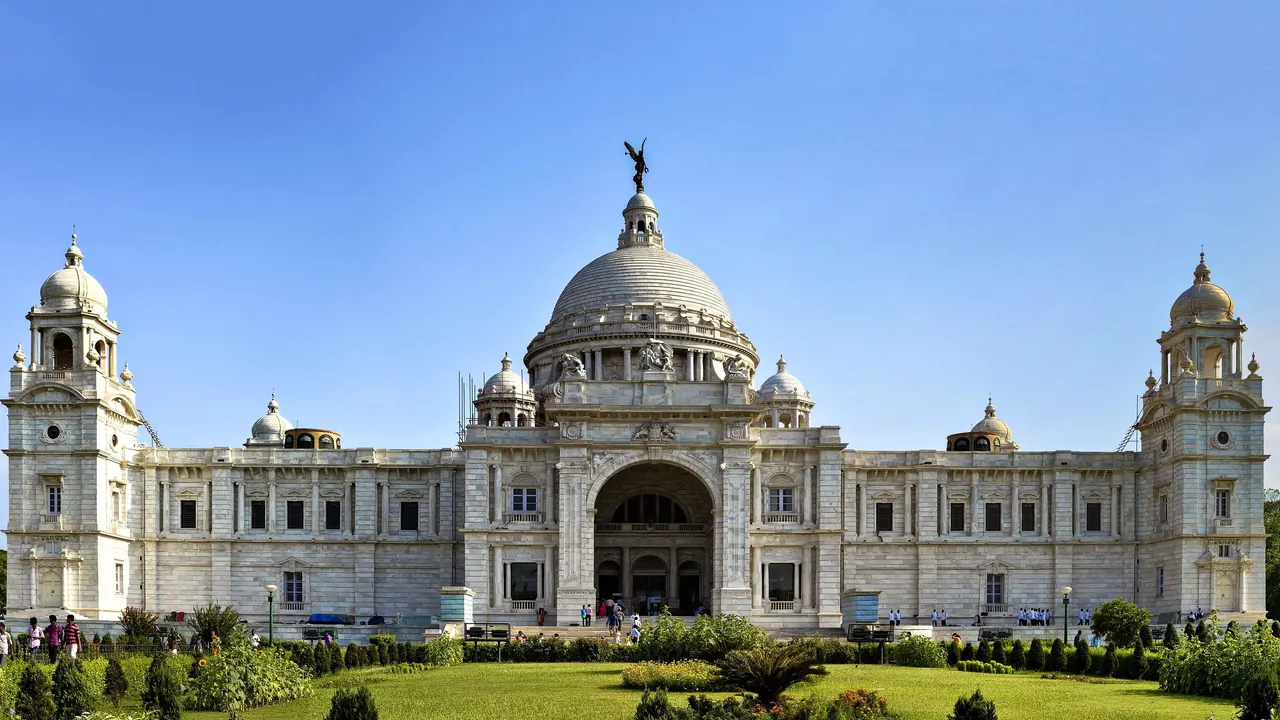
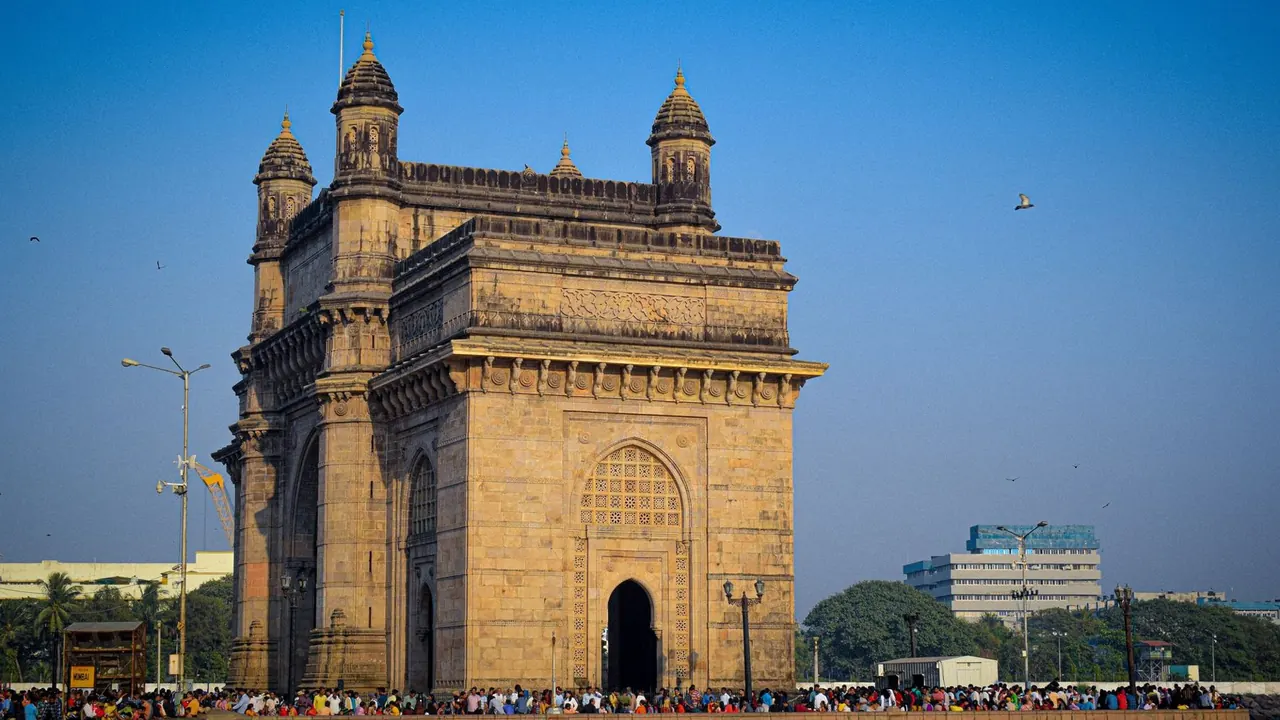
Photos: Kolkata by Subhrajyoti07, CC BY-SA 4.0, cropped; Mumbai by Shubam Bhasin, Pexels License.
Kolkata or Mumbai?
Our verdict in twelve categories, each scored against the same fixed benchmark cities, and the climate month by month, so you can choose for your trip.
Choose Kolkata for
- prices
- culture and sights
Kolkata suits the traveller who wants depth more than polish. It has the old imperial capital's monuments and museums, a living Bengali culture of temples, idol-makers and Tagore, and one of India's great regional kitchens, sweets included. All of it comes cheaply, and comfortable hotels cost little. The trade-off is a city that is hard to escape. There are no hills, no beach and few easy day trips, so the trip is about the city itself.
Choose Mumbai for
- nature and the outdoors
- nightlife
- beaches
Mumbai is the better choice if you want more variety around the sightseeing. It has a forest park with leopards inside the suburbs, the cave temples of Elephanta across the harbour, a real cocktail-bar scene and shopping that runs from gold bazaars to designer boutiques. It also has the sea to walk beside at sunset. Expect to pay noticeably more for a good room and for drinks, and to spend a lot of time in traffic.
Scoreboard
Twelve categories on one fixed scale from 0 to 100. The shaded stretch is the gap between the two.
Your match
Pick a travel style or drag the sliders, and both match scores follow your weighting.
Wins on prices and culture and sights with your weighting.
Wins on nature and the outdoors and nightlife with your weighting.
What matters to you?
Category by category
What the scores mean for a trip.
Beaches & swimming
Neither city is a place to swim, but Mumbai at least has the sea. Juhu and Girgaum Chowpatty are broad sands for sunset walks, snacks and kite flying, and the ferry to Alibaug reaches cleaner water in a long day out.
Kolkata sits on the Hooghly, where nobody swims, and its nearest beaches at Digha and Mandarmani are far enough away to need a night. In both cities, the realistic place to swim is the hotel pool.
Food & drink
Both are first-rate food cities, and the difference is in character. Kolkata's strength is a single, deep regional cuisine: river fish in mustard, poppy seed and panch phoron, sweets from family confectioners, and layers of history in the potato-and-egg biryani, the Indo-Chinese kitchens of Tangra and the Anglo-Indian grills of Park Street.
Mumbai is broader and faster. Station carts sell vada pav, Irani cafés serve bun maska, and Malvani kitchens cook crab and pomfret in coconut, alongside dishes from across India. It also has a modern restaurant and cocktail tier in Bandra and Lower Parel that Kolkata largely lacks.
Culture & sights
Both are former British port cities with a rich colonial legacy, so the choice is about texture. Kolkata, the old capital, offers monuments and collections: the Victoria Memorial, the Indian Museum and the strange Marble Palace. It also has a living Bengali heritage of Kalighat, Belur Math, Tagore's house and the idol-makers of Kumartuli, though much of it is crumbling and easier to read with a guide.
Mumbai's highlight is its streetscape. The Gothic station, the Victorian buildings of the Oval Maidan and the Art Deco blocks of Marine Drive face each other across open grass, and fine museums sit nearby in Kala Ghoda. Beyond that core, the sights are scattered and slow to reach.
Nightlife
Mumbai offers a proper night out. There are cocktail bars, gastropubs and clubs in Bandra, Khar and the old mill compounds of Lower Parel, and an older bar strip in Colaba, with dressy, busy weekends.
In Kolkata, an evening usually means drinks and dinner around Park Street or in a hotel lounge, and dry days can shut the bars entirely. Both cities close early, around midnight. Kolkata's great exception is Durga Puja, when the whole city tours the pandals until the small hours.
Nature & outdoors
Mumbai has far more to offer outdoors. A forested national park with leopards and ancient rock-cut caves sits inside its northern suburbs, flamingos feed on the creek mudflats in winter, and the Western Ghats, with Matheran and the hill forts, are about two hours away.
Kolkata lies on the flat Ganges delta, so green space means the Maidan, Rabindra Sarovar and the great banyan at the Shibpur Botanic Garden. Its one big wild draw, the Sundarbans mangroves, needs two or three days on a boat.
Day trips
Mumbai has the stronger single outing: the hour-long boat ride to Elephanta's carved Shiva caves. The Buddhist halls at Karla and Bhaja and the Alibaug coast add a couple more.
Kolkata's classic day follows the Hooghly upstream through the former Danish, French, Dutch and Portuguese settlements of Serampore, Chandannagar, Chinsurah and Bandel, which are easy to link by local train. Its more remarkable places, Shantiniketan, Bishnupur and Murshidabad, need an overnight stay, just as Ajanta and Ellora do from Mumbai.
Good for families
Both cities welcome children warmly and both are tiring to travel with, so there is little between them. Kolkata keeps more of its attractions inside the city, with Science City, Nicco Park's rides, the old Alipore Zoo and the planetarium, plus the Maidan for running about. Mumbai's best are the Nehru Science Centre, the harbour ferries and ice cream at Chowpatty, while its theme parks are a long drive out and families do best with a car and driver.
Getting around
Getting around is equally slow in both, but the shape of each city differs. Kolkata is more compact, and its north-south metro runs straight through the centre to Park Street and Kalighat. Hooghly ferries make a pleasant shortcut, and the heritage core is walkable in winter.
Mumbai stretches along a long, thin peninsula. The suburban railway is the quickest way north but crushingly full at rush hour, the metro covers only part of the city, and road traffic can turn short trips into an hour. Only the Fort and Colaba area is comfortable on foot.
Shopping & style
Mumbai has more range. Zaveri Bazaar sells gold, Chor Bazaar sells antiques and old film posters, and Colaba Causeway and Linking Road have street stalls, while designer boutiques in Kala Ghoda and Bandra and a few luxury malls cover the top end.
Kolkata is narrower but excellent in its speciality, Bengal textiles. Gariahat and the Dakshinapan emporia sell Baluchari silk, tant cotton and kantha embroidery. New Market's Victorian hall and the book stalls of College Street are worth a wander, but there is little luxury or design shopping.
Affordability
Kolkata is the cheaper trip, and the gap is mostly in where you sleep. Comfortable mid-range hotels cost very little, and food, transport and museum entry are all cheap, so only luxury hotels and imported drinks feel expensive.
Mumbai's street food, trains and rickshaws are just as easy on the wallet, but good rooms in the south of the city cost far more, and heavily taxed cocktails push a night out towards Western prices.
Live music & performing arts
Language decides this one. Kolkata's arts are deep but mostly in Bengali. Group theatre fills the Academy of Fine Arts and Rabindra Sadan most evenings, so a visitor gets most from its Hindustani classical music, above all the Dover Lane Music Conference each winter, and from Tagore's songs and dance dramas.
Mumbai is easier to follow without the local language. The National Centre for the Performing Arts at Nariman Point is home to the Symphony Orchestra of India and adds jazz and dance, so Western orchestral music, rare in Kolkata, has a real home here. Prithvi Theatre in Juhu stages English plays alongside Hindi ones.
Wellness & relaxation
Organised rest is what tips this towards Mumbai. In Kolkata, spas are mostly limited to the big hotels and a few Ayurvedic massage centres. Its calm comes unplanned, on the ghats at first light or on the lawns of Belur Math.
Mumbai has large spas in its luxury hotels, yoga studios in Bandra and the western suburbs, and early walks along Marine Drive or the Bandstand promenade. When the city wears thin, the hills of Lonavala are close enough for a proper retreat.
When should you go?
Pick your month. The climate figures are measured averages, not a forecast.
Kolkata in July
Mumbai in July
Daytime high, °C
Rainfall in the month, mm
Temperature and rainfall are climate normals, averaged over the years shown. Kolkata: 1991-2020 normals, Calcutta / Alipore (5.4 km from centre). Mumbai: 1991-2020 (rainfall 1961-1990) normals, Bombay / Santacruz (5.4 km from centre).
Kolkata has a real winter. From November to February the days are warm rather than hot, around 25°C in January, and the skies are dry and sunny. This is when the old city is pleasant to walk. By April and May the heat reaches 36°C, and from June to September the monsoon brings heavy rain and grey skies, peaking at 384mm in July. October is wet at first and then clears.
Mumbai barely cools at all. Daytime highs stay close to 33°C almost all year, so walking is always warm work. It is very dry and sunny from November to May. Then the monsoon arrives harder than Kolkata's, with 842mm in July, rough seas and the sunniest months turning into the dullest. The sea stays warm all year, but the city beaches are for strolling, not swimming. For both cities, December to February is the most comfortable window, and Kolkata gains the most from it.
Which traveller are you?
On a trip on a tight budget, Kolkata stretches money further. Mid-range hotels, Bengali meals, museum entry and the metro all cost very little. In Mumbai, street food is cheap too, but decent rooms are expensive and good budget options are scarce.
For an outdoors trip, Mumbai is the clear choice. Sanjay Gandhi National Park and the Kanheri caves lie within the city, flamingos gather at Sewri, and the Western Ghats hill stations and forts are within reach. Around flat, humid Kolkata, nature means parks or a multi-day Sundarbans boat trip.
On a food and nightlife trip, Mumbai pairs strong street food and coastal seafood with cocktail bars and clubs in Bandra and Lower Parel. Kolkata's cooking is just as rewarding, but evenings end at dinner and drinks on Park Street, with dry days closing the bars.
Before you go
| Measure | Kolkata | Mumbai |
|---|---|---|
| Official language | Hindi, English | Hindi, English |
| Currency | Indian Rupee (INR) | Indian Rupee (INR) |
| Sockets | CM230 V, 50 Hz | CM230 V, 50 Hz |
| Driving side | Left | Left |
| Time zone | UTC+5:30 | UTC+5:30 |
| Emergency number | 108 or 112 | 108 or 112 |
| Elevation | 9 m | 14 m |
| Main airport | Netaji Subhash Chandra Bose International Airport (CCU)12 km from centre64 non-stop destinations | Chhatrapati Shivaji Maharaj International Airport (BOM)2 km from centre122 non-stop destinations |
By the numbers
| Measure | Kolkata | Mumbai |
|---|---|---|
| City population | 4,496,694 | 15,414,288 |
| People per km² | 21,818 | 25,563 |
| Museums within 10 km | 26 | 1 |
| UNESCO World Heritage sites within 50 km | 0 | 4 |
| Swim season, months above 21 °C | - | 12 months |
Where else could you go?
Every comparison below shares a destination with this one, so you can follow Kolkata or Mumbai somewhere new.
- Darjeelingvs Kolkata
- Udaipurvs Mumbai
- Varanasivs Kolkata
- Kathmanduvs Kolkata
- Jodhpurvs Mumbai
- Bengaluruvs Mumbai