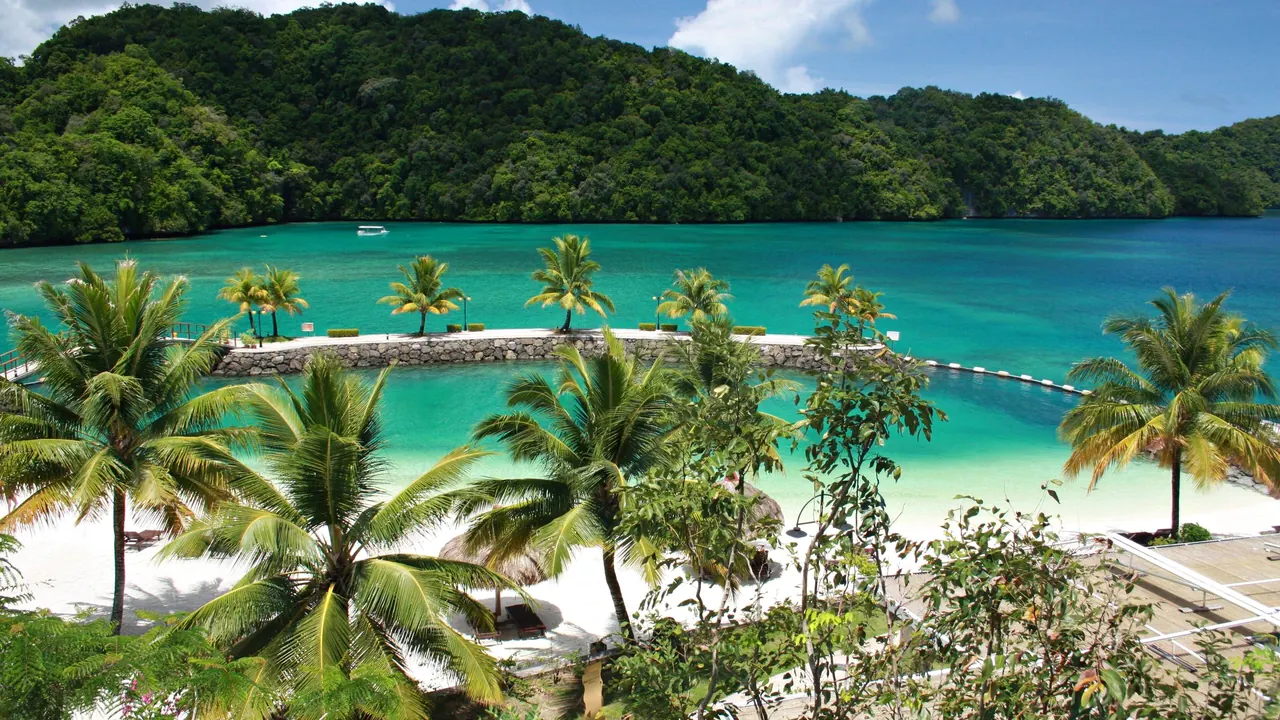
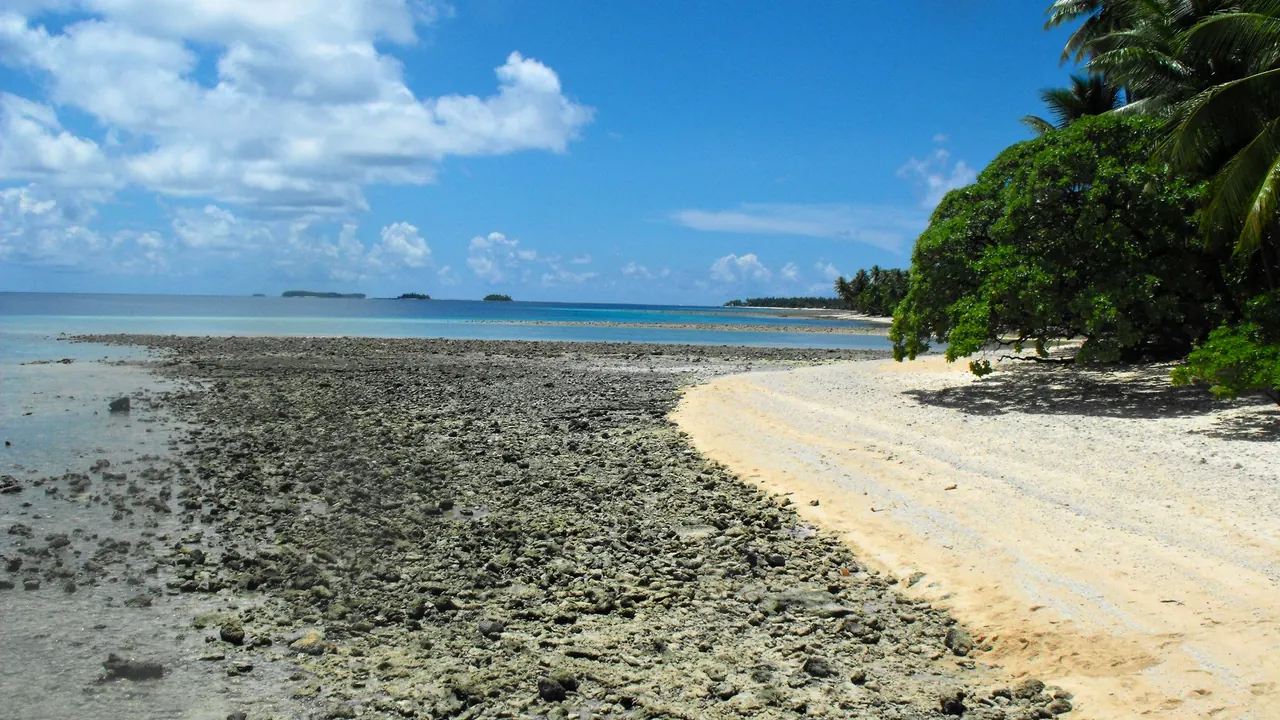
Photos: Koror by ito1117, CC BY-SA 3.0, cropped; Majuro by Cliff Hansen, CC BY-SA 4.0, cropped.
Koror or Majuro?
Our verdict in twelve categories, each scored against the same fixed benchmark cities, and the climate month by month, so you can choose for your trip.
Choose Koror for
- nature and the outdoors
- families
- day trips
Koror is the one for anyone whose vacation happens underwater or on a boat. The Rock Islands, the famous drop-offs, the marine lakes and the reef beaches under limestone cliffs give it a depth of sea life that Majuro cannot match. It also has a little more around it: the Peleliu battlefield, Babeldaob's monoliths and meeting houses, a wider spread of places to eat and a few resort spas. Families with older children who swim well will find more to fill the days here.
Choose Majuro for
- getting around
- prices
Majuro suits a quieter, plainer kind of trip, for travellers who want to see an atoll as it is lived in rather than toured. Days revolve around the lagoon: a drive out to Laura, a boat to an empty islet such as Eneko, sportfishing for tuna and marlin, and the Marshallese story of ocean navigation and nuclear testing. It is a touch less costly than Koror, the shared taxis on the one road make it easy to get about, and the skies are noticeably sunnier through most of the year.
Scoreboard
Twelve categories on one fixed scale from 0 to 100. The shaded stretch is the gap between the two.
Your match
Pick a travel style or drag the sliders, and both match scores follow your weighting.
Wins on nature and the outdoors and families with your weighting.
Wins on getting around and prices with your weighting.
What matters to you?
Category by category
What the scores mean for a trip.
Beaches & swimming
Koror has the finer beaches, but you can't walk to any of them. The good sand lies out in the Rock Islands, in coves under jungle-topped limestone, and you reach it on an organised boat trip. That makes every beach day a snorkelling day as well, with the reef just over the side. In town the shore is mostly mangrove, harbour and causeway, and the only sand nearby is in resort grounds.
Majuro has something Koror lacks: a beach you can just drive to. At Laura, at the far end of the atoll road, there is shade and calm lagoon water. Its islets across the lagoon, Eneko among them, are emptier and plainer than the Rock Islands coves, with nothing provided, so a day out there means bringing everything you need.
Food & drink
Koror gives you more to choose from. Japanese rule left a habit of sashimi, bento and noodle counters, Filipino, Korean and Thai kitchens line the main road, and Palauan dishes such as coconut crab, taro and even fruit bat soup turn up on some menus.
Majuro's eating comes down to hotel dining rooms and a handful of Asian-run places serving fried rice and grills. The best meals are the morning's tuna as sashimi, or local food at a church or community gathering. Both islands rely heavily on imported produce.
Culture & sights
Each town has about a morning's worth of sights, so the real difference is in the history they tell. Koror's Belau National Museum and its storyboard-painted bai lead you through the Spanish, German, Japanese and American periods, the Etpison Museum adds shell money and carvings, and fragments of the old Japanese capital survive around town.
Majuro's Alele Museum is about the sea, with stick charts for reading ocean swells, outrigger canoes and weaving. The Peace Park and the legacy of the Bikini and Enewetak nuclear tests give a visit a more sombre weight.
Nightlife
After dark there is little to do in either place. In Koror, evenings end early because the dive boats leave at dawn, and what nightlife exists is resort bars by the water and weekend karaoke rooms. Majuro is quieter still, with its social life built around church, so a hotel bar shared with aid workers and fishermen, or a lagoon sunset, is about as late as it goes.
Nature & outdoors
This is where the gap between the two is widest. Koror opens onto hundreds of mushroom-shaped, jungle-covered islands, walls and channels with sharks and manta rays, and marine lakes such as Jellyfish Lake and the chalky Milky Way, with sheltered reefs for beginners and fierce currents for experts. Babeldaob, across the bridge, adds mangrove rivers and a jungle waterfall.
Majuro's natural world is the thin atoll itself, with the open Pacific on one side and a 40km lagoon on the other. Its outer reefs and wartime wrecks are healthy and worth diving, and the sportfishing for wahoo and marlin is a genuine draw, but on land the atoll is flat and the town densely built up.
Day trips
Koror has two genuine day trips. Peleliu, an hour away by speedboat, still has tanks, bunkers and aircraft wrecks lying in the jungle from one of the Pacific War's fiercest battles. Babeldaob offers the Badrulchau monoliths, the meeting houses at Airai and the domed capitol at Melekeok, all best seen with a driver.
Majuro has only the drive to Laura and, if you hire a boat and the weather allows, a crossing to Arno Atoll to see outer-island village life. The rest of the country is days away by domestic flight or supply ship.
Good for families
Koror works better for children, as long as they are old enough and swim confidently. They can snorkel in calm lagoons, spot turtles from the boats and get a preview of the reef at the coral research centre's aquarium. The long, sometimes choppy boat days and the heat make it hard going for toddlers.
Majuro has no aquarium, parks or play areas, and the narrow road with fast traffic, stray dogs and limited medical care on a remote atoll make it harder work, despite the warm welcome Marshallese people give children.
Getting around
Majuro is the easier of the two to get around. A single road runs the length of the atoll, and shared taxis cruise up and down it all day, stopping for anyone who waves, so short trips in town need no planning. Laura is better reached by hired car, and the islets only by boat.
Koror has no public transport at all, and its main road stretches across causeways with gaps in the pavement, so you end up taking taxis or hiring a car for Babeldaob. What saves it is that dive and tour operators pick you up from your hotel for the sea trips.
Shopping & style
Shopping is practical in both, mostly general stores full of imported goods, so the one thing to look for is the local craft. In Koror that is the carved wooden storyboard showing legends and village life, sold by carvers around town. In Majuro it is finely woven pandanus baskets, fans and mats, plus replica stick charts, found through the museum and handicraft outlets.
Affordability
Both islands are expensive, but Koror is the harder on the wallet. Rooms cost a lot for what they offer, every visitor pays an environmental fee on arrival, and the Rock Islands permits, dives and boat tours that fill most days add up quickly.
Majuro's hotels are also overpriced for how simple they are, and imported food makes meals cost more than you might expect. Its shared taxis are cheap, though, and there are fewer paid excursions to spend on, although reaching the atoll at all is a large part of the cost.
Live music & performing arts
Neither has a theatre, concert hall or live-music venue, so any performance you see will be a matter of luck. Koror's resorts sometimes put on dance evenings, and Palauan chant and dance appear at cultural festivals. In Majuro the music to seek out is the hymn singing in Marshallese at church, with traditional dances saved for national days.
Wellness & relaxation
Koror is the better place to unwind. A few resort hotels have proper spas offering massages with coconut and local plants, and days on the water, poolside afternoons and early nights set a restful rhythm.
Majuro offers little beyond the occasional massage, and its crowded, untidy town is not restful in itself. Its calm has to be sought out, on a slow afternoon at Laura or a day on an empty lagoon islet.
When should you go?
Pick your month. The climate figures are measured averages, not a forecast.
Koror in July
Majuro in July
Daytime high, °C
Rainfall in the month, mm
Temperature and rainfall are climate normals, averaged over the years shown. Koror: 1991-2020 normals, Babelthuap Island, Babelthuap/Koror Airport (6.4 km from centre). Majuro: 1991-2020 normals, Majuro Atoll, Marshall Islands Int. Airp. (11.1 km from centre).
Both islands are hot every month, so beach weather never ends. Koror's days reach about 31°C all year and Majuro's run a degree cooler. The lagoons at both stay around 28-29°C, so the water is always warm. Walking around either town is tiring in any month, so save longer walks for early morning or late afternoon. Rain is heavy in both all year but comes in short, hard bursts, not long grey spells.
The difference is in timing. Koror is driest from February to April, with March the least rainy at about 194mm. March and April are also its sunniest months. The wet season peaks from June to August, when July brings over 400mm and the sun is weakest. Majuro is driest from January to March and gets steadily wetter towards a peak from September to November. Majuro gets more sun than Koror in every month except November, and the gap is widest in midsummer. For a drier spell, go to Majuro early in the year and to Koror in March or April.
Which traveller are you?
For an outdoors trip, Koror wins without much contest. The Rock Islands Southern Lagoon offers world-class dives at Blue Corner and German Channel, kayaking among jungle-topped islets, Jellyfish Lake and walks to the Ngardmau waterfall, where flat Majuro has mostly reefs and fishing.
On a family trip with children, Koror is easier. The reef research centre's aquarium, calm lagoons with turtles and taxis on hand make it workable for older children. Majuro has nothing aimed at children, plus a fast road, stray dogs and limited medical care.
On a tight budget, Majuro hurts slightly less. Neither is cheap, but shared taxis that stop for anyone waving keep getting around inexpensive, while Koror adds an arrival fee, Rock Islands permits and costly rooms on top of the boat trips that fill most days.
Before you go
| Measure | Koror | Majuro |
|---|---|---|
| Official language | English, Japanese, Palauan | English, Marshallese |
| Currency | US Dollar (USD) | US Dollar (USD) |
| Sockets | AB120 V, 60 Hz | - |
| Driving side | Right | Right |
| Time zone | UTC+9 | UTC+12 |
| Emergency number | 911 | 911 |
| Elevation | 22 m | 3 m |
| Main airport | Roman Tmetuchl International Airport (ROR)7 km from centre7 non-stop destinations | Marshall Islands International Airport (MAJ)12 km from centre10 non-stop destinations |
| Public holidays this year | 11 days | 11 days |
By the numbers
| Measure | Koror | Majuro |
|---|---|---|
| Population | 8,744 | 30,000 |
| People per km² | - | 3,093 |
| Museums within 10 km | 2 | 1 |
| UNESCO World Heritage sites within 50 km | 1 | 0 |
| Swim season, months above 21 °C | 12 months | 12 months |
Where else could you go?
Every comparison below shares a destination with this one, so you can follow Koror or Majuro somewhere new.