Photos: Koror by ito1117, CC BY-SA 3.0, cropped; Pohnpei by Patrick Nunn, CC BY-SA 4.0, cropped.
Koror or Pohnpei?
Our verdict in twelve categories, each scored against the same fixed benchmark cities, and the climate month by month, so you can choose for your trip.
Choose Koror for
- beaches
- day trips
- families
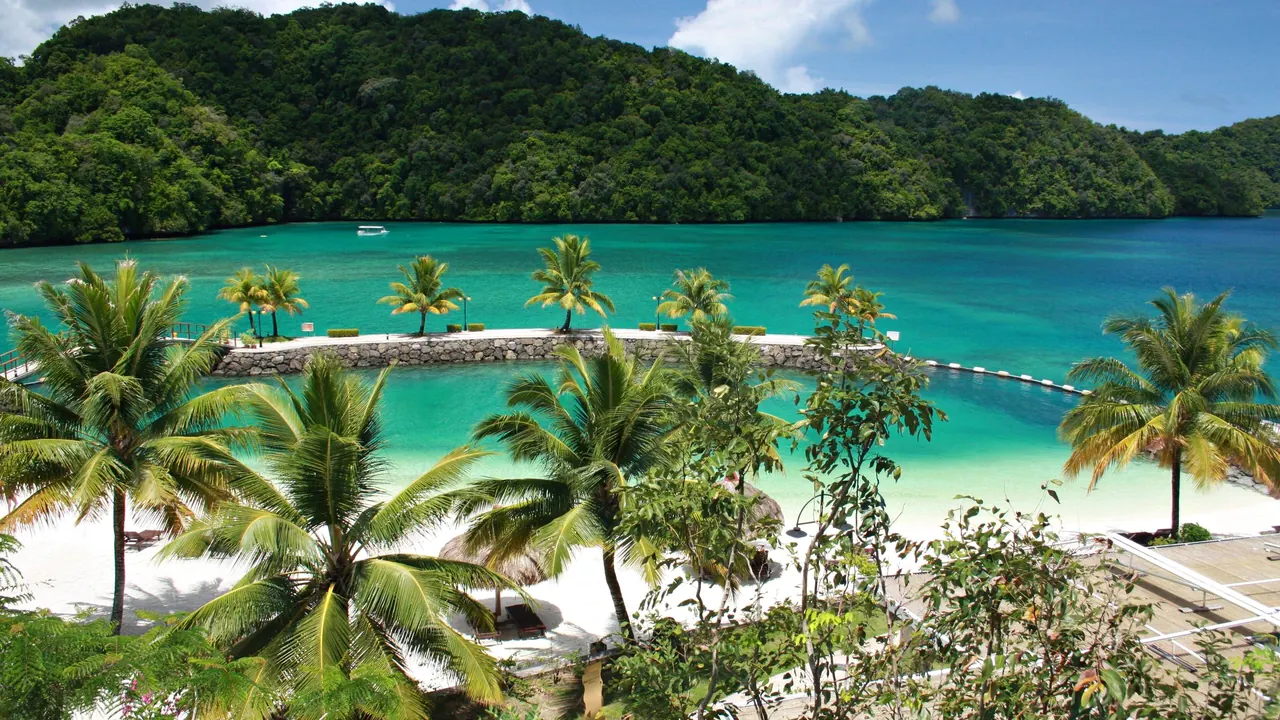
Koror is the choice for a trip built around the water. The Rock Islands lagoon offers some of the finest diving and snorkelling anywhere, the white sand coves under its limestone cliffs are a short boat ride away, and you get a little more to eat, more day trips and more to keep children busy. The price is a higher bill and a town that has little to show beyond a morning of museums.
Choose Pohnpei for
- culture and sights
- prices
- getting around
Pohnpei suits a traveller who wants a wilder, quieter island with one great ruin at its heart. Nan Madol's basalt islets give it a depth of history Koror can't match, the green volcanic interior has waterfalls and cloud forest to walk to, and costs run somewhat lower. In return there is no beach on the main island, much more rain and little to do beyond the reef, the ruins and the waterfalls.
Scoreboard
Twelve categories on one fixed scale from 0 to 100. The shaded stretch is the gap between the two.
Your match
Pick a travel style or drag the sliders, and both match scores follow your weighting.
Wins on beaches and day trips with your weighting.
Wins on culture and sights and prices with your weighting.
What matters to you?
Category by category
What the scores mean for a trip.
Beaches & swimming
Neither has a town beach you can stroll down to, but Koror's boat trips lead somewhere special: white sand crescents under the jungle-covered limestone of the Rock Islands, with reefs right off the boat. For days off the water there is resort sand on Arakabesang and Malakal.
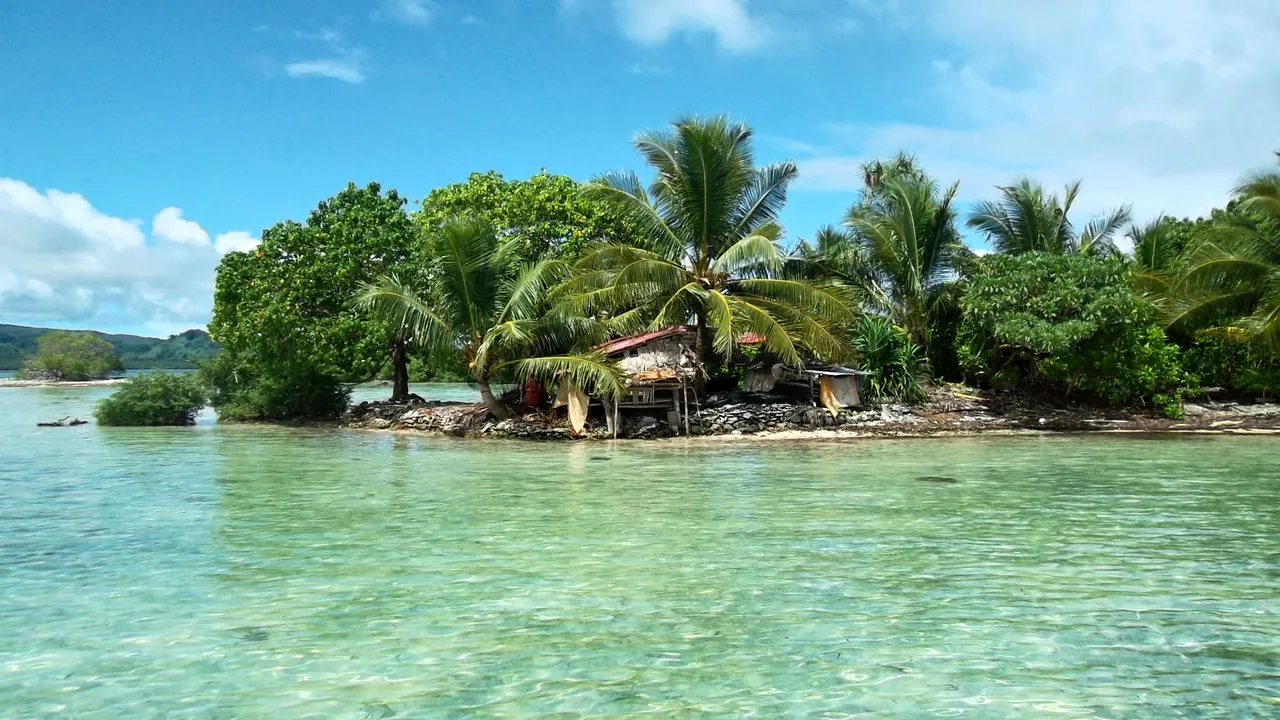
Pohnpei has no swimming beach on the main island at all, and Kolonia looks out on mud and seagrass. The sandy islets on its barrier reef and the shores of Ant and Pakin atolls are lovely and usually empty, but every visit is a planned half-day that depends on tide and weather.
Food & drink
Neither island is worth the trip for food, but Koror has a little more range. Japanese sashimi and noodle counters sit alongside Filipino, Korean, Thai and American-style diners, and Palauan dishes such as coconut crab and taro turn up on some menus.
On Pohnpei, eating out means a handful of simple places in Kolonia. Yellowfin sashimi caught that day and the local black pepper are real pleasures, and sakau gives the evening its own ritual, but you run out of choices sooner than in Koror.
Culture & sights
Pohnpei has the one sight that makes the journey worthwhile on its own: Nan Madol, nearly a hundred islets of stacked basalt on the reef, half swallowed by mangrove and listed by UNESCO. Add the Spanish wall fragment and German bell tower in Kolonia and the 1910 rebellion story on Sokehs, and it fills a day or two.
Koror's offer is neater but slighter. The Belau National Museum with its painted bai, together with the Etpison Museum, explains Palau's colonial layers well, but the town is done in a morning, and Palau's deeper heritage lies in its villages and other islands.
Nightlife
Both islands go to bed early ahead of dawn boats, so neither offers a real night out. The flavour differs. Koror's evenings mean resort bars by the water and weekend karaoke, while Pohnpei's social life is in roadside sakau bars, where people share coconut shells of kava in a slow, drowsy mood.
Nature & outdoors
Both are superb in the water, but Koror's Rock Islands lagoon is the bigger prize. Hundreds of mushroom-shaped limestone islands, world-class dives at Blue Corner and German Channel with sharks and mantas, and the marine lakes of Jellyfish Lake and the Milky Way for non-divers. On land it has less, mainly mangrove trips and the Ngardmau waterfall on Babeldaob.
Pohnpei reverses that balance. Its high volcanic interior, with cloud forest near 800m, waterfalls such as Kepirohi and the climb up Sokehs Rock, gives much more on foot. Offshore it has mantas at Ant and Pakin and the surf break at Palikir Pass, but its reefs don't match the Palau lagoon.
Day trips
Koror has two proper outings. One is the speedboat run to Peleliu, with tanks, bunkers and aircraft wrecks from the Pacific War. The other is a day with a driver on Babeldaob for the Badrulchau monoliths, the Airai bai and the capitol at Melekeok.
On Pohnpei the island is already the whole trip. Sokehs Island and the boats to Ant and Pakin are half-days within the lagoon, and the rest of the country is flights away, so there is no real excursion beyond the island.
Good for families
Koror is the easier place with children, though neither is built for them. Calm, warm lagoons, turtles spotted from the boats and the aquarium at the coral reef research centre can give older kids a memorable stay, and the resort beaches are a fallback.
Pohnpei asks more of a family, with no swimming beach on the main island, heavier rain and only basic healthcare. A waterfall pool or a snorkel off an atoll can still delight adventurous older children, but the logistics take patience.
Getting around
Neither island has buses, so on land both come down to taxis and hire cars. Koror is the more awkward of the two ashore. It is a long, thin town spread across several islands, few visitors walk far, and most hop between hotel, diner and dock by taxi. It pulls ahead at sea. The Rock Islands trips are run as packaged tours that start at your hotel door, so the outings that fill most days take no arranging.
Pohnpei is the other way round, and overall it is easier. Kolonia is small enough to see on foot, shared taxis are cheap, and a single ring road makes driving yourself around the island simple, with Nan Madol about an hour away. The catch is offshore. A run to the atolls or a dive is yours to book in advance, and weather or tide can call it off.
Shopping & style
Shopping is minimal on both islands, and each has one thing worth taking home. In Koror it is the carved Palauan storyboard, a wooden panel of legends and village life sold by local carvers. On Pohnpei it is woven baskets and fans, plus packets of the island's prized black and white pepper.
Affordability
Koror is the costlier stay. Beds are scarce, so rooms carry a premium, and a day among the Rock Islands needs a permit on top of the boat or dive itself. There is also an environmental fee to pay on arrival. Taxis and local diners are reasonable, but they make up only a small part of the bill.
Pohnpei comes out cheaper mainly because more of its best things are on land and free: the waterfall walks, the climb up Sokehs Rock and a wander around Kolonia. Shared taxis cost little and simple island meals are easy on the budget. Rooms are still dear for what they are, and the long island-hopping flight in takes a big share of the total.
Live music & performing arts
There is no theatre or concert hall on either island. In Koror, your chance to see Palauan chant and dance is a festival or a resort dance evening. On Pohnpei, dances appear at feasts and church celebrations, and a sakau ceremony is the closest thing to a show.
Wellness & relaxation
Koror has the edge for unwinding in comfort. A few resort hotels run proper spas with coconut and plant-based treatments, and days of lagoon swims and hotel pools are restful in themselves. Pohnpei offers no more than the odd hotel massage, so its rest comes from quiet itself: few cars, no crowds, days set by rain and tide, and the numbing calm of an evening sakau session.
When should you go?
Pick your month. The climate figures are measured averages, not a forecast.
Koror in July
Pohnpei in July
Daytime high, °C
Rainfall in the month, mm
Temperature and rainfall are climate normals, averaged over the years shown. Koror: 1991-2020 normals, Babelthuap Island, Babelthuap/Koror Airport (6.4 km from centre). Pohnpei: 1991-2020 normals, Pohnpei Island, Pohnpei Int. Airp. (2.2 km from centre).
Both sit in the steady heat of the western Pacific, with daytime highs around 31°C in every month and lagoon water of 28 to 30°C all year. Swimming is always warm, and walking around town is always sticky. The real difference is the rain. Koror is driest and sunniest from February to April, with March the best month of all, and wettest from June to August, when July brings over 400mm and noticeably greyer skies.
Around Kolonia on Pohnpei it is wetter than Koror in almost every month. February is the least rainy month, while April and May are the heaviest, with close to 480mm in May. Sunshine is scarce in winter and lowest in December. The two islands run almost in opposite directions: early in the year favours Koror, while July is Pohnpei's sunniest month, though still very wet, just when Koror is at its dampest.
Which traveller are you?
On a beach and sun trip, Koror is the clear pick. The white sand coves of the Rock Islands, the calm turquoise water and the resort beaches on Arakabesang and Malakal easily beat Pohnpei, where the main island has no sand and every swim needs a boat.
For a culture and arts trip, Pohnpei gives more, mainly because of Nan Madol, the UNESCO-listed city of basalt islets on its southeast reef, plus Spanish, German and Japanese traces in Kolonia. Koror's two museums and its painted bai fill only a morning.
On a trip on a tight budget, Pohnpei is the better bet, though neither will feel cheap. Its days on land cost little, so a traveller who limits the boat outings can keep spending modest. In Koror nearly every worthwhile day is a paid trip on the water.
Before you go
| Measure | Koror | Pohnpei |
|---|---|---|
| Official language | English, Japanese, Palauan | English |
| Currency | US Dollar (USD) | US Dollar (USD) |
| Sockets | AB120 V, 60 Hz | AB120 V, 60 Hz |
| Driving side | Right | Right |
| Time zone | UTC+9 | UTC+11 |
| Emergency number | 911 | 911 |
| Elevation | 22 m | - |
| Main airport | Roman Tmetuchl International Airport (ROR)7 km from centre7 non-stop destinations | Pohnpei International Airport (PNI)7 non-stop destinations |
| Public holidays this year | 11 days | 8 days |
By the numbers
| Measure | Koror | Pohnpei |
|---|---|---|
| Population | 8,744 | 26,102 |
| People per km² | - | 70 |
| Museums within 10 km | 2 | - |
| UNESCO World Heritage sites within 50 km | 1 | - |
| Swim season, months above 21 °C | 12 months | 12 months |
Where else could you go?
Every comparison below shares a destination with this one, so you can follow Koror or Pohnpei somewhere new.