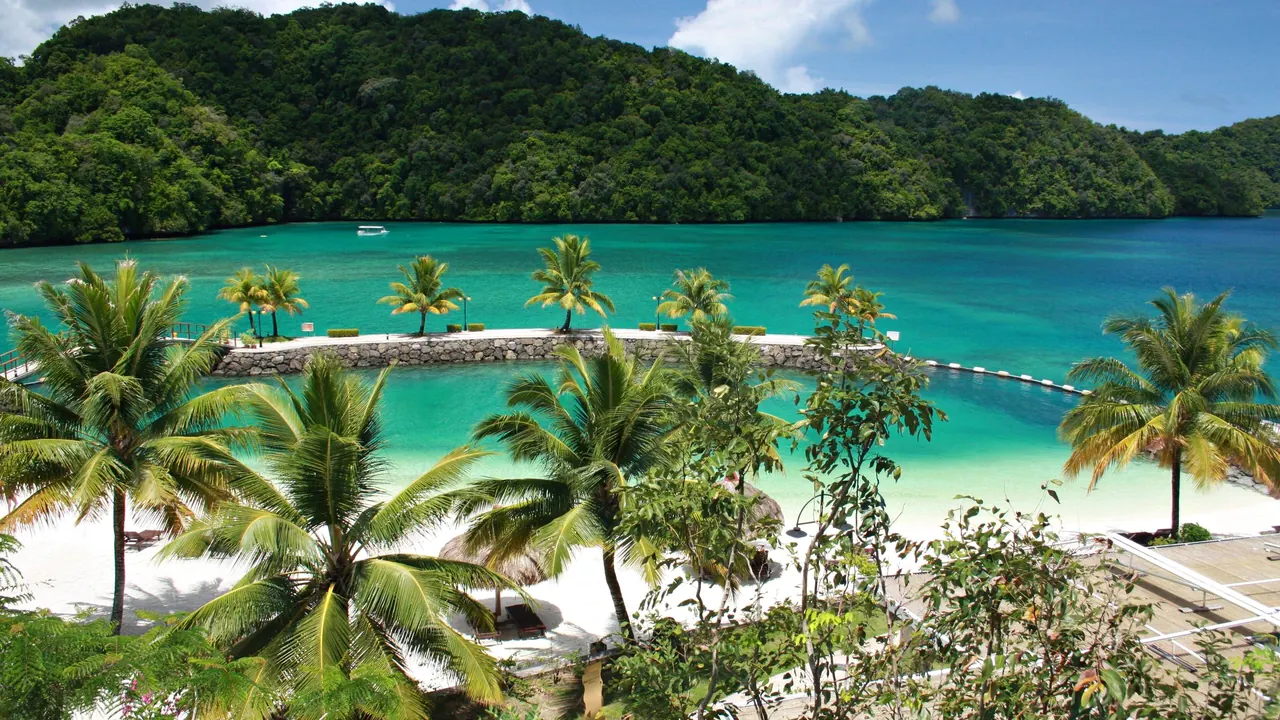
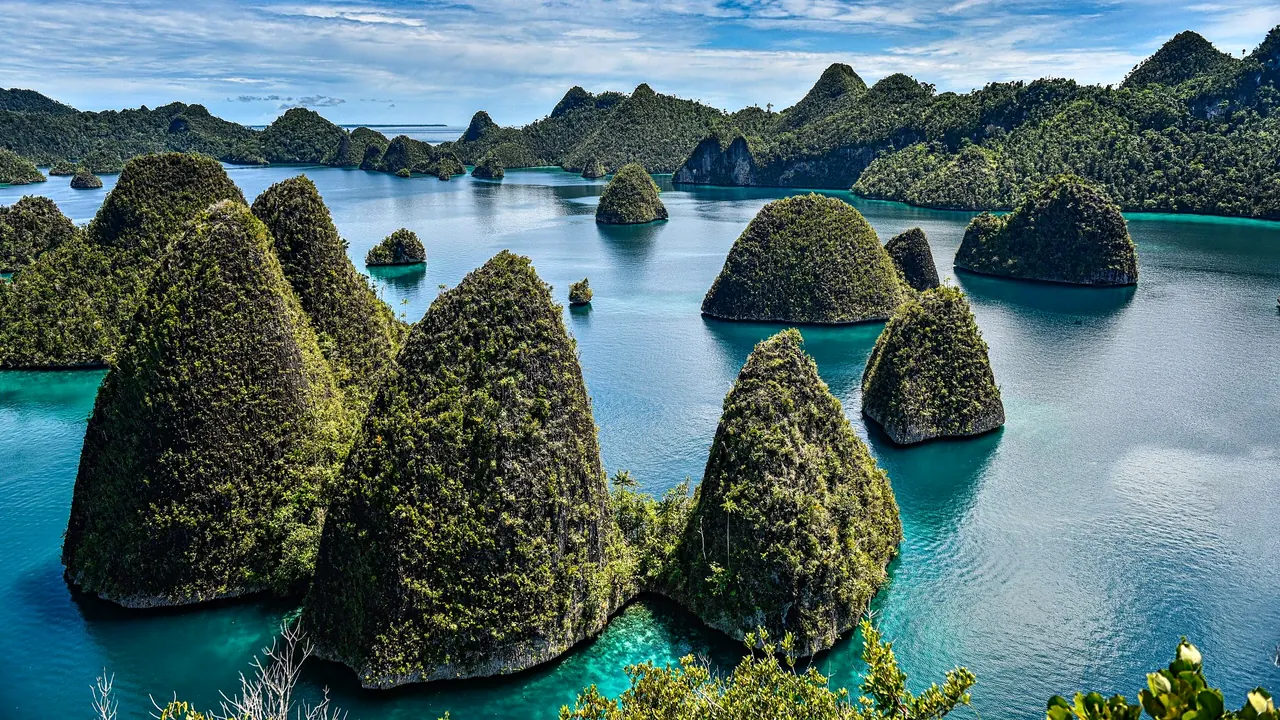
Photos: Koror by ito1117, CC BY-SA 3.0, cropped; Raja Ampat by Rolandandika, CC BY-SA 4.0, cropped.
Koror or Raja Ampat?
Our verdict in twelve categories, each scored against the same fixed benchmark cities, and the climate month by month, so you can choose for your trip.
Choose Koror for
- families
- day trips
- food and drink
Koror suits travellers who want world-class reefs with a little more infrastructure around them. Dive and tour operators collect you from your hotel, there are taxis, a choice of diners and two small museums. Peleliu's battlefields and Babeldaob's monoliths give you dry-land days, and families with older children will find it more manageable. You pay for that comfort, because rooms and boat days here are expensive.
Choose Raja Ampat for
- prices
- beaches
- nature and the outdoors
Raja Ampat is for the traveller who will happily give up almost everything else for the sea. The reefs are richer still, the white-sand strips sit right outside simple homestays on Kri, Gam or Arborek, and the karst lagoons of Wayag and Piaynemo are wilder than anything near Koror. Getting there takes a long journey, the food barely changes from day to day and the comforts are few, but if you base yourself at a homestay and snorkel from the jetty, you can stay cheaply.
Scoreboard
Twelve categories on one fixed scale from 0 to 100. The shaded stretch is the gap between the two.
Your match
Pick a travel style or drag the sliders, and both match scores follow your weighting.
Wins on families and day trips with your weighting.
Wins on prices and beaches with your weighting.
What matters to you?
Category by category
What the scores mean for a trip.
Beaches & swimming
Raja Ampat has the better beaches for a swimmer. You sleep on the sand itself, on narrow white strips on Kri, Gam, Mansuar and Arborek, and can step from your door into shallow reef. Empty sandbars between the karst islands add more on boat days.
Koror's own shoreline is mostly mangrove, harbour and causeway, with resort sand on Arakabesang and Malakal. The memorable beaches are small crescents in the Rock Islands, reached as part of a tour. The water is equally warm and clear in both, but only Raja Ampat offers the casual swim before breakfast.
Food & drink
Neither is a place to travel for food, but Koror gives you more to choose from. Its Japanese legacy brings sashimi, bento and noodle counters, and along the main road there are Filipino, Korean and Thai diners. A few menus also have coconut crab, taro and reef fish.
In Raja Ampat you eat set meals at your homestay: rice, the morning's fish, greens, tempe and sometimes papeda. It is fresh but repetitive, alcohol is scarce, and snacks from Sorong are worth packing.
Culture & sights
Both are thin on sights, but in different ways. Koror has institutions: the Belau National Museum, Micronesia's oldest, with a painted bai in its grounds, the Etpison Museum and scattered traces of the Japanese capital, all seen in a morning. Raja Ampat has no museums at all. Its heritage is living village life in places like Arborek and Sawinggrai, and the ochre hand paintings on Misool's cliffs, seen from a boat.
Nightlife
Koror at least offers a drink after dark: a few bars on the main street, resort bars by the water and karaoke rooms busy at weekends. Raja Ampat has nothing of the kind. After dinner the evening is a homestay deck under a dark sky, alcohol is hard to find and often discouraged, and everyone is in bed early before the morning boats.
Nature & outdoors
These are two of the finest marine destinations anywhere, and Raja Ampat has the edge. It sits at the heart of the Coral Triangle, so its reefs hold an unrivalled variety of species, from the Dampier Strait to the manta cleaning stations, and even the homestay jetty is worth a snorkel. Above water it adds the climbs to viewpoints over Wayag and Piaynemo and dawn visits to see birds of paradise in the forests of Waigeo and Gam.
Koror comes close, and it makes the big dives easy to reach. Blue Corner and German Channel are famous for sharks, mantas and strong currents, while sheltered reefs suit beginners. The marine lakes, Jellyfish Lake and the chalky Milky Way lagoon, fit into a Rock Islands day from town rather than needing an expedition of their own. On land, Babeldaob adds mangrove rivers and the walk to the Ngardmau waterfall.
Day trips
Koror has two outings that would justify a day on their own. Peleliu, an hour away by speedboat, keeps its Pacific War tanks, bunkers and memorials in the jungle. Babeldaob, reached by the bridge, has the Badrulchau monoliths, the bai houses at Airai and the domed capitol at Melekeok.
In Raja Ampat, day trips are boat outings for scenery and reefs. As for places to see, there are only the stilt villages, a stop in Waisai or the rock art near Misool.
Good for families
Koror is the more realistic choice with children. It is safe and quiet, taxis and hotel pick-ups take the effort out of each day, and the coral reef aquarium is a good introduction to the sea. Long, choppy boat days still make it better for older children than toddlers.
Raja Ampat asks a lot more of a family. There are flights, a ferry and boat transfers to get there, then shared bathrooms and mosquito nets, malaria, and medical care a boat ride and a flight away. Confident young swimmers will love the jetty snorkelling, but it is no place for small children.
Getting around
Neither has public transport. Still, Koror is far simpler: taxis are easy to find, one main road links its islands by causeway, and a hire car covers Babeldaob. Dive operators collect you from your hotel for the sea days.
Raja Ampat begins with a flight to Sorong, a ferry of about two hours to Waisai and a boat to your homestay. From there, every outing is a chartered or shared speedboat. Wayag is hours away, Misool is a separate journey, and rough seas in the middle of the year can cancel crossings.
Shopping & style
Koror has the basics and one real craft, the carved Palauan storyboard depicting legends, sold by local carvers and small shops. Raja Ampat has even less: just pandanus hats and bags woven by women on Arborek, often with a manta ray woven in, and noken string bags. You buy these on the jetty, and the money goes straight to the maker. Stock up on sunscreen, medicines and cash before you leave Sorong.
Affordability
Both are expensive by regional standards, but Raja Ampat gives a careful traveller more room. A family homestay on Kri or Gam with meals included is modest, and snorkelling from the jetty is free. Costs rise with the marine park permit, flights to Sorong, speedboat charters to Wayag and diving.
Koror is harder to do cheaply. Its few hotels charge a lot for what they offer, there is an environmental fee on arrival, and the tours, dives and Rock Islands permits that make up most days soon add up.
Live music & performing arts
Neither has a theatre or a regular venue, so performance comes by chance in both. In Koror it is Palauan chant and dance at festivals and the odd resort dance evening. In Raja Ampat it might be a village welcome with tifa drums and feathered dancers on the jetty, or Sunday hymns drifting across the water from a wooden church.
Wellness & relaxation
Both rest you in the same way, through salt water, sun and early nights, rather than through spas. Koror's few resort hotels offer massages using coconut and local plants, and there is a pool to fall back on. Raja Ampat offers deeper quiet in exchange for comfort: no traffic, often no phone signal, and a hammock over the water, but simple huts instead of pampering.
When should you go?
Pick your month. The climate figures are measured averages, not a forecast.
Koror in July
Raja Ampat in July
Daytime high, °C
Rainfall in the month, mm
Where the figures come from
Raja Ampat's temperatures are measured 65 km from the centre, at Sorong / Jefman.
Raja Ampat has no rain gauge within 25 km of the centre, so its rainfall comes from a gridded climate dataset read at the destination rather than from a gauge further away.
Temperature and rainfall are climate normals, averaged over the years shown. Koror: 1991-2020 normals, Babelthuap Island, Babelthuap/Koror Airport (6.4 km from centre). Raja Ampat: 1996-2020 (rainfall 1991-2020) normals, Sorong / Jefman (65 km from centre).
Both are hot and humid all year. Daytime highs stay at about 32°C in every month and the sea is warm enough to swim in any season, so the beach is never out of season, but midday walking is tiring whenever you go. The real difference is the rain. Koror is wet in every month, and its best window is February to April. March is the driest and sunniest month, with about 194mm. From May the rain builds and the days turn greyer, and June to August is the wettest stretch, peaking at about 411mm in July. The months from October to December stay wet too, so they are no better a choice here.
Raja Ampat follows a different calendar. Around the main islands where most visitors stay, October to December is the driest time, with November down to about 161mm, and the seas are calmest from about October to April. May to July brings the heaviest rain, with June at about 338mm, and from June to September the southeast wind can make crossings rough, especially in the south around Misool. Both are at their worst in the middle of the year, but at opposite ends otherwise: go to Koror early in the year, and to Raja Ampat in the last months of it.
Which traveller are you?
On a beach and sun trip, Raja Ampat is the better choice. On Kri, Gam and Arborek, homestays stand on white coral sand with reef a few steps away. In Koror, the good beaches are coves in the Rock Islands that you reach by boat on an organised day.
On a family trip with older children, Koror is easier. Taxis, hotel pick-ups, the reef aquarium and real medical care nearby make it far less demanding than Raja Ampat, with its basic huts, malaria and long boat transfers.
On a trip on a tight budget, Raja Ampat stretches the money further. A family homestay with meals included is modest, and jetty snorkelling costs nothing. Koror's rooms are expensive for what they offer, and the boat tours and permits soon add up.
Before you go
| Measure | Koror | Raja Ampat |
|---|---|---|
| Official language | English, Japanese, Palauan | Indonesian |
| Currency | US Dollar (USD) | Rupiah (IDR) |
| Sockets | AB120 V, 60 Hz | CF50 Hz |
| Driving side | Right | Left |
| Time zone | UTC+9 | UTC+9 |
| Emergency number | 911 | 112 |
| Elevation | 22 m | - |
| Main airport | Roman Tmetuchl International Airport (ROR)7 km from centre7 non-stop destinations | Domine Eduard Osok Airport (SOQ)10 non-stop destinations |
| Public holidays this year | 11 days | - |
By the numbers
| Measure | Koror | Raja Ampat |
|---|---|---|
| Population | 8,744 | - |
| Museums within 10 km | 2 | - |
| UNESCO World Heritage sites within 50 km | 1 | - |
| Swim season, months above 21 °C | 12 months | 12 months |
Where else could you go?
Every comparison below shares a destination with this one, so you can follow Koror or Raja Ampat somewhere new.
- Yapvs Koror
- Guamvs Koror
- Saipanvs Koror
- Floresvs Raja Ampat
- Palawanvs Raja Ampat
- Gili Islandsvs Raja Ampat