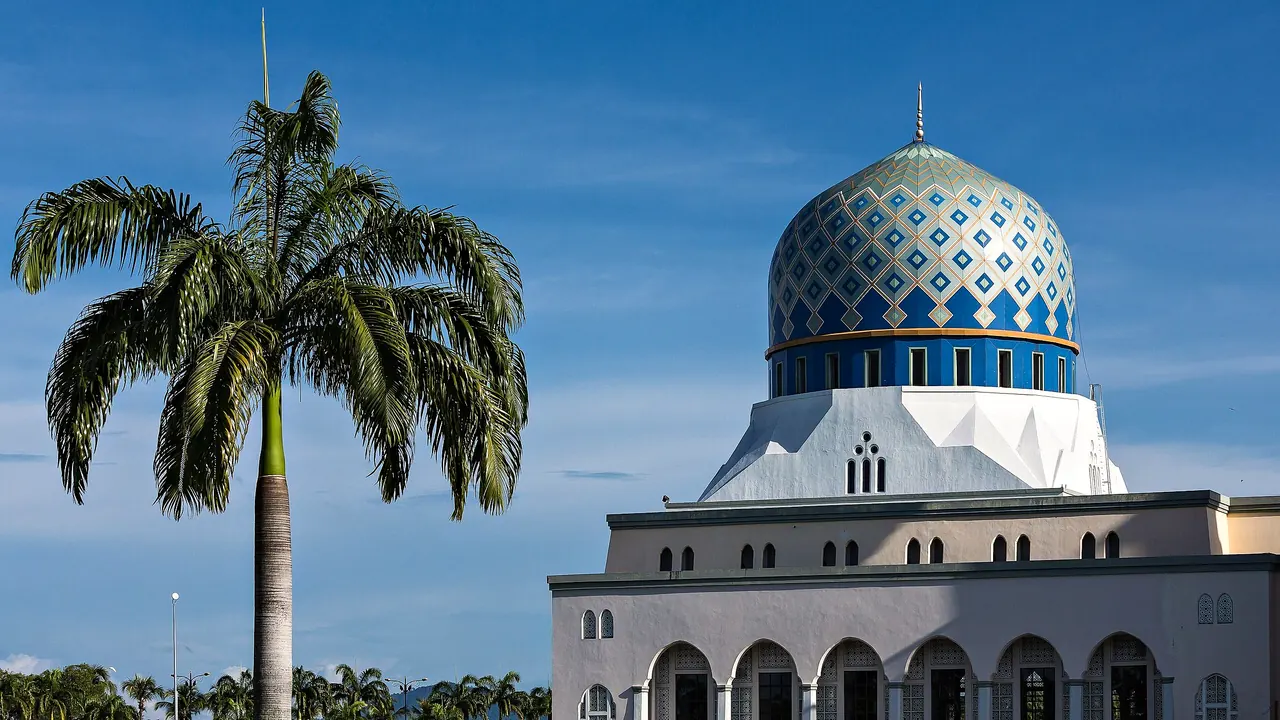
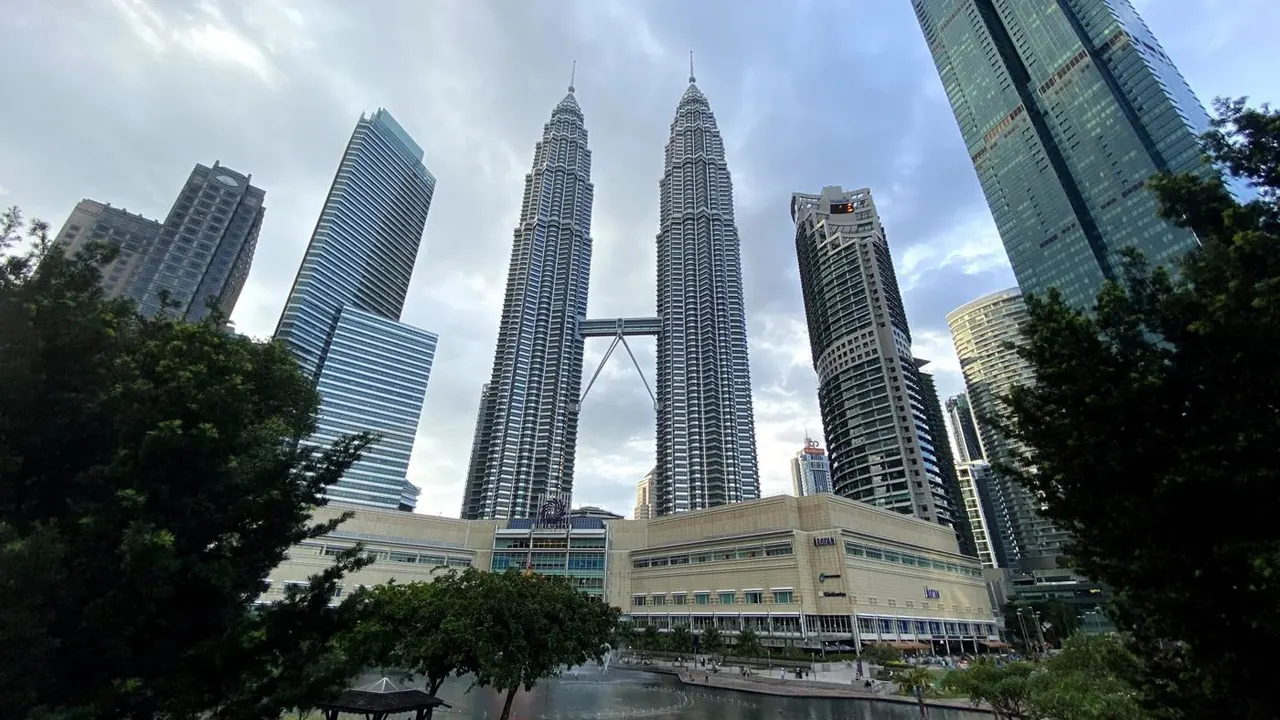
Photos: Kota Kinabalu by CEphoto, Uwe Aranas, CC BY-SA 3.0, cropped; Kuala Lumpur by Brownc, CC BY-SA 4.0, cropped.
Kota Kinabalu or Kuala Lumpur?
Our verdict in twelve categories, each scored against the same fixed benchmark cities, and the climate month by month, so you can choose for your trip.
Choose Kota Kinabalu for
- beaches
- nature and the outdoors
- prices
Kota Kinabalu is the choice when the trip is about the sea and the wild. Mount Kinabalu and its cloud forest are a couple of hours inland, coral islands are a short boat ride from the city jetty, and evenings end early over grilled seafood. If you want to climb, snorkel, dive or watch proboscis monkeys at dusk, it gives you far more. On that kind of trip, its thin list of sights and small nightlife hardly matter.
Choose Kuala Lumpur for
- shopping
- culture and sights
- live music and the arts
For a city vacation, Kuala Lumpur fills the hours between breakfast and midnight far better. Malay, Chinese and Indian food is everywhere, and the Islamic Arts Museum and the colonial buildings around Merdeka Square give you days of sightseeing. Its trains, malls and bars make it easy to stay busy without a car. It suits food lovers, shoppers and anyone who wants culture and evenings out, as long as the beach is left for another leg of the trip.
Scoreboard
Twelve categories on one fixed scale from 0 to 100. The shaded stretch is the gap between the two.
Your match
Pick a travel style or drag the sliders, and both match scores follow your weighting.
Wins on beaches and nature and the outdoors with your weighting.
Wins on shopping and culture and sights with your weighting.
What matters to you?
Category by category
What the scores mean for a trip.
Beaches & swimming
Kota Kinabalu has real swimming close at hand. The Tunku Abdul Rahman Park islands, such as Manukan and Sapi, are a short speedboat hop from the city jetty, with white sand and coral you can snorkel from the shore. The beaches are small and fill up by late morning, and Tanjung Aru on the mainland is better for sunset walks than for swimming. Still, the resorts there and at Dalit Bay put the sea at the centre of a stay.
Kuala Lumpur sits inland, and the nearest coast at Port Klang is mangrove and shipping water. Port Dickson, about an hour and a half away, has warm but rarely clear water and plain sand. Most visitors swim in a rooftop hotel pool and save the sea for a separate leg to Langkawi or Penang.
Food & drink
Kuala Lumpur has much the wider choice. Malay, Chinese and South Indian cooking all run deep, and the mamak canteens serve roti canai and teh tarik at any hour. Jalan Alor, Brickfields and Kampung Baru each make an evening of eating, and there is a polished restaurant tier for a special night.
Kota Kinabalu is narrower but distinctive. Seafood is picked live from tanks or grilled at the waterfront night market, and Sabah has its own dishes, such as sang nyuk mee, Tuaran mee and hinava, the Kadazan raw fish salad cured with lime. Outside the big hotels, variety is what you give up.
Culture & sights
Kuala Lumpur gives you two or three solid days of sightseeing. There are the Petronas Towers and their skybridge, the British-era buildings around Merdeka Square, the Islamic Arts Museum in the Lake Gardens, and temples from Chinatown out to the long stairway at Batu Caves.
Kota Kinabalu lost most of its old town in the 1945 bombing, and the centre is postwar. The Sabah Museum with its longhouse village, the floating City Mosque and the Atkinson Clock Tower fill half a day. Borneo's indigenous cultures are better seen in the villages outside town.
Nightlife
Kuala Lumpur offers a proper night out. The shophouse bars of Changkat Bukit Bintang stay busy late, rooftop bars look out at the Petronas Towers, and larger clubs keep dancers going into the small hours. Heavy taxes make drinking expensive, and many people end the night at a mamak stall instead.
In Kota Kinabalu the evening is a long seafood dinner and a sunset drink at the waterfront bars, with a few live-band bars and small clubs at weekends. Early starts for boats and the mountain keep the scene small.
Nature & outdoors
Nature is where Kota Kinabalu is strongest. Mount Kinabalu, Borneo's highest peak at 4,095m, is about two hours' drive away. Most people climb it over two days with a night in a mountain hut, and its park is one of the richest botanical sites on earth. Add snorkelling and diving in the marine park, rafting on the Kiulu and Padas rivers, and dusk cruises in the Klias wetlands to see proboscis monkeys and fireflies.
Kuala Lumpur's green side is pleasant rather than wild. There is a patch of jungle with a canopy walkway by the KL Tower, forest trails at the Forest Research Institute and birdwatching at Fraser's Hill, but the great national parks need an overnight trip.
Day trips
From Kota Kinabalu, most outings head into the landscape, and there are few towns to visit. The best of them is the Sunday tamu at Kota Belud, about an hour and a half north, where Bajau and Dusun villagers trade livestock, produce and crafts. The other is the slow colonial railway south through rice fields and stilt villages to Beaufort.
Malacca alone puts Kuala Lumpur well ahead. It is about two hours south, with Dutch and Portuguese buildings, Chinese shophouses and Peranakan cooking, though the drive makes for a long day. Nearer the city, Putrajaya's lakeside mosques, the royal town of Klang and the hilltop fort at Kuala Selangor make shorter half-day trips.
Good for families
Kota Kinabalu suits a slow family stay built around the sea. Short boat rides reach shallow island beaches with fish to snorkel over, Lok Kawi Wildlife Park has orangutans and pygmy elephants, and the resorts have pools and kids' clubs. Beyond that there is little made for children, and the mountain means long drives on winding roads.
Under the Petronas Towers in Kuala Lumpur, an aquarium with a shark tunnel and a hands-on science centre give children far more to do. The Lake Gardens add bird and butterfly parks, and there is the national zoo and a big water park at Sunway. Air-conditioned malls give you somewhere to go when the afternoon storms arrive.
Getting around
Kuala Lumpur has a rail network that does most of the work. The LRT and MRT lines, the monorail through Bukit Bintang and the airport express to KL Sentral reach most sights, though changing lines can mean long walks. Ride-hailing fills the gaps.
Kota Kinabalu has no rail transit, and visitors find its minibuses hard to use. The waterfront centre is easy to walk and the island boats leave from its jetty. For anything further you need ride-hailing, a tour or a hired driver.
Shopping & style
Kuala Lumpur is a mall city on a large scale. Bukit Bintang's string of centres runs from luxury flagships to electronics floors, with Mid Valley and Bangsar adding more. For crafts, the Art Deco Central Market sells batik, songket and pewter.
Kota Kinabalu's shopping is small and local. The Sunday market on Gaya Street has orchids and rattan, and the waterfront handicraft market sells cultured pearls and shell work. Sabah tea and wild honey make good gifts, but there is no boutique scene.
Affordability
Both cities are cheap day to day. Kopitiam breakfasts, hawker meals, ride-hailing and comfortable hotels all cost little.
Where the money goes is different. In Kota Kinabalu it goes on the experiences: climbing permits, compulsory guides and the mountain hut, plus diving, rafting and beach-resort rates. In Kuala Lumpur it goes on heavily taxed alcohol, while upper-end hotels are unusually good for what they cost.
Live music & performing arts
Kuala Lumpur has a few evenings worth planning around. The Malaysian Philharmonic Orchestra plays in its intimate hall inside the Petronas Towers, Istana Budaya puts on large productions, and there is a small jazz circuit around Bangsar and Changkat.
Kota Kinabalu has almost no formal stage, and Kadazan-Dusun and Bajau dances are mostly seen as staged shows. The exception is the Kaamatan harvest festival in Penampang, where gong ensembles and bamboo bands play for local people.
Wellness & relaxation
Neither city has a bathing tradition, and in both, relaxing means massage and hotel spas. The difference is the setting.
In Kota Kinabalu it means a beach-resort stay at Tanjung Aru or Dalit Bay, with Poring's open-air sulphur tubs as a reward after the mountain. In Kuala Lumpur it means a reflexology parlour in Bukit Bintang, Malay herbal treatments in a hotel spa and a rooftop pool, with the hill stations for cooler air.
When should you go?
Pick your month. The climate figures are measured averages, not a forecast.
Kota Kinabalu in July
Kuala Lumpur in July
Daytime high, °C
Rainfall in the month, mm
Where the figures come from
Kuala Lumpur's temperatures are measured 46 km from the centre, at Sepang/KL International Airport.
Kuala Lumpur has no rain gauge within 25 km of the centre, so its rainfall comes from a gridded climate dataset read at the city rather than from a gauge further away.
Temperature and rainfall are climate normals, averaged over the years shown. Kota Kinabalu: 1991-2020 (sunshine 1981-2010) normals, Kota Kinabalu (5.3 km from centre). Kuala Lumpur: 1991-2020 (sunshine 1981-2010) normals, Sepang/KL International Airport (46.1 km from centre).
Both cities are hot all year, with daytime highs in the low thirties every month, so the season really comes down to rain. Kota Kinabalu is driest and sunniest from February to April, with only 83mm in February, and this is the best stretch for island days and mountain trips. From May the rain gets much heavier and peaks at 381mm in October. The sea stays around 30°C all year, so swimming is always possible.
Kuala Lumpur follows a different pattern. Its driest months are June and July, with 139mm in July, and February is also fairly calm. The wetter spells come around March and April and again from October to December, peaking at 385mm in November, when afternoon storms are frequent. The heat and humidity make long walks hard going in any month, so street wandering is best done in the early morning.
Which traveller are you?
On a beach and sun trip, Kota Kinabalu is the clear pick. White-sand coral islands lie a short speedboat ride from the centre and beach resorts line the coast. Kuala Lumpur is inland, and its nearest swimmable sand at Port Dickson is ordinary.
For an outdoors trip, choose Kota Kinabalu. Climbing Mount Kinabalu, snorkelling in the marine park, rafting and spotting proboscis monkeys at dusk are all within reach. Kuala Lumpur offers forest walks in the city and hill stations, but real wilderness is an overnight trip away.
On a culture and arts trip, Kuala Lumpur gives you far more. The Islamic Arts Museum, the colonial quarter around Merdeka Square, the temples and Batu Caves fill several days, and the philharmonic adds evenings out. Kota Kinabalu's sights take half a day.
Before you go
| Measure | Kota Kinabalu | Kuala Lumpur |
|---|---|---|
| Official language | Malay | Malay |
| Currency | Malaysian Ringgit (MYR) | Malaysian Ringgit (MYR) |
| Sockets | G240 V, 50 Hz | G240 V, 50 Hz |
| Driving side | Left | Left |
| Time zone | UTC+8 | UTC+8 |
| Emergency number | 999 | 999 |
| Elevation | 5 m | 50 m |
| Main airport | Kota Kinabalu International Airport (BKI)5 km from centre37 non-stop destinations | Kuala Lumpur International Airport (KUL)45 km from centre145 non-stop destinations |
By the numbers
| Measure | Kota Kinabalu | Kuala Lumpur |
|---|---|---|
| City population | 452,058 | 9,000,280 |
| People per km² | 1,284 | 36,932 |
| Museums within 10 km | 3 | 25 |
| UNESCO World Heritage sites within 50 km | 0 | 1 |
| Swim season, months above 21 °C | 12 months | 12 months |
Where else could you go?
Every comparison below shares a destination with this one, so you can follow Kota Kinabalu or Kuala Lumpur somewhere new.
- Malaccavs Kuala Lumpur
- Penangvs Kuala Lumpur
- Singaporevs Kuala Lumpur
- Puerto Princesavs Kota Kinabalu
- El Nidovs Kota Kinabalu
- Kuchingvs Kota Kinabalu