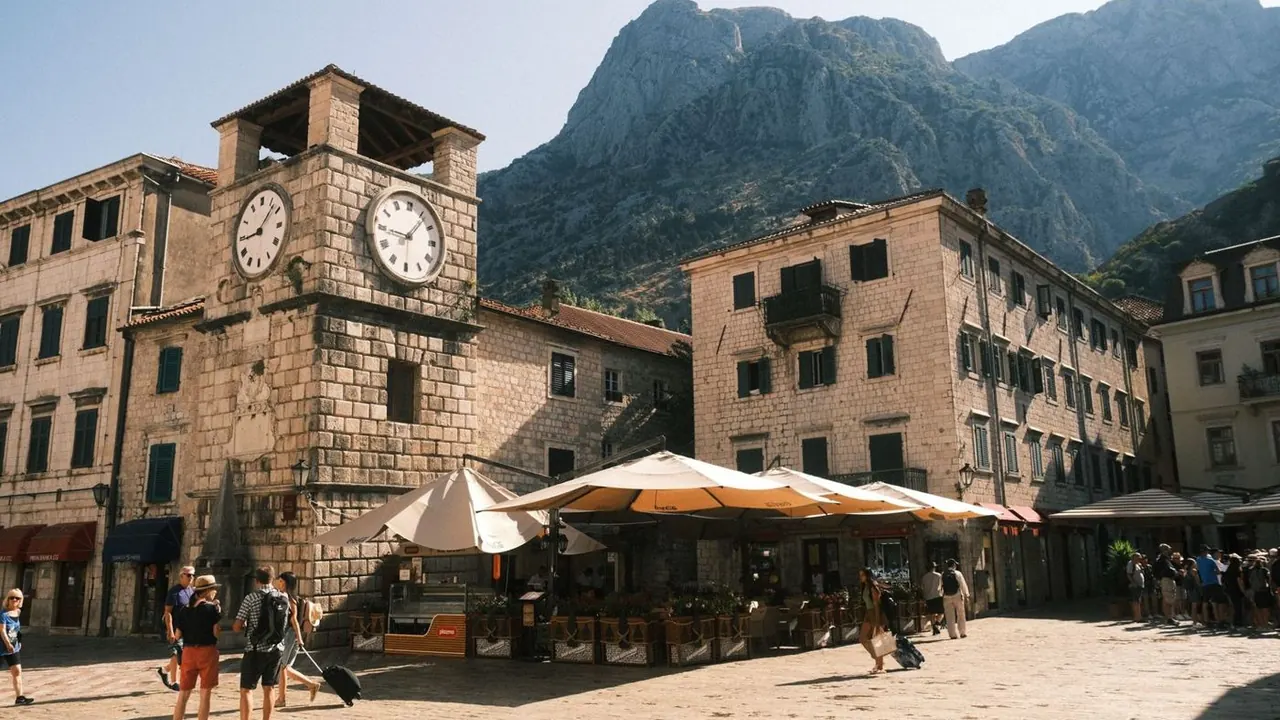
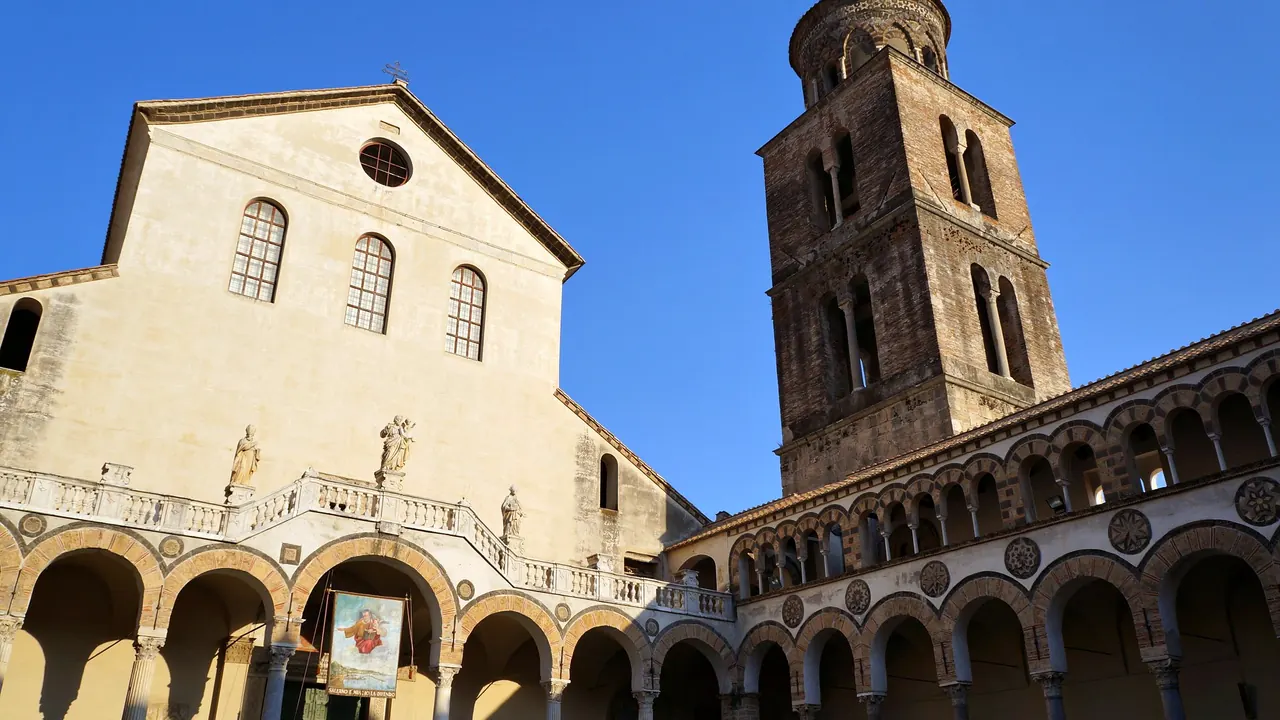
Photos: Kotor by Muhammed Fatih Beki, Pexels License; Salerno by Leandro Neumann Ciuffo, CC BY 2.0, cropped.
Kotor or Salerno?
Our verdict in twelve categories, each scored against the same fixed benchmark cities, and the climate month by month, so you can choose for your trip.
Choose Kotor for
- culture and sights
- nature and the outdoors
Kotor suits travellers who want the setting to be the vacation: a small walled town at the end of a fjord-like bay, cliffs rising straight from the water and walks that start at the town gate. It is best for a slower trip of evening drinks under the lit walls, boat outings to Perast and drives up into Lovcen, for people who are happy with a narrower choice of food, nights out and shopping.
Choose Salerno for
- food and drink
- shopping
- live music and the arts
Salerno is the better pick for a trip built around eating well and seeing a lot. Its trains and ferries put Pompeii, Paestum, Naples and the Amalfi Coast within easy reach without a car. Buffalo mozzarella and Campanian cooking are part of everyday life, and the seafront promenade and sandy beaches make it the easier choice with children.
Scoreboard
Twelve categories on one fixed scale from 0 to 100. The shaded stretch is the gap between the two.
Your match
Pick a travel style or drag the sliders, and both match scores follow your weighting.
Wins on culture and sights and nature and the outdoors with your weighting.
Wins on food and drink and shopping with your weighting.
What matters to you?
Category by category
What the scores mean for a trip.
Beaches & swimming
Neither town is a beach resort in itself, but Salerno does better. It has grey-sand city beaches along its own seafront, and an easy run south to the wide sandy shore towards Paestum, with lidos and pine woods for a full day by the sea. Ferries also reach the clear-water coves of the Amalfi Coast.
Kotor has no real beach. You swim off concrete platforms and jetties in the calm but enclosed inner bay. For sand you have to cross the hill to Jaz or the coves around Budva, so a beach day there always means a journey.
Food & drink
Kotor eats well at the water's edge: mussels from the bay's farms, black cuttlefish risotto, smoked Njegusi ham with mountain cheese and a glass of dark Vranac. The catch is finding it. The terraces on the old town squares are uneven, the best konobas are out in Dobrota, Prcanj and Perast, and there is little else on offer.
Salerno is far stronger, mostly because good food is so ordinary there. Mozzarella comes in the same day from the buffalo farms on the plain, sfogliatelle and lemon pastries fill the old town's bakeries, and Fiano and Aglianico are poured everywhere. You can eat well without planning.
Culture & sights
Kotor comes out ahead because the whole town is the monument. Its UNESCO-listed Venetian walls climb the cliff to St John's fortress, and the twelfth-century Cathedral of St Tryphon, seafaring palazzi and the Maritime Museum fill a triangle of marble lanes.
Salerno's heritage is just as old but more scattered through a working city. The Norman cathedral, with Saint Matthew's relics in its ornate crypt, is the highlight, alongside the medicinal Giardino della Minerva, tied to Europe's first medical school, and the Arechi Castle above the gulf. A day or two covers both towns.
Nightlife
Salerno has more going on after dark. On weekends and through the summer, young locals crowd the wine bars and pubs around Largo Campo and Via dei Mercanti until late, after the passeggiata along the seafront. It is a street-drinking scene rather than a club town.
Kotor's evenings are quieter still: a drink on a square once the day visitors have gone, a few late bars in summer and very little outside the warm months. In both places a big night means travelling, to Budva's seafront clubs from Kotor or to Naples from Salerno.
Nature & outdoors
Both have dramatic limestone scenery, but they use it differently. In Kotor the mountains are right at the door. The Ladder of Kotor mule track leaves from the town gates, cliffs rise over 1,000m from the water, and Lovcen's beech woods are up the hairpin road.
Salerno's landscapes start a little further out. You take a ferry or bus to the Path of the Gods above Positano or the Valle delle Ferriere, or drive south to the Cilento's gorges and headlands. That gives more variety, but less of the feeling of living inside the view.
Day trips
Salerno is one of the best bases in Italy for days out. Paestum's Greek temples and Pompeii are each about half an hour by train, ferries run to Amalfi and Positano, and Naples, Herculaneum and the palace at Caserta are all easy to reach.
Kotor has a fine set of outings, but fewer and harder to reach. You can take a boat to the island church off Perast, drive over Lovcen to old royal Cetinje and the Njegos mausoleum, or face a long day to Dubrovnik with the border to cross. Most of them work best with a car.
Good for families
Salerno is easier with children. The long, flat seafront has gardens, playgrounds and gelato, the beaches to the south are sandy and shallow, and the Luci d'Artista lights make a winter visit fun. The steep, stepped old town and carsick coast roads are the drawbacks.
Kotor's car-free old town is safe and so small that children cannot get lost, and its street cats are a hit. Beyond that there is little made for children: the main sight is a steep, exposed fortress climb, and sand means driving to Budva.
Getting around
Inside the walls Kotor is effortless, flat and car-free, and you can cross it in minutes. Leaving is the problem. Buses around the bay are infrequent, the single shore road jams in summer, and most visitors end up hiring a car or a driver.
Salerno is much easier to get around without one. The centre is a walkable strip from the station to the old town, a short metro line and buses cover the east, direct trains run to Naples, Pompeii and Paestum, and ferries handle the Amalfi Coast.
Shopping & style
Kotor's lanes sell souvenirs, silver filigree, lace and cat trinkets, and the best buys are Vranac, Njegusi ham and honey from the green market. For brands you have to go to Tivat's marina.
Salerno has a real high street. Corso Vittorio Emanuele is a long pedestrian run of Italian clothing stores, and the most memorable buys are hand-painted Vietri majolica and lemon products from the coast.
Affordability
The two cost about the same, and in both the money goes in high summer. Kotor is cheaper than the better-known resorts further up the coast, but in July and August its hotels and the terrace restaurants on the squares inside the walls charge resort rates. A private apartment in Dobrota or Muo, meals away from the busiest squares and a visit in May, June or September bring the cost down noticeably.
Salerno saves you money in a different way. It is a working city priced for the people who live there, and a room costs much less than in the cliff villages of the Amalfi Coast. The spending comes from the outings: ferries along the coast over several days, a lido sunbed and the entry fees at Pompeii and Paestum. Outside summer it is an easy city to stay in on a modest budget.
Live music & performing arts
Salerno has a real stage. The gilded Teatro Verdi, modelled on Naples' San Carlo, runs a season of opera, ballet and concerts, and the Ravello Festival's cliff-top concerts are within reach in summer.
Kotor has nothing year-round. Its best moments are occasions: summer recitals in the churches, the masked carnival and the lit boats of Boka Night.
Wellness & relaxation
Neither has a bathing culture, but Salerno has a little more. Contursi Terme's open-air sulphur pools are about an hour inland, and the palm-lined promenade is made for slow sunset walks, though traffic noise follows you along the main roads.
In Kotor, wellness means a resort hotel spa. Its real calm is in early mornings on the water and long village lunches away from the crowded walls.
When should you go?
Pick your month. The climate figures are measured averages, not a forecast.
Kotor in July
Salerno in July
Daytime high, °C
Rainfall in the month, mm
Where the figures come from
Kotor has no rain gauge within 25 km of the centre, so its rainfall comes from a gridded climate dataset read at the city rather than from a gauge further away.
Kotor's sunshine is measured 42 km from the centre, at Podgorica-Grad.
Salerno's temperatures are measured 71 km from the centre, at Grazzanise.
Salerno has no rain gauge within 25 km of the centre, so its rainfall comes from a gridded climate dataset read at the city rather than from a gauge further away.
Temperature and rainfall are climate normals, averaged over the years shown. Kotor: 1991-2020 normals, Tivat (4.2 km from centre). Salerno: 1991-2020 normals, Grazzanise (71.3 km from centre).
The two summers are almost identical. Both towns reach about 31°C in July and August, which is good beach weather but hard going on Kotor's fortress steps or across the open ground at Pompeii and Paestum. The sea is warm enough for a proper swim at both from June to September and peaks at about 26°C in August. Late May, June and September are the most comfortable months for combining swimming with walking, and both get long, sunny days through the summer.
The real difference comes in autumn and winter. Kotor sits under high mountains, and its rain arrives earlier and heavier: September is already wet there, and November brings about 202mm, against 154mm in Salerno. Salerno stays drier into October and gets a little more winter sun, so it is the safer choice for a mild off-season city stay. Winter days in both are around 13°C.
Which traveller are you?
For a food and nightlife trip, Salerno is the clear choice. Fresh buffalo mozzarella, Cetara's colatura and wood-fired pizza beat Kotor's narrow, uneven menus, and the crowded lanes around Largo Campo stay lively much later than Kotor's terraces, where evenings wind down early.
On a family trip with young children, Salerno works better. It has a flat, car-free promenade with playgrounds, shallow sandy beaches to the south and trains to Pompeii. Kotor is safe and full of cats, but it offers little for children beyond a hot, steep fortress climb.
For a short city break, Kotor has the edge. Its UNESCO-listed walled town can be walked in a few hours, the climb to St John's fortress gives you the bay in one view, and Tivat airport is a short drive away, so even two days feel complete.
Before you go
| Measure | Kotor | Salerno |
|---|---|---|
| Official language | Montenegrin | Italian |
| Currency | Euro (EUR) | Euro (EUR) |
| Sockets | CF230 V, 50 Hz | CFL230 V, 50 Hz |
| Driving side | Right | Right |
| Time zone | UTC+1, UTC+2 in summer | UTC+1, UTC+2 in summer |
| Emergency number | 112 | 112 |
| Elevation | 10 m | 4 m |
| Main airport | Tivat Airport (TIV)5 km from centre42 non-stop destinations | Naples International Airport (NAP)46 km from centre131 non-stop destinations |
| Public holidays this year | - | 13 days |
By the numbers
| Measure | Kotor | Salerno |
|---|---|---|
| City population | 562 | 127,186 |
| People per km² | - | 2,123 |
| Museums within 10 km | 3 | 9 |
| UNESCO World Heritage sites within 50 km | 3 | 5 |
| Swim season, months above 21 °C | 5 months | 5 months |
Where else could you go?
Every comparison below shares a destination with this one, so you can follow Kotor or Salerno somewhere new.