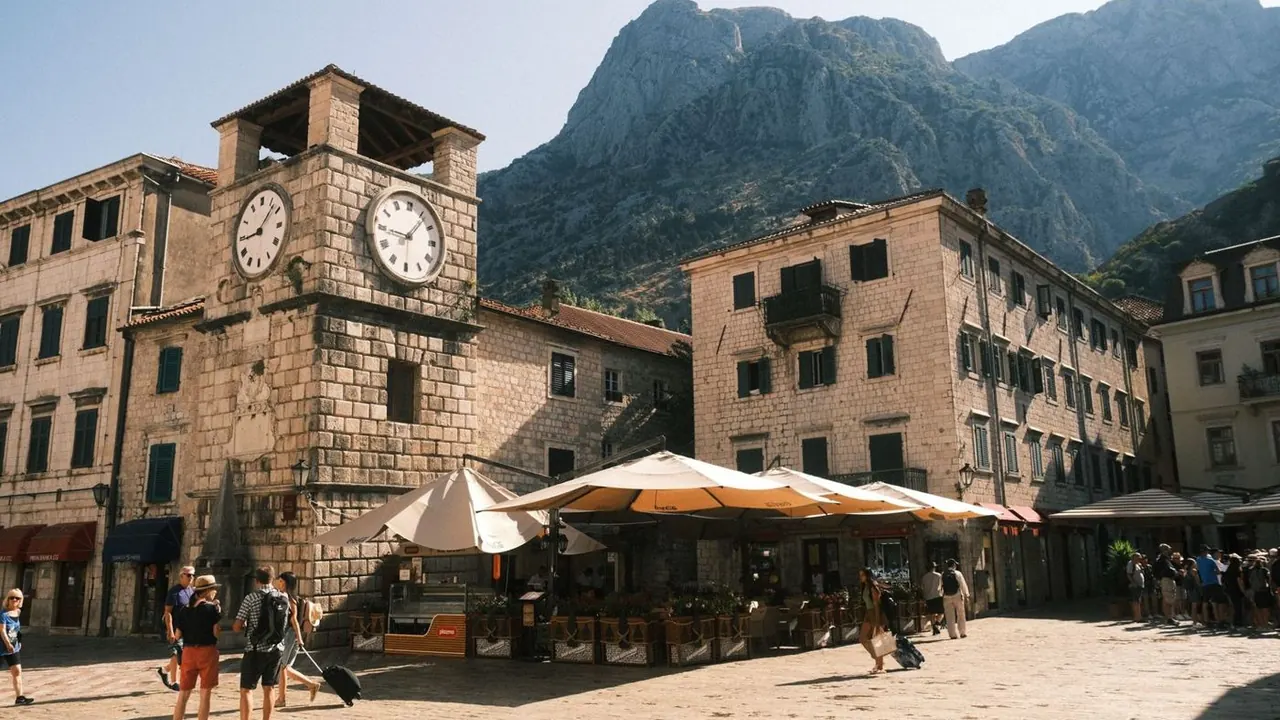
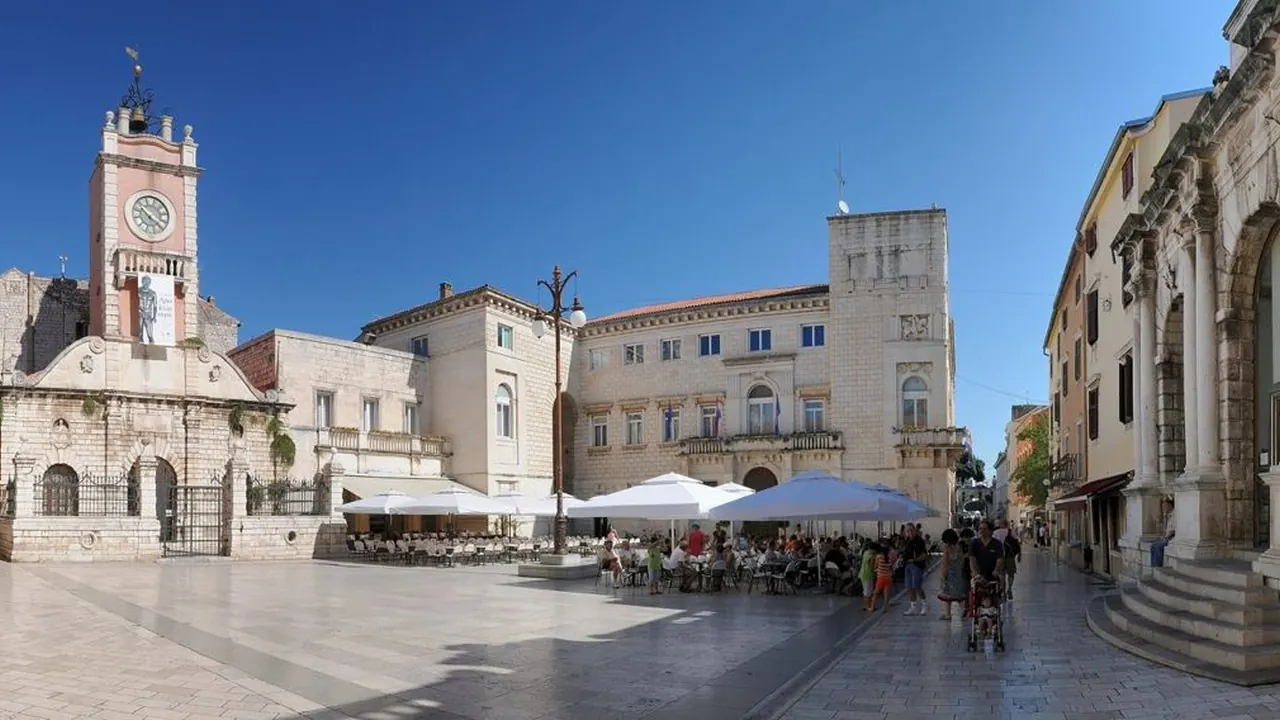
Photos: Kotor by Muhammed Fatih Beki, Pexels License; Zadar by Böhringer Friedrich, CC BY-SA 2.5, cropped.
Kotor or Zadar?
Our verdict in twelve categories, each scored against the same fixed benchmark cities, and the climate month by month, so you can choose for your trip.
Choose Kotor for
- prices
- day trips
Kotor is the choice when the setting matters more than the beach. A walled town at the deepest point of a fjord-like bay, with mountain walls rising straight from the water and paths that start at the gates, suits walkers and photographers. It also suits anyone after a few memorable days rather than a long seaside stay. You go elsewhere for sand and nightlife, but the view from the fortress and the villages along the bay are hard to match.
Choose Zadar for
- families
- beaches
- wellness
Zadar works better as a base for a longer summer vacation. You can swim straight off the town promenade, and sandy beaches and island ferries are close by. Children are easier to entertain, and the evenings have a little more to them. Its history is layered rather than dramatic, from the Roman forum to the Sea Organ, and the national parks and island archipelagos around it give an active trip plenty of range.
Scoreboard
Twelve categories on one fixed scale from 0 to 100. The shaded stretch is the gap between the two.
Your match
Pick a travel style or drag the sliders, and both match scores follow your weighting.
Wins on prices and day trips with your weighting.
Wins on families and beaches with your weighting.
What matters to you?
Category by category
What the scores mean for a trip.
Beaches & swimming
Kotor sits at the enclosed inner end of its bay, so swimming means stepping off jetties and concrete platforms towards Dobrota and Muo. The water is calm and warm but not especially clear. For sand you take the half-hour trip over the hill to Jaz or the coves around Budva and Sveti Stefan, so beach days are outings rather than part of daily life.
In Zadar the swim is part of the day. The open water off the peninsula is clear enough to jump in from the promenade, and Kolovare and pine-shaded Borik are both within easy reach. Those town beaches are pebble and concrete too. Nin's long, shallow sandy beaches and the ferry trip to Sakarun on Dugi Otok give Zadar the better choice of real beaches close by.
Food & drink
Neither town is a reason to travel for food, and both cook the same Adriatic staples of grilled fish, octopus and black risotto. Kotor adds mussels farmed in the bay, smoked Njegusi ham from the mountains and dark Vranac wine. Its old town terraces are uneven, though, and the better meals are out in the shore konobas of Dobrota, Prcanj and Perast.
Zadar's table is a little broader. Lamb or octopus cooked under the peka bell, Pag cheese and pršut, and Maraschino, the town's own cherry liqueur, add variety. The market by the walls is the better of the two for a morning browse, and there is at least a modest fine-dining tier.
Culture & sights
Both have UNESCO-listed Venetian walls and a Romanesque cathedral, and both take about two days to see. The difference is in kind. Kotor's appeal is the whole picture: marble lanes, old seafaring palazzi and the walls zigzagging up the cliff to St John's fortress, with the Maritime Museum as the one real collection.
Zadar is about layers of history and small, good museums. The open Roman forum sits beside the round ninth-century St Donatus, and the Museum of Ancient Glass and the church treasury reward a slow visit. Kotor has nothing like the Sea Organ and the Greeting to the Sun, which give Zadar a modern side.
Nightlife
Both towns send serious partygoers elsewhere: Kotor to Budva's seafront clubs, Zadar to Zrće beach on Pag. Kotor's own evenings are a terrace drink under the floodlit walls once the day visitors have left, plus a handful of late summer bars. Outside the warm months it is quiet early.
Zadar has a bit more going on. The evening starts with the sunset crowd at the Sea Organ, then moves to café-bars along Kalelarga and garden bars on the walls. It is still relaxed rather than wild, and it too goes quiet from October.
Nature & outdoors
Kotor's mountains start at the town gates, while Zadar's parks and islands lie further out. Above Kotor, limestone walls more than 1,000m high rise almost straight from the water. The Ladder of Kotor mule track climbs directly from town, and the hairpin road leads up into Lovcen's beech woods and karst meadows. Kayaking along the shore shows how close the mountains come.
From Zadar the range is wider, but every outing means a drive or a boat ride. Paklenica's gorges, about 45 minutes away, offer serious hiking and some of Croatia's best climbing. Boats run out to the bare Kornati islands and to Telašćica's cliffs and salt lake, and you can reach Krka and Plitvice in a day. Kotor has nothing to match that variety, and Zadar has nothing as dramatic right outside the door.
Day trips
The bay itself supplies most of Kotor's day trips, whereas the best outings from Zadar run along the coast to larger towns. From Kotor, Perast and the boat to Our Lady of the Rocks are twenty minutes away, and Herceg Novi stands at the mouth of the bay. The road over Lovcen reaches Cetinje, the old royal capital, and the Njegos mausoleum. Dubrovnik is possible, though the border can slow you down.
From Zadar, Šibenik and its UNESCO-listed cathedral are about an hour away, and Nin, the tiny town of medieval Croatian kings, is closer still. Split and Trogir make a long but rewarding day. Ferries to car-free Silba and the nearer islands add outings by sea that Kotor's water taxis only partly match.
Good for families
Zadar is the easier town with children. The waterfront promenade is broad and flat, the Sea Organ and the tiles that light up after dark are a hit, and Nin's shallow sandy beaches suit toddlers. Short ferry rides add a sense of adventure.
Kotor's car-free lanes are safe, and the street cats often win children over. Beyond that, little is aimed at them. The fortress climb is steep and exposed, midday crowds fill the old town, and swimming is off jetties unless you drive to Budva. The boat to Perast's island church is the outing that works best.
Getting around
Both old towns are flat and car-free, and you can cross either in minutes on foot. The difference comes once you leave. Kotor depends on one road around the bay that jams in summer and on patchy regional buses, so most visitors end up hiring a car or a driver.
Zadar is a little easier. Island ferries leave from the edge of the old town and a footbridge crosses the harbour. Buses reach Borik, although the national parks still call for a car or an organised excursion.
Shopping & style
Neither is a shopping destination, and in both the best things to take home are edible. In Kotor that means Vranac, Njegusi ham and bay olive oil, and there is silver filigree and a lot of cat-themed souvenirs in the lanes. For brands you have to go to the Tivat marina.
Zadar gives you slightly more to browse. Kalelarga has jewellers and fashion chains as well as souvenir shops, and Maraschino and the fine lace from Pag are more unusual buys than anything in Kotor. There are also malls on the edge of town.
Affordability
Costs are broadly similar, and both are cheaper than the famous names nearby, Budva in one case and the Dalmatian towns further south in the other. Kotor may be slightly easier on the budget, provided you stay in a private apartment in Dobrota or Muo rather than inside the walls in high summer.
In Zadar the extra spending tends to come from park entry fees and boat excursions rather than the room. In both towns, May, June and September are the months that stretch a budget furthest.
Live music & performing arts
Neither has a year-round stage, but Zadar's summer is more rewarding for music. The Musical Evenings in St Donatus put early and chamber music inside a ninth-century church, klapa singing turns up in the squares and a small national theatre runs a season.
Kotor's summer festival is lighter, mostly recitals, choirs and children's theatre. What it does have is spectacle. Its long-established carnival and Boka Night, with decorated boats on the bay, are occasions Zadar has nothing quite like.
Wellness & relaxation
Neither town has a bathing tradition, and spas in both mean resort hotels. Zadar offers more for slow days, though. There is the mud lagoon at Nin, long café mornings and the nightly sunset from the Sea Organ steps.
In Kotor, rest means getting away from the crowds. Stay along the shore, swim early in the still bay and visit the old town only before or after the midday crush.
When should you go?
Pick your month. The climate figures are measured averages, not a forecast.
Kotor in July
Zadar in July
Daytime high, °C
Rainfall in the month, mm
Where the figures come from
Kotor has no rain gauge within 25 km of the centre, so its rainfall comes from a gridded climate dataset read at the city rather than from a gauge further away.
Kotor's sunshine is measured 42 km from the centre, at Podgorica-Grad.
Zadar has no rain gauge within 25 km of the centre, so its rainfall comes from a gridded climate dataset read at the city rather than from a gauge further away.
Temperature and rainfall are climate normals, averaged over the years shown. Kotor: 1991-2020 normals, Tivat (4.2 km from centre). Zadar: 1999-2020 (rainfall 1991-2020) normals, Zadar / Zemunik (9.9 km from centre).
Kotor's swimming season runs from June to September, and the bay is warmest in August at about 26°C. June is the best month for sun and sea there. The water has warmed, the days are long and very sunny, and there is little rain. July and August are hotter, with highs around 32°C, so the fortress climb and any hike on the bare limestone are best done early in the morning. May is the month for walking: warm but not yet hot, and drier than the spring before it. From September the rain comes back hard and peaks at about 202mm in November, so autumn and winter in Kotor are grey and wet.
Zadar has the same swimming season, with the sea about a degree cooler, and its summer is a little less fierce, around 31°C at its peak. The bigger difference is rain, because Zadar gets roughly half as much through the year. That makes April, May and October dependable months for walking the old town or hiking in the mountains. In Kotor, April and October are often wet.
Which traveller are you?
For a beach and sun trip, Zadar is the better pick. You can swim off the promenade in clear water, Nin's sandy shallows are twenty minutes away and ferries go to island coves. In Kotor a proper beach day means going over the hill to Budva.
On a family trip with children, Zadar is easier. The flat waterfront suits pushchairs and scooters, the Sea Organ and the light-up Greeting to the Sun keep children busy, and Nin's shallow sand is ideal. Kotor's main sight is a steep, hot fortress climb.
For a short city break, Kotor gives more in a little time. The walled town takes a day or two to know, the climb to St John's gives the famous bay view and Perast is twenty minutes away. Tivat airport is also only a short drive.
Before you go
| Measure | Kotor | Zadar |
|---|---|---|
| Official language | Montenegrin | Croatian |
| Currency | Euro (EUR) | Euro (EUR) |
| Sockets | CF230 V, 50 Hz | CF230 V, 50 Hz |
| Driving side | Right | Right |
| Time zone | UTC+1, UTC+2 in summer | UTC+1, UTC+2 in summer |
| Emergency number | 112 | 112 |
| Elevation | 10 m | 5 m |
| Main airport | Tivat Airport (TIV)5 km from centre42 non-stop destinations | Zadar Airport (ZAD)10 km from centre66 non-stop destinations |
| Public holidays this year | - | 14 days |
By the numbers
| Measure | Kotor | Zadar |
|---|---|---|
| City population | 562 | 70,779 |
| Museums within 10 km | 3 | 1 |
| UNESCO World Heritage sites within 50 km | 3 | 2 |
| Swim season, months above 21 °C | 5 months | 4 months |
Where else could you go?
Every comparison below shares a destination with this one, so you can follow Kotor or Zadar somewhere new.