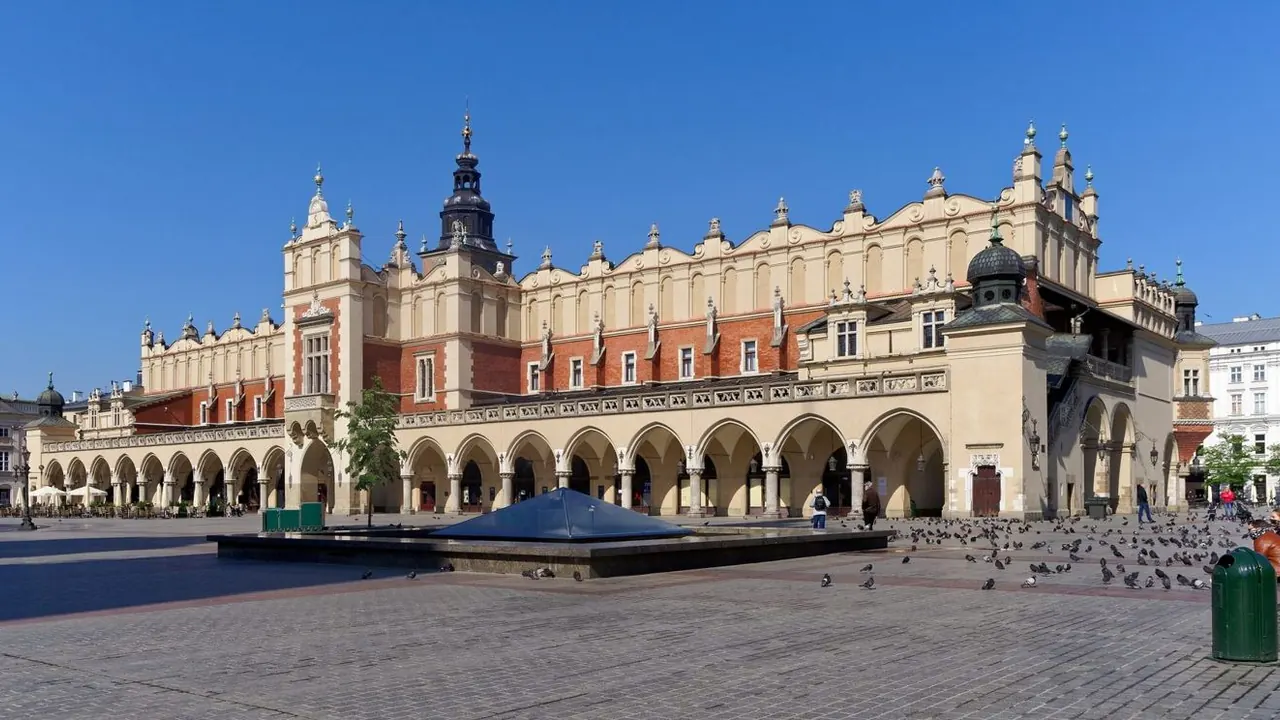
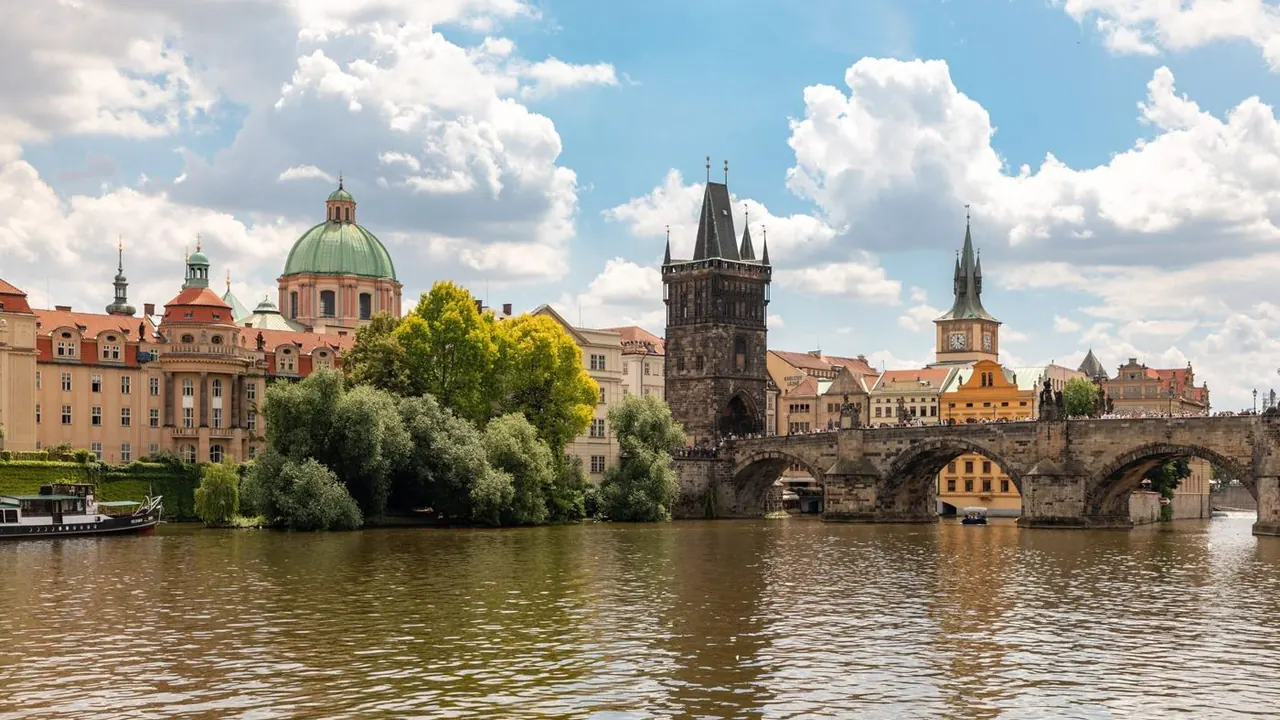
Photos: Krakow by Jakub Hałun, CC BY-SA 4.0, cropped; Prague by Dietmar Rabich, CC BY-SA 4.0, cropped.
Krakow or Prague?
Our verdict in twelve categories, each scored against the same fixed benchmark cities, and the climate month by month, so you can choose for your trip.
Choose Krakow for
- prices
- families
- food and drink
Krakow suits the traveller who wants a historic Central European city without paying capital-city prices. Lunch in a milk bar, an evening hopping between vaulted cellar bars and a tram ride to Kazimierz all cost little, and the centre is small enough to cover on foot in two or three days. It is also the better base for families, and for anyone set on visiting the Wieliczka Salt Mine and Auschwitz-Birkenau.
Choose Prague for
- live music and the arts
- getting around
- culture and sights
Prague is the better choice when the architecture and the evenings matter most. The castle, Mala Strana, the Charles Bridge and a centre that runs from Gothic to Cubist give it more to see. Its opera houses and concert halls give it far more to hear. The metro and night trams make it easier to stay out late in outer neighbourhoods. Expect to pay more in the core and to share it with bigger crowds.
Scoreboard
Twelve categories on one fixed scale from 0 to 100. The shaded stretch is the gap between the two.
Your match
Pick a travel style or drag the sliders, and both match scores follow your weighting.
Too close to call, 1 point apart
Wins on prices and families with your weighting.
Wins on live music and the arts and getting around with your weighting.
What matters to you?
Category by category
What the scores mean for a trip.
Beaches & swimming
Neither city has a beach, and swimming in either means a little planning. Krakow's best option is the Zakrzowek quarry, a short tram ride from the centre, with turquoise water under limestone cliffs but swimming only in fenced areas in summer.
Prague's choices are more spread out: the Dzban reservoir in the Sarka valley on the city's edge, or the wooded banks of Slapy about an hour south, which make a proper lake day out.
Food & drink
The two eat well at a similar level, though Krakow's kitchen has a little more range: pierogi with every filling, zurek served in a bread bowl, roast duck, milk-bar lunches and late-night zapiekanki at Plac Nowy. Flavoured vodka and craft beer fill the cellars.
Prague is built around the glass rather than the plate. Pilsner poured from tanks in classic pubs is the highlight, alongside svickova, dumplings and beer snacks. The tourist streets around Old Town Square are a poor place to eat, so the good meals are in Vinohrady, Karlin or Letna.
Culture & sights
Prague has more to see, and more variety in it. The castle complex with St Vitus Cathedral, the Baroque palaces of Mala Strana, the Charles Bridge, the astronomical clock and Josefov sit alongside Art Nouveau facades and Cubist buildings found almost nowhere else. It needs three or four days, and early mornings help with the crowds.
Krakow is more compact, and two or three days covers it. The Main Market Square with the Cloth Hall and St Mary's altarpiece, royal Wawel and the synagogues of Kazimierz are its core. Its one great museum piece is Leonardo's Lady with an Ermine, and the Schindler Factory gives a vivid account of the occupation.
Nightlife
Both cities go out late and cheaply, but the settings differ. Krakow's nights are about bar-hopping through brick-vaulted Old Town cellars and the mismatched-furniture bars around Plac Nowy, and its large student population keeps them busy all week.
Prague's night out is the pub first, with long tables in Zizkov and beer gardens on Letna. It also has the better club scene for anyone after electronic music, with techno and alternative venues in Holesovice's former industrial buildings. Both old towns attract stag groups at weekends.
Nature & outdoors
Within the city, Prague is the greener and hillier of the two. Petrin's orchards, the old royal park of Stromovka and the rocky gorge of Divoka Sarka feel more varied than Krakow's Planty and Blonia meadow.
Krakow has the bigger landscapes further out. The Tatras offer real alpine hiking about two hours south, and wooden rafts run down the Pieniny gorge. Prague has no mountains, though the sandstone towers of Bohemian Switzerland make excellent walking at a similar distance.
Day trips
Both are excellent bases for day trips, with different strengths. Krakow's trips centre on two essential visits, the salt chambers and underground church of Wieliczka and the Auschwitz-Birkenau memorial, with Zakopane and the pilgrim sites of Kalwaria and Czestochowa as extras.
From Prague, the attraction is a choice of castles and towns: Karlstejn, Kutna Hora with its bone ossuary, Terezin, the wine town of Melnik, and Dresden across the border. Cesky Krumlov is worth an overnight stay.
Good for families
Krakow is the easier city with children. The dragon legend comes to life at Wawel, with a cave to explore and a metal dragon that breathes fire, and the indoor water park works in any weather. Energylandia is about an hour away by car. Several major sights deal with heavy history and are not suitable for young children.
Prague's highlight is its zoo at Troja, one of Europe's best, and the apostles of the astronomical clock delight children. Beyond those there is less to do, and the castle stairs and steep cobbled lanes are hard going with a pushchair.
Getting around
Prague is easier to get around. Three metro lines, trams that run through the night and one ticket for everything, including the Petrin funicular, mean outer neighbourhoods are as easy to reach as the centre. Watch for pickpockets on the busy Mala Strana lines.
Krakow is mostly walking, which works because the Old Town, Wawel, Kazimierz and Podgorze sit close together. Trams cover the rest but can get stuck in traffic, and there is no metro. Trains to the airport and to Wieliczka and Auschwitz make it easy to manage without a car.
Shopping & style
Neither city is worth the trip for shopping alone. What differs is what you bring home. In Krakow, it is amber, carved boxes and lace from the stalls of the Cloth Hall, plus blue-patterned Boleslawiec pottery and the Plac Nowy flea market.
Prague has the luxury labels on Parizska Street, which Krakow largely lacks, and its classic buys are Bohemian crystal, garnets and marionettes. Both old centres are crowded with souvenir shops, so the better browsing is in Kazimierz in Krakow, or in Vinohrady and Holesovice in Prague.
Affordability
Krakow is the cheaper stay overall. Beer, milk-bar lunches, trams and museum tickets cost little, and mid-range rooms are reasonably priced most of the year. Only the Main Square and busy summer weekends push costs up.
Prague is cheap for beer and transport but expensive in its historic core, where hotels, river-view restaurants and exchange booths all target visitors. Staying a few tram stops out and eating in neighbourhood pubs closes much of the gap.
Live music & performing arts
Prague is far stronger here. It has three opera stages, including the Estates Theatre, where Mozart premiered Don Giovanni, the Czech Philharmonic at the Rudolfinum and concerts in the Art Nouveau Smetana Hall. Black-light theatre and marionette shows work without any Czech.
Krakow's offer is smaller but distinctive. There are Chopin recitals in Old Town churches and palaces, jazz in brick cellar clubs and klezmer in Kazimierz, ending with the open-air concert of the Jewish Culture Festival on Szeroka Street. The philharmonic and opera have regular seasons.
Wellness & relaxation
Neither city has a bathing tradition of its own, so in both the everyday offer is hotel spas and massage studios. Krakow's advantage lies beyond the city. It has the more restorative options: slow hours of salt-air therapy deep in the Wieliczka mine, and the naturally hot pools of the Podhale region about two hours south, which combine well with a day near the Tatras.
Prague is the easier place to slow down without leaving town. Its grand old coffee houses, the terraced Baroque gardens below the castle and quiet corners such as Kampa island and Vysehrad give an afternoon real calm. A base in a residential neighbourhood keeps you away from the noise of the core. Its beer spas are a novelty rather than a cure.
When should you go?
Pick your month. The climate figures are measured averages, not a forecast.
Krakow in July
Prague in July
Daytime high, °C
Rainfall in the month, mm
Temperature and rainfall are climate normals, averaged over the years shown. Krakow: 1991-2020 normals, Krakow (10.1 km from centre). Prague: 1991-2020 normals, Praha-Libus (8.1 km from centre).
The two cities have almost the same temperatures. Both sit near freezing in December and January, warm up through May and reach about 25°C in July and August. That is warm enough for long days outdoors but rarely too hot for walking. Late spring and September are the most comfortable months on foot, and winter in either city is cold for sightseeing.
Rain is where they part. Krakow's wet season runs from May to August and peaks in July at around 100mm. September eases off but is not dry. Prague's summer rain is similar, a little heavier in June and August and lighter in July. It is clearly drier in spring and dries out faster in autumn, so its September is the more reliable month for walking. Prague's sunniest stretch is May to August, with about 240 hours in July, and the light fades sharply from November.
Which traveller are you?
For a culture and arts trip, Prague is the stronger pick. It has more architecture across more periods, three opera stages, the Rudolfinum and black-light theatre that needs no Czech. Krakow's music scene is pleasant but lighter.
On a trip on a tight budget, Krakow stretches money further. Milk bars, cheap beer and vodka, low-cost trams and reasonably priced rooms keep daily costs down, while central Prague charges visitor prices unless you base yourself out in Vinohrady or Zizkov.
On a family trip with children, Krakow has more to keep them busy: the fire-breathing dragon below Wawel, a year-round indoor water park and Energylandia within reach. Prague has a superb zoo, but steep stairs and summer crowds make it harder work.
Before you go
| Measure | Krakow | Prague |
|---|---|---|
| Official language | Polish | Czech |
| Currency | Zloty (PLN) | Czech Koruna (CZK) |
| Sockets | CE50 Hz | CE230 V, 50 Hz |
| Driving side | Right | Right |
| Time zone | UTC+1, UTC+2 in summer | UTC+1, UTC+2 in summer |
| Emergency number | 112 | 112 |
| Elevation | 219 m | 235 m |
| Main airport | Kraków John Paul II International Airport (KRK)11 km from centre132 non-stop destinations | Václav Havel Airport Prague (PRG)12 km from centre178 non-stop destinations |
| Public holidays this year | 14 days | 13 days |
By the numbers
| Measure | Krakow | Prague |
|---|---|---|
| City population | 804,237 | 1,397,880 |
| People per km² | 2,459 | 2,817 |
| Museums within 10 km | 113 | 88 |
| UNESCO World Heritage sites within 50 km | 4 | 1 |
Where else could you go?
Every comparison below shares a destination with this one, so you can follow Krakow or Prague somewhere new.