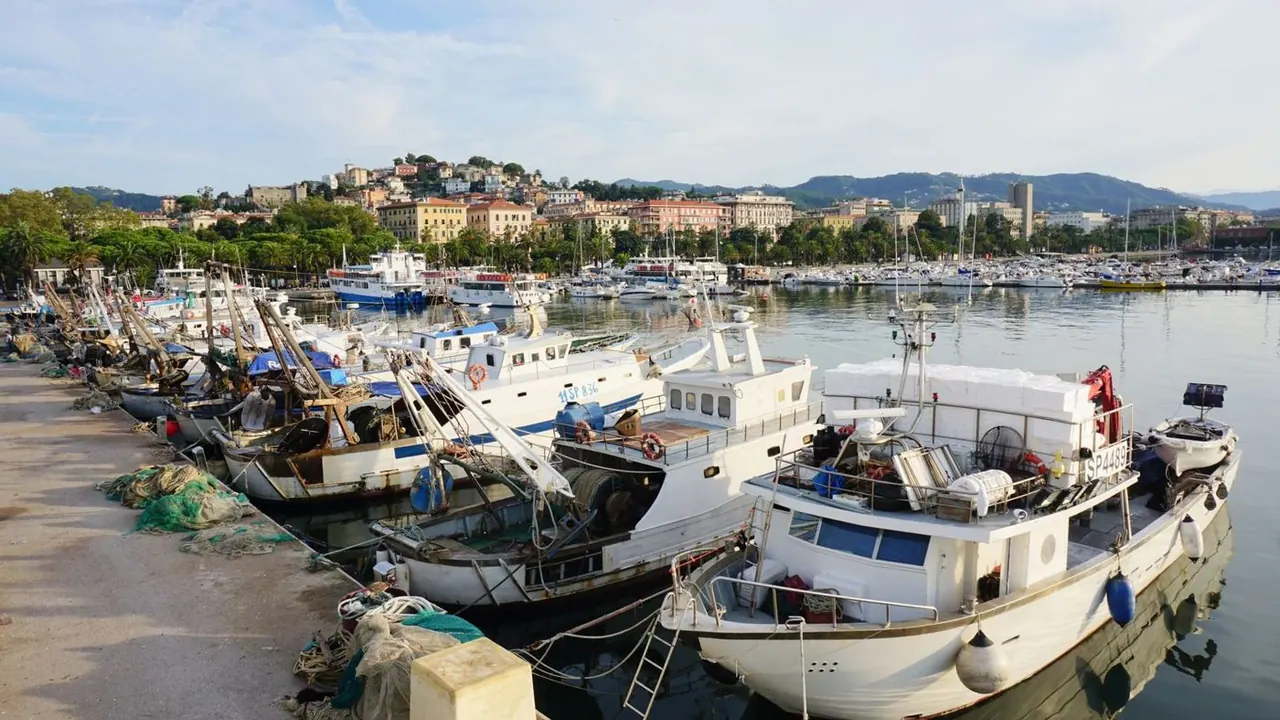
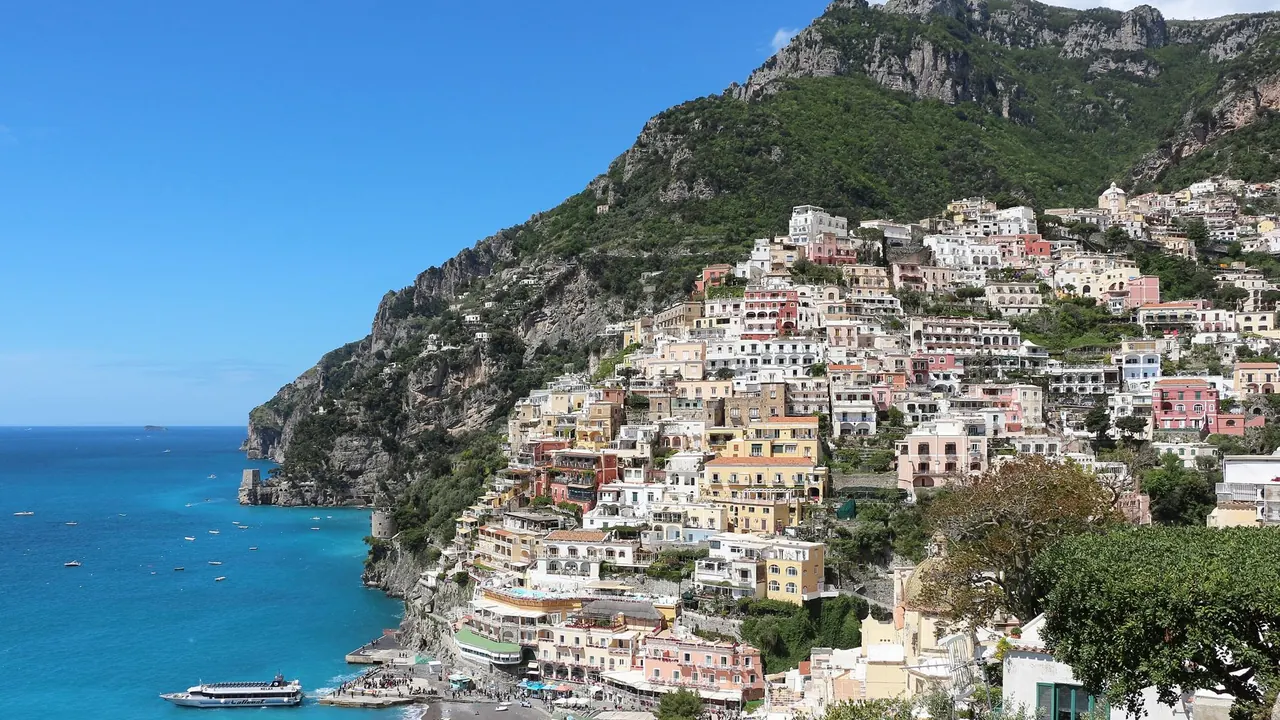
Photos: La Spezia by Irina Balashova, Pexels License; Positano by Bernard Gagnon, CC BY 4.0, cropped.
La Spezia or Positano?
Our verdict in twelve categories, each scored against the same fixed benchmark cities, and the climate month by month, so you can choose for your trip.
Choose La Spezia for
- prices
- getting around
- families
La Spezia suits travellers who want the Cinque Terre without paying village prices or climbing stairs all day. It is a working port town with a flat centre, regional trains running straight along the coast, honest Ligurian cooking and a couple of good museums. That makes it the easier base for families, budget trips and anyone who wants to move around freely.
Choose Positano for
- beaches
- wellness
- shopping
Positano is the choice when the setting is the trip and the budget can stretch a long way. Its beaches are better, the houses stacked above the sea are the view from every terrace, and its slow rhythm of hotel pools and long lunches suits couples who want to unwind. In return you accept steep stairs, slow roads, little sightseeing and some of the highest prices in Italy.
Scoreboard
Twelve categories on one fixed scale from 0 to 100. The shaded stretch is the gap between the two.
Your match
Pick a travel style or drag the sliders, and both match scores follow your weighting.
Wins on prices and getting around with your weighting.
Wins on beaches and wellness with your weighting.
What matters to you?
Category by category
What the scores mean for a trip.
Beaches & swimming
Positano has the better beach life because the sea is on the doorstep. Spiaggia Grande lies directly below the town, Fornillo is a short cliff walk away, and boats reach Arienzo, Laurito and coves further along. The shore is coarse grey sand and pebble that shelves steeply, and in summer the loungers fill by mid-morning.
La Spezia's own waterfront is a port, so swimming starts with a bus, train or ferry. What you get in return is variety: sheltered sand and pebble at Lerici and San Terenzo, clear rocky water off Palmaria and Portovenere, and Monterosso's long sandy beach up the line. It suits a stay where the beach is one outing among several.
Food & drink
La Spezia eats better, and more cheaply. Its cooking has its own local character: farinata from wood ovens, mesciua soup, testaroli with pesto and the gulf's rope-grown mussels. The covered market on Piazza Cavour also gives it a daily food life that Positano lacks.
Positano has the more memorable setting but a narrower menu. Clams, local fish and lemon desserts are served on terraces over the sea and repeated from one menu to the next, and there is little street food and no real market.
Culture & sights
Neither is a heritage destination, but La Spezia gives you more to fill a rainy day. The early Italian paintings of the Museo Amedeo Lia, the naval museum by the arsenal and the Lunigiana stele statues in Castello San Giorgio make a solid day or two. They sit in a nineteenth-century grid of arcades and Liberty facades.
In Positano the town itself is the sight. The majolica dome of Santa Maria Assunta and the painted Roman villa beneath it take a couple of hours, and serious sightseeing means a trip to Pompeii or Naples.
Nightlife
Both towns go to bed early, and evenings mean aperitivo and dinner. La Spezia has a little more going on, with crowds over spritz on Via del Prione and around Piazza Verdi, summer bars on the Lerici waterfront and a few places that stay open late.
Positano's scene is smaller and more polished. There are cocktails with a view, then one dressed-up club in a cave at the end of Spiaggia Grande, and all of it fades once the season ends.
Nature & outdoors
Both sit on some of Italy's finest coastal walking, and the difference is in the kind of landscape. Around La Spezia, the paths cross the vine and olive terraces of the Cinque Terre national park, from the Sentiero Azzurro to quieter ridge trails and the Palmaria loop. The marble peaks of the Apuan Alps are about an hour inland.
Positano is steeper and higher. The Path of the Gods runs along the cliffs above lemon groves with Capri in view, and other trails climb through chestnut woods to ridges over 1,000m. Below, kayaks reach the grottoes and the Li Galli islets.
Day trips
Each is an excellent base, for a different stretch of coast. From La Spezia, trains reach the Cinque Terre villages within minutes, Portovenere and Sarzana are close by, and Pisa and Lucca are about an hour away.
Positano looks towards Capri, Amalfi, Ravello, Sorrento and the ruins of Pompeii and Herculaneum, but most of these trips depend on seasonal ferries or a slow coast road. La Spezia's rail links make day trips simpler to plan in any month.
Good for families
La Spezia is much the easier choice with children. The centre is flat, the seafront gardens suit a pushchair, and boat trips round Portovenere or the shallow beaches at San Terenzo make simple days out, even though there is no zoo or theme park.
Positano is built of stairs, which rules out a pushchair, and its pebbly beaches shelve quickly. Older children who love swimming and boats will enjoy it, but toddlers far less.
Getting around
On getting around, the two are far apart. La Spezia's centre is flat and walkable, and its station is a real hub, with coastal trains through the Cinque Terre, lines inland to Sarzana and Pisa, buses round the gulf and seasonal ferries. Its weak point is the crowded trains in summer.
In Positano every walk means hundreds of steps. One local bus loops along the upper road, regional buses crawl along the coast in summer, and ferries, the practical way out, run mostly in season. In both places a car is more trouble than it is worth.
Shopping & style
Positano has the more distinctive shopping, and browsing it is part of a visit. The lanes down to the beach are lined with white linen and printed resort wear in the moda Positano style, sandals made to measure while you wait and hand-painted ceramics, though it is all one look.
La Spezia offers ordinary provincial shopping along Via del Prione and Corso Cavour. The best things to take home are edible: pesto, olive oil, Sciacchetrà and Monterosso anchovies.
Affordability
The difference in cost is stark. La Spezia is mid-priced, with trattorias, focaccia and regional trains at reasonable prices, and many visitors stay here because the Cinque Terre villages cost more.
Positano is among the most expensive places to stay in Italy, and sea-view rooms, beach loungers, terrace restaurants and boat transfers are all priced for the view. The usual way round this is to stay in Praiano or Sorrento and visit for the day. In both places, the spring and autumn months are easier on the budget.
Live music & performing arts
La Spezia gives you more to go to, though neither town is a place to travel for performance. The Teatro Civico keeps a stage open through the year for plays, touring shows and concerts, and in summer an old jazz festival and outdoor concerts spread music around the gulf. Opera still means a train to Genoa or Pisa.
Positano has almost nothing of its own beyond the odd summer concert in a church or square. Its best evening out is Ravello's classical festival further along the coast, played in the open air above the sea, and for opera or theatre you go to Naples.
Wellness & relaxation
Positano is the better place to slow down, as long as you avoid July and August. Its upscale hotels have spas and pools cut into the cliff, and in May, June or late September a long terrace lunch above the sea is the whole point.
La Spezia has no spa culture of its own, only hotel spas and the small thermal baths at Equi Terme, about an hour inland. Its calm comes instead from off-season evenings on the seafront and quiet days on Palmaria or in Tellaro.
When should you go?
Pick your month. The climate figures are measured averages, not a forecast.
La Spezia in July
Positano in July
Daytime high, °C
Rainfall in the month, mm
Where the figures come from
La Spezia's temperatures are measured 65 km from the centre, at Pisa / S. Giusto.
La Spezia has no rain gauge within 25 km of the centre, so its rainfall comes from a gridded climate dataset read at the city rather than from a gauge further away.
Positano's temperatures are measured 25 km from the centre, at Capri.
Positano has no rain gauge within 25 km of the centre, so its rainfall comes from a gridded climate dataset read at the city rather than from a gauge further away.
Positano's sunshine is measured 59 km from the centre, at Grazzanise.
Temperature and rainfall are climate normals, averaged over the years shown. La Spezia: 1991-2020 normals, Pisa / S. Giusto (64.8 km from centre). Positano: 2005-2025 (sunshine 1991-2020, rainfall 1991-2020) normals, Capri (25.3 km from centre).
Both coasts follow the same Mediterranean pattern. Swimming is comfortable from June into early October, and the sea is warmest in August, at about 25°C off La Spezia and a degree warmer off Positano. July and August reach around 30°C in both places. That is pleasant on a beach but hard work on the Cinque Terre paths or Positano's stairways, so May and late September are better for walking.
The two differ most in autumn and winter. La Spezia turns wet sooner and more heavily, with October and November its rainiest months at around 150mm, and its winters are a little cooler and greyer. Positano stays slightly milder and sunnier through the cold months, but for both, the most rewarding season runs from spring to early autumn.
Which traveller are you?
On a trip on a tight budget, La Spezia is the obvious base. A working port town keeps rooms and everyday meals at ordinary prices, and cheap trains reach the Cinque Terre without boat transfers. In Positano, even an afternoon on a lounger costs dearly.
For a beach and sun trip, Positano wins. Swimming sets the rhythm of every day rather than being an outing, and the deep blue water stays warm into October. Much of La Spezia's shore is paid bathing establishments, and in August the free stretches fill early.
On a family trip with children, La Spezia makes the days easier to manage. It is a relaxed, safe town, the ship models and torpedoes at the naval museum win over some children, and a short train ride home ends any outing early. Positano works mainly for teenagers who live in the water.
Before you go
| Measure | La Spezia | Positano |
|---|---|---|
| Official language | Italian | Italian |
| Currency | Euro (EUR) | Euro (EUR) |
| Sockets | CFL230 V, 50 Hz | CFL230 V, 50 Hz |
| Driving side | Right | Right |
| Time zone | UTC+1, UTC+2 in summer | UTC+1, UTC+2 in summer |
| Emergency number | 112 | 112 |
| Elevation | 3 m | 142 m |
| Main airport | Pisa International Airport (PSA)65 km from centre82 non-stop destinations | Naples International Airport (NAP)33 km from centre131 non-stop destinations |
| Public holidays this year | 13 days | 13 days |
By the numbers
| Measure | La Spezia | Positano |
|---|---|---|
| City population | 92,119 | 3,729 |
| People per km² | 1,792 | 429 |
| Museums within 10 km | 12 | 10 |
| UNESCO World Heritage sites within 50 km | 2 | 5 |
| Swim season, months above 21 °C | 4 months | 5 months |
Where else could you go?
Every comparison below shares a destination with this one, so you can follow La Spezia or Positano somewhere new.