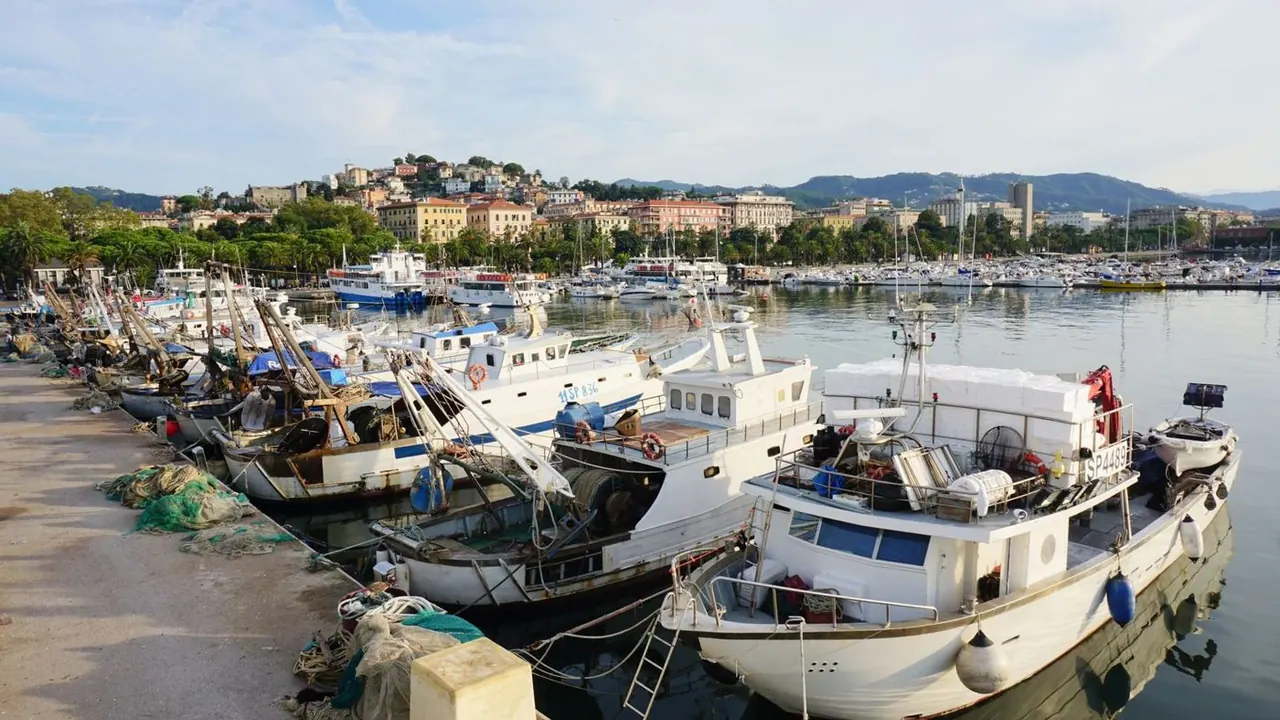
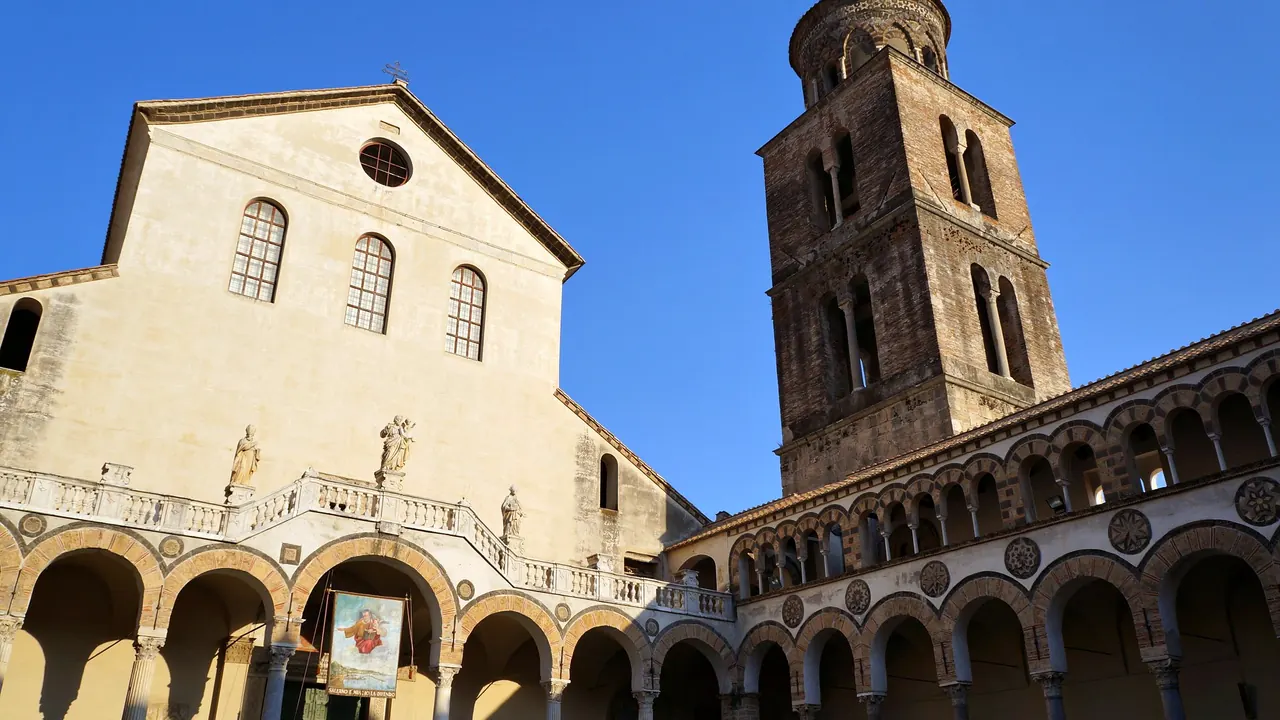
Photos: La Spezia by Irina Balashova, Pexels License; Salerno by Leandro Neumann Ciuffo, CC BY 2.0, cropped.
La Spezia or Salerno?
Our verdict in twelve categories, each scored against the same fixed benchmark cities, and the climate month by month, so you can choose for your trip.
Choose La Spezia for
- getting around
- nature and the outdoors
La Spezia suits walkers and anyone whose vacation is really about the Cinque Terre. The five villages are minutes away by train, the trails start almost at the station, and rooms cost less than on the cliffs. Choose it if you want early starts on the coastal paths, quiet evenings and a calm, flat town to come back to.
Choose Salerno for
- live music and the arts
- nightlife
- shopping
Salerno is the better choice if you want more from the trip than one stretch of coast. Paestum, Pompeii, Amalfi and Naples are all within easy reach. You also get stronger everyday cooking, a real opera house, livelier late evenings in the old town and lower prices. Sand beaches start just south of the city, and the old town makes a good base for a mixed trip of ruins, food and sea.
Scoreboard
Twelve categories on one fixed scale from 0 to 100. The shaded stretch is the gap between the two.
Your match
Pick a travel style or drag the sliders, and both match scores follow your weighting.
Wins on getting around and nature and the outdoors with your weighting.
Wins on live music and the arts and nightlife with your weighting.
What matters to you?
Category by category
What the scores mean for a trip.
Beaches & swimming
Neither city is a beach resort, and the swimming is about equally good. What differs is the kind of beach. From La Spezia every swim is a trip out: rocky platforms with very clear water on Palmaria and at Portovenere, small pebble coves under the olive terraces at Tellaro, or the sand at Monterosso, a train ride away.
Salerno has grey-sand city beaches you can walk to, though the water near the port is murky. Its real strength is the long sandy shore towards Paestum, backed by pine woods, which suits a full day lying on the sand far better than anything near La Spezia.
Food & drink
Salerno eats better. Its cooking has Campania's depth: mozzarella made that morning on the plain towards Paestum, colatura from Cetara next door, wood-fired pizza and pastry shops full of sfogliatelle and lemon cakes. The old town's trattorias and friggitorie give you plenty of choice.
La Spezia's food is good but narrower. Farinata, mesciua and the gulf's rope-grown mussels are worth trying, and the Cinque Terre whites go well with them. The choice is that of a small port, though, with little beyond Ligurian home cooking.
Culture & sights
Salerno has more history in its own streets. The Norman cathedral, with its bronze doors and the crypt holding Saint Matthew's relics, stands in a medieval warren of stepped lanes, and the Giardino della Minerva recalls Europe's first medical school.
La Spezia is a nineteenth-century naval town of straight avenues and Liberty facades, with no old core to wander. Its best visit is a museum, the Amedeo Lia collection of early Italian painting, along with the odd stele statues in the castle. In both cities the big sights lie outside town.
Nightlife
Salerno has more going on after dark. On weekends and summer nights, young locals fill the squares around Largo Campo and Via dei Mercanti with drinks until late, and Naples is close for a bigger night out.
La Spezia's evening ends with the aperitivo. A spritz on Via del Prione or the waterfront at Lerici is pleasant, but the town goes quiet early, and so do most visitors, who have trails to walk in the morning.
Nature & outdoors
Both have spectacular coast on the doorstep, and there is little to choose between them. La Spezia has the vine-terraced cliffs of the Cinque Terre, with the Sentiero Azzurro and quieter ridge paths, plus Palmaria and the pinewoods of Montemarcello. The Apuan Alps give serious mountain hiking inland.
Salerno has the limestone drama of the Amalfi Coast, mule tracks such as the Path of the Gods across the Lattari mountains, and the wilder Cilento national park to the south. Cilento is the one place in either area where a car really helps, while the Cinque Terre paths are easy to reach by train.
Day trips
Both are excellent bases, but Salerno's range is wider. Within an hour you can see Greek temples at Paestum, Roman Pompeii and Herculaneum, the Amalfi villages by ferry, Ravello's gardens and the whole of Naples. Each day out feels quite different from the last.
La Spezia's great strength is how close everything is. The Cinque Terre villages and Portovenere are minutes away, and Pisa and Lucca make easy longer trips. Away from the coast, though, there is less variety, and Florence takes a very long day.
Good for families
Salerno is the easier choice with children. Its long car-free promenade has playgrounds and gelato all the way along. The beaches south of town are shallow and sandy, and the Luci d'Artista light installations give children a reason to visit in winter.
La Spezia is safe and flat, and boat trips round Portovenere go down well with children. The region's real attractions are steep villages, crowded trains and long trail walks, though, which suit teenagers better than small children.
Getting around
La Spezia is slightly easier. Its centre is small and level, and the coastal train runs through all five Cinque Terre villages, with buses and seasonal ferries covering the rest of the gulf. Its weak point is the summer crush on trains and village platforms.
Salerno's centre is a walkable strip along the sea, but the old town is all steps and the castle needs a bus. Trains to Naples, Pompeii and Paestum are simple, while on the Amalfi side the ferries are the only comfortable option in summer.
Shopping & style
Neither city is a shopping destination, but Salerno has more to offer. Corso Vittorio Emanuele is a longer, busier pedestrian street, the old town has some craft workshops, and hand-painted Vietri ceramics are sold just outside the city.
In La Spezia, Via del Prione covers the everyday chains, and the best things to take home are edible: pesto, olive oil and Sciacchetrà. Carrara marble from nearby towns is the one unusual buy.
Affordability
Salerno is the cheaper stay. It is a working southern city where pizzerias and coffee bars charge local prices, and outside high summer a modest budget goes a long way. The main extra costs are ferries and the entry fees at the big archaeological sites.
La Spezia saves money only compared with the Cinque Terre villages. In summer, rooms cost about what you would pay elsewhere in Western Europe, and trail passes, boat trips and beach clubs mount up over a stay.
Live music & performing arts
Salerno has a proper season. The Teatro Verdi, a gilded copy of Naples' San Carlo, stages opera, concerts and ballet, and in summer the Ravello Festival's cliff-top concerts are within reach for a special evening.
La Spezia's Teatro Civico focuses on plays and touring shows, and summer adds an established jazz festival and concerts in castle courtyards. For opera you have to travel to Genoa or Pisa.
Wellness & relaxation
Neither city has a spa tradition. Both rely on hotel spas, with small thermal springs about an hour inland, at Equi Terme in the Lunigiana and Contursi Terme in the Sele valley.
The difference is the kind of quiet on offer. La Spezia finds it out of town, on Palmaria or over a long lunch in Tellaro. Salerno has its palm-lined promenade at sunset, but traffic noise from the port city is never far away.
When should you go?
Pick your month. The climate figures are measured averages, not a forecast.
La Spezia in July
Salerno in July
Daytime high, °C
Rainfall in the month, mm
Where the figures come from
La Spezia's temperatures are measured 65 km from the centre, at Pisa / S. Giusto.
La Spezia has no rain gauge within 25 km of the centre, so its rainfall comes from a gridded climate dataset read at the city rather than from a gauge further away.
Salerno's temperatures are measured 71 km from the centre, at Grazzanise.
Salerno has no rain gauge within 25 km of the centre, so its rainfall comes from a gridded climate dataset read at the city rather than from a gauge further away.
Temperature and rainfall are climate normals, averaged over the years shown. La Spezia: 1991-2020 normals, Pisa / S. Giusto (64.8 km from centre). Salerno: 1991-2020 normals, Grazzanise (71.3 km from centre).
The two follow much the same Mediterranean year, with Salerno a degree or two warmer almost every month. Both are at their best for the beach from June to September, when highs reach about 30°C in July and August and the sea peaks at around 25°C. Salerno's water stays a little warmer into early October. High summer is hot work on the trails and in the ruins at Pompeii, so May, June and September are the most comfortable months for walking in either place.
Autumn is where they differ most. La Spezia's rains arrive hard in October, at around 144mm, while Salerno gets a little less rain and noticeably more sun that month, which makes it the safer choice for a late-season trip. November is wet and grey in both. Winter is mild for walking in both cities, but La Spezia is the cooler of the two, and Salerno's January brings the heavier rain.
Which traveller are you?
For a culture and arts trip, Salerno is the clear pick. It has a Norman cathedral in its own medieval lanes, opera and ballet at the gilded Teatro Verdi, and Paestum's Greek temples and Pompeii each about half an hour away by train.
On a food and nightlife trip, Salerno again comes out ahead. Fresh buffalo mozzarella, Cetara's colatura and wood-fired pizza beat La Spezia's provincial range, and the lanes around Largo Campo stay busy late, after La Spezia has gone to bed.
On an outdoors trip built around walking, La Spezia makes the easier base. Trains reach every Cinque Terre village and its trailheads within minutes, Palmaria's loop is a short boat ride away, and the marble peaks of the Apuan Alps are about an hour inland.
Before you go
| Measure | La Spezia | Salerno |
|---|---|---|
| Official language | Italian | Italian |
| Currency | Euro (EUR) | Euro (EUR) |
| Sockets | CFL230 V, 50 Hz | CFL230 V, 50 Hz |
| Driving side | Right | Right |
| Time zone | UTC+1, UTC+2 in summer | UTC+1, UTC+2 in summer |
| Emergency number | 112 | 112 |
| Elevation | 3 m | 4 m |
| Main airport | Pisa International Airport (PSA)65 km from centre82 non-stop destinations | Naples International Airport (NAP)46 km from centre131 non-stop destinations |
| Public holidays this year | 13 days | 13 days |
By the numbers
| Measure | La Spezia | Salerno |
|---|---|---|
| City population | 92,119 | 127,186 |
| People per km² | 1,792 | 2,123 |
| Museums within 10 km | 12 | 9 |
| UNESCO World Heritage sites within 50 km | 2 | 5 |
| Swim season, months above 21 °C | 4 months | 5 months |
Where else could you go?
Every comparison below shares a destination with this one, so you can follow La Spezia or Salerno somewhere new.