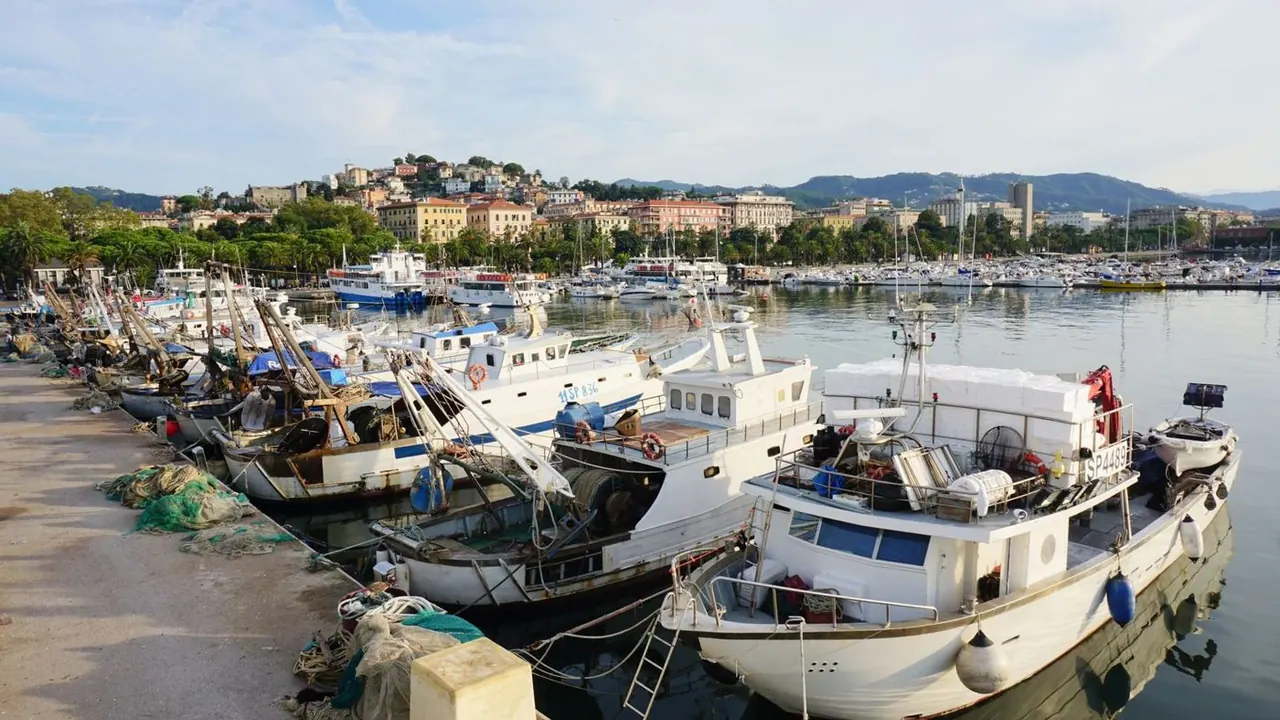
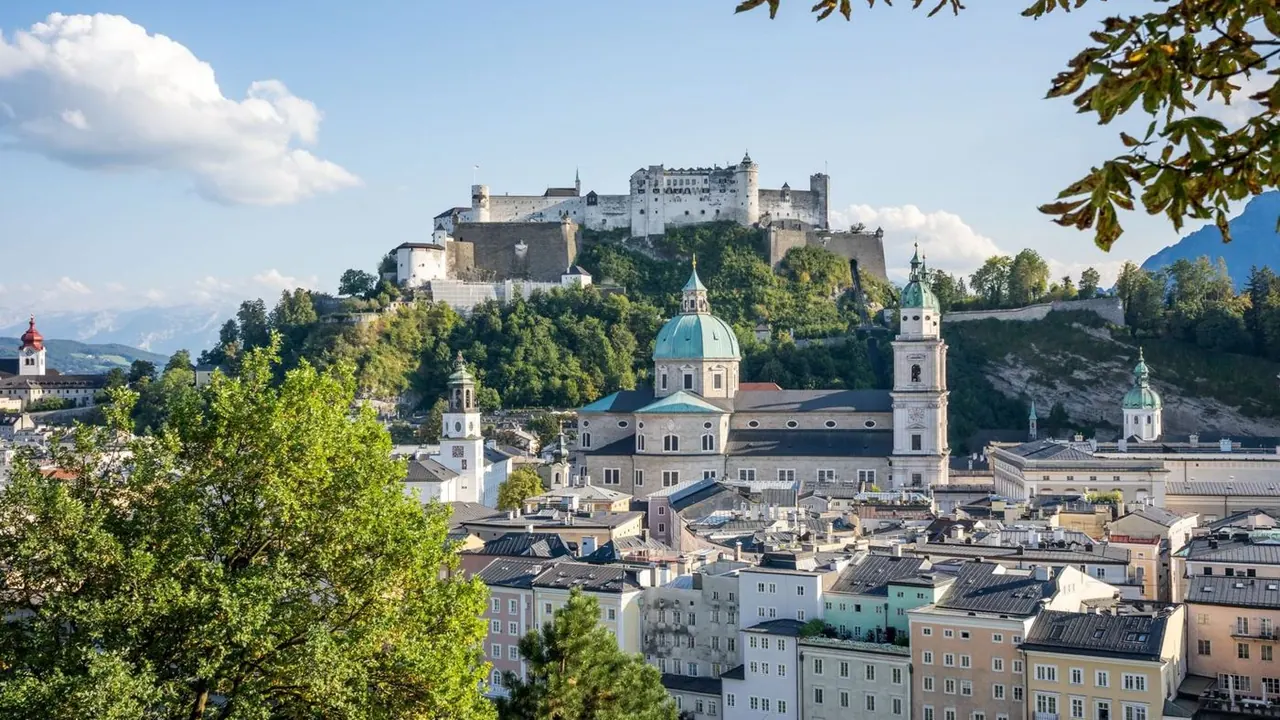
Photos: La Spezia by Irina Balashova, Pexels License; Salzburg by Leonhard Niederwimmer, Pexels License.
La Spezia or Salzburg?
Our verdict in twelve categories, each scored against the same fixed benchmark cities, and the climate month by month, so you can choose for your trip.
Choose La Spezia for
- beaches
- prices
- food and drink
La Spezia is the choice when the trip is about the coast: walking the terraced paths of the Cinque Terre, swimming off Palmaria or Lerici, and taking the train and boat between villages each day. It is also the cheaper base of the two, and its Ligurian cooking of farinata, gulf mussels and pesto has more character than anything on Salzburg's tourist menus.
Choose Salzburg for
- live music and the arts
- culture and sights
- wellness
Travellers who want the city itself to be the main attraction should choose Salzburg. It has a Baroque old town under a medieval fortress, Mozart's houses, and opera or a concert almost every evening, and the lakes and the Alps begin at the edge of town. It is easier with young children and better for spa days. In return, it costs noticeably more and has no sea.
Scoreboard
Twelve categories on one fixed scale from 0 to 100. The shaded stretch is the gap between the two.
Your match
Pick a travel style or drag the sliders, and both match scores follow your weighting.
Wins on beaches and prices with your weighting.
Wins on live music and the arts and culture and sights with your weighting.
What matters to you?
Category by category
What the scores mean for a trip.
Beaches & swimming
La Spezia has no beach on its own waterfront, but salt water is never far away. Lerici and San Terenzo have sheltered sand and pebble, Portovenere and Palmaria have rocky platforms over very clear water, and Monterosso's long sandy beach is a short train ride up the coast. The sea stays warm enough from June into early October.
Salzburg's swimming is in the Salzkammergut lakes, half an hour or more away. Fuschlsee and Wolfgangsee are green and clean, and you get in from grass or a wooden jetty. The water is cooler, the season ends in early September, and a lake afternoon is a pleasant extra rather than a central part of the trip.
Food & drink
La Spezia eats better and has more local character. Wood-oven farinata, mesciua soup, rope-grown mussels from Portovenere and pesto on testaroli are all particular to this stretch of coast, and with them come Cinque Terre whites and sweet Sciacchetrà. Eating in town costs less than in the villages, although fine dining and food from abroad are both scarce.
Salzburg's cooking is hearty Austrian food: schnitzel, Kasnocken and the cloud-like Salzburger Nockerl. Its strengths are the coffee-house afternoons and the Augustiner monastery brewery's chestnut garden. In the old town, many restaurants serve the same expensive menus, so the better meals are in the inns of the outer districts.
Culture & sights
Salzburg is the far richer city for sightseeing. The prince-archbishops' Baroque ensemble of cathedral, Residenz and arcaded squares sits under Hohensalzburg, Mozart's birthplace is a few lanes away, and St Peter's catacombs, Mirabell and Hellbrunn fill two or three full days without any repetition.
La Spezia is a nineteenth-century naval town of straight avenues and Liberty façades, with no medieval core. The Museo Amedeo Lia's early Italian paintings and the Lunigiana stele statues in Castello San Giorgio are worth a morning each. Most of the area's history, though, is out in Portovenere, Sarzana and Luni.
Nightlife
Neither city is somewhere to stay out late, and both are quiet by midnight. What differs is the kind of evening. La Spezia has the Italian aperitivo, with spritz and Vermentino on Via del Prione and the seafront, and in summer the crowd moves to Lerici's waterfront bars. Salzburg has beer halls with long tables and litre mugs, and student pubs along Rudolfskai. Anyone who wants a club night in Salzburg takes the train to Munich.
Nature & outdoors
Both are excellent bases for the outdoors, and Salzburg offers the wider range. Wooded ridges rise inside the city, the Untersberg cable car takes you up to limestone ridge walks, and the Salzkammergut lakes, Berchtesgaden's Königssee and the ski areas are all close by. Snow in winter makes it a base for all seasons.
La Spezia's landscape is narrower but very striking. It has the vine-terraced cliffs and footpaths of the Cinque Terre, the island loop on Palmaria and the pines of Montemarcello, with kayaking and diving in the gulf and the marble peaks of the Apuan Alps an hour inland. Spring and autumn are the seasons to walk here.
Day trips
La Spezia has the edge mainly because its day trips are so close and so easy without a car. The Cinque Terre villages are minutes away by train, Portovenere is a short boat ride, and Sarzana, Luni, Carrara, Pisa and Lucca are all within about an hour. Portofino and Genoa make a longer day along the Riviera.
Salzburg's day trips are just as varied: Hallstatt's lakeshore, salt mines at Hallein and Berchtesgaden, the fortress at Werfen and the city of Munich. The trips take longer, though, and several of the lake villages are much easier to reach with a hire car than by the slow buses.
Good for families
Salzburg gives children more to do. The trick fountains at Hellbrunn, the zoo beside the palace, the Haus der Natur, the marionette theatre and the funicular up to the fortress fill the days, and the salt mines nearby add underground slides and boat rides. The cobbles and steep lanes are hard work with a pushchair, however.
La Spezia's flat centre is easier with a buggy, and the shallow water at San Terenzo and boat trips round the islands are good days out. Beyond the naval museum there are no dedicated attractions, and the steep villages and full summer trains suit older children best.
Getting around
Both are easy without a car, but in different ways. La Spezia is above all a rail hub: from its flat, walkable centre, trains run through the Cinque Terre and on to Pisa, with buses and seasonal ferries around the gulf. Its weak point is the crowded coastal trains in summer.
Salzburg is best within the city. Its sights are all a short walk apart, trolleybuses reach Hellbrunn and the cable car, and the riverside paths are good for cycling. Getting out to the lakes is the slow part, which is why many visitors hire a car for those days.
Shopping & style
Salzburg has more to shop for, and much of it is local. Getreidegasse's guild signs hang over the old burgher houses, workshops make dirndls and loden jackets to measure, and in Advent the Christmas market on Domplatz is one of the best known in the region.
La Spezia's Via del Prione is ordinary provincial high-street shopping. The best things to take home are edible: pesto, olive oil, anchovies and Sciacchetrà from the Piazza Cavour market and the delis around it.
Affordability
La Spezia is the cheaper stay. Farinata, trattorias and local trains are fair value, and rooms cost clearly less than in the Cinque Terre villages, although summer rooms, trail passes and bathing establishments add up over a stay.
Salzburg is expensive for a small city, especially near the old town and during the summer festival and the Advent markets. Staying across the river, eating in the outer inns and beer halls, and buying a city card help to keep costs down.
Live music & performing arts
This is where the two differ most. In summer the Salzburg Festival fills the Felsenreitschule and the Festspielhaus with opera and orchestras of the first rank, and Jedermann is played in front of the cathedral. Mozart Week, the Easter Festival, the Landestheater and nightly chamber concerts keep music going through the rest of the year.
La Spezia has the Teatro Civico's season and a long-established summer jazz festival, with concerts in piazzas around the gulf. For opera you have to go to Genoa or Pisa.
Wellness & relaxation
Salzburg is better for a restful trip. The Paracelsus Bad's saunas look out over the Kapuzinerberg, Bad Reichenhall's brine spa is twenty minutes away, and the Gastein valley's thermal springs make a fine spa excursion. Quiet coffee-house afternoons add to the slow pace.
La Spezia has no bathing tradition. Its nearest thermal baths are the small ones at Equi Terme, an hour inland. What it offers instead is unhurried time: a long lunch in Tellaro and the quiet of Palmaria, at its best outside the busy summer months.
When should you go?
Pick your month. The climate figures are measured averages, not a forecast.
La Spezia in July
Salzburg in July
Daytime high, °C
Rainfall in the month, mm
Where the figures come from
La Spezia's temperatures are measured 65 km from the centre, at Pisa / S. Giusto.
La Spezia has no rain gauge within 25 km of the centre, so its rainfall comes from a gridded climate dataset read at the city rather than from a gauge further away.
Temperature and rainfall are climate normals, averaged over the years shown. La Spezia: 1991-2020 normals, Pisa / S. Giusto (64.8 km from centre). Salzburg: 1991-2020 normals, Salzburg (3.4 km from centre).
La Spezia has a Mediterranean year with a dry summer. July and August bring afternoons near 30°C, long sunny days and the sea at its warmest, about 25°C, so these are the beach months, although the heat makes the coastal paths hard going. For walking, May and June are the safest choice. They are warm, sunny and among the drier months, and by June the sea is warm enough to swim. September keeps the warm water but brings the first heavy rain, and October and November are the wettest months of the year, each with more than 150mm.
Salzburg's rain falls the other way round. May to August are its wettest months, often with afternoon storms, so a summer stay needs an umbrella, even though highs of around 25°C suit the old town and the lakes. September is less wet than high summer but still rainy. April and October are drier, with cool days that are good for walking the streets. Winter is properly cold, with January highs near 3°C and snow often in town. So late spring is La Spezia's best season, while anyone who wants fewer showers in Salzburg should go in April or October and accept the cooler weather.
Which traveller are you?
For a beach and sun trip, choose La Spezia. Warm sea from June into early October, coves at Fiascherino and Tellaro, clear water off Palmaria and the sandy strip at Monterosso all beat Salzburg's alpine lakes, where you swim from lawns and jetties for a shorter summer.
On a culture and arts trip, Salzburg is far ahead. The UNESCO-listed Baroque centre, Hohensalzburg and Mozart's houses fill several days, and the summer festival, Mozart Week and the Easter Festival offer music of a quality that La Spezia's single main theatre cannot approach.
On a family trip with children, Salzburg works better. The trick fountains and zoo at Hellbrunn, the hands-on Haus der Natur and the miners' slides in the salt mines keep children busy. La Spezia has boat trips and shallow beaches, but its steep villages and crowded trains suit teenagers more than toddlers.
Before you go
| Measure | La Spezia | Salzburg |
|---|---|---|
| Official language | Italian | German, Austrian Sign Language |
| Currency | Euro (EUR) | Euro (EUR) |
| Sockets | CFL230 V, 50 Hz | CF230 V, 50 Hz |
| Driving side | Right | Right |
| Time zone | UTC+1, UTC+2 in summer | UTC+1, UTC+2 in summer |
| Emergency number | 112 | 112 |
| Elevation | 3 m | 424 m |
| Main airport | Pisa International Airport (PSA)65 km from centre82 non-stop destinations | Salzburg Airport (SZG)3 km from centre64 non-stop destinations |
| Public holidays this year | 13 days | 16 days |
By the numbers
| Measure | La Spezia | Salzburg |
|---|---|---|
| City population | 92,119 | 155,021 |
| People per km² | 1,792 | 2,360 |
| Museums within 10 km | 12 | 38 |
| UNESCO World Heritage sites within 50 km | 2 | 3 |
| Swim season, months above 21 °C | 4 months | - |
Where else could you go?
Every comparison below shares a destination with this one, so you can follow La Spezia or Salzburg somewhere new.