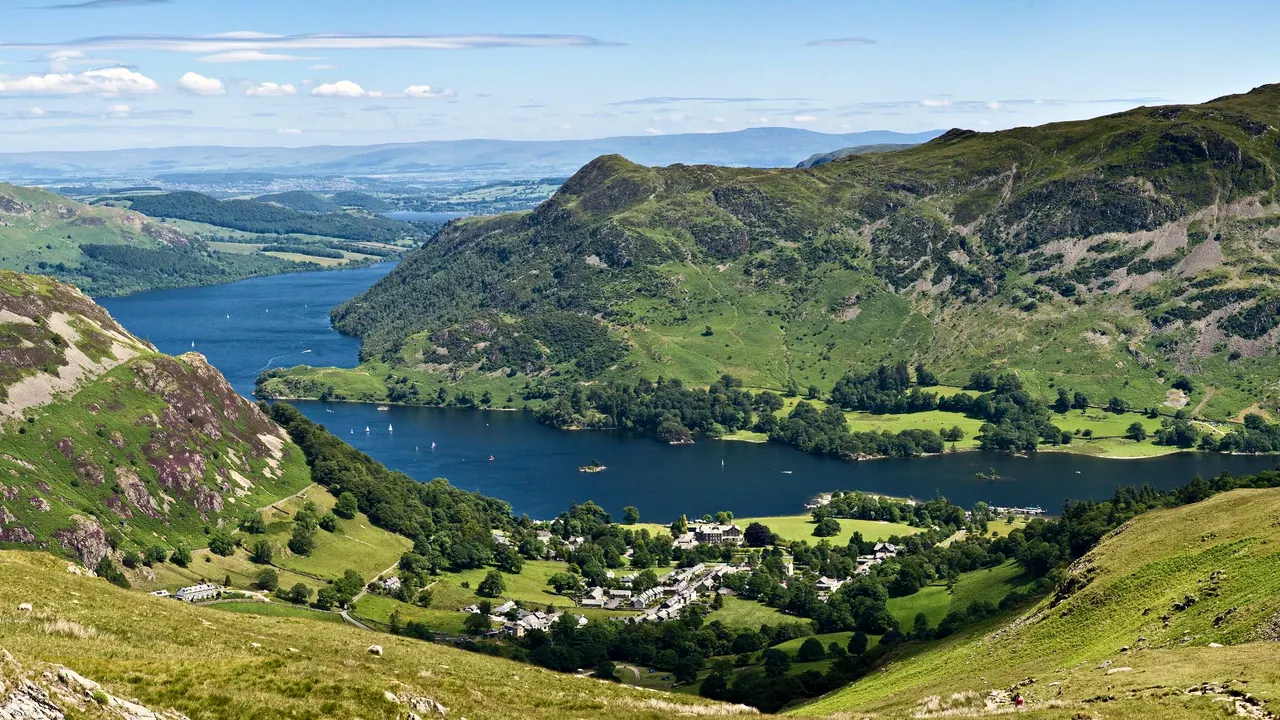
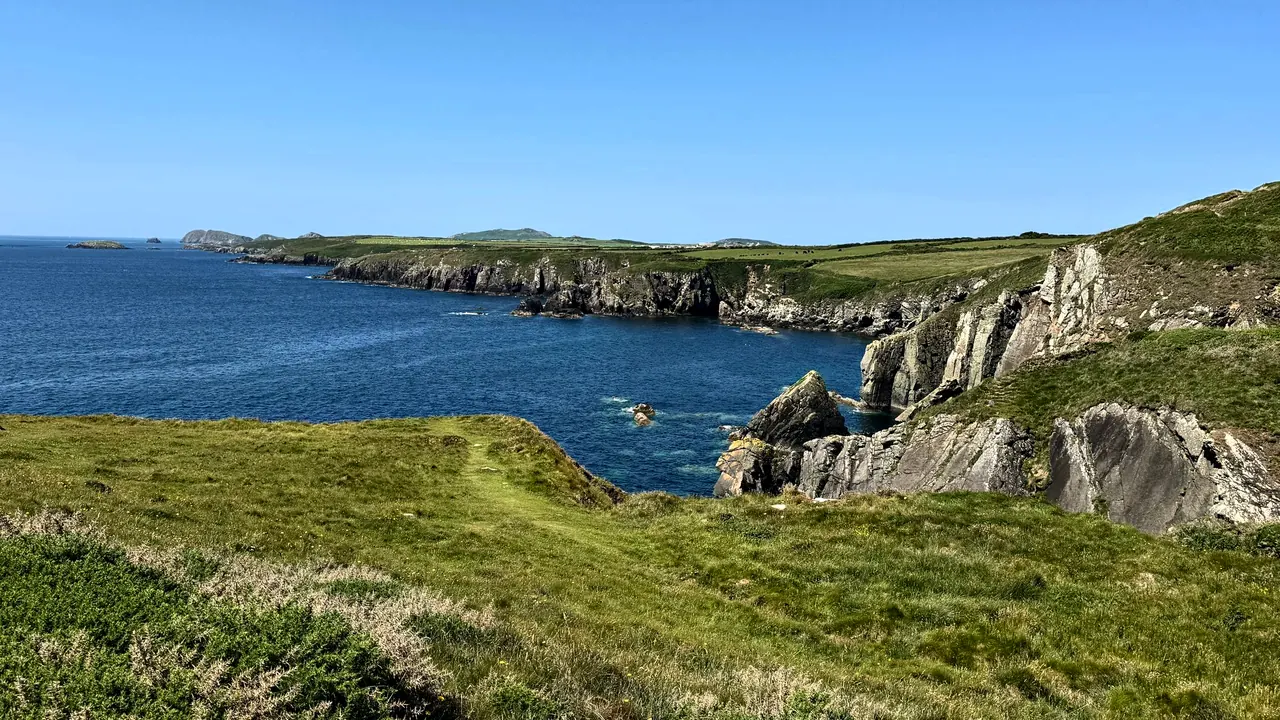
Photos: Lake District by Diliff, CC BY-SA 3.0, cropped; Pembrokeshire by Petra Nesti, Pexels License.
Lake District or Pembrokeshire?
Our verdict in twelve categories, each scored against the same fixed benchmark cities, and the climate month by month, so you can choose for your trip.
Choose Lake District for
- day trips
- wellness
- food and drink
The Lake District suits walkers who want mountains, and travellers who like to end the day well fed and warm. The fells and long lakes are the draw. Behind them are the region's two clear advantages: better places to eat, from fireside inns to serious country-house cooking around Cartmel and Windermere, and lakeside spa hotels that turn a walking weekend into a restful one. Hadrian's Wall and the Yorkshire Dales are close enough for a day out. Expect a lot of rain.
Choose Pembrokeshire for
- beaches
- prices
- culture and sights
Pembrokeshire is the choice for a seaside vacation. It has real sandy beaches, a coast path round almost the whole county, and puffins and seals offshore. St Davids and the Norman castles give it more substantial history, and families get easy days of rock pools and crabbing. It is also the gentler of the two on the budget. Its restaurants are thinner, though, and the sea is never warm.
Scoreboard
Twelve categories on one fixed scale from 0 to 100. The shaded stretch is the gap between the two.
Your match
Pick a travel style or drag the sliders, and both match scores follow your weighting.
Too close to call, 2 points apart
Wins on day trips and wellness with your weighting.
Wins on beaches and prices with your weighting.
What matters to you?
Category by category
What the scores mean for a trip.
Beaches & swimming
Pembrokeshire wins this one easily. Its beaches are real sand: Barafundle's dune-backed cove, the long open sweeps of Newgale and Whitesands, and the town beaches of Tenby. Many have lifeguards in summer, and there are enough of them to find a quiet one.
The Lake District offers lakes and tarns with shingle shores and jetties, which is great for a bracing wild swim after a walk but not for a day spent lying on the sand. The water is cold in both places, so in Pembrokeshire a beach day still means rock pools and short dips rather than long swims.
Food & drink
The Lake District is the better place to eat out. The slate-floored pubs serve Herdwick lamb and Cumberland sausage, and the southern Lakes around Cartmel and Windermere have country-house and farm-to-table cooking that people travel across Britain to try. It also has its own sweet things, from Grasmere gingerbread to sticky toffee pudding.
Pembrokeshire's strength is what it produces. Crab and lobster come straight off the harbour boats, along with salt-marsh lamb and farmhouse cheese, which is ideal if you are self-catering from farm shops. Beyond a few good restaurants in St Davids, Fishguard and Narberth, though, menus soon start to repeat.
Culture & sights
Pembrokeshire has more to see. St Davids Cathedral stands beside the ruined Bishop's Palace, Pembroke Castle is the largest of a ring of Norman fortresses, and the Pentre Ifan burial chamber goes back much further.
The Lake District's heritage is literary and works on a smaller scale. It means Wordsworth's Dove Cottage, Beatrix Potter's Hill Top and Ruskin's Brantwood, plus the Castlerigg stone circle. Each takes an hour or so, and the landscape itself matters more than any building.
Nightlife
Both are early-to-bed places, and neither has a club worth the trip. Pembrokeshire has the edge in Tenby on a summer weekend, when the harbour pubs fill with groups on weekends away and a few bars stay open late.
In the Lake District, the most choice is in Ambleside, Keswick and Bowness, but evenings mean a pint by the fire with walkers comparing routes. They end early because people want to be on the fells in the morning.
Nature & outdoors
Both are superb outdoors but in different ways: mountains and lakes against cliffs and sea. The Lake District has England's highest fells, with Striding Edge onto Helvellyn, Scafell Pike from Wasdale, and the crags where British rock climbing began. Sailing and paddleboarding on Windermere and Ullswater fill the summer.
Pembrokeshire's version runs along the coast path, about 300km of arches and stacks. The wildlife here is better: puffins on Skomer, seal pups on Ramsey and gannets on Grassholm. Add coasteering, surf at Freshwater West and sea kayaking, and it suits people who want the sea as part of their adventure.
Day trips
The Lake District has better places to visit for a day. Carlisle's castle and cathedral and the central stretches of Hadrian's Wall are within easy reach of the northern Lakes. Furness Abbey, Lancaster and the Yorkshire Dales lie to the south, and Kendal, Cockermouth and Cartmel make easy outings inside the region.
Pembrokeshire's outings are pleasant but small. You can take the boat to the monks' island of Caldey, visit Dylan Thomas's boathouse at Laugharne, or see the harbours of Aberaeron and New Quay. Gower is the furthest worthwhile trip, at about two hours away.
Good for families
A family day in the Lake District is built around a ride and a short walk: a steamer across Windermere or Ullswater, the miniature railway up Eskdale, Peter Rabbit country around Hawkshead, or the easy loop round Tarn Hows. Older children can go ghyll scrambling and canoeing. Wet days are the weak spot, because there is little to do indoors in such a rainy place.
In Pembrokeshire the day is spent on the beach, with sandcastles, crabbing off harbour walls and boat trips out to the seals. In Tenby and Saundersfoot the sand is a short walk from your door, and a farm park and soft-play centres cover the rainy days, so it is a shade easier with young children.
Getting around
Neither is easy without a car, but the Lake District gives you more of a choice. In the central Lakes, the Windermere branch line, buses between Ambleside, Grasmere and Keswick, and the lake steamers make a car-free stay workable. The western valleys still need a car and a drive over Hardknott and Wrynose, which are steep and single-track.
Pembrokeshire is compact, about an hour across, but it is really car country. You will be on narrow hedge-lined lanes, and in summer the beach car parks fill early. Seasonal coastal buses do let you walk the coast path one way and ride back.
Shopping & style
Neither place is a reason to go shopping, and each has one specialism. In Ambleside and Keswick it is outdoor gear: boots, waterproofs and climbing equipment. In Pembrokeshire it is Narberth's independent shops and delis, and Welsh blankets woven in the county's old woollen mills, the better thing to take home.
Affordability
Pembrokeshire is easier on the wallet, although both charge peak British rates for cottages in July and August. Once you are there, Pembrokeshire's pub meals and cafés are moderately priced, and spring and early autumn bring clear savings.
The Lake District stays in demand right through to September and at weekends, and parking and pub meals add up. Its long tradition of youth hostels, bunkhouses and campsites helps walkers who don't mind basic beds.
Live music & performing arts
Keswick's Theatre by the Lake is the one place in either region with a proper season of plays, and it has the lake as a backdrop. Kendal adds an arts centre and a November mountain festival of outdoor films and talks.
Pembrokeshire's offer is music. Its classical festival is held under the roof of St Davids Cathedral in early summer, and the small theatres in Milford Haven and Fishguard host touring shows. Beyond these, an evening of live music in either place usually means a folk session in a pub.
Wellness & relaxation
The Lake District is the better place for a restful break. Lakeside hotels around Windermere and Ullswater have pools and treatment rooms with water views, and a weekend of fell walking followed by a long soak is a well-loved pattern.
Pembrokeshire relaxes you through empty lanes, small towns and sea views rather than facilities. It has only a few hotel spas and some farmhouse retreats.
When should you go?
Pick your month. The climate figures are measured averages, not a forecast.
Lake District in July
Pembrokeshire in July
Daytime high, °C
Rainfall in the month, mm
Where the figures come from
Lake District's temperatures are measured 37 km from the centre, at Walney Island.
Lake District has no rain gauge within 25 km of the centre, so its rainfall comes from a gridded climate dataset read at the destination rather than from a gauge further away.
Lake District's sunshine is measured 90 km from the centre, at Leeming.
Pembrokeshire's temperatures are measured 46 km from the centre, at Aberporth.
Pembrokeshire has no rain gauge within 25 km of the centre, so its rainfall comes from a gridded climate dataset read at the destination rather than from a gauge further away.
Temperature and rainfall are climate normals, averaged over the years shown. Lake District: 1991-2020 normals, Walney Island (36.8 km from centre). Pembrokeshire: 1991-2020 normals, Aberporth (46.2 km from centre).
The two have almost the same temperatures through the year. Both peak at about 18°C in July and August and stay cool to cold from November to March, so you can walk all year but it is never hot. Rain is the big difference. The Lake District is far wetter, with winter months reaching about 200mm and even its driest month, April, wetter than most of Pembrokeshire's year. Its best stretch is April to June, before rain builds again from August.
Pembrokeshire's wettest months, October to December, only just pass 120mm. It is also sunnier, with most sunshine in May and June, which makes late spring its best time for the coast path. For the beach, aim for July to September, when the sea reaches about 17°C. That is fine for a dip, and many people wear a wetsuit.
Which traveller are you?
On a beach and sun trip, the Lake District leaves you on a pebbly lake shore with cold water, a pleasant hour after a walk at best. Pembrokeshire is built for it: a different sandy bay each morning, rock pools at low tide and a wetsuit for the waves.
For a relaxing and wellness trip, the Lake District gives you the better rhythm. Spend the morning on a quiet valley walk, the afternoon soaking in a lakeside hotel pool and the evening at dinner by the fire. Pembrokeshire has the sea air and the calm, but it rarely has a spa to go with them.
On a trip on a tight budget, the Lake District suits mainly walkers who are happy in a bunk bed and want nothing more than the fells. Pembrokeshire is easier for everyone else. Rent a cottage, cook crab and lamb from the farm shops, spend free days on the sand and the coast path, and keep fish and chips as the treat.
Before you go
| Measure | Lake District | Pembrokeshire |
|---|---|---|
| Official language | English | English |
| Currency | Pound Sterling (GBP) | Pound Sterling (GBP) |
| Sockets | G230 V, 50 Hz | G230 V, 50 Hz |
| Driving side | Left | Left |
| Time zone | UTC, UTC+1 in summer | UTC, UTC+1 in summer |
| Emergency number | 112 or 999 | 112 or 999 |
| Main airport | Manchester Airport (MAN)211 non-stop destinations | Cardiff International Airport (CWL)32 non-stop destinations |
| Public holidays this year | 8 days | 8 days |
By the numbers
| Measure | Lake District | Pembrokeshire |
|---|---|---|
| Population | - | 125,818 |
| People per km² | - | 78 |
| Swim season, months above 21 °C | None | None |
Where else could you go?
Every comparison below shares a destination with this one, so you can follow Lake District or Pembrokeshire somewhere new.
- Yorkshire Dalesvs Lake District
- Northumberlandvs Lake District
- Peak Districtvs Lake District
- Cornwallvs Pembrokeshire
- Snowdoniavs Lake District
- Snowdoniavs Pembrokeshire