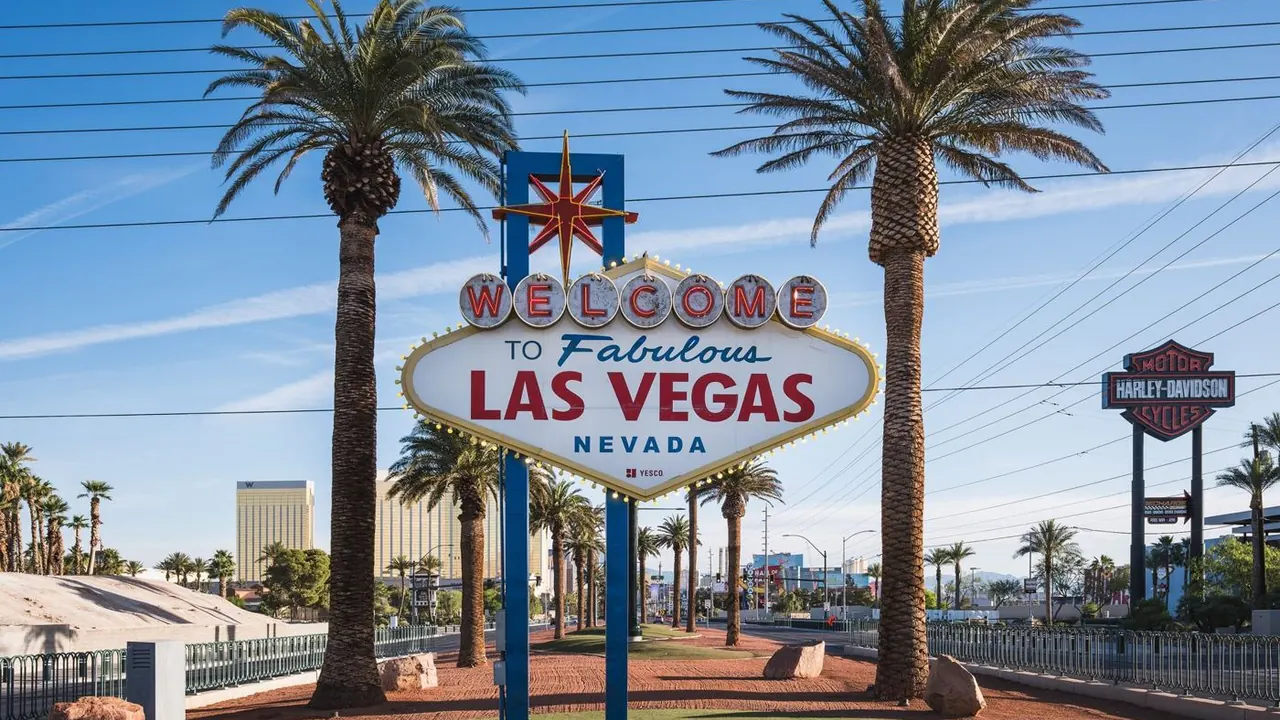
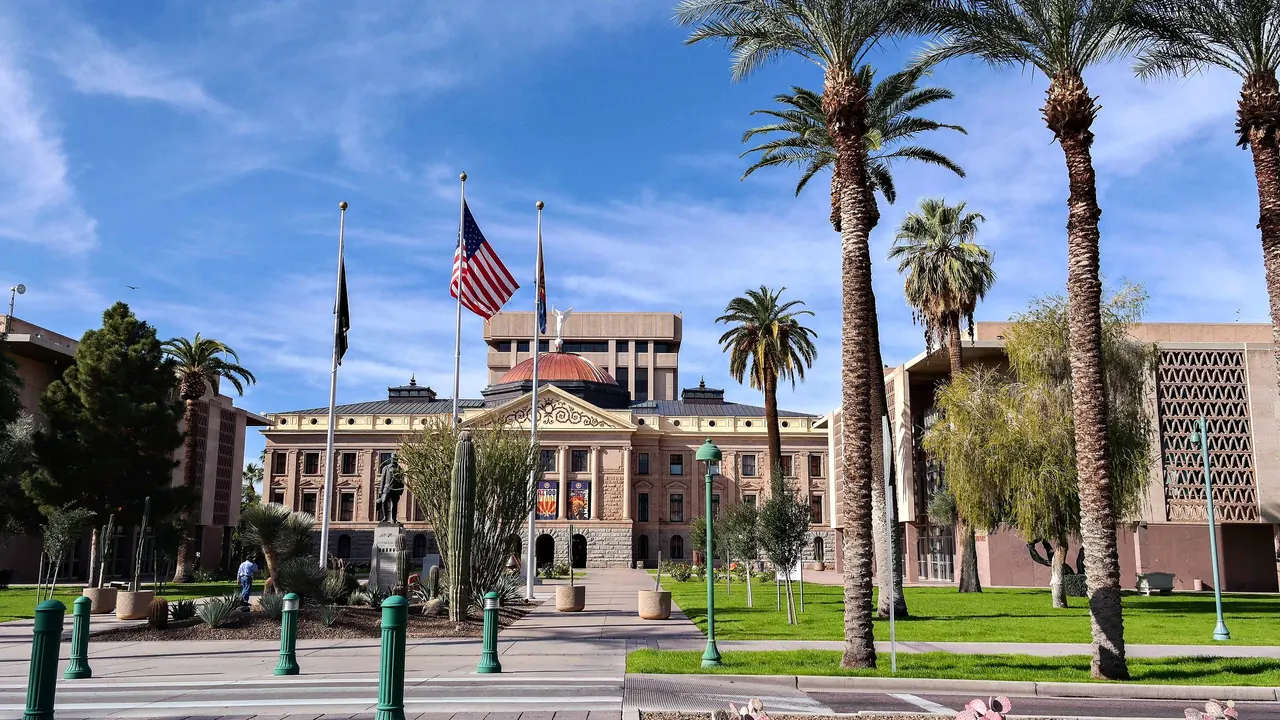
Photos: Las Vegas by Christian David, CC BY-SA 4.0, cropped; Phoenix by Visitor7, CC BY-SA 3.0, cropped.
Las Vegas or Phoenix?
Our verdict in twelve categories, each scored against the same fixed benchmark cities, and the climate month by month, so you can choose for your trip.
Choose Las Vegas for
- nightlife
- live music and the arts
- getting around
Las Vegas is the choice for a group trip, a celebration or a few nights built around evenings. The shows, the resort nightclubs and the late-opening restaurants along the Strip and Spring Mountain Road pack more into a short stay than Phoenix can, and most of it sits along one corridor. Families and anyone looking for heritage will find much less to hold them.
Choose Phoenix for
- families
- day trips
- wellness
Phoenix rewards a slower, longer stay, ideally in winter or spring with a hire car. Desert trails start at the edge of the suburbs, the big resorts around Camelback Mountain are made for resting, and the Heard Museum, Sedona and Tucson give it more depth by day. It is also the easier of the two with children.
Scoreboard
Twelve categories on one fixed scale from 0 to 100. The shaded stretch is the gap between the two.
Your match
Pick a travel style or drag the sliders, and both match scores follow your weighting.
Too close to call, 2 points apart
Wins on nightlife and live music and the arts with your weighting.
Wins on families and day trips with your weighting.
What matters to you?
Category by category
What the scores mean for a trip.
Beaches & swimming
Neither city has a beach, and both rely on pools and desert reservoirs. In Las Vegas the nearest natural swim is Boulder Beach on Lake Mead, a gravel shore with no shade. Most visitors stay at the Strip resorts instead, some of which have sand-lined wave pools.
Phoenix has a bit more of a local water culture. There are small beaches at Saguaro Lake and Canyon Lake below desert cliffs, and floating down the lower Salt River on a tube is a summer tradition with locals.
Food & drink
Las Vegas gives you more choice and a higher top end. Famous chefs have restaurants in the resorts, the steakhouses and tasting menus are strong, and Spring Mountain Road has kilometres of Sichuan, Korean, Thai and Vietnamese kitchens, many open late. What it lacks is any cooking of its own.
Phoenix has that local cooking: Sonoran carne asada, paper-thin flour tortillas and bacon-wrapped hot dogs from evening carts. The wider restaurant scene is solid but not exceptional, and the good places are spread out enough that you usually need to drive between them.
Culture & sights
Phoenix has more to see by day. The Heard Museum's collection of Native American art is world class, the Musical Instrument Museum can fill a morning, and Frank Lloyd Wright's Taliesin West is a real architectural draw. The catch is that each sight is a separate drive.
In Las Vegas, the main sight is the spectacle itself: the themed resorts, the fountain show and the light canopy over Fremont Street. The Neon Museum and the Mob Museum tell the city's short history well, but after those, anyone who travels for sights will run out quickly.
Nightlife
Nightlife is the biggest gap between the two. Las Vegas never closes: casino bars stay open all night, you can carry drinks along the Strip, and resort clubs book star DJs, with pool parties during the day. Fremont Street and the arts district offer cheaper, more local bars.
Phoenix's nightlife is split between districts. Old Town Scottsdale has clubs and rooftop bars, Mill Avenue in Tempe is full of students, and Roosevelt Row has craft beer bars. Everything shuts at 2am, and the distances mean you pick one area for the night.
Nature & outdoors
Both cities have outstanding desert scenery, but it is laid out differently. In Phoenix the mountains rise straight out of the suburbs, so an early hike on Camelback Mountain, Piestewa Peak or South Mountain fits easily before breakfast. The saguaro forests of the McDowell Sonoran Preserve are close by too.
Around Las Vegas the scenery is a drive away but more varied. Red Rock Canyon has world-class climbing, Valley of Fire has flame-coloured rock and petroglyphs, and Mount Charleston has pine forest and a small ski area. In both cities, summer heat limits hiking to the early morning.
Day trips
Phoenix has a better choice of outings, with real towns within two hours. You can visit the hillside mining town of Jerome, Prescott's Western saloon street, the Montezuma Castle cliff dwelling, Sedona's red rock country, or Tucson with its adobe barrios and Mission San Xavier del Bac.
From Las Vegas there is really one classic outing: Hoover Dam combined with Boulder City. The Grand Canyon and Zion tours sold on the Strip are long journeys into open landscape, not trips to places you can wander round.
Good for families
Phoenix is much easier with children, especially in the cooler months. There is a zoo, an aquarium, the Arizona Science Center and a children's museum, plus water parks and spring training baseball in March. Hotels are roomy and the atmosphere is relaxed.
Las Vegas can fill a day or two with the indoor rides, the shark aquarium and the thrill rides at the top of the observation tower. But almost every route passes casino floors and adult advertising, so many families treat it as a stop on a road trip to the national parks.
Getting around
Las Vegas is easier without a car, though distances are deceptive. Most of what visitors want lies along about 6km of Strip, buses run day and night as far as downtown, and there is a monorail. Even so, the walks between resorts take longer than they look, and taxis or ride-hailing fill the gaps.
Phoenix really needs a car. The light rail is useful between the airport, downtown and Tempe, but Scottsdale and the trailheads are dozens of kilometres apart on wide arterial roads. Walking is only practical in a few small centres.
Shopping & style
Las Vegas has more brands under one roof, open late. There are the Roman-themed arcade at Caesars Palace, the Venetian's shops along its indoor canal, the Fashion Show mall and two outlet centres. Almost nothing is local, though.
Phoenix's malls in Scottsdale and near the Biltmore district are smaller. What Las Vegas cannot match is the Native American work: Navajo and Zuni silver and turquoise, Hopi katsina carvings and rugs, best bought from museum shops and reputable galleries.
Affordability
Neither city is cheap, but Phoenix is a little easier on the budget. Rooms drop sharply in summer, chain hotels along the freeways are good value all year, and the hiking is mostly free. The extra cost is a hire car.
Las Vegas can be cheap midweek, but room rates jump at weekends and resort fees are added to almost every booking. Once you are inside, shows, clubs and dining on the Strip add up quickly. Staying midweek and eating in Chinatown keeps costs down.
Live music & performing arts
Las Vegas is the reason to travel for a show. Permanent theatres host acrobatic and water-based productions, magicians and comedians, and big stars take long residencies, so you can see acts that rarely tour. The formal arts are thinner, centred on the Smith Center downtown.
Phoenix is the reverse. It has a full set of formal institutions, including the Phoenix Symphony, Arizona Opera, Ballet Arizona and Wright's round ASU Gammage auditorium, but none of them is a reason to travel on its own. Its seasons also go quiet in summer.
Wellness & relaxation
Phoenix is the better place to slow down. The resorts at the foot of Camelback Mountain and in north Scottsdale combine spas, several pools and golf, use desert ingredients such as sage and agave in their treatments, and are at their most restful in winter.
Las Vegas has some of the biggest hotel spas in the country, with thermal circuits and salt rooms. But the casinos around them are designed to keep you stimulated, so you get the most out of a stay by choosing a non-gaming hotel and booking spa time early in the day.
When should you go?
Pick your month. The climate figures are measured averages, not a forecast.
Las Vegas in July
Phoenix in July
Daytime high, °C
Rainfall in the month, mm
Temperature and rainfall are climate normals, averaged over the years shown. Las Vegas: 1991-2020 normals, McCarran International Airport (8.5 km from centre). Phoenix: 1991-2020 normals, Phoenix Sky Harbor Airport (2.8 km from centre).
Both are desert cities with no real rainy season. A little rain falls in winter in each, and Phoenix also gets short summer storms, but showers rarely spoil a day in either. So the choice of month comes down to heat. Las Vegas is the cooler of the two. From June to August highs sit around 40°C, which is weather for resort pools rather than walking the Strip. Midwinter days are cool, at about 15°C. Its best months for exploring the city and the desert are March and April, and again October and November.
Phoenix is a few degrees warmer all year round. Its summer is slightly fiercer, at about 41°C, but its winter is the real draw. January highs reach about 20°C, so from November to April it is pleasant for hiking and sitting outdoors. That makes it the better winter escape of the two.
Which traveller are you?
For a food and nightlife trip, Las Vegas is clearly better. Bars and clubs run all night, top chefs have restaurants in the resorts, and Chinatown has late kitchens. In Phoenix, bars close at 2am and the going-out districts are a long drive apart.
On a family trip with children, Phoenix is the more comfortable base. It has a zoo, a science centre, water parks and a relaxed atmosphere. In Las Vegas, children have to walk past casino floors and adult advertising almost everywhere they go.
For a relaxing and wellness trip, choose Phoenix. The desert resorts below Camelback Mountain have big spas, several pools and a calm pace through the winter. Las Vegas has large spas too, but the casinos around them are noisy and lit around the clock.
Before you go
| Measure | Las Vegas | Phoenix |
|---|---|---|
| Currency | US Dollar (USD) | US Dollar (USD) |
| Sockets | AB120 V, 60 Hz | AB120 V, 60 Hz |
| Driving side | Right | Right |
| Time zone | UTC-8, UTC-7 in summer | UTC-7 |
| Emergency number | 911 | 911 |
| Elevation | 610 m | 331 m |
| Main airport | Harry Reid International Airport (LAS)4 km from centre159 non-stop destinations | Phoenix Sky Harbor International Airport (PHX)6 km from centre149 non-stop destinations |
| Public holidays this year | 11 days | 12 days |
By the numbers
| Measure | Las Vegas | Phoenix |
|---|---|---|
| City population | 641,903 | 1,608,139 |
| People per km² | 1,843 | 1,199 |
| Museums within 10 km | 21 | 10 |
| UNESCO World Heritage sites within 50 km | 0 | 1 |
Where else could you go?
Every comparison below shares a destination with this one, so you can follow Las Vegas or Phoenix somewhere new.