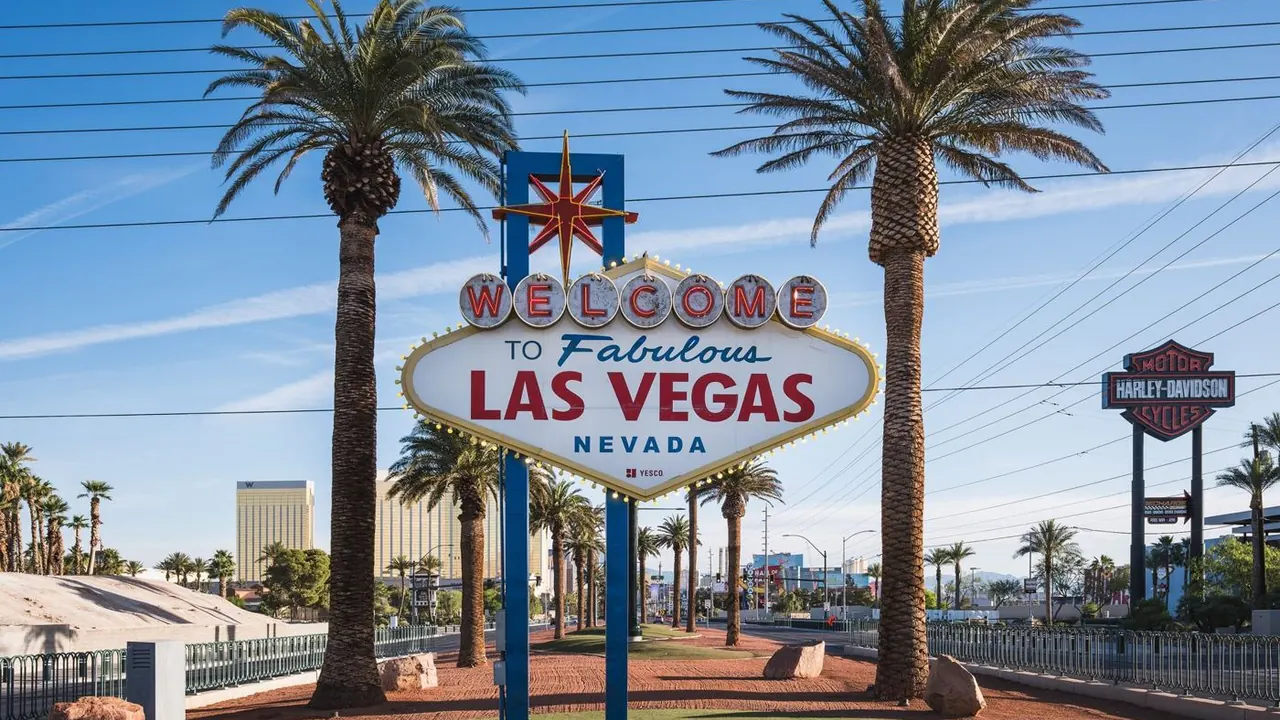
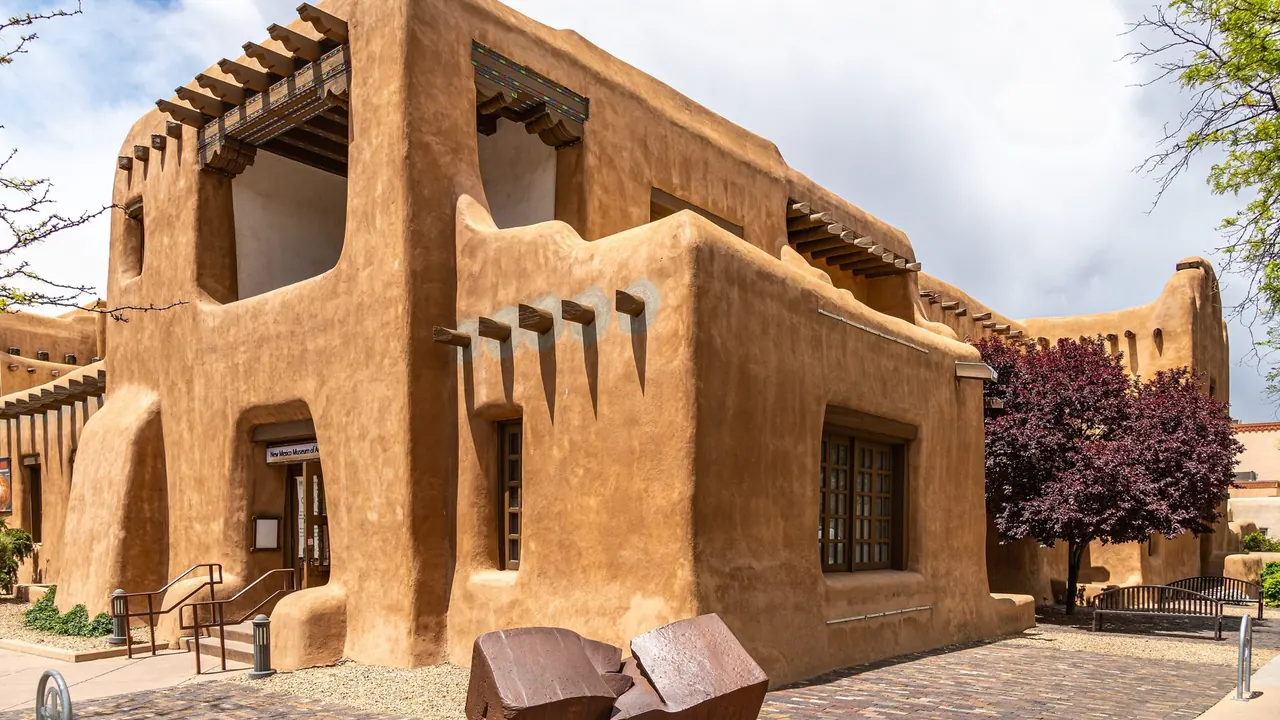
Photos: Las Vegas by Christian David, CC BY-SA 4.0, cropped; Santa Fe by dconvertini, CC BY-SA 2.0, cropped.
Las Vegas or Santa Fe?
Our verdict in twelve categories, each scored against the same fixed benchmark cities, and the climate month by month, so you can choose for your trip.
Choose Las Vegas for
- nightlife
- live music and the arts
- food and drink
Las Vegas suits a group trip or a celebration built around the night: casino bars and resort clubs running until dawn, headline residencies and big production shows, chef-led dining rooms on the Strip and late Asian kitchens on Spring Mountain Road. It is a place to be entertained rather than to explore, and it rewards a few intense days more than a long, curious stay.
Choose Santa Fe for
- day trips
- culture and sights
- families
Travellers who want a place with a character of its own will be happier in Santa Fe. The adobe centre around the Plaza, Museum Hill and the Canyon Road galleries, New Mexican chile cooking and mountains at the edge of town make for a slower, more rounded trip. The pueblos, Bandelier and the High Road to Taos fill several more days. Evenings end early, though, so it is the wrong choice for anyone after a big night out.
Scoreboard
Twelve categories on one fixed scale from 0 to 100. The shaded stretch is the gap between the two.
Your match
Pick a travel style or drag the sliders, and both match scores follow your weighting.
Too close to call, 2 points apart
Wins on nightlife and live music and the arts with your weighting.
Wins on day trips and culture and sights with your weighting.
What matters to you?
Category by category
What the scores mean for a trip.
Beaches & swimming
Neither city is a beach destination, and the only difference is in what replaces the beach. Las Vegas has the resort pools on the Strip, some with sand-lined wave pools and lazy rivers, plus the gravel shore of Boulder Beach on Lake Mead about 40 minutes away. In Santa Fe, swimming mostly means a hotel pool, with Abiquiu Lake or a float down the Rio Grande as occasional summer outings.
Food & drink
Las Vegas offers more choice. The Strip has outposts of famous chefs, steakhouses and tasting menus, and Spring Mountain Road has kilometres of Sichuan, Korean, Thai and Vietnamese restaurants, many of them open late. What the city lacks is any cooking of its own.
Santa Fe is the reverse: a small scene built on a real regional cuisine of red and green chile, blue corn, posole and sopaipillas, served in adobe dining rooms and by a fine-dining tier unusual for a town its size. Its Railyard farmers' market makes a morning out that Las Vegas cannot match, but anyone who wants variety will tire of the food sooner.
Culture & sights
Santa Fe is by far the richer place for sightseeing. It still has its low adobe streets, the Palace of the Governors on the Plaza and a run of old churches including the Loretto Chapel. Its museums, from the folk art collection on Museum Hill to the O'Keeffe Museum, are much stronger than you would expect in a town this size.
In Las Vegas the spectacle itself is the attraction: themed resorts, the dancing fountains and the light canopy over Fremont Street. The Neon Museum and the Mob Museum tell the city's short story well, but a keen sightseer will be finished within a day.
Nightlife
This is where the two cities are furthest apart. Las Vegas runs all night, with casino bars that never close, star DJs on residency in the resort clubs and dayclub pool parties. For something less polished, there is a looser bar scene around Fremont Street and the arts district.
Santa Fe's evening is a long dinner followed by a margarita on a rooftop facing the Jemez Mountains, perhaps with a stop at a brewery near the Railyard. The streets are quiet before midnight, and anyone who wants a club drives to Albuquerque.
Nature & outdoors
Both cities have fine landscapes close by, but Santa Fe's are more varied and easier to enjoy through more of the year. Trails start at the edge of town and the ski road climbs into aspen and spruce, with the Pecos Wilderness beyond. Valles Caldera, the Rio Grande Gorge and the Abiquiu cliffs add volcanic grassland, rafting and red rock.
Las Vegas has striking desert within an hour: the climbing walls of Red Rock Canyon, Valley of Fire and the pine forest of Mount Charleston. But summer heat limits desert hiking to the early morning for four months of the year, and every outing needs a car.
Day trips
Santa Fe has far more to fill a day out. The High Road to Taos passes through Chimayo and Truchas and ends at Taos Pueblo, which has been lived in for about a thousand years. Bandelier's cliff dwellings, Pecos, Los Alamos and the old mining villages along the Turquoise Trail are all within reach.
From Las Vegas the one real outing is Hoover Dam combined with Boulder City. Tours to the Grand Canyon, Zion and Death Valley are sold everywhere, but they are long drives to landscapes rather than trips to towns or historic sites.
Good for families
Las Vegas can keep children busy for a day or two, mostly with thrills: the indoor amusement park and its roller coasters, the shark aquarium, the rides perched at the top of the observation tower and the Discovery Children's Museum downtown, with the big resort pools for the afternoons. The crowds and late-night atmosphere never quite go away, though, and many families treat the city as an overnight stop on a road trip to the national parks rather than a destination.
Santa Fe is the easier place for a family stay, unhurried and small enough to manage, though it too is aimed at adults. The toys and miniatures in the folk art collection and a few immersive art spaces hold younger visitors' attention, but gallery browsing and long dinners test their patience, and the 2,100m altitude can leave small children tired for the first day or two.
Getting around
Las Vegas and Santa Fe are about equally awkward without a car, but for opposite reasons. The 6km Strip looks walkable, yet the resorts are so large and the footbridges so roundabout that most visitors end up in taxis, on the monorail or on the all-night buses.
Santa Fe's old centre really is walkable, with the Plaza, Canyon Road and the Railyard all within twenty minutes of each other, though the altitude slows you on uphill stretches. Beyond the centre, buses are infrequent and a hire car is the practical choice. The one exception is the Rail Runner train to Albuquerque.
Shopping & style
The two are evenly matched but sell entirely different things. Las Vegas offers mall shopping on a grand scale: the big luxury fashion and jewellery houses in the resort arcades, the Fashion Show mall and two outlet centres, all open late. There is almost nothing local.
Santa Fe is the opposite. Native American artists sell silver, turquoise and pottery under the portal of the Palace of the Governors, galleries line Canyon Road, and downtown dealers stock rugs and Western boots. The summer Indian, Spanish and folk art markets draw collectors from far away, but there is little for anyone looking for fashion or department stores.
Affordability
Las Vegas can be surprisingly reasonable midweek, when rooms on and near the Strip are inexpensive for their size and downtown is cheaper still, while Santa Fe stays expensive all year. The Las Vegas bargain does not last, though: weekend rates, resort fees, shows and dining on the Strip push the bill up quickly, and eating in Chinatown is the main way to rein it in.
Santa Fe charges resort prices for a small town, highest during the summer markets, the opera season and at Christmas, and the hire car you will need adds to the cost. Staying out on Cerrillos Road helps, and the trails and gallery browsing cost nothing.
Live music & performing arts
Las Vegas has far more on stage on any given night. Its purpose-built theatres host water and aerial spectacles, magicians and comedians, and major stars who rarely tour take long residencies there. The Smith Center adds touring musicals, the philharmonic and ballet.
Santa Fe's offering is more refined but seasonal. The summer opera plays in an open-sided theatre on a hill, with performances starting at sunset, and there is also a chamber music festival and a long flamenco tradition. Outside summer, the Lensic and the old churches keep a modest small-town calendar.
Wellness & relaxation
Santa Fe is the better place to slow down. It has outdoor soaking tubs among the pines on the road to the ski area, the historic mineral springs at Ojo Caliente an hour north and plenty of spas and yoga studios, and evenings end early.
Las Vegas has some of the largest hotel spas in the country, with thermal circuits and salt and ice rooms. But the casinos around them are lit and loud day and night, so the calm ends at the spa door.
When should you go?
Pick your month. The climate figures are measured averages, not a forecast.
Las Vegas in July
Santa Fe in July
Daytime high, °C
Rainfall in the month, mm
Where the figures come from
Santa Fe's station stands 199 m below the city centre, so the centre is likely a little cooler than the figures say.
Santa Fe has no rain gauge within 25 km of the centre, so its rainfall comes from a gridded climate dataset read at the city rather than from a gauge further away.
Temperature and rainfall are climate normals, averaged over the years shown. Las Vegas: 1991-2020 normals, McCarran International Airport (8.5 km from centre). Santa Fe: 1991-2020 normals, Santa Fe / Cieneguilla (12.4 km from centre).
Las Vegas is at its best in March, April, October and November, when days are warm and dry enough to walk the Strip and hike the desert. From June to September highs reach 40°C. That is fine for the resort pools but too hot for walking anywhere. Winter afternoons of around 15°C are mild, and rain hardly matters at any time of year.
Santa Fe is cooler all year because of its altitude. Winter highs of about 6°C bring cold, crisp days with skiing close by, and spring warms slowly. June is warm and dry at around 31°C. In July and August summer storms arrive, bringing about 60mm of rain a month. Late May, June, September and early October are the most comfortable months for walking the town and hiking the hills.
Which traveller are you?
For a food and nightlife trip, Las Vegas is the clear pick. Clubs, casino bars and dayclubs keep going until dawn, and the chef dining rooms on the Strip and the late Asian kitchens of Spring Mountain Road offer far more choice than Santa Fe's early, chile-centred evenings.
On a culture and arts trip, Santa Fe wins easily. A Spanish colonial capital with the Palace of the Governors, Museum Hill, the O'Keeffe Museum and the Canyon Road galleries, plus Taos Pueblo and Bandelier within reach, offers days of real history where Las Vegas offers spectacle.
On a family trip with older children, Santa Fe is the gentler choice. It is calm and safe, with a children's museum, ladders up to cliff dwellings and ski lessons in winter. In Las Vegas, families are routed through casino floors and adult advertising, often in punishing summer heat.
Before you go
| Measure | Las Vegas | Santa Fe |
|---|---|---|
| Currency | US Dollar (USD) | US Dollar (USD) |
| Sockets | AB120 V, 60 Hz | AB120 V, 60 Hz |
| Driving side | Right | Right |
| Time zone | UTC-8, UTC-7 in summer | UTC-7, UTC-6 in summer |
| Emergency number | 911 | 911 |
| Elevation | 610 m | 2,134 m |
| Main airport | Harry Reid International Airport (LAS)4 km from centre159 non-stop destinations | Santa Fe Municipal Airport (SAF)12 km from centre5 non-stop destinations |
| Public holidays this year | 11 days | 13 days |
By the numbers
| Measure | Las Vegas | Santa Fe |
|---|---|---|
| City population | 641,903 | 87,505 |
| People per km² | 1,843 | 645 |
| Museums within 10 km | 21 | 10 |
| UNESCO World Heritage sites within 50 km | 0 | 0 |
Where else could you go?
Every comparison below shares a destination with this one, so you can follow Las Vegas or Santa Fe somewhere new.