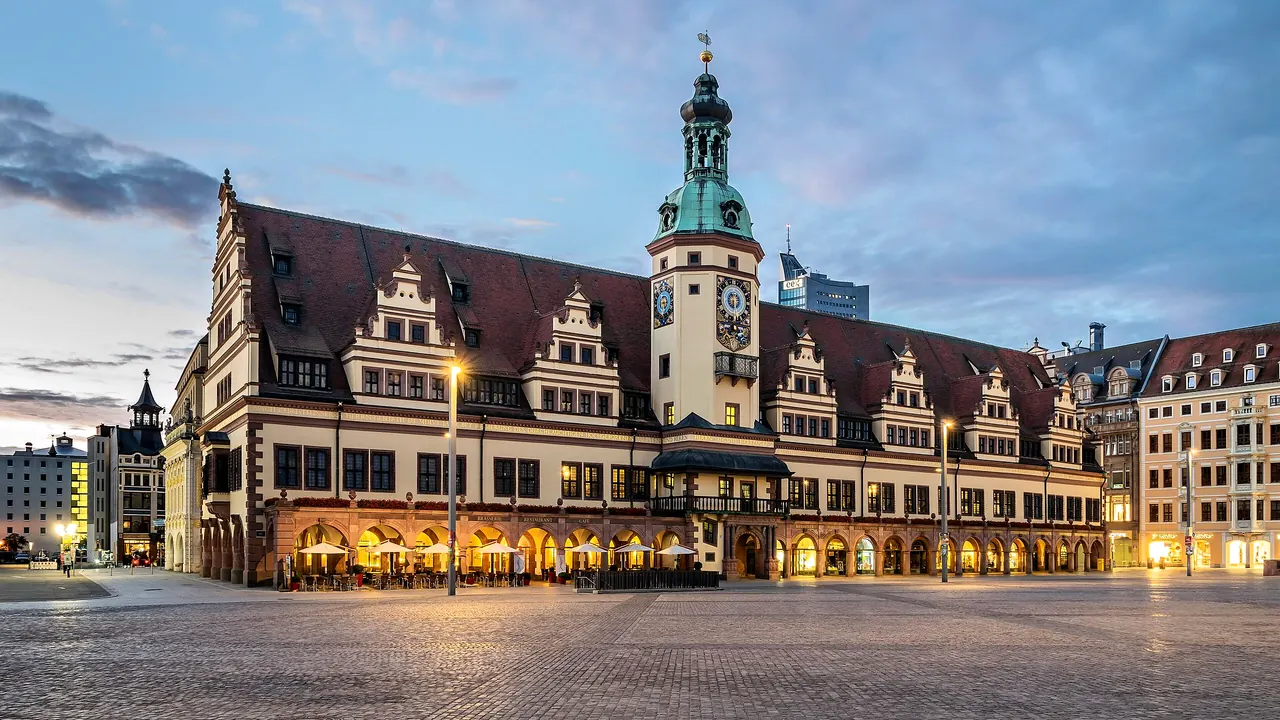
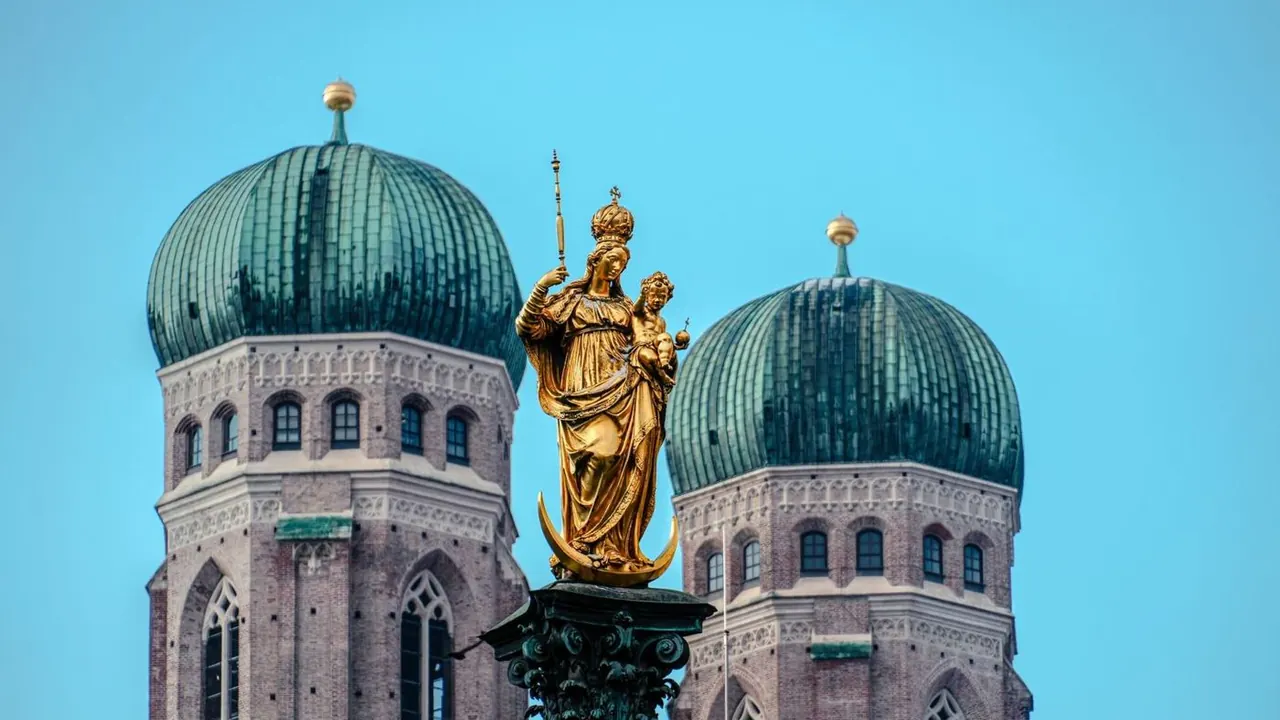
Photos: Leipzig by Krzysztof Golik, CC BY-SA 4.0, cropped; Munich by 0xd1ma, Pexels License.
Leipzig or Munich?
Our verdict in twelve categories, each scored against the same fixed benchmark cities, and the climate month by month, so you can choose for your trip.
Choose Leipzig for
- prices
- nightlife
- beaches
Leipzig suits travellers who want music and modern history at a gentler price. Bach's church, the Gewandhaus and the story of 1989 all sit in a centre you can walk, rooms are cheap by German standards, and the club nights in old factories run until morning. Dresden, Weimar and Berlin are easy train rides away.
Choose Munich for
- nature and the outdoors
- wellness
- shopping
Choose Munich for a fuller, grander trip if you can pay for it. Its galleries and palaces go deeper, the Alps and lakes are close, the opera is among the best in the world, and it does more for children, shoppers and anyone looking for a proper thermal bath.
Scoreboard
Twelve categories on one fixed scale from 0 to 100. The shaded stretch is the gap between the two.
Your match
Pick a travel style or drag the sliders, and both match scores follow your weighting.
Wins on prices and nightlife with your weighting.
Wins on nature and the outdoors and wellness with your weighting.
What matters to you?
Category by category
What the scores mean for a trip.
Beaches & swimming
Neither city is a beach destination, and the swimming they offer is on a similar scale but feels different. Leipzig's lakes are old lignite mines south of town that were flooded. They have sandy shores, beach bars and water that warms to about 22°C, and you reach them by tram or by bike through the floodplain forest.
Munich's swimming is more alpine. There are gravel banks along the Isar at the Flaucher, and the Starnberger See and the Ammersee are under an hour away by S-Bahn. There you lie on lawns and jetties rather than sand, and the mountain-fed water is fresher.
Food & drink
Munich gives you more reason to plan meals. Its beer halls and chestnut-shaded beer gardens, the Viktualienmarkt and a respectable tier of starred restaurants make food part of the trip. The cooking is built around Helles, pork with crackling and white sausage.
Leipzig eats well and plainly: Saxon roasts with dumplings, the marzipan Leipziger Lerche, sour salted Gose and an old coffee-house tradition. The more interesting tables are on the Karli and in Plagwitz, and there is little fine dining, so this is good everyday eating rather than a reason to go.
Culture & sights
Munich has the bigger collections. The Kunstareal alone could fill several days, with the old masters of the Alte Pinakothek, the Glyptothek's sculpture and the Blue Rider painters at the Lenbachhaus. The Residenz, Nymphenburg and the Deutsches Museum add palace rooms and science on a grand scale.
Leipzig has fewer sights, but they tell a sharper story: Bach's Thomaskirche, the Nikolaikirche where the Monday prayers of 1989 began, the Stasi offices at the Runde Ecke and the trade-fair arcades. Two or three days covers Leipzig, while Munich repays a longer stay.
Nightlife
The two cities go out about as much, but in very different ways. Leipzig's nights belong to electronic music in old factories and warehouses. At weekends they run past dawn and the doors are easy, and there are also the bars of the Karli, Connewitz and the converted mills of Plagwitz.
In Munich the evening usually starts in a beer hall or beer garden and often ends there too. There are cocktail and gay bars around Gärtnerplatz but only a handful of serious clubs. The city is tidier and quiet by midnight on weeknights, except during the Oktoberfest fortnight.
Nature & outdoors
This is where Munich pulls clearly ahead. The Alps are on its skyline, and trains reach Garmisch, the Zugspitze and Tegernsee for hiking in summer and skiing in winter. In town, the English Garden and the surfers on the Eisbach bring the outdoors right into the city.
Leipzig is flat and its green spaces are gentler: the Auwald floodplain forest, canoeing along the canals from Plagwitz, and cycling and paddling around the old mine lakes. A real hike means two hours on a train to Saxon Switzerland or the Harz.
Day trips
Both are excellent bases, and Munich has a slight edge for the variety within reach. From Leipzig, trains fan out to Dresden, Weimar, Erfurt, Wittenberg, Naumburg and Berlin, most of them about an hour away. That puts a dense run of Reformation, Bauhaus and classical German history within easy reach.
Munich adds a change of country and scenery. Salzburg and Innsbruck are within two hours, as are Neuschwanstein and the other royal castles. Nuremberg and Regensburg are close by, and Augsburg is half an hour away.
Good for families
Munich is the easier choice with children, especially for a longer stay. Hellabrunn zoo, the hands-on Deutsches Museum, the transport museum, the Sea Life aquarium and beer gardens with playgrounds fill plenty of days. Legoland is within a drive.
Leipzig has one outstanding attraction for children in its zoo, where the covered Gondwanaland hall works in any weather. In summer there are also Belantis and the lake shores, but after that the list runs out sooner.
Getting around
Both cities are flat, good for cycling and easy without a car, but Munich's network reaches further. U-Bahn, S-Bahn, trams and buses run as one system out to Nymphenburg, the Olympic Park, the lakes and the airport, around a pedestrianised core. Delays on the central S-Bahn line are the main irritation.
Leipzig manages well with its trams and a single S-Bahn line under the centre. You can cross the old town on foot in about fifteen minutes, and every regional and long-distance train leaves from the one great station.
Shopping & style
Munich is the place to shop. Maximilianstrasse has the luxury houses and Kaufingerstrasse the department stores. Specialist tailors sell Tracht, the dirndls and lederhosen you won't find elsewhere, and in December the Christmas markets add craft stalls.
Leipzig's centre is mostly chain stores under its handsome arcades. The character is out west, in the vintage and record shops of Karl-Heine-Strasse and the galleries of the Spinnerei, which are better for browsing than for serious buying.
Affordability
Leipzig is noticeably kinder to the wallet. The main reason is the room: hotels near the old town cost much less than in Munich, where rooms are dear all year. Everyday costs in Leipzig are still at German levels, so you get cheap beds rather than a cheap trip.
Munich has ways to save, such as a picnic in a beer garden, free parks and lakes, and token Sunday entry at several museums. They soften the gap but don't close it. Prices in both cities climb steeply in the big trade-fair weeks, and in Munich again during the Oktoberfest.
Live music & performing arts
These are two of Germany's great music cities, and Munich is slightly ahead on depth. The Bavarian State Opera is world class, three orchestras of real standing play in halls such as the Herkulessaal, and the rococo Cuvilliés Theatre adds chamber opera.
Leipzig's answer is the Gewandhaus Orchestra, the Thomanerchor singing Bach in the church where he worked, and the Bachfest every June, all with a sense of place that Munich cannot match. The Wave-Gotik-Treffen at Whitsun gives the city an alternative side as well.
Wellness & relaxation
Munich has a real bathing culture. There is the Art Nouveau Müller'sches Volksbad with its Roman-style steam bath, the huge thermal complex at Erding, and the spa towns of Bad Tölz and Bad Reichenhall towards the mountains.
Leipzig has ordinary pool and sauna complexes and a few lakeside saunas, and spa towns such as Bad Düben are a separate trip. Its calm comes more from uncrowded streets and slow walks in the Auwald.
When should you go?
Pick your month. The climate figures are measured averages, not a forecast.
Leipzig in July
Munich in July
Daytime high, °C
Rainfall in the month, mm
Temperature and rainfall are climate normals, averaged over the years shown. Leipzig: 1991-2020 (sunshine 1961-1990, rainfall 1961-1990) normals, Leipzig-Holzhausen (5.7 km from centre). Munich: 1991-2020 normals, München (1.9 km from centre).
The two cities have almost the same temperatures. Daytime highs are about 4°C in January and 25°C in July and August. Lake swimming works in both from late June to early September. May, June and September are comfortable for walking all day, and the winters are cold, grey and short of daylight in both.
The real difference is rain. Leipzig is dry for a German city: its wettest month, June, brings about 67mm. Munich's summers are much wetter, with around 120mm a month from May to August, so pack for showers there. Munich does get a little more sunshine in most months, though, so its summer days are brighter between the downpours.
Which traveller are you?
On a trip on a tight budget, Leipzig lets the money go further. A cheaper room near the old town leaves enough for a Gewandhaus concert, the centre is easily walked, and evenings in the student bars of the Karli stay modest.
For an outdoors trip, Munich lets you sleep in the city and spend the day in real mountains, walking in summer or skiing in winter, and still be back for dinner. In Leipzig, being outdoors means canoe and bike outings on the flat.
On a relaxing and wellness trip, Munich is the better base for a whole day of pools, steam and sauna infusions. As everywhere in Germany, the saunas are mixed and textile-free. Leipzig offers quiet rather than treatments, with forest walks and unhurried Sundays.
Before you go
| Measure | Leipzig | Munich |
|---|---|---|
| Official language | German | German |
| Currency | Euro (EUR) | Euro (EUR) |
| Sockets | CF230 V, 50 Hz | CF230 V, 50 Hz |
| Driving side | Right | Right |
| Time zone | UTC+1, UTC+2 in summer | UTC+1, UTC+2 in summer |
| Emergency number | 112 | 112 |
| Elevation | 110 m | 519 m |
| Main airport | Leipzig/Halle Airport (LEJ)13 km from centre20 non-stop destinations | Munich Airport (MUC)29 km from centre210 non-stop destinations |
| Public holidays this year | 11 days | 12 days |
By the numbers
| Measure | Leipzig | Munich |
|---|---|---|
| City population | 615,932 | 1,505,036 |
| People per km² | 2,068 | 4,844 |
| Museums within 10 km | 40 | 75 |
| UNESCO World Heritage sites within 50 km | 1 | 1 |
Where else could you go?
Every comparison below shares a destination with this one, so you can follow Leipzig or Munich somewhere new.
- Innsbruckvs Munich
- Dresdenvs Leipzig
- Salzburgvs Munich
- Berlinvs Leipzig
- Nurembergvs Munich
- Hallstattvs Munich