Maseru
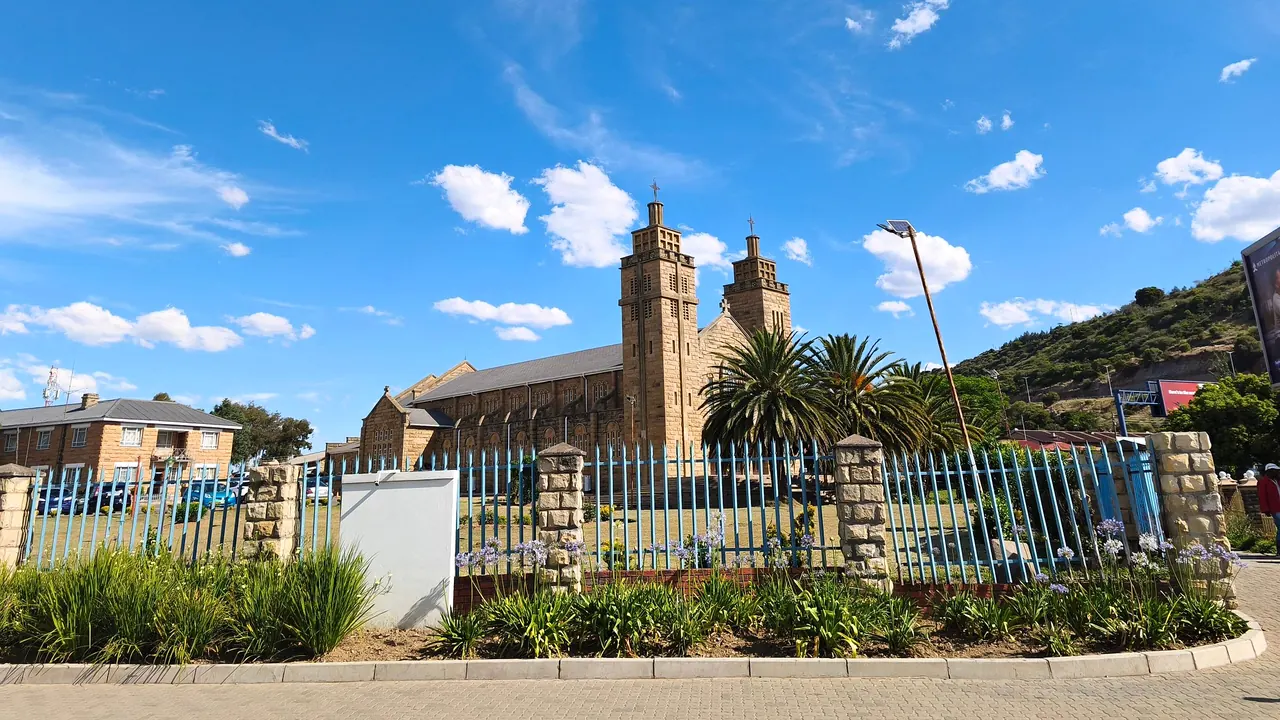
Our Lady of Victories Cathedral in Maseru, framed by palms under a blue sky
- Affordability70
- Nature & outdoors58
- Day trips38
Photo: August Dominus, CC0
Match
26
Every category weighted equally
- Beach & sun26
- Culture & arts24
- Food & nightlife24
- Family trip28
- Outdoors32
- Relax & unwind25
- Shopping & style24
- On a budget31
Maseru in twelve categories
Our verdict on each, scored 0 to 100 against the same fixed benchmark cities, so a score means the same thing on every page.
Beaches & swimming. Scores 3 out of 100.
Food & drink. Scores 22 out of 100.
Culture & sights. Scores 12 out of 100.
Nightlife. Scores 18 out of 100.
Nature & outdoors. Scores 58 out of 100.
Day trips. Scores 38 out of 100.
Good for families. Scores 14 out of 100.
Getting around. Scores 26 out of 100.
Shopping & style. Scores 24 out of 100.
Affordability. Scores 70 out of 100.
Live music & performing arts. Scores 12 out of 100.
Wellness & relaxation. Scores 13 out of 100.
Maseru category by category
Beaches & swimming
3Maseru has no beach. Lesotho is landlocked and sits high on the plateau, and the nearest coast is a long day's drive away across South Africa. The rivers and reservoirs around the city are not used for swimming, so bathing means a hotel pool.
Food & drink
22Eating in Maseru is plain and practical. Basotho home cooking is built on papa, a stiff maize porridge, served with moroho greens, stewed meat or chakalaka, and you find it in canteens, at roadside grills and at the stalls around the bus and taxi ranks. Beyond that the choice is mostly hotel dining rooms, grill restaurants and the South African chains in the shopping centres.
It is fine for filling up between excursions, but there is no real café culture, little fine dining and no local wine. Sorghum beer is brewed at home and sold informally, more a glimpse of village life than a tasting experience.
Culture & sights
12Maseru is a young administrative town with little to see within the city itself. Its best-known landmark is the Basotho Hat, a craft centre shaped like the conical mokorotlo hat on the national flag. Add Our Lady of Victories Cathedral, the Royal Palace grounds seen from outside and a few colonial-era buildings along Kingsway, and most visitors have done the city in a morning.
The country's history is told elsewhere: at the mountain fortress of Moshoeshoe I and at the mission town museums south of the city. Maseru works as a base for those rather than as a sight in its own right.
Nightlife
18Going out in Maseru is a local affair: a handful of bars, lounges and weekend clubs around the centre and the shopping districts, where famo and amapiano play loud on Friday and Saturday nights. It is lively enough at the weekend but small, and most visitors spend their evenings at their hotel. Walking between places after dark is not advisable, so plan on a taxi there and back.
Nature & outdoors
58Maseru sits on the Caledon River at about 1,600m, in Lesotho's lowlands, with flat-topped sandstone mesas on the horizon and the Maluti Mountains rising to the east. The landscape opens up quickly once you leave the city: short hikes up the plateau of Thaba Bosiu, sandstone hills around Roma, and further out the rolling grassland and gorges of Malealea, a classic area for pony trekking on Basotho ponies.
Semonkong and the long drop of the Maletsunyane Falls are about two hours away, at the limit of a day out. The high passes, dams and ski slopes lie deeper in the mountains and need an overnight stay. Summers bring green hills and afternoon thunderstorms; winters are dry and bright with frosty nights and snow on the peaks. Mountain roads are slow, so a car and time help.
Day trips
38The most rewarding short outings lie within an hour of the city. Thaba Bosiu, the mountain stronghold where Moshoeshoe I founded the Basotho nation, is about half an hour east, with royal graves on the summit and a cultural village at its foot. To the south, Morija is the country's oldest mission town, with a museum and archives covering Basotho history, fossils and dinosaur footprints nearby. Roma, with its university and sandstone churches, sits in a valley to the southeast.
North of the city, Teyateyaneng is the centre of mohair tapestry weaving, and the Ha Kome cave houses are still lived in beneath a rock overhang. Across the border, the small Free State towns offer a change of pace. It is a modest, distinctive circuit rather than a long list of famous names.
Good for families
14Maseru has almost nothing designed for children: no zoo, aquarium or theme park, and few parks or playgrounds a visitor would seek out. The shopping centres and hotel pools fill the gaps. Older children may enjoy pony rides and the cultural village at Thaba Bosiu, but these need a car, and the centre is not a place to wander on foot with young ones, especially after dark.
Getting around
26The centre along Kingsway is small and can be walked in daylight, though pavements are uneven and traffic is heavy at rush hour. Public transport means shared four-plus-one taxis and minibus taxis on fixed routes, cheap and constant but unmarked and confusing for a first-time visitor. Almost everything worth seeing lies outside the city, so most travellers hire a car or a driver; mountain roads are slow, and the border crossing to South Africa can mean queues.
Shopping & style
24Shopping here is about Basotho crafts. The Basotho Hat craft centre sells woven grass hats, baskets and the patterned wool blankets that are worn as everyday dress across the country, and Teyateyaneng to the north is the place to buy mohair tapestries and rugs from the weavers themselves. Beyond that, the city's malls stock South African chain stores, and there are no boutiques or fashion streets to speak of.
Affordability
70Day to day, Maseru costs little. A plate of papa and stew at a canteen, a ride in a shared taxi across town and entry to the handful of sights around the city all come cheap, and the craft centres are good value for what they sell.
Rooms are where the budget goes. There are not many comfortable hotels, and those there are mostly serve business and government visitors, so a good room costs not much less than in a mid-sized city across the border. Most day trips need a hired car or a driver, which takes a further share. Guesthouses and mission lodges keep things cheaper for travellers happy with simple comforts.
Live music & performing arts
12Maseru has no opera, orchestra or regular theatre programme for visitors. Its music is famo, played on accordion and drums and heard in bars and from passing taxis, and traditional song and dance can be seen at the cultural village at Thaba Bosiu or at national celebrations. The long-running Morija arts and cultural festival brings music, dance and horse racing to the mission town south of the city, but for most of the year there is little to attend.
Wellness & relaxation
13There is no bathing or spa culture in Maseru, and wellness extends no further than a few hotel spas and gyms. The city is not hectic, but traffic, minibus horns and a business-trip atmosphere do not make it a place to unwind. Visitors looking for rest usually head to the quiet mountain lodges further into the country.
When should you go?
Pick a month to see what it is like. The climate figures are measured averages, not a forecast.
Maseru in July
Daytime high, °C
Rainfall in the month, mm
The whole year
Shaded against this destination’s own year: the deepest cell is its best month for that figure and the palest its weakest.
Where the figures come from
Maseru's temperatures are measured 68 km from the centre, at Ficksburg.
Maseru has no rain gauge within 25 km of the centre, so its rainfall comes from a gridded climate dataset read at the destination rather than from a gauge further away.
Temperature and rainfall are climate normals, averaged over the years shown. Maseru: 1998-2020 (rainfall 1991-2020) normals, Ficksburg (67.7 km from centre).
Before you go
| Measure | Maseru |
|---|---|
| Official language | English, Sesotho |
| Currency | Loti (LSL) |
| Sockets | M220 V, 50 Hz |
| Driving side | Left |
| Time zone | UTC+2 |
| Emergency number | Police 112, ambulance 114, fire 115 |
| Elevation | 1,600 m |
| Main airport | Moshoeshoe I International Airport (MSU)18 km from centre1 non-stop destination |
| Public holidays this year | 11 days |
By the numbers
| Measure | Maseru |
|---|---|
| Population | 343,541 |
| People per km² | 2,489 |
| Museums within 10 km | 0 |
| UNESCO World Heritage sites within 50 km | 0 |
Compare Maseru with
Every comparison with a written verdict behind it.