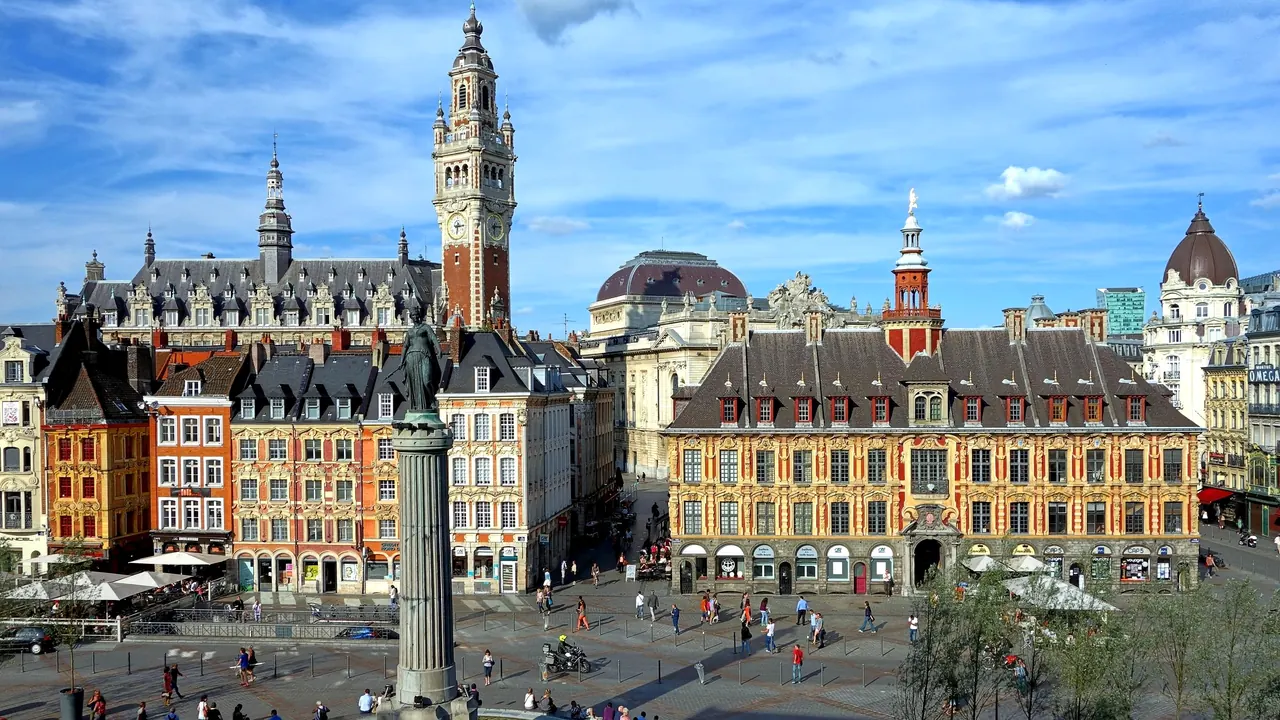
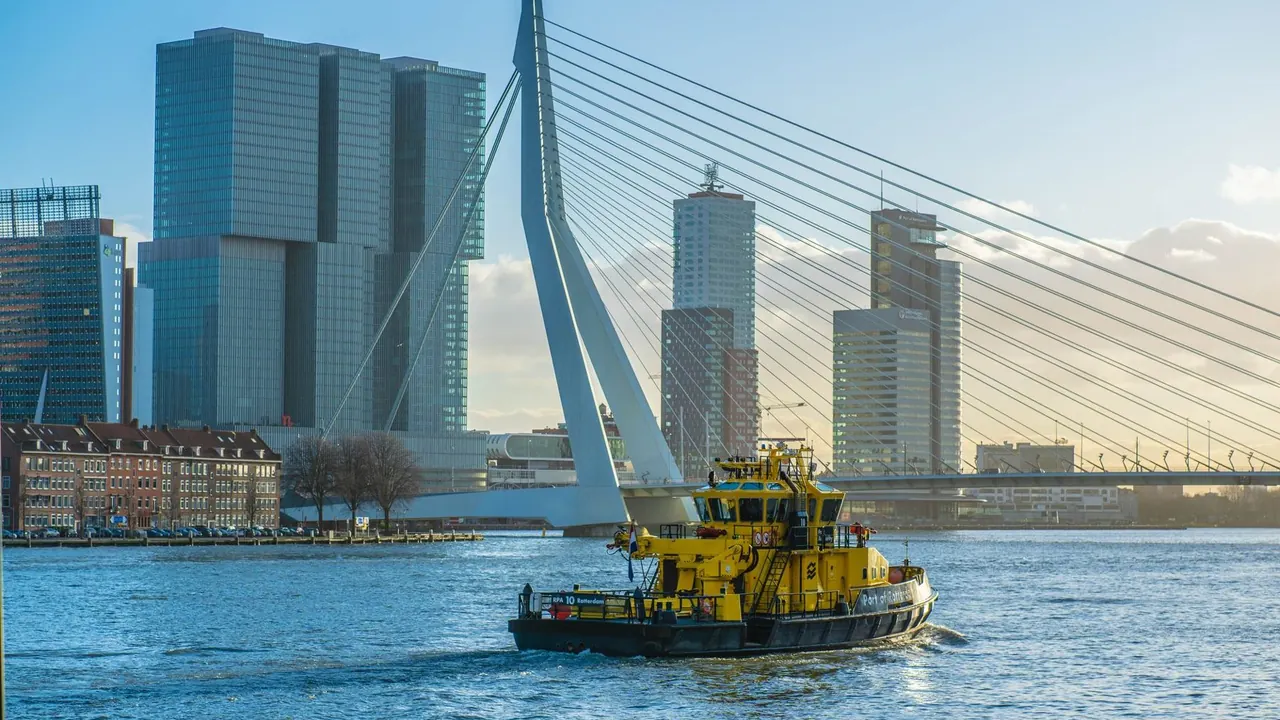
Photos: Lille by Velvet, CC BY-SA 3.0, cropped; Rotterdam by Bas Geerlings, Pexels License.
Lille or Rotterdam?
Our verdict in twelve categories, each scored against the same fixed benchmark cities, and the climate month by month, so you can choose for your trip.
Choose Lille for
- prices
- food and drink
- culture and sights
Lille suits travellers who want a compact, walkable old town with serious art and hearty Flemish cooking, at a gentler cost. The Palais des Beaux-Arts and the brick-and-stone streets of Vieux-Lille fill two days, and estaminet dinners with Belgian beer fill the evenings. With Brussels, Bruges and Paris all close by train, it also makes an excellent base for a wider trip.
Choose Rotterdam for
- families
- wellness
- nature and the outdoors
Choose Rotterdam if modern architecture, the harbour and the river appeal more than an old quarter, or if you are travelling with children. Its zoo, maritime museum and boat trips make family days easy, it has its own beach and dunes at the end of a metro line, and the Dutch sauna complexes and Kralingse Bos give more room to unwind. Expect to pay more for meals and drinks.
Scoreboard
Twelve categories on one fixed scale from 0 to 100. The shaded stretch is the gap between the two.
Your match
Pick a travel style or drag the sliders, and both match scores follow your weighting.
Too close to call, 2 points apart
Wins on prices and food and drink with your weighting.
Wins on families and wellness with your weighting.
What matters to you?
Category by category
What the scores mean for a trip.
Beaches & swimming
Neither city is a beach destination, but Rotterdam has the sea within its own transport network. Hoek van Holland's wide strand, with dunes behind it and ships passing close by, is a metro ride from the centre and fills with locals on warm weekends. Lille's nearest sand is at Dunkirk, an hour away by train, with the Opal Coast resorts further on.
In both cases the North Sea is cold and windy, so plan on a walk along the sand rather than a swim. Rotterdam's beach is simply much easier to fit into an afternoon.
Food & drink
Lille has the stronger and more distinctive food. Its wood-panelled estaminets in Vieux-Lille serve a real regional cuisine: carbonnade cooked in beer, potjevleesch, waterzooi and pungent Maroilles cheese in almost everything, with northern ales to match and old pastry shops for filled waffles.
In Rotterdam the appeal is variety rather than tradition: Surinamese roti, Turkish bakeries, and Indonesian and Cape Verdean kitchens around the Markthal, the Witte de Withstraat and the Nieuwe Binnenweg. It is good for varied, casual eating, but Dutch cooking itself barely goes beyond herring and bitterballen.
Culture & sights
Lille comes out ahead for the classic sightseer. The Palais des Beaux-Arts is a museum of national importance, and Vieux-Lille, the Vieille Bourse and the belfry make up an intact Flemish baroque townscape. La Piscine in Roubaix, an art museum inside an old swimming pool, is a short tram ride away.
Rotterdam lost its old centre in 1940, so its interest lies in the architecture that replaced it: the Erasmus Bridge, the Cube Houses, the Markthal and the mirrored Depot Boijmans. Its museums are good rather than great, and history survives mainly in Delfshaven and the Old Harbour.
Nightlife
The two are evenly matched for a night out, in different ways. Lille is a bar city. Its large student population fills Rue Masséna and Rue Solférino on Thursdays, there are quieter beer and cocktail cellars in Vieux-Lille, and for serious clubbing locals have traditionally crossed into Belgium.
Rotterdam's bar streets around the Witte de Withstraat and the Oude Haven go quiet earlier midweek, but clubs are its stronger side. This is where gabber began, and techno and house nights in harbour warehouses draw crowds from across the country.
Nature & outdoors
Both sit on flat, densely settled land, but Rotterdam has more within easy reach. Kralingse Bos has a lake for sailing, bike paths run straight out along the dykes, and the Biesbosch national park, about forty minutes away, adds tidal creeks for canoeing and birdwatching.
In Lille, outdoor time means the Citadel park and level towpath cycling along the Deûle, with short walks on the low Monts de Flandre. Its best scenery, the chalk cliffs of Cap Blanc-Nez, is a long day out.
Day trips
Both are superb bases, and the real question is which countries you want to see. From Lille, Brussels is about half an hour away, Ghent and Bruges around an hour, and Paris and even London are possible in a day, with Amiens, Arras and the First World War battlefields on the French side.
Rotterdam's trips are mostly Dutch: Delft and The Hague in minutes, Amsterdam, Utrecht and Haarlem within an hour, and the Kinderdijk windmills by water bus. Antwerp is easy from either city, but Bruges and Ghent are much closer to Lille.
Good for families
Rotterdam is the easier choice with children. Diergaarde Blijdorp is one of the best zoos in the Netherlands, the Maritime Museum has a hands-on harbour area, and the Euromast, harbour boats and water taxis are outings in themselves. Madurodam's miniature Netherlands is a short train ride away.
Lille manages well enough, with a small zoo and playgrounds in the Citadel park and a science centre reached by metro. Its bigger attractions lie across the border or on the coast, though, and the cobbles of Vieux-Lille are hard work with a pushchair.
Getting around
Both are easy without a car, but they feel different on foot. Lille's centre is compact and flat, its two stations stand beside the old town, and most visitors simply walk, using the automated VAL metro or the tram for Roubaix and Tourcoing.
Rotterdam's rebuilt centre is spread out, with wide roads and windy stretches between the sights, so most visitors mix walking with trams, the metro and a bike. What it adds is the river: water taxis and water buses cross the Maas and run out to Kinderdijk.
Shopping & style
There is little between them for everyday shopping, as both have the main chains in an easy, walkable core: Rue Neuve and Euralille in Lille, the pedestrian Lijnbaan and the sunken Beurstraverse in Rotterdam. Lille's independent fashion and delicatessens fill the narrow streets of Vieux-Lille, while Rotterdam's vintage, record and design shops cluster on the Meent and the Nieuwe Binnenweg.
What sets Lille apart is the Braderie in early September, a weekend flea market that takes over the whole city. Rotterdam has its large twice-weekly market on the Binnenrotte instead.
Affordability
Lille is the cheaper stay. Hotels are reasonable outside the Braderie and the trade fairs, and estaminet meals, beer and museum visits are fairly priced, though it is comfortable rather than cheap.
Rotterdam's hotels can be good value for the Netherlands, especially at weekends in the business districts, but restaurant meals, drinks and coffee cost more. Market stalls and Surinamese and Turkish snack shops keep lunch down, and it works out cheaper than sleeping in Amsterdam.
Live music & performing arts
Rotterdam has the edge, thanks to the Rotterdam Philharmonic at De Doelen and above all the North Sea Jazz Festival each July, one of the world's major jazz gatherings. Small jazz and pop venues, helped by the conservatory, keep music going through the year. Much of its theatre needs Dutch, however, and the city has no opera house of its own.
Lille is the place for opera: the Opéra de Lille on the Place du Théâtre stages opera and dance, alongside the Orchestre National de Lille and the Théâtre du Nord. It is a solid season, though rarely the reason for a trip.
Wellness & relaxation
Rotterdam is better for a restful stay, mainly through the Dutch sauna tradition. Large wellness complexes on the edge of the city have saunas, steam rooms, outdoor pools and quiet gardens, and most are textile-free in the sauna areas. Between visits, Kralingse Bos and the waterside terraces give calm.
Lille has no bathing culture of its own, so rest means hotel spas and long afternoons in Vieux-Lille tea rooms. The nearest thermal bath is a train ride away at Saint-Amand-les-Eaux.
When should you go?
Pick your month. The climate figures are measured averages, not a forecast.
Lille in July
Rotterdam in July
Daytime high, °C
Rainfall in the month, mm
Where the figures come from
Rotterdam has no rain gauge within 25 km of the centre, so its rainfall comes from a gridded climate dataset read at the city rather than from a gauge further away.
Rotterdam's sunshine is measured 52 km from the centre, at De Bilt.
Temperature and rainfall are climate normals, averaged over the years shown. Lille: 1991-2020 normals, Lille (7.8 km from centre). Rotterdam: 1993-2020 (sunshine 1991-2020, rainfall 1991-2020) normals, Rotterdam Airport Zestienhoven (3.9 km from centre).
Both cities have a mild North Sea climate, and the best months for walking the streets are May to September. Lille is a little warmer in summer, with July and August highs around 24°C against 22°C in Rotterdam, and its rain is spread fairly evenly through the year. Rotterdam gets wetter from midsummer onwards, and autumn there is markedly damper, with about 99mm in October against 64mm in Lille, so a late-season trip stays drier in Lille.
Sunshine is similar in both, brightest from May to August and scarce from November to February, when cold, grey days suit museums better than long walks. Of the two, only Rotterdam has the sea on its doorstep, and even in August the water barely reaches 19°C, so swimming is for the hardy at any time of year.
Which traveller are you?
On a family trip with young children, Rotterdam is the better pick. Blijdorp zoo, the Maritime Museum's hands-on harbour, water taxis and the Euromast fill several days, and flat, safe streets with wide pavements make getting about with children simple.
For a trip on a tight budget, Lille stretches the money further. Rooms are reasonable outside the Braderie, estaminet meals and Belgian beer are fairly priced, and the compact centre means you walk most places rather than paying for transport.
On a relaxing and wellness trip, Rotterdam has more to offer. Its Dutch sauna complexes, with outdoor pools and quiet gardens, make a proper day of rest, and Kralingse Bos gives lakeside calm, whereas Lille's slower pleasures come down mostly to café terraces.
Before you go
| Measure | Lille | Rotterdam |
|---|---|---|
| Official language | French | Dutch |
| Currency | Euro (EUR) | Euro (EUR) |
| Sockets | CE230 V, 50 Hz | CF230 V, 50 Hz |
| Driving side | Right | Right |
| Time zone | UTC+1, UTC+2 in summer | UTC+1, UTC+2 in summer |
| Emergency number | 112 | 112 |
| Elevation | 17 m | 10 m |
| Main airport | Lille Airport (LIL)8 km from centre61 non-stop destinations | Rotterdam The Hague Airport (RTM)5 km from centre53 non-stop destinations |
| Public holidays this year | 11 days | 11 days |
By the numbers
| Measure | Lille | Rotterdam |
|---|---|---|
| City population | 238,246 | 664,311 |
| People per km² | 6,846 | 2,080 |
| Museums within 10 km | 23 | 41 |
| UNESCO World Heritage sites within 50 km | 6 | 5 |
| Swim season, months above 21 °C | - | None |
Where else could you go?
Every comparison below shares a destination with this one, so you can follow Lille or Rotterdam somewhere new.
- The Haguevs Rotterdam
- Utrechtvs Rotterdam
- Haarlemvs Rotterdam
- Amsterdamvs Rotterdam
- Brugesvs Lille
- Ghentvs Lille