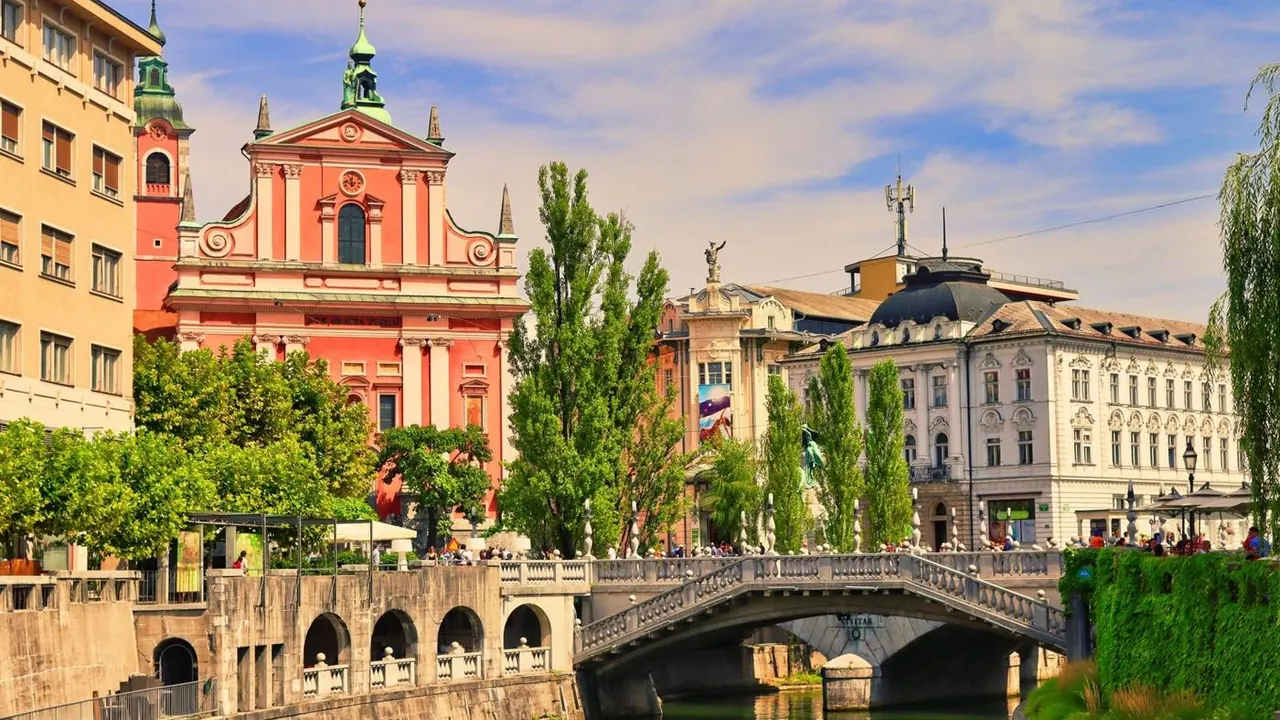
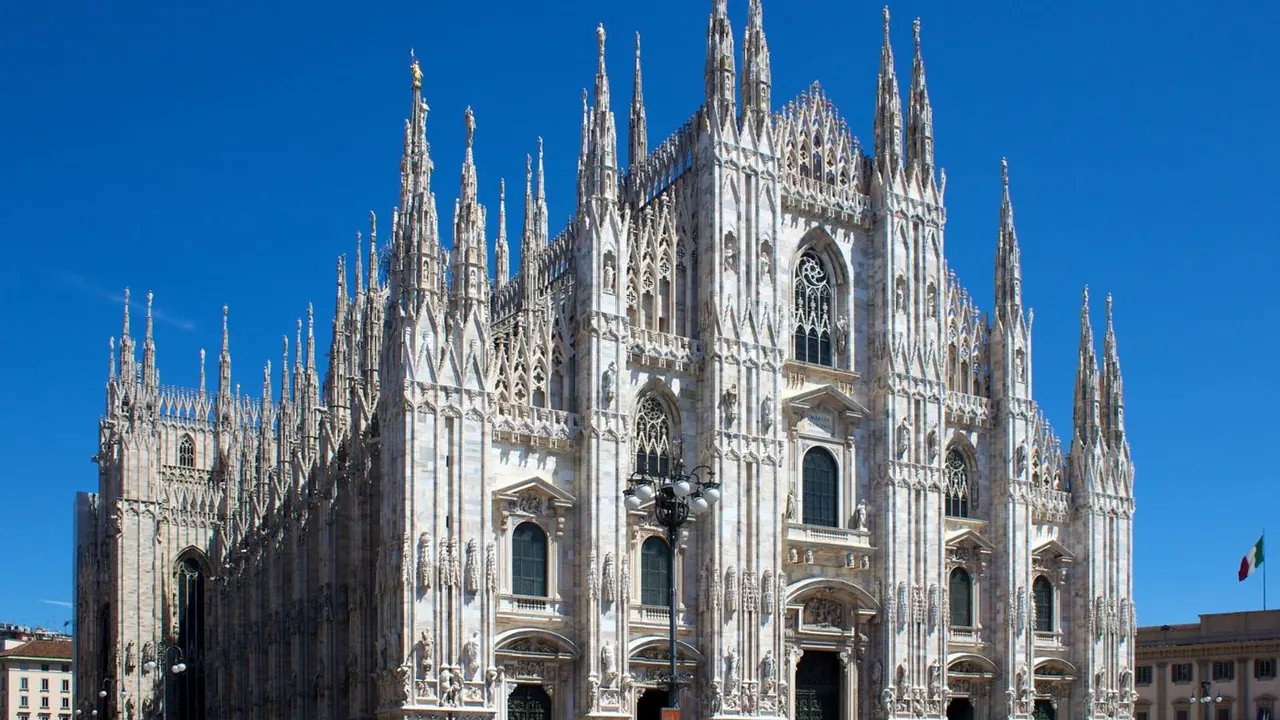
Photos: Ljubljana by detait, Pexels License; Milan by Jiuguang Wang, CC BY-SA 3.0, cropped.
Ljubljana or Milan?
Our verdict in twelve categories, each scored against the same fixed benchmark cities, and the climate month by month, so you can choose for your trip.
Choose Ljubljana for
- prices
- nature and the outdoors
- beaches
Ljubljana suits a slower, greener trip. The centre is small, mostly free of cars and easy to walk, and the Julian Alps, Lake Bled and the karst caves are close enough to see on a day out from a base in town. It also costs noticeably less to stay and eat. Choose it if you want mountains, lakes and quiet evenings by the river more than big-name sights.
Choose Milan for
- shopping
- live music and the arts
- nightlife
Milan is the better pick for anyone who wants a big city with famous things in it. The Last Supper and the Duomo, a night at La Scala, the fashion houses of the Quadrilatero and a long aperitivo by the Navigli are all here. High-speed trains also put Verona, Turin and Lake Como within easy reach. It is the more expensive of the two, but the extra range is real.
Scoreboard
Twelve categories on one fixed scale from 0 to 100. The shaded stretch is the gap between the two.
Your match
Pick a travel style or drag the sliders, and both match scores follow your weighting.
Wins on prices and nature and the outdoors with your weighting.
Wins on shopping and live music and the arts with your weighting.
What matters to you?
Category by category
What the scores mean for a trip.
Beaches & swimming
Neither city is a beach destination, and in both a swim means leaving town. Ljubljana's options are the Sava on its northern edge, Lake Bled about an hour away, and the pebble and concrete shore at Piran, around an hour and a half by road.
Milan has a city lido at the Idroscalo near Linate, with Lake Como and Lake Maggiore an hour away by train and their pebbly lidos. Lake swimming is about equal in the two, but Slovenia's Adriatic is the easier sea trip, since Liguria is a longer haul from Milan.
Food & drink
Milan is the stronger city for eating. It has its own rich northern cooking, from saffron risotto to ossobuco and cotoletta, a serious fine-dining scene, very good versions of other Italian regional food, and the aperitivo ritual that shapes the evening. Its historic pasticcerie and espresso bars add a lot to the day.
Ljubljana is homelier and narrower in range: štruklji, Carniolan sausage and jota in gostilna inns, and a fine Central Market. Its real strength is wine, especially the orange wines of the west poured by the glass along the river, but most visitors will have tried its range within a week.
Culture & sights
Milan has the more important sights: the marble Duomo with its rooftop, Leonardo's Last Supper, the Brera paintings and Michelangelo's Rondanini Pietà in the Castello Sforzesco. They sit in clusters within a largely modern, businesslike city.
Ljubljana works the other way round. No one museum matches Milan's, but the whole centre is a single work, shaped by Plečnik's bridges, colonnades and library, with the castle hill above. It takes two or three days and is best enjoyed by wandering.
Nightlife
Milan offers far more after dark. Aperitivo leads into busy canal-side bars on the Navigli, smarter evenings in Brera, a relaxed mix and the gay scene around Porta Venezia, and clubs that run from dressy Corso Como venues to warehouse nights.
Ljubljana's evenings mostly happen on the terraces along the Ljubljanica, with Metelkova's scruffy clubs as the late-night option at weekends. It suits a drink by the water better than a long night out.
Nature & outdoors
Ljubljana has the outdoors on its doorstep. Tivoli Park runs straight into wooded hills, Šmarna Gora is a quick climb, and the Julian Alps, the Soča's rafting water and the Postojna and Škocjan caves are all within easy reach.
Milan starts on a flat, often hazy plain with only a few parks and the canal towpaths. The lakes and the Grigne ridges are rewarding, but you have to take a train to reach them, and skiing is a full day out.
Day trips
Both make good bases, but Milan's fast trains give it the wider choice. Verona, Turin, Bergamo and Lake Como are each about an hour away, and Bologna, Mantua, Parma, the Borromean Islands and Swiss Lugano are also within reach.
From Ljubljana the trips are to smaller places: Bled, painted Radovljica, Predjama Castle built into its cliff, the Lipizzaner stud at Lipica and Piran on the coast. Some of these are easier by car. Trieste and Zagreb are the cross-border options.
Good for families
With children the two are about equal, and the difference is in what they offer. Ljubljana is calm and almost free of traffic, with the castle funicular, the dragons on the bridge and a puppet theatre that small children can follow without the language. Its attractions for children are modest, though, and run out in a few days.
Milan has the science and technology museum with its submarine for a rainy day, and theme parks such as Gardaland within reach for older children. Summer humidity can wear little ones out, however.
Getting around
Both are easy to get around, in different ways. In Ljubljana nearly everything is within a 20-minute walk of the river, and you will rarely need the buses apart from the airport run.
Milan is bigger but has a simple five-line metro and dense trams, including the old orange cars, and direct trains to the lakes. Its drawbacks are the hot underground in summer and the long trip in from Malpensa.
Shopping & style
In Milan, shopping can be the purpose of the trip. The Quadrilatero holds the flagships of Italian fashion houses, many of which were born in the city, and beyond it are the Galleria's old shops, Corso Buenos Aires, design showrooms and vintage shops in Porta Ticinese.
Ljubljana is a place for small souvenirs: pumpkin-seed oil, coastal salt, Idrija lace, gingerbread hearts and the Sunday flea market on the embankment. It has no luxury street to speak of.
Affordability
Ljubljana is the gentler city on the wallet. Set lunches at the inns, reasonably priced local wine and almost no transport costs keep daily spending down, though summer rooms in the old town still cost as much as in Western Europe.
Milan is Italy's most expensive city, and its hotels are hard to book at a fair rate during the fairs and fashion weeks. Aperitivo snacks and office-worker lunch menus help, as does staying near a metro stop outside the centre.
Live music & performing arts
Milan has La Scala, one of the world's great opera houses, whose season opens each December. Alongside it are the Piccolo Teatro, a fine symphony orchestra and big summer concerts at San Siro, so a performance can be the main reason for a visit.
Ljubljana's offering is solid for its size: an opera and ballet house, a Philharmonic with roots going back to 1701, and the summer festival in Plečnik's Križanke courtyard. Most of its theatre is in Slovene.
Wellness & relaxation
Neither city has a bathing culture of its own, and the real rest lies outside both. Milan does have a well-known thermal complex in town and the 1930s Bagni Misteriosi pools, while Ljubljana's options are a water park and a few hotel spas.
Where they differ is pace and setting. Ljubljana itself is quiet and green, with Slovenia's thermal spa towns about an hour away, while busy Milan sends people to the calm villas of the lakes to slow down.
When should you go?
Pick your month. The climate figures are measured averages, not a forecast.
Ljubljana in July
Milan in July
Daytime high, °C
Rainfall in the month, mm
Where the figures come from
Milan has no rain gauge within 25 km of the centre, so its rainfall comes from a gridded climate dataset read at the city rather than from a gauge further away.
Milan's sunshine is measured 41 km from the centre, at Novara / Cameri.
Temperature and rainfall are climate normals, averaged over the years shown. Ljubljana: 1991-2020 normals, Ljubljana / Bezigrad (1.9 km from centre). Milan: 1991-2020 normals, Milano / Linate (8 km from centre).
Ljubljana is at its best from May to August. Afternoons climb from about 22°C in May to 28°C in July and August, the lakes near the city are warm enough for a swim in high summer, and July is clearly its sunniest month. It is a wet city all year, though, and the rain is heaviest from September to November, at close to 160mm in September, so autumn walks mean bringing a coat. Winter afternoons reach only about 4°C.
Milan's year has a similar shape, but its rain falls differently. Late spring and June are the most comfortable months for walking its streets. High summer is as warm as Ljubljana's, though the air on the plain can feel heavy and there is a little less sun. Its wet season also runs from September to November. Winter is where Milan pulls ahead. January afternoons are a few degrees milder, around 7°C, and December to March are much drier than in Ljubljana, so Milan is the easier choice for a winter city break.
Which traveller are you?
On an outdoors trip, Ljubljana is the better base. You can cycle the flat Ljubljana Marshes one day and walk the Vintgar gorge or up to Velika Planina's herders' huts the next. From Milan, via ferrata and lake sailing begin with a train ride.
For a shopping trip, Milan is the clear choice. Ljubljana fills a morning, with the small design shops on Trubarjeva street and wooden crafts to take home. In Milan you can spend days going from Via della Spiga to the boutiques of Brera and the weekend antique markets on the Navigli.
On a trip on a tight budget, Ljubljana stretches the money further. Picnic on cheese and cured meats from the Central Market, pay little to get into the sights and come outside July and August. In Milan, a gallery seat at La Scala and fairly priced trams help, but the hotels still eat into the budget.
Before you go
| Measure | Ljubljana | Milan |
|---|---|---|
| Official language | Slovene | Italian |
| Currency | Euro (EUR) | Euro (EUR) |
| Sockets | CF230 V, 50 Hz | CFL230 V, 50 Hz |
| Driving side | Right | Right |
| Time zone | UTC+1, UTC+2 in summer | UTC+1, UTC+2 in summer |
| Emergency number | 112 | 112 |
| Elevation | 309 m | 138 m |
| Main airport | Ljubljana Jože Pučnik Airport (LJU)20 km from centre32 non-stop destinations | Milan Malpensa International Airport (MXP)40 km from centre208 non-stop destinations |
| Public holidays this year | 21 days | 13 days |
By the numbers
| Measure | Ljubljana | Milan |
|---|---|---|
| City population | 284,293 | 1,354,196 |
| People per km² | 1,736 | 7,453 |
| Museums within 10 km | 14 | 88 |
| UNESCO World Heritage sites within 50 km | 3 | 4 |
Where else could you go?
Every comparison below shares a destination with this one, so you can follow Ljubljana or Milan somewhere new.