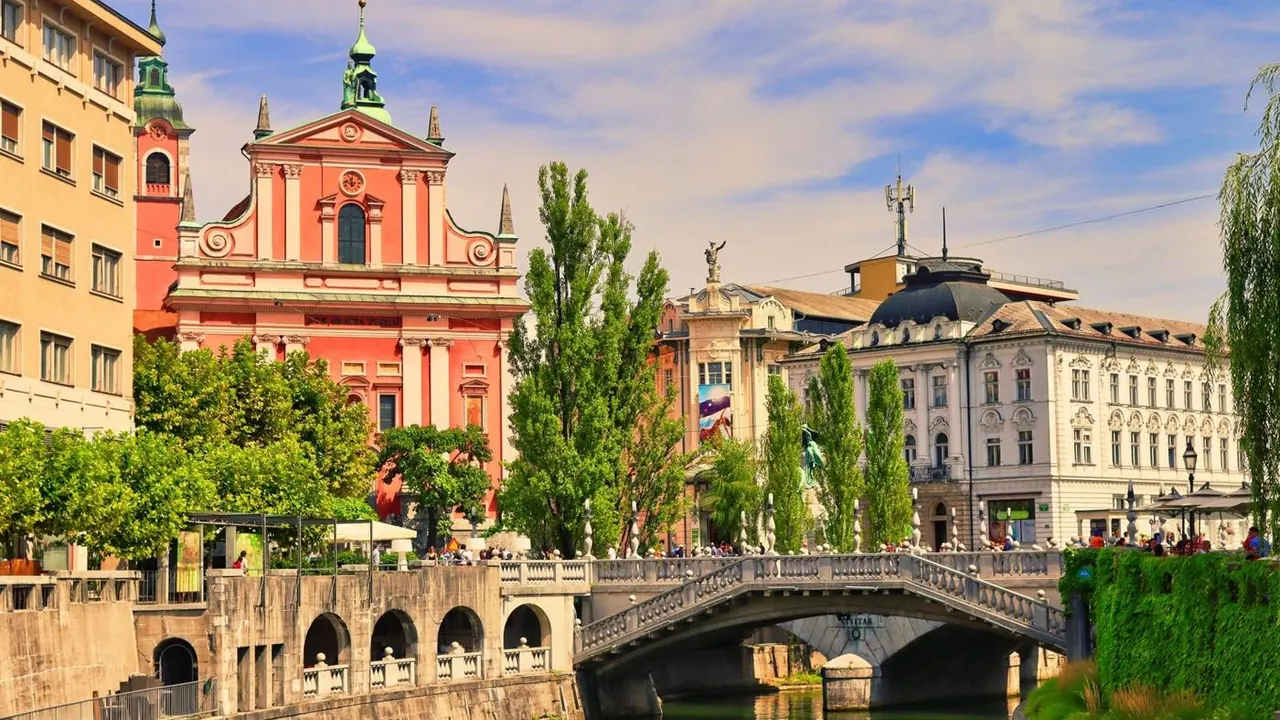
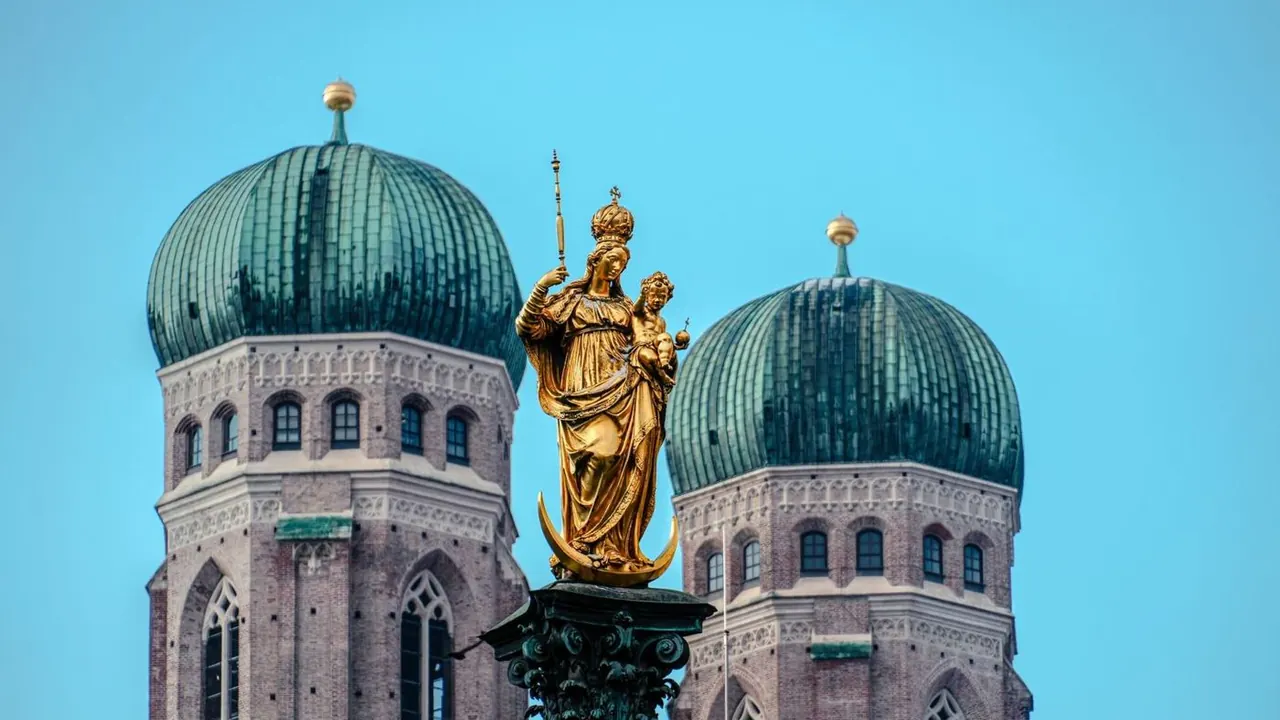
Photos: Ljubljana by detait, Pexels License; Munich by 0xd1ma, Pexels License.
Ljubljana or Munich?
Our verdict in twelve categories, each scored against the same fixed benchmark cities, and the climate month by month, so you can choose for your trip.
Choose Ljubljana for
- prices
Ljubljana suits a slower, cheaper trip where the city is a pleasant base rather than the main event. Its centre is small enough to cross on foot in minutes, Plečnik's bridges and the riverside cafés set the pace, and Bled, the Julian Alps and the karst caves are close. It works well for walkers, wine drinkers and couples who want mountains without Munich's hotel bills.
Choose Munich for
- shopping
- live music and the arts
- culture and sights
Munich is the better pick if you want the city itself to fill your days. Its old master galleries, the Residenz and the Deutsches Museum, a world-class opera house and three serious orchestras give it far more to see and hear than Ljubljana has. Families, shoppers and anyone planning day trips by train are also better served. You pay for that, mostly in the price of a room.
Scoreboard
Twelve categories on one fixed scale from 0 to 100. The shaded stretch is the gap between the two.
Your match
Pick a travel style or drag the sliders, and both match scores follow your weighting.
Wins on prices with your weighting.
Wins on shopping and live music and the arts with your weighting.
What matters to you?
Category by category
What the scores mean for a trip.
Beaches & swimming
Neither city is a beach destination, and in both a swim means fresh water. In Ljubljana locals use the Sava, and Lake Bled warms to around 24°C, but it is an hour away. The Adriatic at Piran, with its concrete platforms and small pebble strips, is a day trip.
Munich makes summer swimming a little easier to fit into a city stay. The gravel banks of the Isar are in town, and the Starnberger See and Ammersee, with their lawns and jetties, are under an hour by S-Bahn. The alpine-fed water stays on the fresh side.
Food & drink
Both kitchens are hearty and regional, but they are built around different drinks. Ljubljana is a wine city, pouring Vipava, Brda and Styrian bottles and the western orange wines by the glass along the river. Gostilna inns serve štruklji, žganci and jota, and the Central Market sells cheeses and pumpkin-seed oil.
Munich gives you more to eat your way through. The beer halls and chestnut-shaded beer gardens are an experience in themselves, coffee and cake is a daily ritual, and there are more starred restaurants. Over a week you will run through Ljubljana's choices sooner.
Culture & sights
Ljubljana's appeal lies in a whole townscape shaped by one architect: Plečnik's Triple Bridge, colonnades and library, the baroque and Secession old town and the castle above. You can see it comfortably in two or three days, and its museums are pleasant rather than essential.
Munich is in another league for collections. The Kunstareal alone, with the old masters of the Alte Pinakothek, the Glyptothek and the Blue Rider painters of the Lenbachhaus, could fill a stay. The Residenz, Nymphenburg and the Deutsches Museum come on top of that.
Nightlife
In Ljubljana an evening usually means a drink on the embankments of the Ljubljanica. Metelkova's scruffy late clubs are the one real draw for a longer night, and on weekdays the river goes quiet after midnight.
Munich has more range. Its beer halls can take up a whole evening, Glockenbachviertel and Gärtnerplatz have cocktail and gay bars, and a handful of serious techno clubs run until morning. It is still tidy rather than wild, except during the Oktoberfest.
Nature & outdoors
Both have the Alps close by, so the outdoors is a real strength either way. From Ljubljana, the Julian Alps, Triglav National Park and the Kamnik-Savinja range are about an hour away or less. There is rafting on the Soča, the Postojna and Škocjan caves lie in the karst, and Šmarna Gora is a climb within the city.
Munich's mountains around Garmisch and the Zugspitze are a little further off, but there is more green space in town: the vast English Garden, the surfers on the Eisbach and long cycle paths along the Isar. Its lakes are good for sailing and easy cycling, while the country around Ljubljana is wilder and more varied.
Day trips
Both are excellent bases, but Munich's list is longer and nearly all of it is reachable by train. Augsburg, Nuremberg, Regensburg, Salzburg and Innsbruck are all within a couple of hours, and the royal castles of Neuschwanstein and Herrenchiemsee are the classic excursions.
From Ljubljana most of Slovenia is within reach: Bled, Škofja Loka, Predjama Castle set into its cliff, Idrija and the coast at Piran, with Trieste and Zagreb across the borders. The smaller places are easier with a car.
Good for families
Ljubljana is calm and largely free of cars. Younger children enjoy the castle funicular, the dragons on the Dragon Bridge and the puppet theatre, but the zoo is modest and there is no aquarium or theme park.
Munich has far more for a week with children: the large Hellabrunn zoo, the children's area at the Deutsches Museum, the transport museum and an aquarium in the Olympic Park. A big theme park is within a day's reach, and beer gardens with playgrounds make even adult outings easy.
Getting around
Ljubljana is a walking city. Almost everything is within about 20 minutes on foot, and you will mainly need a bus for the airport. The lack of a metro hardly matters at this size, though the remote mountain valleys are easier to reach by car.
Munich has a walkable old town too, plus an integrated U-Bahn, S-Bahn and tram network. That means the museums, Nymphenburg, the lakes and most day trips need no car at all.
Shopping & style
In Ljubljana, shopping means gifts from the market: honey, salt from the coastal pans, pumpkin-seed oil and Idrija lace. There is also the Sunday flea market on the embankment and a few boutiques in the old town.
Munich is a proper shopping city. The luxury houses are on Maximilianstrasse, department stores line the pedestrian streets, specialist tailors make dirndls and lederhosen, and Christmas markets fill the old town in December. Only Ljubljana's flea market has no real match there.
Affordability
Ljubljana is the cheaper stay. Lunch menus at the inns, fairly priced local wine and walking everywhere keep daily costs modest. Rooms are the main expense in both cities, but in Ljubljana they reach Western European levels mostly in the old town at the height of summer, while in Munich they are expensive all year.
Munich's rates rise further during the Oktoberfest and the trade fairs, and a restaurant dinner costs about what it would in any Western capital. Some things help: you can bring a picnic to a beer garden, the parks and lakes are free, and some museums charge only a token fee on Sundays. Even so, the same number of nights costs noticeably more in Munich.
Live music & performing arts
Ljubljana has enough for a good night out: the Slovenian Philharmonic, the opera and ballet house, Cankarjev dom and the summer festival in Plečnik's Križanke courtyard.
Munich is worth the trip for music alone. The Bavarian State Opera is among the world's leading companies, three orchestras of real standing play the Herkulessaal and the Prinzregententheater, and the rococo Cuvilliés Theatre stages chamber opera. In both cities most drama is in the local language.
Wellness & relaxation
In Ljubljana the restfulness comes from the pace: a quiet centre with few cars and long afternoons at riverside cafés. For proper bathing you drive to Slovenia's thermal spa towns, about an hour away.
Munich has a bathing culture inside the city. The Art Nouveau Müller'sches Volksbad has a Roman-style steam bath, the public saunas follow the textile-free German custom, and the large thermal complex at Erding is about forty minutes out. Bad Tölz and Bad Reichenhall add more choice.
When should you go?
Pick your month. The climate figures are measured averages, not a forecast.
Ljubljana in July
Munich in July
Daytime high, °C
Rainfall in the month, mm
Temperature and rainfall are climate normals, averaged over the years shown. Ljubljana: 1991-2020 normals, Ljubljana / Bezigrad (1.9 km from centre). Munich: 1991-2020 normals, München (1.9 km from centre).
Both cities are cold and often grey from November to February, with midwinter highs of around 4°C, so May to September is the time to go. Ljubljana runs hotter and sunnier in July and August, reaching about 28°C against Munich's 25°C. That makes a swim in the Sava or an Alpine lake more tempting. Summer brings plenty of rain to both, so pack for showers.
The real gap opens in autumn. Ljubljana turns wet early, with about 159mm of rain in September and heavy totals into November. Munich's September is far drier at around 78mm and still mild enough for long walks and beer gardens. In spring the two are close, and April and May are pleasant for walking in either.
Which traveller are you?
For a culture and arts trip, Munich rewards a longer stay. Base yourself in Maxvorstadt, a short walk from the Kunstareal, take one collection each morning and keep your evenings for music. Ljubljana makes a pleasant two-day stroll, but it won't fill a week of serious sightseeing.
On a trip on a tight budget, Ljubljana is the safer choice, because Munich's hotel prices are high in every season. Spend your days on foot, picnic on produce from the Central Market and take intercity buses into the hills, which cost little to reach and nothing to walk.
On a family trip with children, choose Munich if you have a full week. It has enough to keep children busy without repeating anything, and trams and the S-Bahn take pushchairs to the lakes as easily as to the museums. Ljubljana suits a short, calm stop on a wider Slovenian tour.
Before you go
| Measure | Ljubljana | Munich |
|---|---|---|
| Official language | Slovene | German |
| Currency | Euro (EUR) | Euro (EUR) |
| Sockets | CF230 V, 50 Hz | CF230 V, 50 Hz |
| Driving side | Right | Right |
| Time zone | UTC+1, UTC+2 in summer | UTC+1, UTC+2 in summer |
| Emergency number | 112 | 112 |
| Elevation | 309 m | 519 m |
| Main airport | Ljubljana Jože Pučnik Airport (LJU)20 km from centre32 non-stop destinations | Munich Airport (MUC)29 km from centre210 non-stop destinations |
| Public holidays this year | 21 days | 12 days |
By the numbers
| Measure | Ljubljana | Munich |
|---|---|---|
| City population | 284,293 | 1,505,036 |
| People per km² | 1,736 | 4,844 |
| Museums within 10 km | 14 | 74 |
| UNESCO World Heritage sites within 50 km | 3 | 1 |
Where else could you go?
Every comparison below shares a destination with this one, so you can follow Ljubljana or Munich somewhere new.