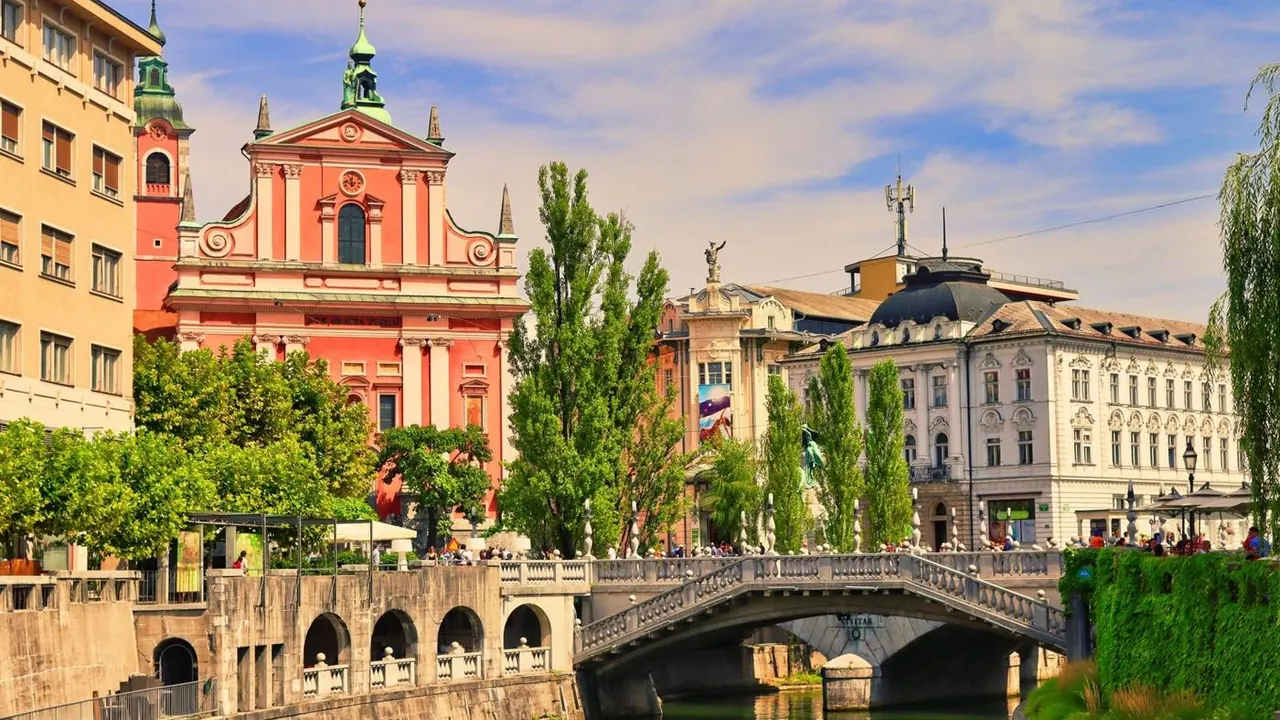
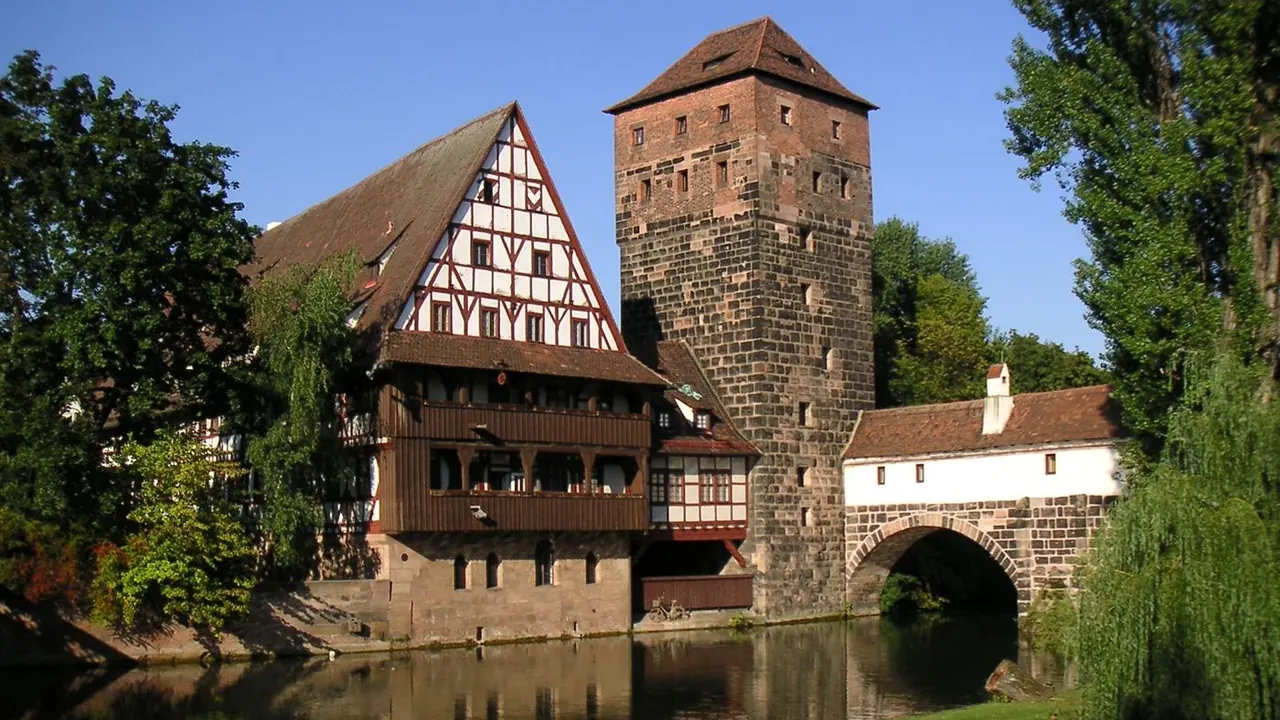
Photos: Ljubljana by detait, Pexels License; Nuremberg by Horst Gutmann, CC BY 2.0, cropped.
Ljubljana or Nuremberg?
Our verdict in twelve categories, each scored against the same fixed benchmark cities, and the climate month by month, so you can choose for your trip.
Choose Ljubljana for
- nature and the outdoors
- beaches
- prices
Ljubljana suits travellers who want real landscape close to a small, calm capital. Bled, the Julian Alps, the Soča valley and the karst caves are all close enough for a day out. The car-free riverside centre is made for slow evenings over Slovenian wine, and in summer the Adriatic is near enough for a swim.
Choose Nuremberg for
- culture and sights
- shopping
- families
Nuremberg is the better choice for history with weight to it: an imperial castle inside medieval walls, Germany's great museum of its own art and culture, and the sobering sites of the Nazi era and the war crimes trials. It also does more for children, and its trains reach Bamberg, Regensburg and Würzburg without a car.
Scoreboard
Twelve categories on one fixed scale from 0 to 100. The shaded stretch is the gap between the two.
Your match
Pick a travel style or drag the sliders, and both match scores follow your weighting.
Too close to call, 1 point apart
Wins on nature and the outdoors and beaches with your weighting.
Wins on culture and sights and shopping with your weighting.
What matters to you?
Category by category
What the scores mean for a trip.
Beaches & swimming
Neither city is a place to stay for swimming, but Ljubljana has better water within reach. Bled's lake warms up nicely in summer, and the Adriatic towns of Piran and Izola make a realistic day by the sea, though you swim from concrete platforms and pebbles rather than sand.
From Nuremberg the nearest swimming is in the reservoirs of the Franconian Lake District, which have grassy banks and a few small sandy strips. They are fine for a hot afternoon, but there is no sea anywhere near.
Food & drink
The two are on a par, and both serve hearty regional cooking built around sausage. Ljubljana's strength is wine: Vipava, Brda and Styrian bottles and the orange wines of the west, poured beside the river, with the Central Market for cheese and pumpkin-seed oil.
Nuremberg drinks beer instead, with Franconia's small breweries, smoky Kellerbier in beer gardens, little beechwood-grilled bratwurst and Lebkuchen. Ljubljana has a few modern kitchens. Beyond their regional food, neither city offers much range.
Culture & sights
Ljubljana's appeal is one coherent cityscape: Plečnik's bridges, colonnades and library, baroque and Secession streets, and the castle on its wooded hill. Its museums are modest, and two or three days cover it.
Nuremberg has more to see and more weight. The walls, the Kaiserburg and the Gothic churches tell the story of the Holy Roman Empire, and the Germanisches Nationalmuseum alone fills a day. The Rally Grounds and the trial courtroom add a twentieth-century chapter few cities can match.
Nightlife
Evenings are equally low-key in both, but they take place in different settings. In Ljubljana people drink outdoors on the terraces along the Ljubljanica, and Metelkova's mural-covered former barracks provide the late, scruffy club nights. Nuremberg is more of a tavern and bar city, and its liveliest nights are in Gostenhof's small bars and alternative venues west of the walls, with students from Erlangen filling the weekends.
Nature & outdoors
This is where Ljubljana pulls clearly ahead. Triglav National Park and Velika Planina's high pasture in the Kamnik-Savinja Alps are within about an hour, and rafting and kayaking on the emerald Soča make a longer trip further west. The karst caves and small ski resorts are close as well, and Tivoli Park and Šmarna Gora bring hill walking into the city itself.
Nuremberg's country is gentler: pine forest at the edge of town, easy cycling along the Pegnitz, and the limestone towers and climbing crags of Franconian Switzerland. It suits walkers and cyclists, but there are no mountains.
Day trips
Both are excellent bases, but they lead to different kinds of day out. From Ljubljana the trips are about scenery and small places: Bled, Predjama Castle in its cliff, Lipica's horses, Piran and the Brda wine villages, with Trieste or Zagreb for a change of country. A car helps for the smaller ones.
From Nuremberg it is a run of historic towns reached easily by train: Bamberg, Regensburg, Würzburg, Rothenburg and Munich.
Good for families
Ljubljana is an easy city with small children rather than a thrilling one. The flat, car-free streets, the castle funicular, the dragon statues, the puppet theatre and a modest zoo cover two or three days.
Nuremberg gives children more to do. Its long toy-making history shows in the Toy Museum, the railway museum has full-size locomotives, and the zoo is large, with a dolphin house. There is also a play park in Zirndorf, and in Advent a children's Christmas market with carousels.
Getting around
You walk almost everywhere in both. Ljubljana's pedestrianised centre needs no transport at all and has bike-share, but there is no metro or tram, and the countryside is best reached by intercity bus or a hired car. Nuremberg's walled core is just as compact, and beyond it the U-Bahn, trams and S-Bahn run on one ticket to the zoo, the Rally Grounds and Fürth, with regional trains making a car unnecessary.
Shopping & style
Ljubljana's shopping is small and local: honey and coastal salt at the market, Idrija lace, the Sunday antiques market on the embankment and a few design boutiques in the old town.
Nuremberg is not a shopping destination either, but it offers more. Königstraße has department stores, the Handwerkerhof sells wooden toys and crafts, and in Advent the Christkindlesmarkt on the Hauptmarkt is one of Germany's most famous Christmas markets.
Affordability
Day-to-day costs are moderate and similar in both, with set lunches at Ljubljana's inns and cheap beer and transport in Nuremberg. Where they differ is when hotel prices climb. Ljubljana's small stock of central rooms is dearest in July and August. Nuremberg's peaks come with the trade fairs and the Advent market, so plan your dates around those.
Live music & performing arts
Both have solid formal arts on a regional scale. Ljubljana's highlights are the summer festival in Plečnik's open-air Križanke courtyard and a Philharmonic with roots in 1701, though most theatre is in Slovene. Nuremberg has opera and ballet in its Art Nouveau Staatstheater and two orchestras that give a large free concert in the park. In summer there are also the Bardentreffen folk weekend and a big rock festival by the Zeppelinfeld.
Wellness & relaxation
Neither city has a bathing tradition of its own, so the difference lies in distance and style. Nuremberg's thermal spa in Fürth is a short U-Bahn ride away, its saunas follow the German nude, mixed habit, and Bad Windsheim's saline pools are about an hour out.
Ljubljana's real spas are Slovenia's thermal towns, about an hour's drive away. In return, the quiet, car-free centre and its riverside cafés make the city itself restful.
When should you go?
Pick your month. The climate figures are measured averages, not a forecast.
Ljubljana in July
Nuremberg in July
Daytime high, °C
Rainfall in the month, mm
Temperature and rainfall are climate normals, averaged over the years shown. Ljubljana: 1991-2020 normals, Ljubljana / Bezigrad (1.9 km from centre). Nuremberg: 1991-2020 normals, Nuernberg (5.5 km from centre).
Winters are cold in both, with daytime highs of about 4°C from December to January. Ljubljana warms faster and gets hotter. July and August reach 28°C with plenty of sunshine, which is the time for swimming in Bled's lake or a run to the coast. It is a wet city all year, though, and the rain is heaviest in autumn, when September brings around 159mm.
Nuremberg stays milder in high summer at about 25°C, so July and August are still comfortable for walking the old town. It is also much drier, with under 80mm in every month. Late spring and early autumn suit both cities. Autumn is the time to favour Nuremberg, and the hottest weeks are the time to favour Ljubljana if you want the lakes.
Which traveller are you?
For an outdoors trip, Ljubljana makes the better base. You can spend a week heading out each morning to mountains, rivers or caves and be back for a quiet dinner by the water, though a hired car opens up the remoter valleys.
On a culture and arts trip, Nuremberg holds your attention for longer. Ljubljana's charm lies in one cityscape seen in two or three days, while Nuremberg's medieval core, a major national museum and its wartime history sustain a much longer stay.
On a family trip with children, Nuremberg suits a longer stay. Ljubljana is calm and easy with a pushchair but runs out of things for children quickly, whereas Nuremberg's museums and zoo, all on one transport ticket, keep young travellers busy for days.
Before you go
| Measure | Ljubljana | Nuremberg |
|---|---|---|
| Official language | Slovene | German |
| Currency | Euro (EUR) | Euro (EUR) |
| Sockets | CF230 V, 50 Hz | CF230 V, 50 Hz |
| Driving side | Right | Right |
| Time zone | UTC+1, UTC+2 in summer | UTC+1, UTC+2 in summer |
| Emergency number | 112 | 112 |
| Elevation | 309 m | 209 m |
| Main airport | Ljubljana Jože Pučnik Airport (LJU)20 km from centre32 non-stop destinations | Nuremberg Airport (NUE)5 km from centre56 non-stop destinations |
| Public holidays this year | 21 days | 12 days |
By the numbers
| Measure | Ljubljana | Nuremberg |
|---|---|---|
| City population | 284,293 | 531,159 |
| People per km² | 1,736 | 2,848 |
| Museums within 10 km | 14 | 50 |
| UNESCO World Heritage sites within 50 km | 3 | 1 |
Where else could you go?
Every comparison below shares a destination with this one, so you can follow Ljubljana or Nuremberg somewhere new.