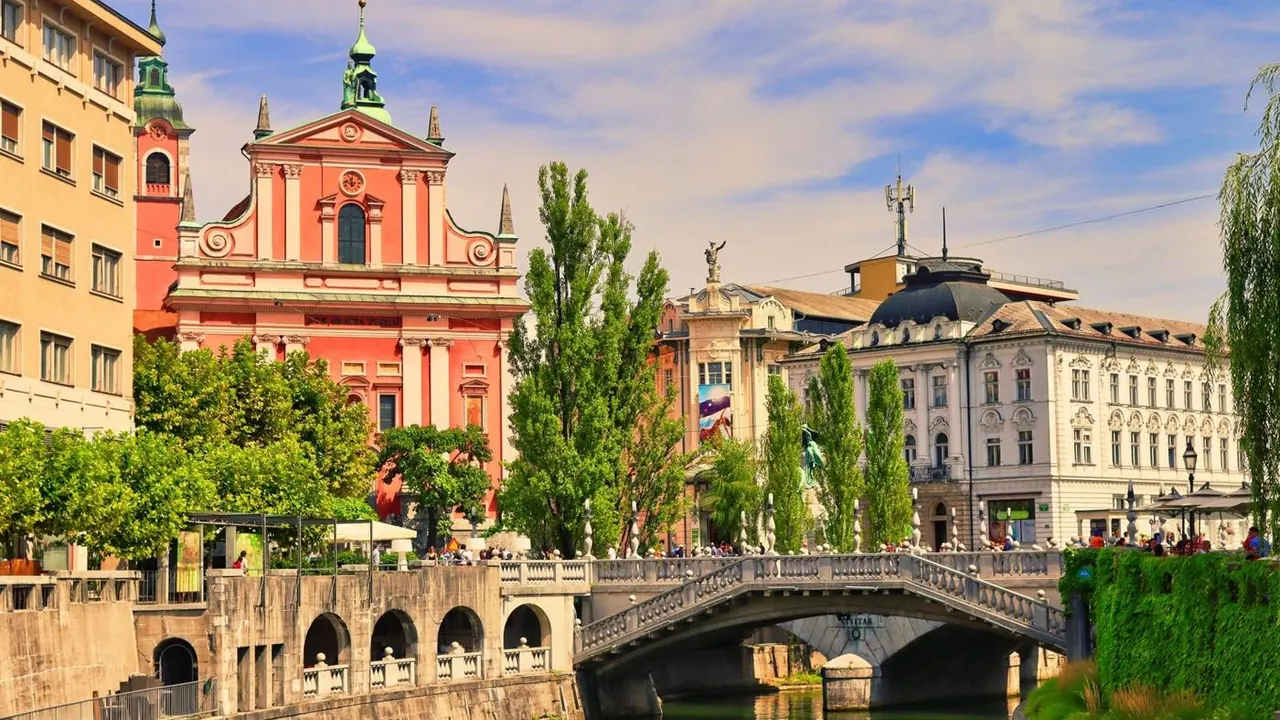
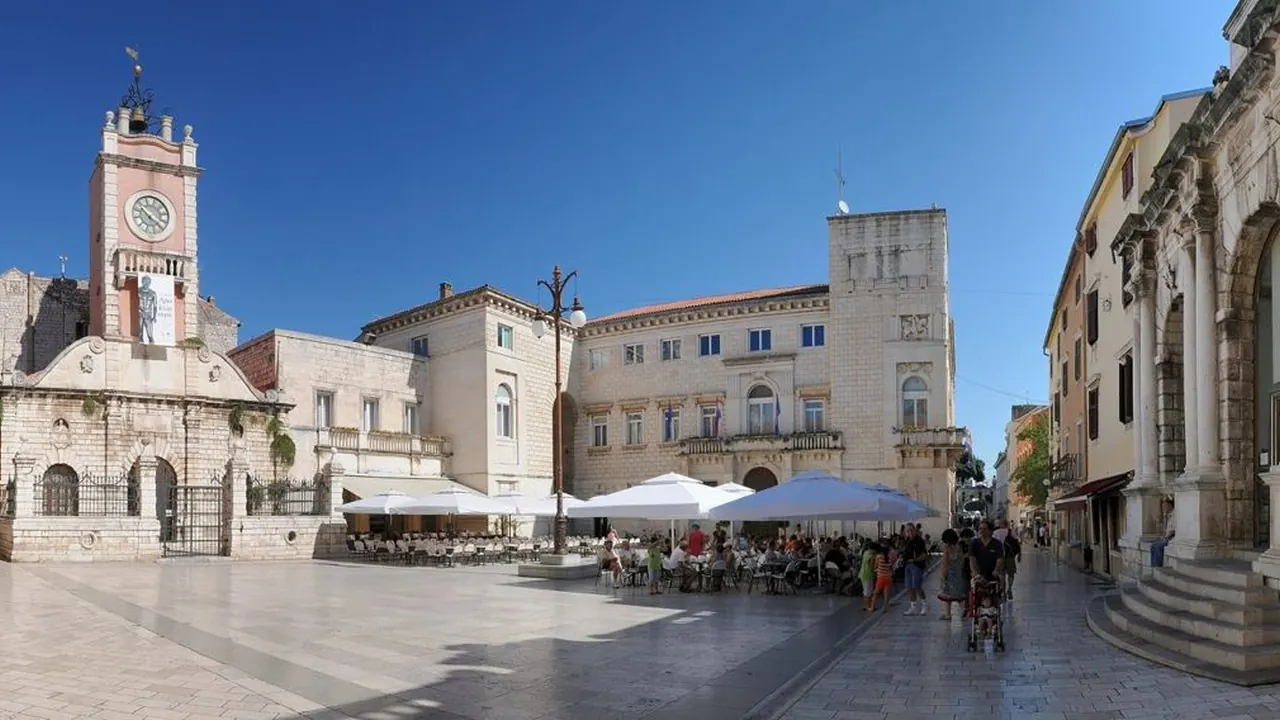
Photos: Ljubljana by detait, Pexels License; Zadar by Böhringer Friedrich, CC BY-SA 2.5, cropped.
Ljubljana or Zadar?
Our verdict in twelve categories, each scored against the same fixed benchmark cities, and the climate month by month, so you can choose for your trip.
Choose Ljubljana for
- live music and the arts
- getting around
- food and drink
Ljubljana suits travellers who want a small, walkable capital as a base for the whole of Slovenia. Plečnik's riverside architecture, wine bars along the Ljubljanica, an opera house and a philharmonic give the evenings more substance, and Bled, the Julian Alps and the karst caves are all within easy reach. It works in every season, which Zadar does not.
Choose Zadar for
- beaches
- nature and the outdoors
- families
Zadar is the choice for a summer trip built around the sea. You swim off the stone promenade, take ferries out to the islands and watch the sunset at the Sea Organ, with Roman and Venetian layers in the old town and Paklenica and the Kornati on the doorstep. Come for warm water and long light evenings, not for food or concerts.
Scoreboard
Twelve categories on one fixed scale from 0 to 100. The shaded stretch is the gap between the two.
Your match
Pick a travel style or drag the sliders, and both match scores follow your weighting.
Too close to call, 2 points apart
Wins on live music and the arts and getting around with your weighting.
Wins on beaches and nature and the outdoors with your weighting.
What matters to you?
Category by category
What the scores mean for a trip.
Beaches & swimming
This is the clearest difference between the two. In Zadar, swimming is part of every summer day: you step into clear water from the stone promenade, walk to Kolovare, or take a ferry to Ugljan or out to Sakarun's pale sand on Dugi Otok. The city beaches are pebble and concrete, but Nin's shallow sand is close by.
Ljubljana is inland. A swim means the Sava, Lake Bled about an hour away, or a drive of an hour and a half to the concrete platforms at Piran. That is a nice extra on a hot day, but you would not plan a trip around it.
Food & drink
Ljubljana eats and drinks better. The Central Market under Plečnik's colonnades, inns serving štruklji and jota, a few ambitious modern kitchens and, above all, wine bars pouring Vipava, Brda and orange wines by the glass give a week of meals some variety.
Zadar sticks to the Dalmatian coastal repertoire: grilled fish, black risotto and peka lamb. Pag cheese and Maraschino are distinctive, but the konobas on the peninsula serve much the same menu, and the main streets lean towards tourist cooking.
Culture & sights
The two are on a par, but the interest is different. Ljubljana's appeal is one architect's vision across a whole cityscape: Plečnik's bridges, embankments and library, baroque churches and the castle on its hill. Zadar layers three thousand years on one small peninsula, with the Roman forum, the round church of St Donatus and the Venetian walls, plus the Sea Organ on the waterfront. Its glass and archaeology museums are more distinctive than Ljubljana's galleries.
Nightlife
Evenings in both cities are spent outdoors by the water, and the real difference is the season. Ljubljana's students keep the terraces along the Ljubljanica busy for most of the year, especially during term, and Metelkova's scruffy clubs in the old barracks give it one genuine late-night corner at weekends. On weekdays the riverside quietens after midnight.
Zadar has a summer scene. Evenings start with the sunset on the Riva and move on to café-bars along Kalelarga and terraces on the walls. Anyone after proper clubbing heads to Zrće on Pag, about an hour away. From October to May going out mostly means a quiet drink in a café-bar.
Nature & outdoors
Both are excellent bases for the outdoors, one for mountains and the other for mountains and sea. From Ljubljana you can reach the Julian Alps, Triglav, the Soča's rafting and the Postojna and Škocjan caves, and there is winter skiing within reach.
Zadar adds water to the mix. There are sailing trips to the Kornati and Telašćica, sea kayaking among the islands, Paklenica's climbing gorges, and Krka and Plitvice for waterfalls. Its summer heat makes hiking hard work, though, while Ljubljana's hills are walkable for most of the year.
Day trips
Ljubljana has the edge because it sits in the middle of a small country. Bled, Škofja Loka, Predjama Castle, Idrija and the coast at Piran are all easy outings, and Trieste and Zagreb are close enough to cross the border for a day.
From Zadar, the best options run along the coast: Šibenik's cathedral, royal Nin, and Split and Trogir if you don't mind a long day. Island ferries add something Ljubljana cannot offer, but more of it depends on a car or an organised excursion.
Good for families
For families the two are much alike: safe, flat, car-free centres with little built specially for children. What differs is how you spend the day. In Ljubljana that means the castle funicular, the dragons, Tivoli's playgrounds, a small zoo and a puppet theatre. In Zadar it means the sea: Nin's shallow sand, ferry rides and the glowing Greeting to the Sun after dark, best in June or September before the heat peaks.
Getting around
Ljubljana is easier to get around. Everything a visitor wants lies within about twenty minutes' walk, electric shuttles and bike-share fill the gaps, and intercity buses fan out across the country.
Zadar's peninsula is just as walkable, but beyond it the local buses are basic and regional connections are weak, so the national parks and the coast really need a hire car or a tour. Its advantage is the ferries, which leave from the edge of the old town.
Shopping & style
Lace is the souvenir the two share. Ljubljana's comes from Idrija and is worked on bobbins, while Zadar's comes from Pag and is made with a needle. Beyond that, Ljubljana gives you a little more to browse. The Central Market sells pumpkin-seed oil, honey and salt from the coastal pans, gingerbread hearts and wooden crafts make easy gifts, a few independent designers keep shop in the old town, and on Sunday mornings antiques are laid out along the embankment.
Zadar's marble Kalelarga is mostly jewellers, chains and souvenir stalls, so the open-air market by the walls is the stop to make time for. Pag cheese, figs and olive oil are the things to buy there, and Maraschino is the obvious bottle to take home. In neither city is shopping a reason to choose it.
Affordability
Costs are similar, and in both cities accommodation is the big expense in July and August. Ljubljana saves you money because everything is within walking distance and most sights cost little to enter. Zadar's private apartments are good value outside high summer, but boat trips and national park tickets add up quickly.
Live music & performing arts
Ljubljana has far more on offer. The Philharmonic, whose roots go back to 1701, the National Opera and Ballet and the programme at Cankarjev dom run all year, and the summer festival fills the Križanke courtyard.
Zadar has one memorable highlight, early and chamber music inside St Donatus on summer evenings, plus some klapa singing in the squares. Outside July and August there is little to see or hear.
Wellness & relaxation
Neither city has a bathing tradition of its own, but Ljubljana has more to offer. There is a big sauna and water park on the edge of town, and Slovenia's thermal spa towns are within about an hour's drive. Zadar's version is gentler: hotel spas at Borik, the healing mud at Nin's lagoon, and the simple pleasure of watching the sunset from the Sea Organ steps.
When should you go?
Pick your month. The climate figures are measured averages, not a forecast.
Ljubljana in July
Zadar in July
Daytime high, °C
Rainfall in the month, mm
Where the figures come from
Zadar has no rain gauge within 25 km of the centre, so its rainfall comes from a gridded climate dataset read at the city rather than from a gauge further away.
Temperature and rainfall are climate normals, averaged over the years shown. Ljubljana: 1991-2020 normals, Ljubljana / Bezigrad (1.9 km from centre). Zadar: 1999-2020 (rainfall 1991-2020) normals, Zadar / Zemunik (9.9 km from centre).
Ljubljana has an inland climate, with cold winters, warm summers and rain in every month. July and August peak at about 28°C with long sunny days, so midsummer is warm and green rather than baking. Late spring is pleasant for walking the old town and the hills, though May and June bring regular showers. September and October stay mild but are the wettest months of the year, at up to 159mm, so an early autumn visit means packing for rain. From December to February the days sit only a few degrees above freezing and are often grey.
Zadar is warmer and drier for most of the year. From June to September the sea is warm enough for daily swimming, reaching about 25°C in August. July and August are almost rain-free, with highs around 31°C, which is good for the beach but makes midday sightseeing and hill walks hard work. May and late September are kinder for walking. Rain arrives in autumn and is heaviest in November. Winter days stay milder than Ljubljana's, but the sea is then too cool for swimming.
Which traveller are you?
On a beach and sun trip, Zadar wins easily. You can swim straight off the promenade, Nin's sandy shallows are twenty minutes away and ferries reach island coves. From Ljubljana the coast is a day trip, and the sea is not part of daily life.
For a culture and arts trip, Ljubljana gives more to do after dark: the National Opera, the Philharmonic and summer concerts in Plečnik's Križanke courtyard. Zadar matches it for sights, with its Roman forum and St Donatus, but its cultural calendar is thin outside summer.
For a short city break, Ljubljana is the easier choice. Everything lies within a twenty-minute walk, the wine bars and inns are better than Zadar's tourist konobas, and it works in any season. Zadar's appeal depends on summer weather and on time at sea.
Before you go
| Measure | Ljubljana | Zadar |
|---|---|---|
| Official language | Slovene | Croatian |
| Currency | Euro (EUR) | Euro (EUR) |
| Sockets | CF230 V, 50 Hz | CF230 V, 50 Hz |
| Driving side | Right | Right |
| Time zone | UTC+1, UTC+2 in summer | UTC+1, UTC+2 in summer |
| Emergency number | 112 | 112 |
| Elevation | 309 m | 5 m |
| Main airport | Ljubljana Jože Pučnik Airport (LJU)20 km from centre32 non-stop destinations | Zadar Airport (ZAD)10 km from centre66 non-stop destinations |
| Public holidays this year | 21 days | 14 days |
By the numbers
| Measure | Ljubljana | Zadar |
|---|---|---|
| City population | 284,293 | 70,779 |
| People per km² | 1,736 | - |
| Museums within 10 km | 14 | 1 |
| UNESCO World Heritage sites within 50 km | 3 | 2 |
| Swim season, months above 21 °C | - | 4 months |
Where else could you go?
Every comparison below shares a destination with this one, so you can follow Ljubljana or Zadar somewhere new.