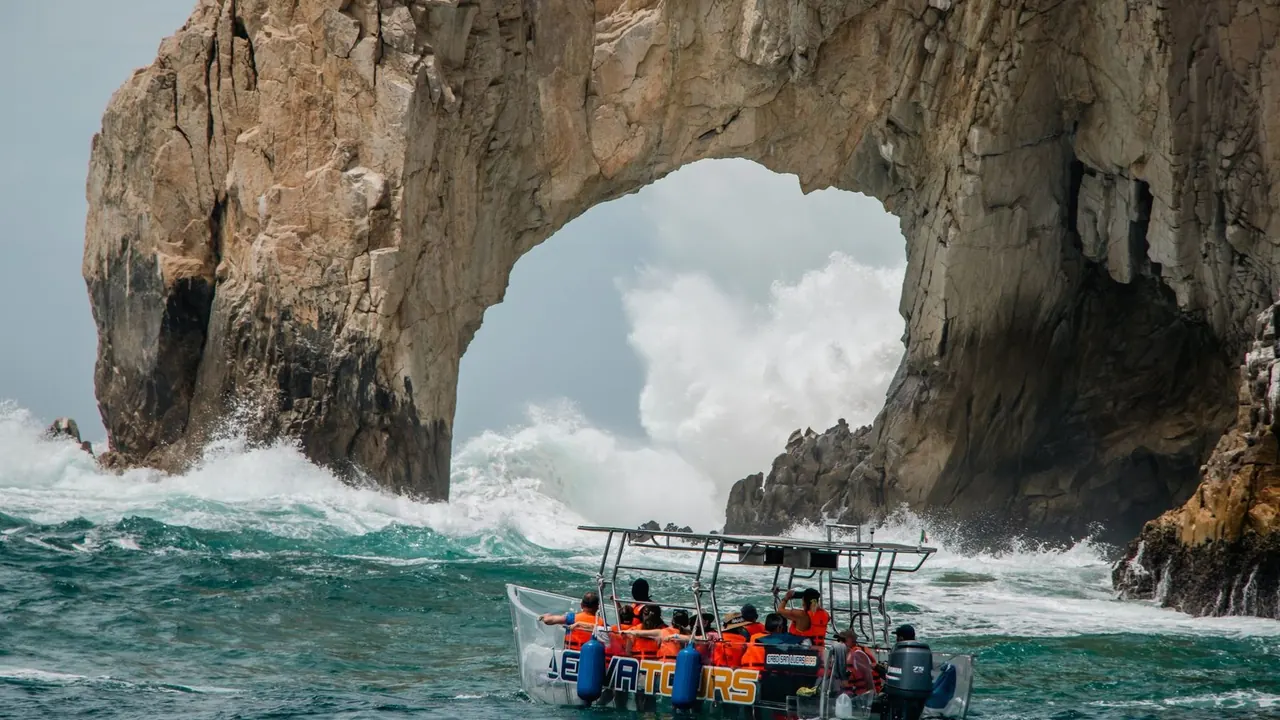
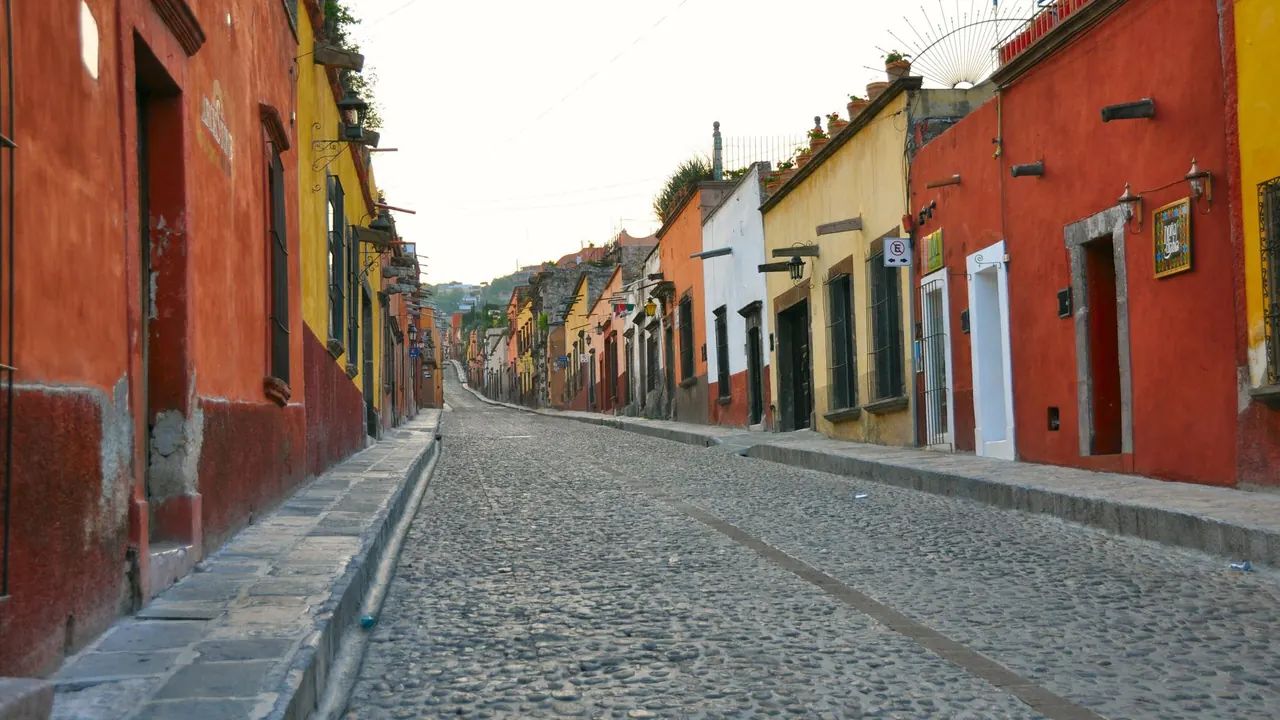
Photos: Los Cabos by Jules Clark, Pexels License; San Miguel de Allende by Russ Bowling, CC BY 2.0, cropped.
Los Cabos or San Miguel de Allende?
Our verdict in twelve categories, each scored against the same fixed benchmark cities, and the climate month by month, so you can choose for your trip.
Choose Los Cabos for
- beaches
- nature and the outdoors
- nightlife
Los Cabos is the pick for a sea-and-sun trip. Calm swimming coves on the Sea of Cortez, whales off the cape in winter, marlin fishing, snorkelling and Cabo Pulmo's reef fill the days, and the marina bars in Cabo San Lucas fill the nights. It suits couples and families who are happy to base themselves at a resort and treat the towns as an extra. It is the more expensive of the two, though, and there is little history to see.
Choose San Miguel de Allende for
- culture and sights
- day trips
- live music and the arts
Travellers who would rather walk than swim will get more from San Miguel de Allende. Its colonial centre of cobbled streets, churches and courtyards is the reason to come, and the food, crafts, music and hot springs are all close at hand. Guanajuato, Querétaro and Atotonilco make easy day trips. It is a slower, more grown-up place, a poor choice for anyone who needs a beach and a much better one for anyone who wants Mexico's colonial past.
Scoreboard
Twelve categories on one fixed scale from 0 to 100. The shaded stretch is the gap between the two.
Your match
Pick a travel style or drag the sliders, and both match scores follow your weighting.
Too close to call, 1 point apart
Wins on beaches and nature and the outdoors with your weighting.
Wins on culture and sights and day trips with your weighting.
What matters to you?
Category by category
What the scores mean for a trip.
Beaches & swimming
Los Cabos is a beach destination first and foremost, and San Miguel de Allende is not one at all. In Los Cabos the Sea of Cortez side has the safe swimming: Medano Beach and the snorkelling coves along the corridor. On the Pacific side the surf is strong enough that those beaches are for looking at, not swimming.
San Miguel lies high on the central plateau, so the only places to swim are hotel pools and the warm spring pools out of town. Anyone combining the two would do best to save the beach days for Baja.
Food & drink
San Miguel eats the better of the two, and the gap shows in variety. Its rooftop and courtyard restaurants cook with Bajío ingredients such as nopal, mesquite and local cheeses. The market and the Sunday tianguis cover the cheap end.
Los Cabos does one thing very well, and that is fish: tacos, ceviche and aguachile made from the day's catch. For this the taco stands and farm restaurants in San José are better than the marina grills. Both places pour Mexican wine and mezcal, from Baja's vineyards in one case and Guanajuato's in the other.
Culture & sights
The two are far apart here. San Miguel's whole centre is the sight: the pink spires of the Parroquia, San Felipe Neri, the dome of La Concepción, the Casa de Allende and the Siqueiros mural at Bellas Artes, all within a few cobbled blocks. Two unhurried days cover the main sights.
Los Cabos has a small colonial plaza, a mission church and a gallery district in San José. The arch at Land's End is a natural landmark rather than a cultural one, and for history you have to drive out to Todos Santos or La Paz.
Nightlife
Los Cabos goes out harder. In Cabo San Lucas the big bars and dance clubs behind the marina stay open into the early hours, and the drinking on Medano starts in the afternoon. Expect a loud party crowd, especially around spring break.
In San Miguel the evening is a drink on a rooftop as the Parroquia lights up, followed by mezcal bars and cantinas near the Jardín. Weekend visitors from Mexico City and Querétaro keep a few dance bars busy late on Fridays and Saturdays, but on weeknights the town is quiet.
Nature & outdoors
Most of the outdoors in Los Cabos is out at sea: whales from December to April, marlin in the deep water off the cape, the sea lion colony, diving, and the living reef at Cabo Pulmo. On land, the Sierra de la Laguna has serious hikes up into oak and pine forest.
San Miguel's outdoors is gentler. There are cactus trails at El Charco del Ingenio, horse rides on the ranches, mountain biking on dirt roads and dawn balloon flights over the dry Bajío highlands. Each makes a good morning out, but none fills a whole trip.
Day trips
Day trips are one of San Miguel's strongest points. Guanajuato's painted ravine and the aqueduct and convents of Querétaro are each about an hour away. Atotonilco's murals, Dolores Hidalgo, the Cañada de la Virgen pyramids and the wine country are all close too.
From Los Cabos the choice is narrower. Adobe-walled Todos Santos makes a good day, while La Paz is a long drive, and El Triunfo and Miraflores can be combined on a loop by car. Past those towns there is mostly open desert.
Good for families
Los Cabos works better with children, as long as you stay at a resort with pools and a kids' club. The calm coves, glass-bottom boats and whale watching are easy outings. The Pacific surf and the noisy marina at night are the things to steer around.
San Miguel is built for adults, and its steep cobbles are hard going with a pushchair. Still, the Jardín is friendly to families in the evening, and older children will enjoy the spring pools, a horse ride and the fiesta parades.
Getting around
San Miguel is easier to get around because everything you want is within walking distance of the Jardín. The walking is still hard work: the stones are uneven and the altitude makes the climbs harder. Taxis are cheap for the hill and the springs.
Los Cabos is spread over two towns and a resort corridor of about 30km. Visitors mostly rely on taxis, shuttles or a hire car, and only the two town centres are pleasant to walk. In both places you will want a car or a driver for most day trips.
Shopping & style
San Miguel is the better place to shop. You can buy tin lanterns, blown glass and textiles in the Mercado de Artesanías, carved furniture and talavera in the design shops, and art and antiques in the converted textile mill. Much of it is aimed at people furnishing a house.
Los Cabos offers duty-free malls at the marina and souvenir silver and tequila sold mainly to cruise visitors. San José's galleries and folk art are the most interesting part.
Affordability
Neither is a bargain by Mexican standards, but Los Cabos costs more. Corridor resorts are priced at international luxury levels, marina restaurants charge American beach-resort prices, and taxis are expensive. Eating at San José's taco stands is the main way to save.
San Miguel's boutique hotels and the restaurants on the Jardín are not cheap either, especially at weekends. Away from the centre, though, market lunches, cantinas and taxis cost little, and most sights are churches and streets that are free to enjoy.
Live music & performing arts
San Miguel has far more to listen to. The nineteenth-century Teatro Ángela Peralta stages concerts and dance, the chamber music and jazz festivals are long-established, mariachi bands play on the Jardín every evening, and the Alborada and Holy Week fill the streets with music.
In Los Cabos live music mostly means cover bands in the marina bars and dinner shows at the resorts, and there is no concert season to plan around.
Wellness & relaxation
San Miguel has the edge, and much of the reason is its pace: courtyard mornings, quiet rooftops and the hot mineral pools and grottoes towards Atotonilco. Day spas, temazcal and yoga in town serve the large resident community.
Wellness in Los Cabos happens inside the resorts. The corridor hotels compete on spas with treatment rooms facing the sea, and several offer temazcal, so how restful your stay is depends on choosing a quiet hotel away from noisy Cabo San Lucas.
When should you go?
Pick your month. The climate figures are measured averages, not a forecast.
Los Cabos in July
San Miguel de Allende in July
Daytime high, °C
Rainfall in the month, mm
Where the figures come from
Los Cabos has no weather station within reach, so its figures come from a gridded climate model rather than a measured record, and read a broad area rather than the city itself.
San Miguel de Allende's temperatures are measured 54 km from the centre, at Guanajuato, Gto..
San Miguel de Allende has no rain gauge within 25 km of the centre, so its rainfall comes from a gridded climate dataset read at the city rather than from a gauge further away.
Temperature and rainfall are climate normals, averaged over the years shown. Los Cabos: 2001-2020 normals, NASA POWER reanalysis grid, no weather station within 90 km. San Miguel de Allende: 1991-2020 normals, Guanajuato, Gto. (53.7 km from centre).
Los Cabos is warm and dry for most of the year. From November to April the days suit both the beach and the town, and whale season falls in these months, though the sea cools to around 22°C. From July to October the water is at its warmest for swimming, but the afternoons are hot. What rain there is comes in late summer, mostly in August and September, with September the wettest at about 99mm.
San Miguel de Allende follows a different pattern. Its best walking weather runs from October to March, when the days are dry, sunny and mild. April and May are the hottest months, at around 32°C in the afternoon. The summer rains then last from June to September, with July the wettest at about 132mm, and the hills turn green. In winter both cities work well. In late summer Los Cabos is the hotter of the two and San Miguel the wetter.
Which traveller are you?
On a beach and sun trip, Los Cabos is the obvious choice. Medano Beach and the coves at Chileno and Santa Maria are good for swimming and snorkelling. San Miguel sits hours inland and has nothing nearer the sea than a hotel pool.
On a culture and arts trip, choose San Miguel de Allende. Its UNESCO-listed centre, the Parroquia, the baroque churches, Bellas Artes and the art schools give you days of looking. Nearby Guanajuato and Atotonilco add more. Los Cabos has little beyond San José's small plaza.
On a family trip with children, Los Cabos is the easier choice. The resorts have kids' clubs and the coves are calm, and glass-bottom boats and whale watching are simple outings. In San Miguel, steep cobbled streets and adult-focused galleries mean younger children soon get bored.
Before you go
| Measure | Los Cabos | San Miguel de Allende |
|---|---|---|
| Official language | Spanish, Nahuatl, Yucatec Maya | Spanish, Nahuatl, Yucatec Maya |
| Currency | Mexican Peso (MXN) | Mexican Peso (MXN) |
| Sockets | AB127 V, 60 Hz | AB127 V, 60 Hz |
| Driving side | Right | Right |
| Time zone | UTC-7 | UTC-6 |
| Emergency number | 911 | 911 |
| Elevation | 11 m | 1,900 m |
| Main airport | Los Cabos International Airport (SJD)35 km from centre54 non-stop destinations | Guanajuato International Airport (BJX)77 km from centre22 non-stop destinations |
| Public holidays this year | 9 days | 9 days |
By the numbers
| Measure | Los Cabos | San Miguel de Allende |
|---|---|---|
| City population | 202,694 | 69,811 |
| Museums within 10 km | 1 | 2 |
| UNESCO World Heritage sites within 50 km | 0 | 2 |
| Swim season, months above 21 °C | 12 months | - |
Where else could you go?
Every comparison below shares a destination with this one, so you can follow Los Cabos or San Miguel de Allende somewhere new.