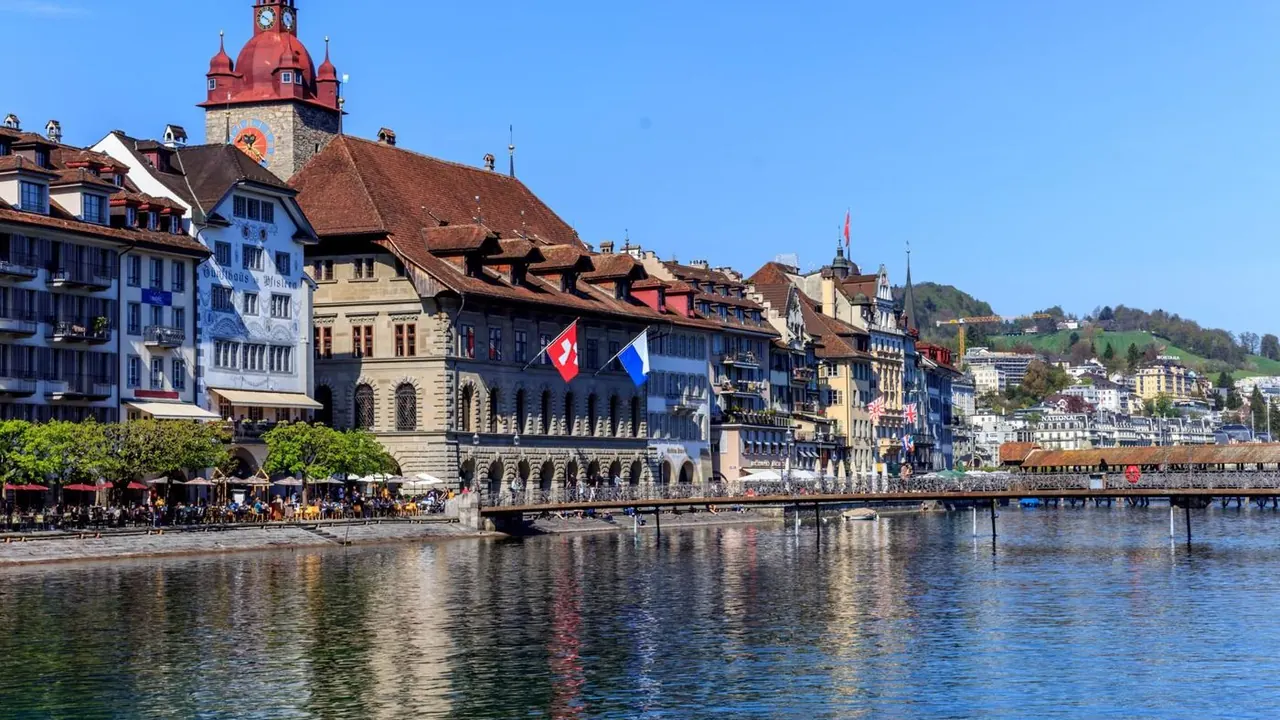
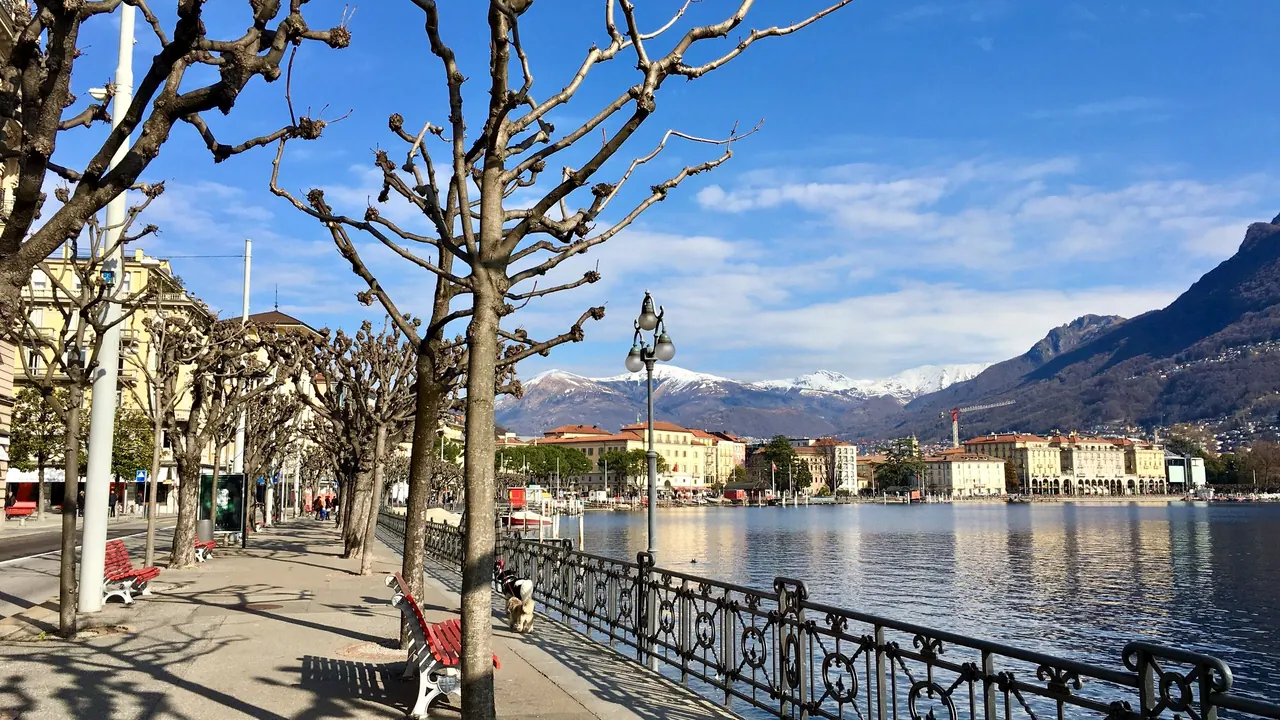
Photos: Lucerne by ILOVESwitzerland, Pexels License; Lugano by Thomas Woodtli from Zürich, Switzerland, CC BY-SA 2.0, cropped.
Lucerne or Lugano?
Our verdict in twelve categories, each scored against the same fixed benchmark cities, and the climate month by month, so you can choose for your trip.
Choose Lucerne for
- live music and the arts
- culture and sights
- nature and the outdoors
Lucerne is the choice for travellers who want mountains and music. Pilatus and Rigi rise straight from the lake, Titlis and its glacier are close, and the paddle steamers leave from in front of the station, so a day can mix boat, cogwheel railway and ridge walk without a car. The Old Town also has more to see, from the Chapel Bridge to the Lion Monument, and the Lucerne Festival brings the world's best orchestras to the lakefront concert hall.
Choose Lugano for
- beaches
- food and drink
- day trips
Lugano suits a slower, warmer and more southern stay. Its summers are hotter and its winters much sunnier, the lake is better for swimming, and the grotti, serving polenta and Merlot under chestnut trees, make eating out more of a pleasure. It sits on the Italian border, so Milan, Como and Lake Maggiore are all an easy day out, which is ideal for someone who would rather roam two countries than climb high peaks.
Scoreboard
Twelve categories on one fixed scale from 0 to 100. The shaded stretch is the gap between the two.
Your match
Pick a travel style or drag the sliders, and both match scores follow your weighting.
Wins on live music and the arts and culture and sights with your weighting.
Wins on beaches and food and drink with your weighting.
What matters to you?
Category by category
What the scores mean for a trip.
Beaches & swimming
Neither town has sand, and in both a swim means lawns, jetties and ladders into a lake. In Lucerne, people swim at the Lido, the old wooden lake baths and the grassy shore at Ufschötti. The water is clean and calm, but it is only warm enough for most people in high summer.
Lugano is the better place for it. The lake is a few degrees warmer, the season runs from June into early September, and the main lido at the mouth of the Cassarate has decks and pools, with more bathing spots towards Castagnola and Paradiso. In Lucerne a swim fits between excursions, while in Lugano a whole afternoon at the lido is worth planning.
Food & drink
Lucerne cooks Swiss comfort food: Chügelipastete in cream sauce, fondue, rösti and perch from the lake, served in guild houses and wood-panelled taverns. Many tables near the Chapel Bridge cater to coach tours, and the choice is narrow.
Lugano eats better, thanks to its Italian side. The grotti in the hills and lakeside villages serve polenta, braised meats and salumi at granite tables, with Ticino Merlot from vineyards close by, and the old town has good pastry shops. Neither town is cheap or very varied, but in Lugano a meal is part of the day's pleasure, and Italy is just across the border.
Culture & sights
Lucerne has more to see. Its medieval Old Town has frescoed squares, the covered Chapel Bridge, the climbable towers of the Musegg Wall and the carved Lion Monument. The Rosengart Collection, the Bourbaki Panorama and Wagner's villa at Tribschen give it enough for a full two days.
Lugano is pleasant but slighter. It has the Lombard arcades around Piazza della Riforma, San Lorenzo above the lake and Luini's Passion fresco in Santa Maria degli Angioli, with its art museum split between LAC and Palazzo Reali. One unhurried day covers it, and the Hesse museum up in Montagnola is a worthwhile extra.
Nightlife
Both are early-to-bed towns, but the feel of an evening differs. Lucerne has pubs and wine bars by the Reuss, a small club scene around the Neustadt and students on weekends, and Fasnacht turns the whole town into a party until dawn once a year.
Lugano is about an aperitivo under the arcades, a long dinner and perhaps a lounge bar by the water, with a smart local crowd. On summer weekends the lake promenade stays lively later, but anyone wanting a real night out takes the train to Milan.
Nature & outdoors
Lucerne has the grander mountains. Pilatus with its steep cogwheel railway, the ridge walks on Rigi and the open-top cable car up the Stanserhorn all rise straight from the lake. The year-round snow on Titlis is about an hour away, and winter brings skiing and sledging.
Lugano's landscape is gentler and more southern. Funiculars climb Monte Brè and San Salvatore, paths run down through chestnut woods, and the shore path leads to Gandria. The clear green rivers of the Verzasca and Maggia valleys are about an hour away, and paddleboards and kayaks are easy to hire, but the high Alps are some distance off.
Day trips
Lucerne lies at the centre of the Swiss rail network. Zurich, Basel and arcaded Bern are each under an hour away, and the steamer to the Rütli meadow and Altdorf follows the William Tell story.
Lugano has a slight edge, because its trips cross a border. Milan, with The Last Supper and the Brera, is just over an hour away, Como is closer, and the castles of Bellinzona, Lake Maggiore and Bergamo's upper town are also within reach. The two towns are about two hours apart through the Gotthard, so one day trip can link them.
Good for families
Lucerne is easier with children. The Swiss Museum of Transport, with its trains, planes and planetarium, fills a whole day. The Glacier Garden's mirror maze and the wildlife park at Goldau add more, and the flat riverside centre makes walking simple.
Lugano relies on the outdoors: lido slides, boat rides, funiculars and the playgrounds in Parco Ciani, plus the miniature Swiss landmarks at Melide. Its steep streets are hard work with a pushchair, and on a wet day there is little indoors to fall back on.
Getting around
Lucerne is very easy to navigate. The station, the steamer piers and the edge of the Old Town are side by side on the lakefront, and most sights are a short, level walk along the Reuss.
Lugano takes more effort. The station sits high above the old town and is linked to it by a short funicular, and buses climb to the hillside districts. Both towns run on the same integrated Swiss network of boats, trains and mountain railways, so neither needs a car.
Shopping & style
Shopping is about equal, but each town sells something different. In Lucerne it means Swiss watches, jewellery, army knives and chocolate around Schwanenplatz, mostly aimed at tour groups, with few fashion or design shops.
Lugano's Via Nassa mixes Swiss watchmakers with Italian fashion houses under its porticoes, and the old-town lanes have delicatessens and wine shops. There is a large designer outlet at Mendrisio, and for serious shopping Milan is close.
Affordability
Both are among the most expensive places in Europe to visit, and neither can be done cheaply. In Lucerne, the mountain railways and cable cars that make the stay worthwhile take a large share of the budget, and lakeside supermarket picnics are the usual way to save.
Lugano has a few more ways to cut costs. Grotti and set lunches are fairer value, hotel stays usually come with free regional transport, and lunch in an Italian lakeside town on a day trip costs much less.
Live music & performing arts
Lucerne is the stronger place for music. The Lucerne Festival brings leading orchestras and soloists to Jean Nouvel's lakefront hall, famous for its acoustics, which also has a year-round programme. The city theatre adds opera, and at Fasnacht Guggenmusik brass bands fill the streets.
Lugano centres on LAC, home to the Orchestra della Svizzera italiana, with drama and dance mostly in Italian. Its highlight is Estival Jazz, a series of free open-air concerts in Piazza della Riforma, but opera lovers go to La Scala in Milan.
Wellness & relaxation
Neither town has thermal springs, so spa time means hotel spas in both, and the difference lies in how each one helps you slow down. In Lucerne it comes from steamer afternoons and quiet lakeside evenings, and the Mario Botta mineral bath high on the Rigi offers a soak with a mountain view, though the Old Town is crowded at midday.
Lugano relaxes you through its climate and pace: coffee under the arcades, a bench in Parco Ciani among the palms, and grotto lunches that stretch into the evening. North of town, near Rivera, there is a large indoor complex with pools and saunas.
When should you go?
Pick your month. The climate figures are measured averages, not a forecast.
Lucerne in July
Lugano in July
Daytime high, °C
Rainfall in the month, mm
Where the figures come from
Lucerne has no rain gauge within 25 km of the centre, so its rainfall comes from a gridded climate dataset read at the city rather than from a gauge further away.
Lucerne's sunshine is measured 42 km from the centre, at Zurich Town / Ville..
Temperature and rainfall are climate normals, averaged over the years shown. Lucerne: 2005-2025 (sunshine 1991-2020, rainfall 1991-2020) normals, Emmen (4.2 km from centre). Lugano: 1991-2020 normals, Lugano (1.2 km from centre).
Both towns are at their warmest in July and August, but Lugano is a few degrees warmer all year, reaching about 27°C against Lucerne's 24°C. That makes Lugano the better pick for swimming and long evenings by the water, though its summers can feel close and humid. Lucerne stays fresher for hiking and walking around town in high summer. Its wettest months are June to August, with around 141mm each month, so mountain views often disappear behind cloud just when most people visit.
Lugano's rain follows a different pattern. It peaks in late spring and again in autumn, with about 178mm in May, while winter there is fairly dry and much brighter, with roughly twice Lucerne's sunshine from November to February. Lucerne's winters are grey and cold, but this is when skiing and sledging start. For walking the streets with mild weather, Lugano's spring and early autumn are the better months, and in Lucerne it is September.
Which traveller are you?
On a culture and arts trip, Lucerne is the better base. It has the Chapel Bridge, the Musegg towers, the Rosengart's Picassos and the Lucerne Festival in Jean Nouvel's concert hall, which together go well beyond Lugano's compact old town and its season at LAC.
For a beach and sun trip, Lugano is the better choice. It has more sunshine, the lake is warmer to swim in, and its lidos have decks, pools and slides. Lucerne's lake is lovely, but the water is cooler and the summers are wetter.
On a family trip with children, Lucerne makes things easier. The Swiss Museum of Transport fills a whole day, and the flat riverside centre is easy with a pushchair. Lugano's steep streets are tiring for small legs, and it has no big indoor attraction for a rainy day.
Before you go
| Measure | Lucerne | Lugano |
|---|---|---|
| Official language | French, German, Italian, Romansh | French, German, Italian, Romansh |
| Currency | Swiss Franc (CHF) | Swiss Franc (CHF) |
| Sockets | CJ230 V, 50 Hz | CJ230 V, 50 Hz |
| Driving side | Right | Right |
| Time zone | UTC+1, UTC+2 in summer | UTC+1, UTC+2 in summer |
| Emergency number | 112 | 112 |
| Elevation | 436 m | 283 m |
| Main airport | Zürich Airport (ZRH)49 km from centre226 non-stop destinations | Milan Malpensa International Airport (MXP)46 km from centre208 non-stop destinations |
| Public holidays this year | 12 days | 15 days |
By the numbers
| Measure | Lucerne | Lugano |
|---|---|---|
| City population | 86,234 | 63,495 |
| People per km² | 2,963 | 837 |
| Museums within 10 km | 14 | 17 |
| UNESCO World Heritage sites within 50 km | 1 | 5 |
Where else could you go?
Every comparison below shares a destination with this one, so you can follow Lucerne or Lugano somewhere new.