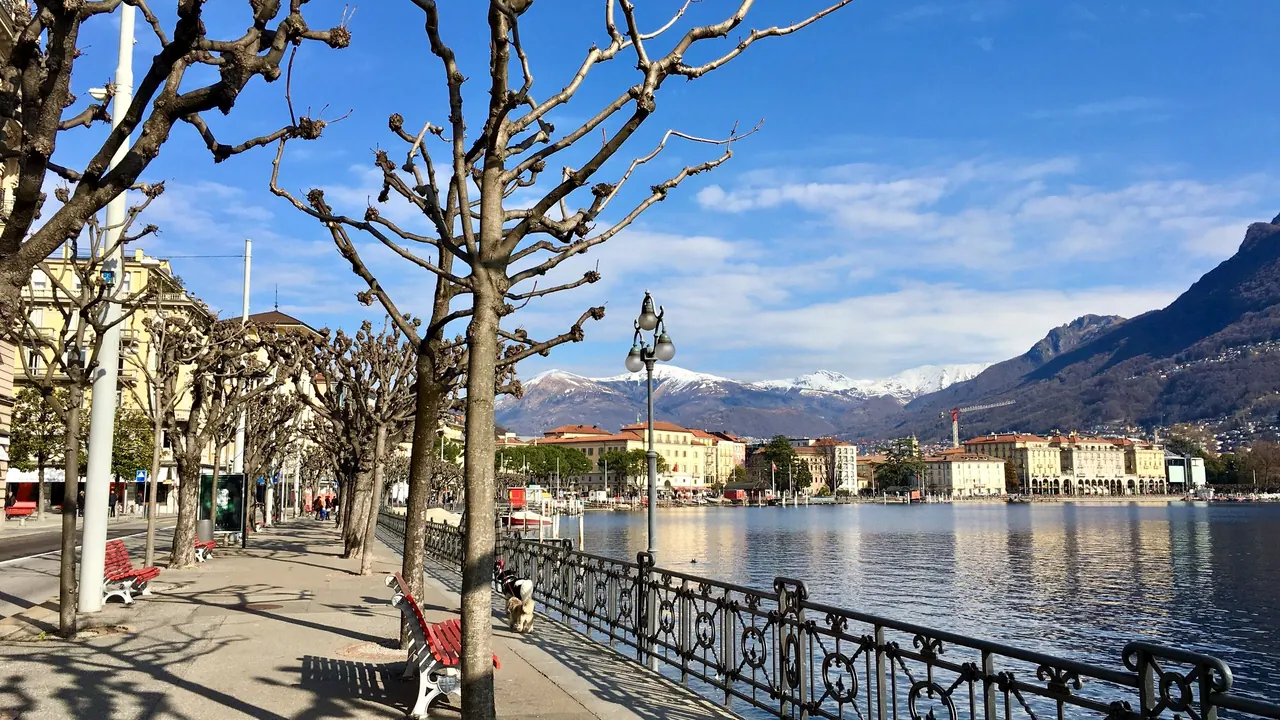
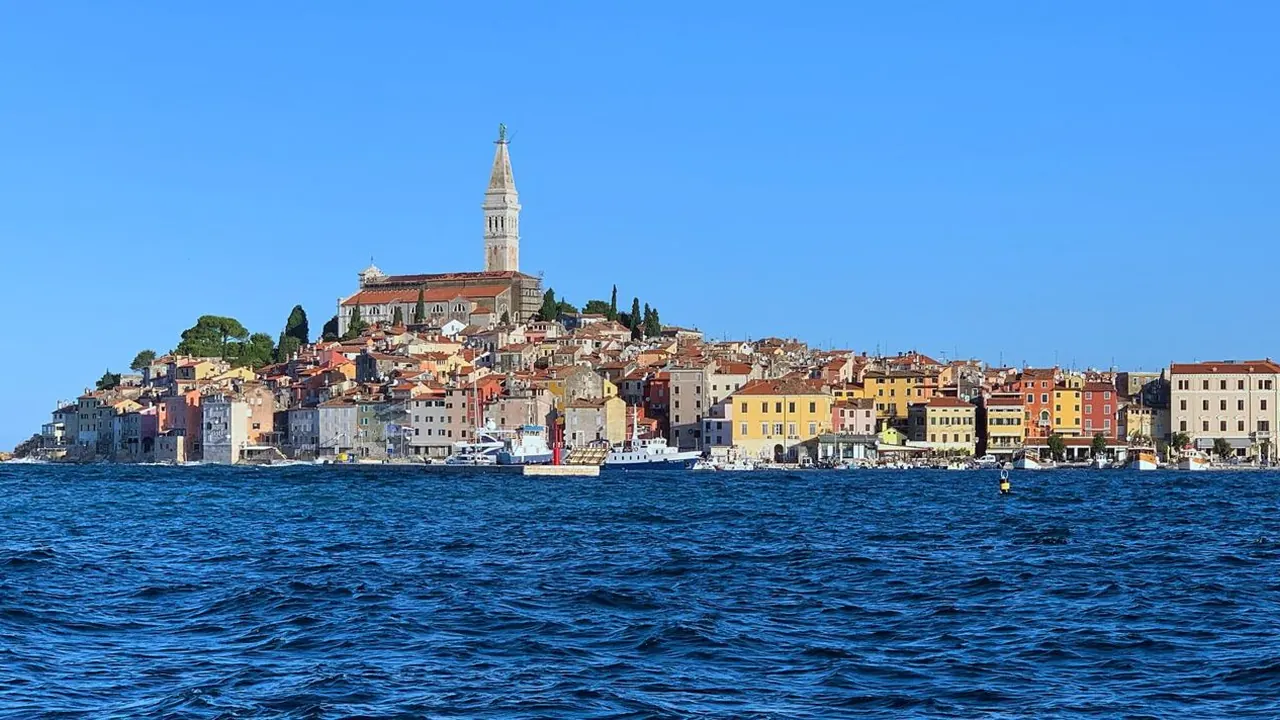
Photos: Lugano by Thomas Woodtli from Zürich, Switzerland, CC BY-SA 2.0, cropped; Rovinj by Vyacheslav Bukharov, CC BY-SA 4.0, cropped.
Lugano or Rovinj?
Our verdict in twelve categories, each scored against the same fixed benchmark cities, and the climate month by month, so you can choose for your trip.
Choose Lugano for
- live music and the arts
- getting around
- nature and the outdoors
Lugano suits travellers who want mountains above the water and a lot to do from a single base. Funiculars and a rack railway climb straight from town to proper summits, and the trains reach Milan, Como and the castles of Bellinzona without a car. It also has a real concert hall. You pay Swiss prices for all of it, and the swimming is from lake lidos, not the sea.
Choose Rovinj for
- prices
- beaches
- food and drink
Rovinj is for people who want the sea to be the centre of the day. You can swim off clear Adriatic rocks below a Venetian old town, walk through pine woods on the Golden Cape and eat fish and truffle pasta in the evening. It is cheaper than Lugano and gets more summer sun, but the mountains are missing, evenings are quiet and you will want a car to see Istria.
Scoreboard
Twelve categories on one fixed scale from 0 to 100. The shaded stretch is the gap between the two.
Your match
Pick a travel style or drag the sliders, and both match scores follow your weighting.
Wins on live music and the arts and getting around with your weighting.
Wins on prices and beaches with your weighting.
What matters to you?
Category by category
What the scores mean for a trip.
Beaches & swimming
Neither town has sand, but Rovinj has the sea and Lugano does not. In Lugano you swim from lidos with lawns, decks and ladders into a lake that warms to the low twenties in high summer. It is pleasant on a hot day, but it is not a beach vacation.
Rovinj has several kilometres of limestone ledges and pebble coves running into the Golden Cape pines. The Adriatic water is very clear, and taxi boats cross to quieter coves on St Catherine and Red Island. You will need water shoes for the sea urchins.
Food & drink
Both are good places to eat well for a week rather than for variety, but the cooking is different. In Lugano the best meals are in grotti: polenta, braised meats and local cheeses at granite tables under chestnut trees, with Ticino Merlot, and all at Swiss prices.
Rovinj eats from the sea and the Istrian hinterland: scampi buzara, fuži with truffle, peppery olive oil and Malvazija. The family konobas inland are worth the drive, but the harbourfront menus are aimed at passing visitors.
Culture & sights
Each town takes a day or less to see, but in different ways. Lugano has separate things to visit: Luini's Passion fresco in Santa Maria degli Angioli, the art collection at LAC and Palazzo Reali, and Hesse's house up in Montagnola.
In Rovinj the old town itself is the sight. Pastel Venetian houses climb to St Euphemia's bell tower, and the Batana House tells the story of the local fishing boats. It is more photogenic as a whole, but there are fewer places to go inside.
Nightlife
Both are quiet by midnight. In Lugano the evening is an aperitivo under the arcades or on the lakefront among a well-dressed local crowd, and anyone young who wants a real night out takes the train to Milan. In Rovinj it is a drink on the rocks at sunset and a few harbour bars in summer, and outside the season the town goes almost silent.
Nature & outdoors
Lugano has the more dramatic landscape by a clear margin. Steep wooded mountains drop into the lake, and funiculars and a rack railway take you to Monte Brè, San Salvatore and Monte Generoso, with views towards the Alps. The Lema to Tamaro ridge and the Verzasca and Maggia valleys make serious day hikes.
Rovinj's outdoors is gentler and is mostly on the water. You can walk or cycle the flat paths of the Golden Cape, kayak and dive around the low islands, and take a boat up the Lim Fjord. There are no mountains.
Day trips
From Lugano you can visit two countries by train. The Last Supper in Milan is a little over an hour away, Lake Como about half an hour, and the castles of Bellinzona closer still, with Lake Maggiore and the Borromean Islands beyond.
Rovinj also has strong trips, including Pula's Roman amphitheatre, the mosaics of Poreč and the hill towns of Motovun and Grožnjan. But there is no railway, so most of these need a car, and Trieste is the furthest you can reasonably go.
Good for families
Lugano is the slightly easier choice with children, mainly because the attractions are rides. There are boats to the villages, funiculars and a rack railway, slides at the lidos and the miniature Swiss landmarks at Melide. It suits younger children better than teenagers.
Rovinj has big campsites and resorts with pools and playgrounds, and shady flat paths in the Golden Cape park. On the other hand, the rocky shore needs water shoes and close watching, and the waterparks are a drive away. Both towns are steep work with a pushchair.
Getting around
Lugano is much easier to manage without a car. A funicular links the station to the old town, buses climb the hillsides, and boats, mountain railways and Swiss trains take you almost everywhere a visitor wants to go.
Rovinj is simple on foot, with a car-free old town and a promenade into the Golden Cape. Outside the town there is no railway, and the buses only link the larger towns, so the hill towns and wineries realistically need a hire car.
Shopping & style
Lugano has more to buy. Via Nassa's arcades are lined with Swiss watchmakers, jewellers and Italian fashion houses, there is a large designer outlet near Mendrisio, and Milan is close for anything else. Rovinj's shopping is regional and small: truffle products, olive oil, Teran wine and lavender, plus the galleries and artists' studios along Grisia.
Affordability
Neither is a bargain, but Rovinj leaves much more room to save. You can rent a private apartment or stay at a campsite, buy lunch from a bakery or the market, and go in late spring or September, when it is noticeably cheaper.
Lugano charges Swiss prices for everything from lakeside rooms to boat trips and funiculars. A grotto lunch and the regional transport pass that comes with most hotel stays help a little, but there is no cheap way to stay in the town.
Live music & performing arts
Lugano has a proper year-round season. The Orchestra della Svizzera italiana plays in LAC's concert hall, the theatre puts on drama and dance, and Estival Jazz fills Piazza della Riforma with free concerts in summer.
Rovinj offers summer music only: occasional concerts in St Euphemia, open-air sets on the harbour and, if you are lucky, a performance of bitinada, the local unaccompanied singing. For anything larger you go to Pula's arena.
Wellness & relaxation
Lugano is a place to slow down by a lake and Rovinj by the sea, and each manages it about equally well. In Lugano the unhurried day is a coffee under the arcades, an afternoon on a lido or a bench in Parco Ciani, and a lunch in the hills that runs into the evening. For a wet day there is a large indoor complex of pools and saunas near Rivera, north of town.
In Rovinj you unwind with a late swim off the rocks and an evening walk under the Golden Cape pines. Several resort hotels along the shore open their pools, saunas and treatments to outside guests. Go in May, June or September, because in high summer the old town lanes fill up and you have to look for quiet further from the centre.
When should you go?
Pick your month. The climate figures are measured averages, not a forecast.
Lugano in July
Rovinj in July
Daytime high, °C
Rainfall in the month, mm
Where the figures come from
Rovinj's temperatures are measured 64 km from the centre, at Trieste.
Rovinj has no rain gauge within 25 km of the centre, so its rainfall comes from a gridded climate dataset read at the city rather than from a gauge further away.
Temperature and rainfall are climate normals, averaged over the years shown. Lugano: 1991-2020 normals, Lugano (1.2 km from centre). Rovinj: 1991-2020 normals, Trieste (63.7 km from centre).
Lugano is wetter than its palms suggest. From April to November most months bring heavy rain, around 170mm in May, usually as showers and storms rather than steady drizzle. July and August reach about 27°C, which is warm enough for the lake lidos and humid for climbing the old town's slopes. Spring and early autumn are the best times to walk and hike, and the winter months are drier but cool and grey.
Rovinj is drier and sunnier through the summer, and its rain arrives in autumn, peaking in November. The sea is pleasant from June and reaches about 26°C in August. It stays warm enough to swim well into September, when the air cools enough for comfortable walking. May and late September are the best months for exploring Istria on foot or by bike, and winters are mild but quiet.
Which traveller are you?
On a beach and sun trip, choose Rovinj. You swim in the clear, warm Adriatic from rock ledges and pebble coves, taxi boats run out to island coves, and the summers are sunnier. Lugano offers only lake lidos for a hot afternoon.
For an outdoors trip, Lugano is the stronger choice. Funiculars run up Monte Brè and San Salvatore, and you can walk the Monte Lema ridge or the green Verzasca valley. Rovinj offers gentler sea kayaking, island diving and flat forest paths.
On a trip with a tight budget, Rovinj makes your money go further. It has private apartments, large campsites and cheaper shoulder months, and lunch can come from a bakery. Lugano has no cheap way to stay, and its lake boats and mountain railways all add up.
Before you go
| Measure | Lugano | Rovinj |
|---|---|---|
| Official language | French, German, Italian, Romansh | Croatian |
| Currency | Swiss Franc (CHF) | Euro (EUR) |
| Sockets | CJ230 V, 50 Hz | CF230 V, 50 Hz |
| Driving side | Right | Right |
| Time zone | UTC+1, UTC+2 in summer | UTC+1, UTC+2 in summer |
| Emergency number | 112 | 112 |
| Elevation | 283 m | 0 m |
| Main airport | Milan Malpensa International Airport (MXP)46 km from centre208 non-stop destinations | Pula Airport (PUY)31 km from centre34 non-stop destinations |
| Public holidays this year | 15 days | 14 days |
By the numbers
| Measure | Lugano | Rovinj |
|---|---|---|
| City population | 63,495 | 12,968 |
| People per km² | 837 | - |
| Museums within 10 km | 17 | 1 |
| UNESCO World Heritage sites within 50 km | 5 | 1 |
| Swim season, months above 21 °C | - | 4 months |
Where else could you go?
Every comparison below shares a destination with this one, so you can follow Lugano or Rovinj somewhere new.