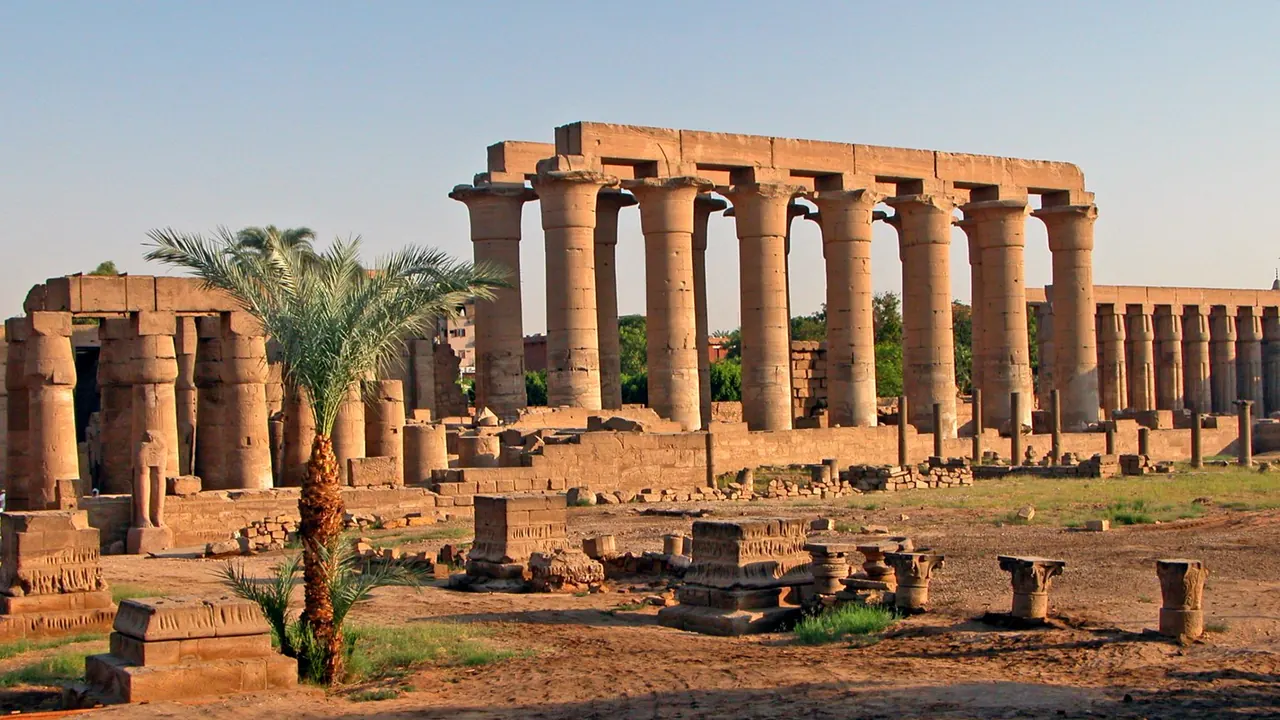
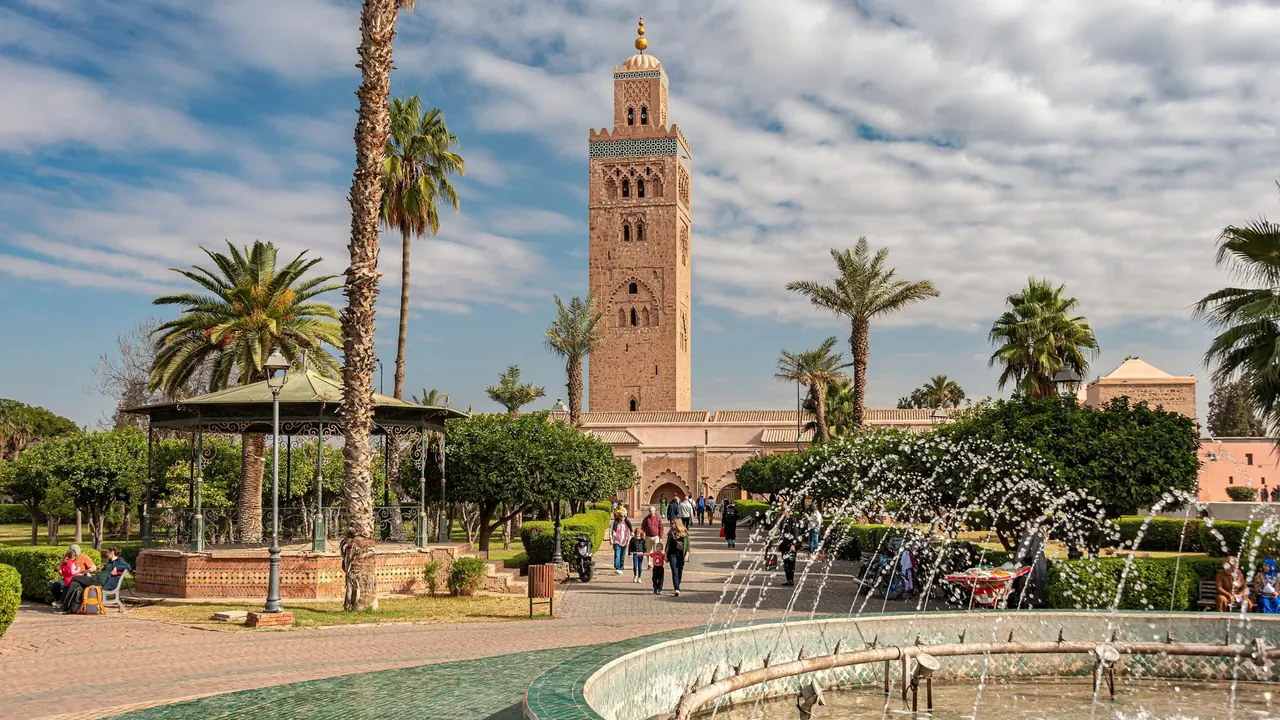
Photos: Luxor by Dennis G. Jarvis, CC BY-SA 2.0, cropped; Marrakech by Jorge Franganillo, CC BY 2.0, cropped.
Luxor or Marrakech?
Our verdict in twelve categories, each scored against the same fixed benchmark cities, and the climate month by month, so you can choose for your trip.
Choose Luxor for
- day trips
- culture and sights
- prices
Choose Luxor if the trip is about ancient Egypt. Karnak, the Valley of the Kings and the temples strung along the Nile within a day's reach make it one of the world's great places for seeing monuments, and day-to-day costs are low. Go knowing that the evenings are quiet, the food is simple and the town itself is plain. The rewards are early starts among the tombs and calm days on the West Bank.
Choose Marrakech for
- shopping
- wellness
- nature and the outdoors
Marrakech suits a traveller who wants the city itself to be the experience: the lanes and souks of the medina, hammams and riad courtyards, and long dinners around Jemaa el-Fna. The High Atlas and the Agafay desert are within easy reach, so a stay can combine shopping, rest and mountain walking. In return, you see fewer great monuments.
Scoreboard
Twelve categories on one fixed scale from 0 to 100. The shaded stretch is the gap between the two.
Your match
Pick a travel style or drag the sliders, and both match scores follow your weighting.
Wins on day trips and culture and sights with your weighting.
Wins on shopping and wellness with your weighting.
What matters to you?
Category by category
What the scores mean for a trip.
Beaches & swimming
Neither city has a beach, and in both the swim that matters on a hot afternoon is in a pool. What differs is the nearest coast. From Luxor it is the warm Red Sea around Hurghada, about four hours away and worth adding as a separate leg, while Marrakech has the cool, windy Atlantic at Essaouira, which is closer but better for a stroll than a swim, and the Lalla Takerkoust reservoir for a lakeside afternoon.
Food & drink
Marrakech gives you more to look forward to at the table. Tagines, pastilla, tanjia slow-cooked in the embers of a hammam furnace and the grill stalls of Jemaa el-Fna at dusk make eating part of the trip, even if riad menus start to repeat after a few days.
Luxor's cooking is plainer Egyptian fare such as ful, taameya, koshari and grilled kofta. The most satisfying meals tend to be home cooking in West Bank guesthouses rather than hotel buffets or temple-view rooftops. In both cities, alcohol is limited to hotels and licensed places.
Culture & sights
Both cities are rewarding for sightseeing, but Luxor works on a different scale. Karnak, Luxor Temple, the Valley of the Kings, Hatshepsut's terraced temple and the painted Tombs of the Nobles fill several full days among the monuments of ancient Thebes, although the modern town has little from later periods.
Marrakech offers a living medieval city instead. The walled medina, the Koutoubia, the Ben Youssef Madrasa, the Bahia and El Badi palaces and the Jardin Majorelle can be seen in two or three days, and much of the pleasure lies in the streets themselves rather than in any single sight.
Nightlife
Neither is a destination for a night out, but Marrakech at least gives you an evening. You can have dinner around Jemaa el-Fna and a sunset cocktail on a rooftop terrace, and for those who want more there are lounge bars and a few large clubs in Hivernage and Gueliz. Luxor goes to bed early, and a day that began before dawn at the tombs usually ends in a hotel bar or with tea and shisha in a café on the corniche.
Nature & outdoors
Marrakech has much more to offer outdoors because the High Atlas is within easy reach. From the city you can walk between Berber villages from Imlil, climb Jebel Toubkal, visit the waterfalls of the Ourika valley, ski at Oukaimeden in winter or take a camel ride in the Agafay desert.
Luxor offers a single, striking landscape: the green strip of the Nile set against bare desert cliffs. It is best seen from a felucca at sunset, by bicycle through the West Bank fields or from the path over the Theban hills to Deir el-Bahari. Both cities offer hot-air balloon flights at dawn.
Day trips
Luxor is the better base for day trips, as long as you want more temples. Dendera's painted ceilings, the vivid reliefs at Esna and the near-complete temple at Edfu are all within two hours, and Abydos makes a long but rewarding day.
From Marrakech, the excursions worth taking go into the mountains and the desert, and the towns people most want to see lie further away. Essaouira is a long day at best and better with a night there, and Ait Benhaddou needs an overnight stay over the Tizi n'Tichka pass. That leaves the foothill souks and the mosque at Tinmel as the nearer choices.
Good for families
Both cities are hard going with young children and work best for older ones with a particular interest. Luxor suits a child fascinated by mummies and pharaohs, with tombs to crawl into and the Mummification Museum, though the sites mean long walks over hot, shadeless ground. Marrakech suits a child who enjoys markets and the street performers of Jemaa el-Fna, but its crowded lanes, shared with motorbikes and carts, need close watching.
In either city a pool, shade and a calm place to stay matter more than any attraction, and the cooler months make everything easier.
Getting around
Getting about is much the same in both: a mix of walking and taxis, with fares agreed before you set off and no metro or tram. What differs is the layout. In Luxor the East Bank sights are walkable and a ferry crosses the Nile, but the West Bank sites are spread over several kilometres and most visitors hire a driver for the day. The Marrakech medina is compact but a maze of unnamed alleys that you can only explore on foot, and petit taxis link it to Gueliz and the Majorelle garden.
Shopping & style
Marrakech is a shopping destination, and Luxor is not. The souks north of Jemaa el-Fna are laid out by trade and full of carpets, lanterns, leather, babouches and argan oil, and the boutiques of Gueliz and the Sidi Ghanem showrooms sell design pieces for anyone who tires of bargaining.
In Luxor, shopping mostly means souvenir stock in the tourist souk and at stalls outside the sites. The alabaster workshops on the West Bank are the one place worth a special visit.
Affordability
Both are cheap once you are there, but your money goes further in Luxor. Guesthouses, local food and river crossings cost very little, and even the grand riverside hotels are good value. The catch is the entry fees at every temple and tomb, which become the largest expense over several days.
Marrakech is still inexpensive for food, taxis and entry to the palaces, but its boutique riads, palace hotels and smart restaurants charge international prices, and alcohol is expensive. In both cities the first price quoted to visitors is set high, so agree every price before you pay.
Live music & performing arts
Marrakech has more to watch, because its performances happen outdoors every evening: gnawa musicians, drummers and storytellers in Jemaa el-Fna keep alive a tradition listed by UNESCO. Luxor's one regular show is the sound-and-light walk through floodlit Karnak, besides the belly dance and tanoura whirling staged in hotels and on cruise boats. Neither city has a theatre or a concert season.
Wellness & relaxation
Marrakech is the clear choice for rest. Every quarter of the medina has a public hammam, spa hammams add argan oil massages and rhassoul clay wraps, and the courtyards and roof terraces of the riads shut out the noise of the lanes.
Luxor has no bathing tradition, and spa treatments are found only in the larger riverside hotels. Its calm comes instead from the rhythm of the day, with a long afternoon by the pool and sunset on the river, and from staying among the fields of the West Bank rather than on the traffic-filled East Bank.
When should you go?
Pick your month. The climate figures are measured averages, not a forecast.
Luxor in July
Marrakech in July
Daytime high, °C
Rainfall in the month, mm
Where the figures come from
Luxor has no rain gauge within 25 km of the centre, so its rainfall comes from a gridded climate dataset read at the city rather than from a gauge further away.
Temperature and rainfall are climate normals, averaged over the years shown. Luxor: 1998-2020 (rainfall 1991-2020) normals, Luxor (6.5 km from centre). Marrakech: 1991-2020 normals, Marrakech (5.1 km from centre).
Luxor is completely dry all year, so the only question is heat. It is at its best from November to February, when January days of around 22°C are ideal for long hours at the tombs. The heat builds through spring, and from May to September highs reach 41°C, which leaves only early mornings for sightseeing.
Marrakech is milder and changes more through the year. Winter days of around 19°C are pleasant for walking, though this is when the light rain falls, peaking at about 36mm in March. Spring and autumn are the best seasons, and July brings 38°C with the most sunshine of the year. Neither city suits a beach trip in any month, so the choice is between Luxor's dry winter warmth and Marrakech's spring and autumn.
Which traveller are you?
For a culture and arts trip, Luxor is the stronger choice. Ancient Thebes fills several days with temples and painted tombs, and Dendera, Esna and Edfu add more. Marrakech wins only if evening music, such as the gnawa circles of Jemaa el-Fna, matters more than monuments.
On a relaxing and wellness trip, Marrakech suits far better. A scrub in a neighbourhood hammam or an argan oil massage in a spa, followed by quiet hours in a riad courtyard, beats Luxor, where rest mostly means a hotel pool through the afternoon heat.
For an outdoors trip, pick Marrakech. The High Atlas is within about an hour and a half, with village trails from Imlil, the climb of Toubkal, the Ourika waterfalls and winter skiing. Outdoors in Luxor mostly means a felucca sail and cycling on the West Bank.
Before you go
| Measure | Luxor | Marrakech |
|---|---|---|
| Official language | Arabic | Arabic, Standard Moroccan Tamazight |
| Currency | Egyptian Pound (EGP) | Moroccan Dirham (MAD) |
| Sockets | CF220 V, 50 Hz | CE50 Hz |
| Driving side | Right | Right |
| Time zone | UTC+2, UTC+3 in summer | UTC+1 |
| Emergency number | Police 122, ambulance 123, fire 180 | Police 19/112, ambulance 15, fire 15 |
| Elevation | 89 m | 465 m |
| Main airport | Luxor International Airport (LXR)7 km from centre29 non-stop destinations | Marrakesh Menara Airport (RAK)6 km from centre113 non-stop destinations |
| Public holidays this year | 15 days | 11 days |
By the numbers
| Measure | Luxor | Marrakech |
|---|---|---|
| City population | 202,232 | 1,002,697 |
| People per km² | 486 | 4,360 |
| Museums within 10 km | 4 | 14 |
| UNESCO World Heritage sites within 50 km | 1 | 1 |
Where else could you go?
Every comparison below shares a destination with this one, so you can follow Luxor or Marrakech somewhere new.