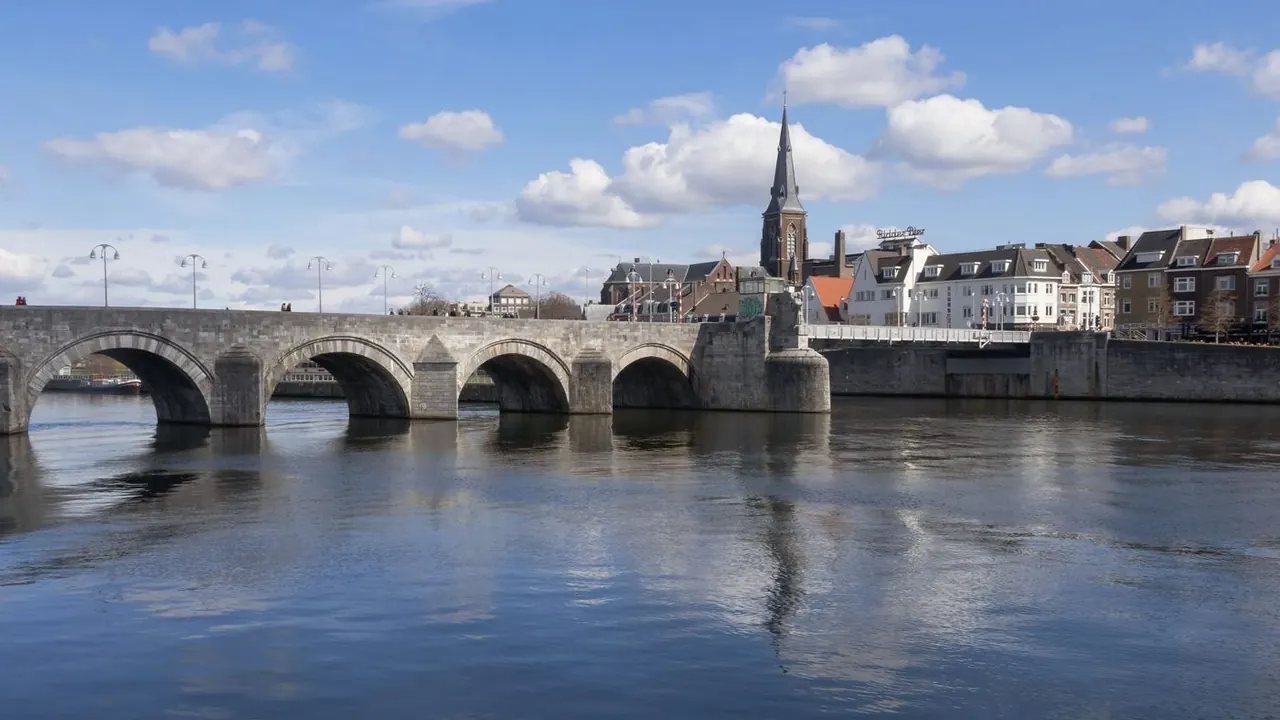
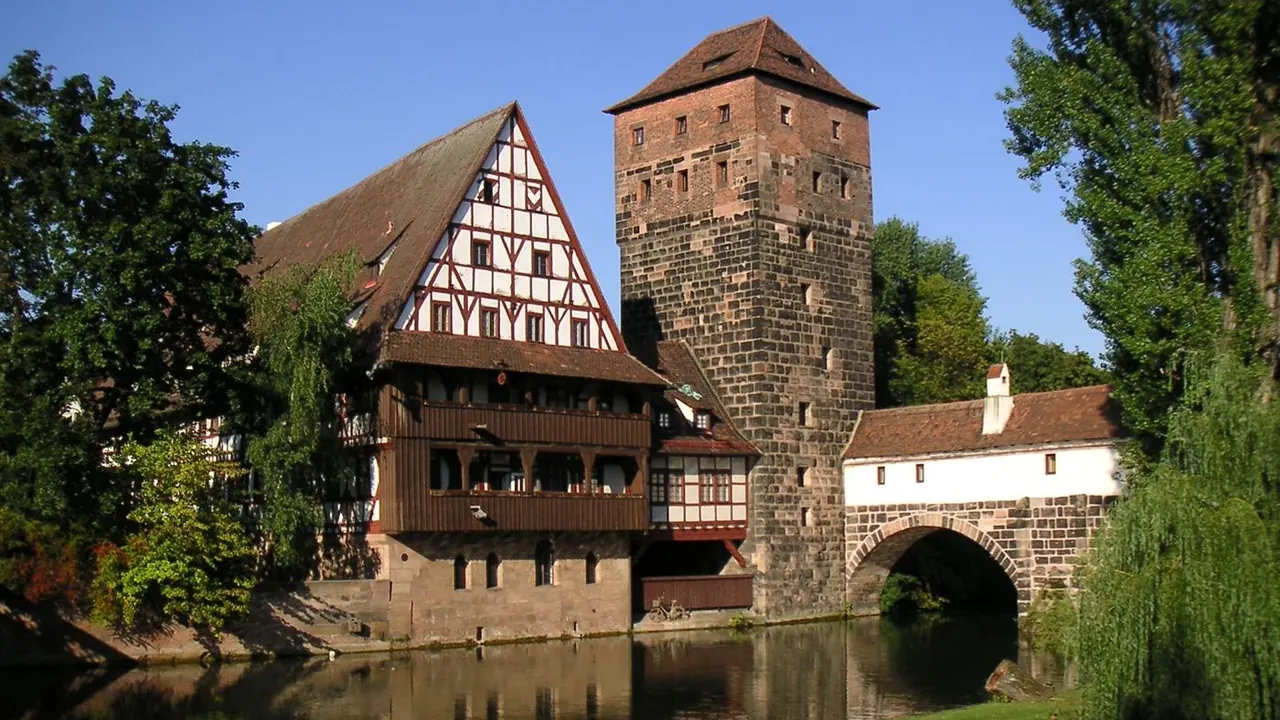
Photos: Maastricht by Michielverbeek, CC BY-SA 4.0, cropped; Nuremberg by Horst Gutmann, CC BY 2.0, cropped.
Maastricht or Nuremberg?
Our verdict in twelve categories, each scored against the same fixed benchmark cities, and the climate month by month, so you can choose for your trip.
Choose Maastricht for
- shopping
- food and drink
- wellness
Maastricht suits a slow weekend of terraces, boutiques and border-hopping. Its Stokstraat quarter and Grote Staat give it the better shopping of the two, and with Aachen, Liège and Tongeren each a short ride away you can take in three countries without changing hotel. Choose it if you care more about long lunches, browsing and gentle walks on the Sint-Pietersberg than about famous monuments.
Choose Nuremberg for
- prices
- live music and the arts
- culture and sights
Nuremberg is the stronger pick for history and for families. The imperial castle, the walled old town, the Germanisches Nationalmuseum and the sombre twentieth-century sites give it far more weight as a place to learn, and the toy and railway museums and the zoo keep children busy. It also stretches a budget further, has the fuller theatre and concert calendar, and puts Bamberg, Regensburg and Würzburg within easy reach by train.
Scoreboard
Twelve categories on one fixed scale from 0 to 100. The shaded stretch is the gap between the two.
Your match
Pick a travel style or drag the sliders, and both match scores follow your weighting.
Too close to call, 2 points apart
Wins on shopping and food and drink with your weighting.
Wins on prices and live music and the arts with your weighting.
What matters to you?
Category by category
What the scores mean for a trip.
Beaches & swimming
Neither city is a place to swim, but Nuremberg has slightly more to offer. The Franconian Lake District, about an hour south, is a chain of reservoirs such as the Brombachsee with grassy shores and water near 23°C in a warm summer, good for a full day out with sailing or paddling.
Maastricht's equivalent is the old gravel-pit lakes along the Maas, closer but smaller, with little sandy shores that suit only a hot afternoon.
Food & drink
Both eat well in a hearty, regional way, but the flavours differ. Maastricht leans towards Limburg and Belgium: sweet-sour zuurvlees with fries, vlaai in every bakery, Belgian beer and local white wine, with a fine-dining tier unusually good for its size and terraces on the Vrijthof and the Markt.
Nuremberg is pork and beer country. You come for the small grilled bratwurst, Sunday Schäufele, Lebkuchen and above all the Franconian small breweries and beer gardens on the Pegnitz. Go to Maastricht for a long, refined lunch and to Nuremberg for a tavern supper with Kellerbier.
Culture & sights
Nuremberg carries more historical weight. Its almost complete city walls, the Kaiserburg, St Sebaldus and St Lorenz and the Germanisches Nationalmuseum could fill several days, and the Nazi Rally Grounds and Courtroom 600 add a sobering chapter you will not find elsewhere.
Maastricht is older but quieter about it. The two Romanesque basilicas, the Helpoort and the medieval Sint Servaasbrug, the tunnels of the Sint-Pietersberg and the Bonnefanten make a satisfying two days, without a single landmark of the castle's stature.
Nightlife
Evenings are much alike, built around drinking rather than dancing, with a large student crowd in both. Maastricht's brown cafés around the Markt and Platielstraat pour Belgian beer, while Nuremberg's livelier corner is Gostenhof, with alternative bars in the old working-class streets outside the walls.
What sets Maastricht apart is carnival, when the whole city parties in costume in the streets for days before Lent.
Nature & outdoors
Both offer pastoral rather than dramatic countryside, close to town. Maastricht has the marl cliffs of the Sint-Pietersberg at its edge and the orchards and steep lanes of the Heuvelland, loved by road cyclists, with Belgium's Hoge Kempen and the Ardennes further out.
Nuremberg's Reichswald forest begins at the city limits, and Franconian Switzerland, about an hour away, adds limestone towers, caves and serious rock climbing that Maastricht's hills lack.
Day trips
Both are excellent bases, and the difference lies in variety. From Maastricht you cross borders: Aachen's cathedral and Liège are each about half an hour away, Tongeren and Valkenburg closer still, and Cologne, Brussels and Leuven within a long day.
Nuremberg keeps you in Germany but offers a richer string of historic towns: Bamberg, Regensburg and Würzburg by train in about an hour, the walled Romantic Road towns of Rothenburg and Dinkelsbühl, Wagner's Bayreuth and Munich by fast train.
Good for families
Nuremberg is the easier city with children. Its long toy-making history shows in the Toy Museum, the railway museum has full-size locomotives, and the zoo, in wooded old quarries, has dolphins and manatees, with a toy-brand play park in nearby Zirndorf.
Maastricht is calm and flat for buggies, but beyond the tunnel tour most of the fun means a trip to Valkenburg's caves and fairy-tale park or the zoo in Kerkrade.
Getting around
Maastricht is a city for bikes and Nuremberg one for trains, though in both the historic core is best seen on foot. Maastricht's centre reaches across both banks of the Maas, with the station in Wyck just over the bridge, and its flat streets, many of them pedestrianised, are easy for anyone. Leaving town is where the bike comes into its own: buses do reach Valkenburg, but you see the Heuvelland villages far better by pedalling out along the river, or with a car.
Nuremberg works the other way round. Its walled old town is just as walkable, and only the steep cobbles below the castle slow you down. Its real advantage lies beyond the walls, where U-Bahn, trams, buses and S-Bahn share one ticket to the zoo, the Rally Grounds and Fürth, and regional trains carry on into Franconia. In Maastricht's hill country you would miss a car, but around Nuremberg you have no need of one.
Shopping & style
Maastricht is the better place to shop, and people cross borders to do so. The Stokstraat quarter's designer boutiques in 17th- and 18th-century houses, the brands of the Grote Staat and Wyck's independents make for a pleasant afternoon of browsing.
Nuremberg's Königstraße is mostly chain stores. Its appeal is souvenirs, from Lebkuchen tins to wooden toys and Handwerkerhof crafts, and in Advent the famous Christkindlesmarkt.
Affordability
Nuremberg is the easier city on the wallet. Filling tavern food, cheap local beer and inexpensive transport keep daily costs down, provided you avoid the trade-fair weeks and the Advent season, when hotels fill up.
Maastricht keeps to Dutch prices for meals and rooms, and weekend demand pushes hotels up. Bakery lunches and a walkable centre help, and a midweek stay saves the most.
Live music & performing arts
Nuremberg has the deeper programme. The Staatstheater stages opera, ballet and drama in its Art Nouveau house, two orchestras play through the season, and summer brings the free Bardentreffen folk weekend and a big rock festival by the Zeppelinfeld.
Maastricht relies largely on the theatre on the Vrijthof, conservatory recitals and church organ concerts, with the summer open-air concerts on the square and carnival brass bands as its big moments.
Wellness & relaxation
Both rely on spas just outside town rather than baths of their own. Maastricht has more choice nearby: the thermal pools above Valkenburg, Aachen's Roman-era baths and the Belgian town of Spa within an hour.
Nuremberg's main option is the large sauna spa in Fürth, a short U-Bahn ride away, where nude mixed saunas are normal, with Bad Windsheim's saline pools further out. Each city unwinds in its own way, on Maastricht's quiet squares or in Nuremberg's beer gardens.
When should you go?
Pick your month. The climate figures are measured averages, not a forecast.
Maastricht in July
Nuremberg in July
Daytime high, °C
Rainfall in the month, mm
Temperature and rainfall are climate normals, averaged over the years shown. Maastricht: 1991-2020 normals, Maastricht Airport Zuid Limburg (10 km from centre). Nuremberg: 1991-2020 normals, Nuernberg (5.5 km from centre).
The two share a central European climate, and both are at their best from May to September, when afternoons are warm enough to sit outside and the lakes near each city are good for a swim in July and August. Nuremberg runs a little hotter in high summer, around 25°C, and gets noticeably more sunshine through June, July and August. Maastricht stays milder and greyer, and its wettest month is August at around 84mm, so expect some showers during a summer stay.
The real gap is in winter. Nuremberg is colder, with highs near 4°C from December to January, but drier. Maastricht stays a couple of degrees warmer and wetter, with rain spread fairly evenly through the dark months. For walking the streets and the countryside, late April to early June and September suit both cities best.
Which traveller are you?
For a shopping trip, Maastricht is the clear choice. The restored houses of the Stokstraat are lined with designer boutiques, Wyck adds independent interiors and vintage shops, and the weekly market fills the Markt. Outside Advent, Nuremberg's chain-store streets offer little to compare.
On a culture and arts trip, Nuremberg wins. Its imperial castle, Gothic churches, Dürer's house and the vast Germanisches Nationalmuseum sit alongside the Rally Grounds and Courtroom 600, and the Staatstheater adds opera and ballet that Maastricht's provincial stage cannot match.
On a tight budget, Nuremberg makes the money go further. Tavern meals are filling, local beer is cheap and transport costs little, as long as you avoid trade-fair weeks. Maastricht keeps to Dutch prices, and its weekend rooms are in high demand.
Before you go
| Measure | Maastricht | Nuremberg |
|---|---|---|
| Official language | Dutch | German |
| Currency | Euro (EUR) | Euro (EUR) |
| Sockets | CF230 V, 50 Hz | CF230 V, 50 Hz |
| Driving side | Right | Right |
| Time zone | UTC+1, UTC+2 in summer | UTC+1, UTC+2 in summer |
| Emergency number | 112 | 112 |
| Elevation | 49 m | 209 m |
| Main airport | Maastricht Aachen Airport (MST)9 km from centre5 non-stop destinations | Nuremberg Airport (NUE)5 km from centre56 non-stop destinations |
| Public holidays this year | 11 days | 12 days |
By the numbers
| Measure | Maastricht | Nuremberg |
|---|---|---|
| City population | 120,227 | 531,159 |
| People per km² | 2,000 | 2,848 |
| Museums within 10 km | 21 | 50 |
| UNESCO World Heritage sites within 50 km | 5 | 1 |
Where else could you go?
Every comparison below shares a destination with this one, so you can follow Maastricht or Nuremberg somewhere new.