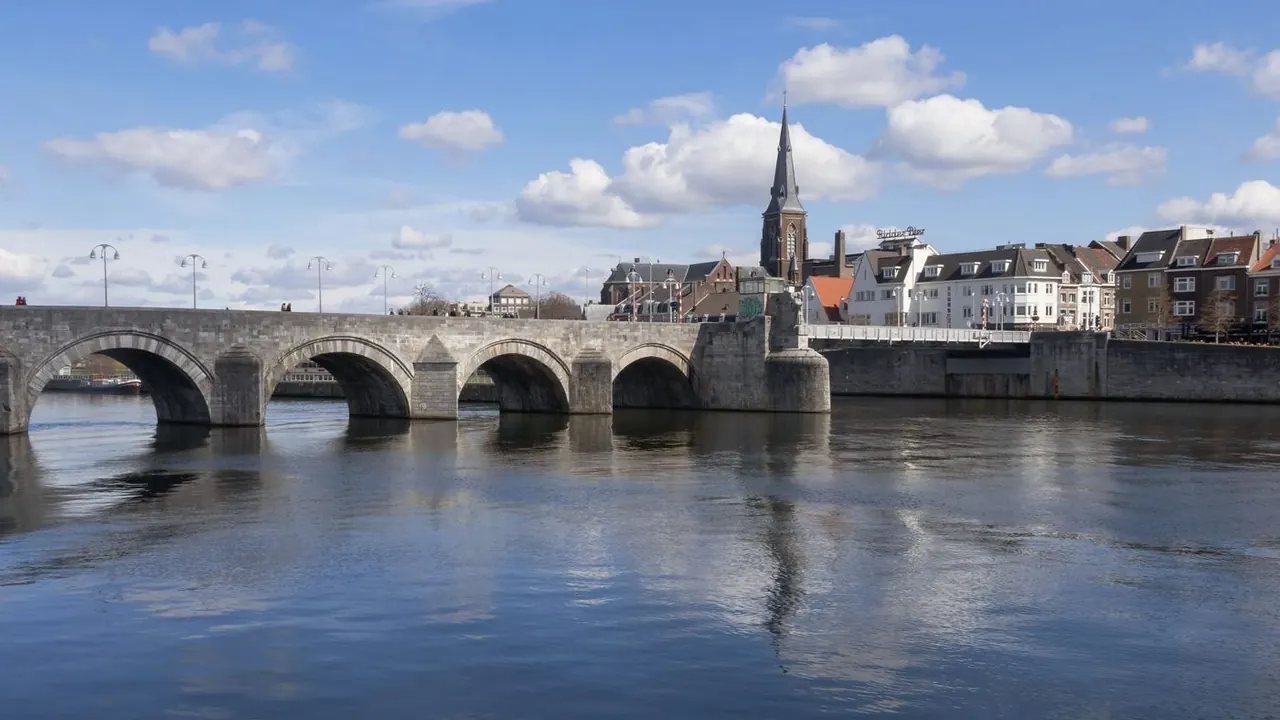
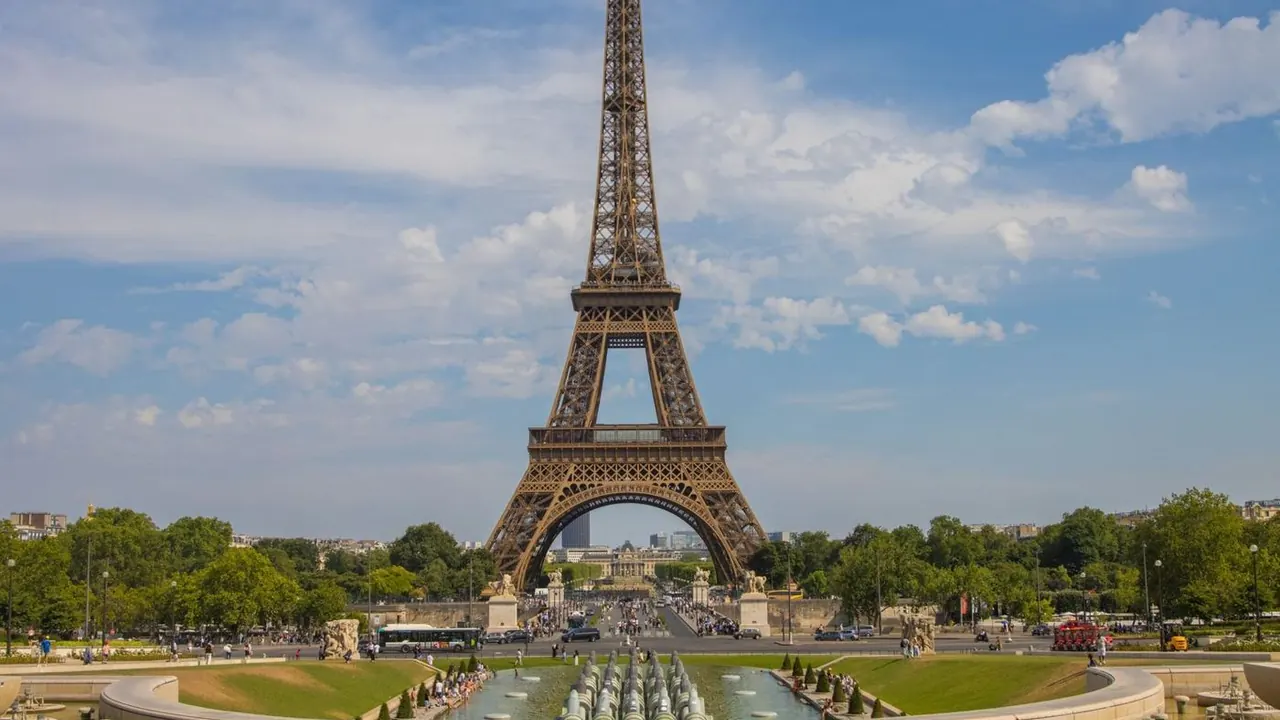
Photos: Maastricht by Michielverbeek, CC BY-SA 4.0, cropped; Paris by Efrem Efre, Pexels License.
Maastricht or Paris?
Our verdict in twelve categories, each scored against the same fixed benchmark cities, and the climate month by month, so you can choose for your trip.
Choose Maastricht for
- prices
- wellness
- nature and the outdoors
Maastricht suits a slower, smaller trip. It is a walkable old town of Romanesque churches and terraced squares, set where the Netherlands meets Belgium and Germany, with hill country, thermal baths and three countries' worth of towns within easy reach. It costs less than Paris and asks little of you. Choose it for a long weekend of good lunches, gentle walks and border-hopping, not for big sights.
Choose Paris for
- live music and the arts
- food and drink
- nightlife
Paris is the choice when you want more of everything that a great capital does well. The museums, the food from market stall to haute cuisine, the fashion houses and department stores, the opera, the jazz cellars and the late bars are all on a scale Maastricht cannot approach. You pay more for it, and the pace is faster and more crowded, but a week here barely scratches the surface.
Scoreboard
Twelve categories on one fixed scale from 0 to 100. The shaded stretch is the gap between the two.
Your match
Pick a travel style or drag the sliders, and both match scores follow your weighting.
Wins on prices and wellness with your weighting.
Wins on live music and the arts and food and drink with your weighting.
What matters to you?
Category by category
What the scores mean for a trip.
Beaches & swimming
Both are inland, and neither offers sea swimming. What differs is the kind of water. Maastricht's summer swims are in old gravel-pit lakes along the Maas, with small sandy shores and lifeguards, while Paris offers urban versions: sand laid along the riverbanks, open-air swimming at the Bassin de la Villette and handsome Art Deco public pools, with the cool Channel coast at Deauville about two hours away by train.
Food & drink
Maastricht eats well for its size, but on regional lines: zuurvlees with fries, slices of vlaai, seasonal asparagus and game, Belgian beer and local white wine, taken in brown cafés or on terraces on the Vrijthof. The range is narrow once you have tried the Limburg dishes.
Paris is one of the great food cities of the world, and the gap is wide. Daily life revolves around neighbourhood bakeries, cheese shops and street markets such as the Marché d'Aligre, and the choice runs from zinc-counter bistros and natural wine bars to haute cuisine. Add the North African, Vietnamese and West African kitchens of Belleville and the 13th, plus pastry as an art, and you could eat differently every day for weeks.
Culture & sights
Maastricht's history is real and well kept: two Romanesque basilicas, the Helpoort and medieval walls along the Jeker, the tunnels of the Sint-Pietersberg and the Bonnefanten museum by the river. It makes a satisfying two days, but nothing here would bring you on its own.
Paris works on another scale entirely. The Louvre alone outweighs everything in Maastricht, and the Orsay, Orangerie, Rodin and Cluny museums would each headline a smaller city. Notre-Dame, the Sainte-Chapelle and the unified Haussmann boulevards mean the streets themselves are a sight, though the queues at the big names demand booking ahead.
Nightlife
An evening in Maastricht means Belgian beer in a brown café around the Markt or the Platielstraat, kept busy at weekends by students, with little in the way of clubs. Carnival is the one time the whole town parties round the clock.
Paris has far more going on every night of the year. Bars spill into the streets of Oberkampf, Belleville and the Canal Saint-Martin, South Pigalle has its cocktail bars and the Marais its gay scene, and after the bars close the clubs and summer barges carry on with house and techno until dawn. It is chic rather than wild, and doors can be selective.
Nature & outdoors
Maastricht has the edge for anyone who wants real countryside on the doorstep. Paths up the Sint-Pietersberg start at the edge of town, the Jeker valley runs into Belgium, and the Heuvelland's orchards, sunken lanes and short climbs are famous with road cyclists. Hoge Kempen and the Ardennes add heath and forest further out.
Paris offers greenery of a more managed kind: formal gardens, the cliffs of the Buttes-Chaumont and the big woods of Boulogne and Vincennes. Fontainebleau, about forty minutes by train, is the standout, with sandstone boulders that draw climbers.
Day trips
Maastricht's strength is variety in a small radius: Aachen, Liège, Tongeren and Valkenburg are all close, Cologne and Brussels within an easy day, so you can visit three countries and three languages in one stay.
Paris still comes out ahead because its list is longer and grander. Versailles, Fontainebleau and Chartres are under an hour, Giverny and Auvers-sur-Oise are close by, and fast trains put the Champagne houses of Reims, Rouen's old town and the Loire châteaux within easy range. On a long stay these excursions can fill as many days as the city.
Good for families
Maastricht is calm, flat and easy with a buggy, but most of what children enjoy lies outside it: the caves, cable car and fairy-tale park at Valkenburg, and the zoo at Kerkrade. In town, the guided tunnel walk is the main event.
Paris gives children much more to do, from Disneyland and Parc Astérix to the Cité des Sciences, the menagerie and skeletons of the Jardin des Plantes, and toy sailboats on the Luxembourg pond. The cost is daily friction: stairs in the metro, small hotel rooms and long queues.
Getting around
Maastricht barely needs transport: almost everything is a short walk on either bank of the Maas, bikes are easy on the riverside paths, and the station in Wyck links to Liège and Aachen. Exploring the hill villages, though, works best with a car or bike.
Paris handles a far bigger city with remarkable ease. The centre is a superb walk along the Seine, and the dense metro, RER and bike-share reach almost anywhere, including Versailles and the airports. Expect stairs without lifts, packed rush-hour trains and pickpockets on the tourist lines.
Shopping & style
Maastricht is a pleasant place to browse, with designer boutiques in the restored houses of the Stokstraat quarter, high-street brands on the Grote Staat and small independents in Wyck. It is good for a weekend, without much luxury depth.
Paris is in a different league. The great fashion houses line Avenue Montaigne and the Faubourg Saint-Honoré, Galeries Lafayette and Le Bon Marché are sights in their own right, and the Marais is full of young designers. Beyond fashion come the covered passages, the vast Saint-Ouen flea market, the bouquinistes along the Seine and specialist food shops.
Affordability
Maastricht is the cheaper stay, though still at Northern European levels. Rooms and terrace drinks cost about the Dutch norm, bakery lunches and café beer are modest, and you will spend almost nothing on transport. Weekend rooms are in demand, so midweek stays save the most.
Paris costs noticeably more, with small, pricey hotel rooms and full admission at the major museums. It does offer ways round this, such as free permanent collections at the city's own museums, cheap lunchtime set menus, market picnics by the river and lodging in the outer arrondissements.
Live music & performing arts
Maastricht's stage life centres on the theatre on the Vrijthof, home to the regional orchestra and opera, along with conservatory recitals, organ concerts in the churches and big open-air summer concerts on the square. It is solid but provincial.
Paris is one of the world's great performance capitals. The Paris Opera Ballet dances at the Palais Garnier, opera fills the Bastille, and the Philharmonie and Radio France keep a full classical calendar. Add the Comédie-Française, jazz cellars on the rue des Lombards and cabaret in Pigalle, and you can fill every evening, though much of the theatre is in French.
Wellness & relaxation
Maastricht is the better place to unwind. It has no spa of its own, but the thermal pools above Valkenburg, Aachen's historic baths and the town of Spa are all within an hour, and the city's slow rhythm of long lunches and river walks does the rest.
Paris offers rest in snatches instead: tiled steam rooms and mint tea at the Grande Mosquée hammam, hotel day spas, or a chair in the Luxembourg gardens. Its crowded, noisy streets work against a real wellness break.
When should you go?
Pick your month. The climate figures are measured averages, not a forecast.
Maastricht in July
Paris in July
Daytime high, °C
Rainfall in the month, mm
Temperature and rainfall are climate normals, averaged over the years shown. Maastricht: 1991-2020 normals, Maastricht Airport Zuid Limburg (10 km from centre). Paris: 1991-2020 normals, Paris-Montsouris (4.6 km from centre).
Both cities share a mild northern climate, so neither is a beach destination at any time of year, and both are best from late spring to early autumn. Paris runs about two degrees warmer through every month, peaking at 26°C in July and August against 24°C in Maastricht, which makes summer afternoons pleasant for the river beaches and canal-side terraces of Paris without being too hot for walking. Winters are cold and grey in both, with daytime highs in single figures from December to February.
Rain falls through the whole year in both, but the pattern differs. Maastricht is wetter in high summer, with August its wettest month at 84mm, while Paris gets its heaviest rain in May and has a fairly dry late winter. Maastricht's sunniest stretch runs from April to August, which together with the green hills makes spring and early autumn its best seasons for walking and cycling in the Heuvelland.
Which traveller are you?
On a relaxing and wellness trip, Maastricht is the one to pick. It suits travellers who want a few slow days with a spa visit built in and no pressure to see everything. Paris rewards stamina more than rest.
On a trip on a tight budget, Maastricht is the safer choice, especially for a few nights rather than a week. If you are set on Paris you can still manage, but it takes more planning and a less central base to make the money last.
For a culture and arts trip, Maastricht is pleasant for a weekend, but Paris is the place to go. If you plan your days around great museums and your evenings around opera, ballet or concerts, you will find more there than one visit can hold.
Before you go
| Measure | Maastricht | Paris |
|---|---|---|
| Official language | Dutch | French |
| Currency | Euro (EUR) | Euro (EUR) |
| Sockets | CF230 V, 50 Hz | CE230 V, 50 Hz |
| Driving side | Right | Right |
| Time zone | UTC+1, UTC+2 in summer | UTC+1, UTC+2 in summer |
| Emergency number | 112 | 112 |
| Elevation | 49 m | 27 m |
| Main airport | Maastricht Aachen Airport (MST)9 km from centre5 non-stop destinations | Charles de Gaulle International Airport (CDG)22 km from centre277 non-stop destinations |
| Public holidays this year | 11 days | 11 days |
By the numbers
| Measure | Maastricht | Paris |
|---|---|---|
| City population | 120,227 | 2,103,778 |
| People per km² | 2,000 | 19,960 |
| Museums within 10 km | 21 | 251 |
| UNESCO World Heritage sites within 50 km | 5 | 4 |
Where else could you go?
Every comparison below shares a destination with this one, so you can follow Maastricht or Paris somewhere new.