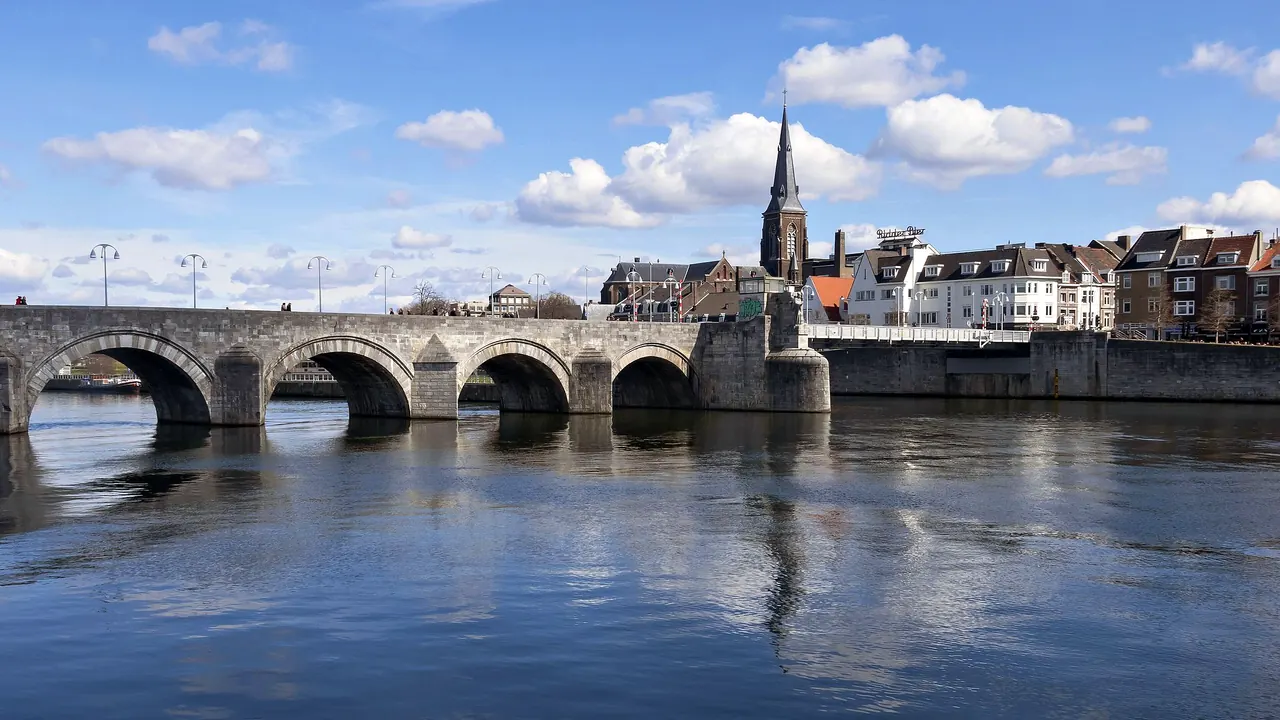
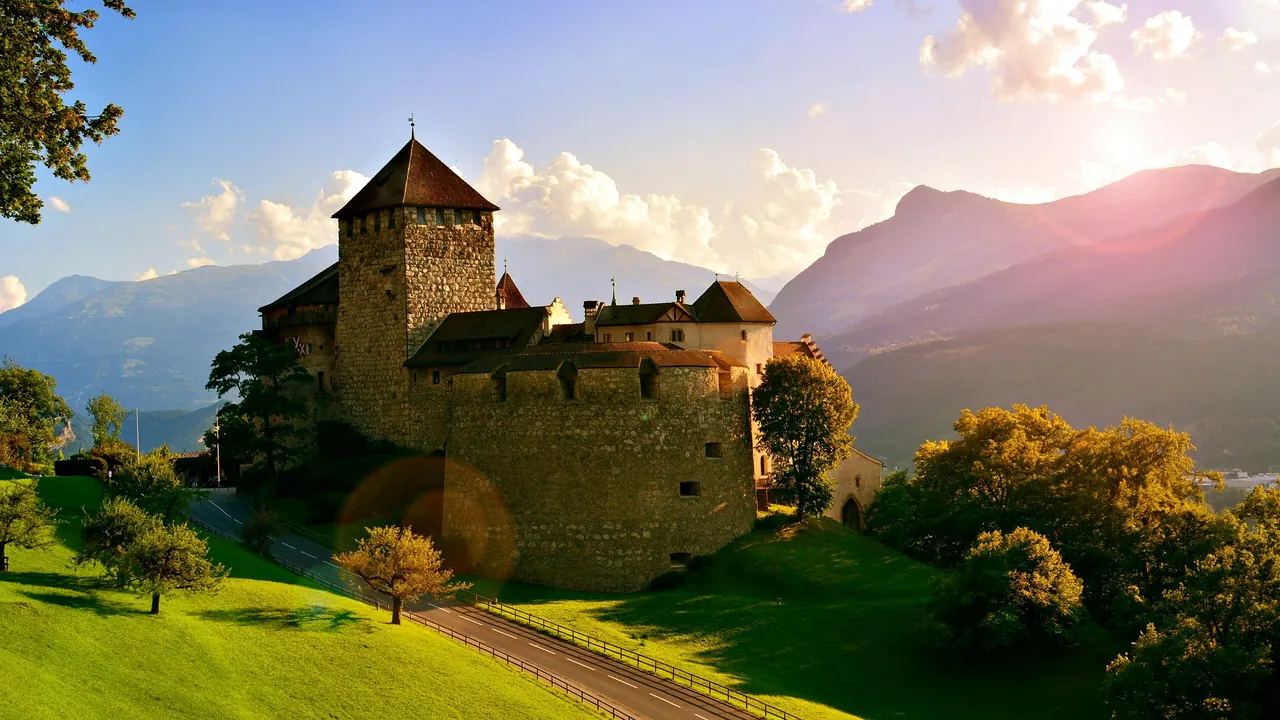
Photos: Maastricht by Michielverbeek, CC BY-SA 4.0, cropped; Vaduz by Justin LaBerge, CC BY 2.0, cropped.
Maastricht or Vaduz?
Our verdict in twelve categories, each scored against the same fixed benchmark cities, and the climate month by month, so you can choose for your trip.
Choose Maastricht for
- shopping
- nightlife
- food and drink
Maastricht suits travellers who want a town to linger in. It has Romanesque basilicas and medieval walls to wander, Limburg cooking and Belgian beer on the terraces of the Vrijthof, brown cafés full of students and boutiques in the Stokstraat quarter. It is also the easier and cheaper base. You can walk it end to end, and trains to Liège and Aachen leave from the station in Wyck.
Choose Vaduz for
- nature and the outdoors
- beaches
Choose Vaduz if the mountains are the point of the trip. Trails climb from the edge of town, Malbun and the Rätikon peaks are a short drive up, and the thermal water at Bad Ragaz is close by for a soak afterwards. As a base it is quiet and expensive, with one day's worth of sights and early nights. It suits walkers and skiers far better than anyone looking for a town to explore.
Scoreboard
Twelve categories on one fixed scale from 0 to 100. The shaded stretch is the gap between the two.
Your match
Pick a travel style or drag the sliders, and both match scores follow your weighting.
Wins on shopping and nightlife with your weighting.
Wins on nature and the outdoors and beaches with your weighting.
What matters to you?
Category by category
What the scores mean for a trip.
Beaches & swimming
Neither is a place to plan a swimming vacation. Maastricht has the old gravel-pit lakes along the Maas, with small sandy shores and lifeguards, which are fine for a hot afternoon.
Vaduz has a slight edge because the setting is more beautiful. The Walensee, under its steep mountain walls, is about half an hour away, Lake Constance is under an hour, and there are open-air pools in town. The lake season is short, though.
Food & drink
Maastricht eats far better. It has Limburg dishes such as zuurvlees with fries, vlaai in every bakery, Belgian beer everywhere, a fine-dining tier that is unusual for its size, and full terraces on the Vrijthof and the Markt. Eating is one of the main reasons to come, even though the international range is thin.
Vaduz serves solid Alpine food such as Käsknöpfle, rösti and autumn game in hotel dining rooms and village inns in the hills. There is little choice and evenings end early. Its one real asset is wine: the prince's estate below the castle sells its Pinot Noir and Chardonnay in town.
Culture & sights
Maastricht has far more history to see. There are two Romanesque basilicas, the Helpoort and the medieval walls along the Jeker, a 13th-century bridge over the Maas, the tunnels of the Sint-Pietersberg and the Bonnefanten. That is enough for two full days.
Vaduz takes one day, but its strength is a different one. Modern art in the black cube of the Kunstmuseum and the Hilti Art Foundation next door is stronger than the town's size suggests, and the National Museum and the stamp museum complete the list. The castle is the prince's home and stays closed, so you see it from outside only.
Nightlife
Maastricht has a real night out, though it centres on cafés. Students and locals fill the brown cafés around the Markt and the Platielstraat late at weekends, and carnival turns the whole city into a round-the-clock street party.
Vaduz has a few wine bars and hotel lounges on the Städtle and little else. Its young people go to Feldkirch or Zurich for a night out, so plan on early nights and early starts.
Nature & outdoors
Here Vaduz is in another league. Mountains rise on both sides of the Rhine valley and trails climb straight from the centre. Above Malbun the Rätikon peaks offer high walks, the exposed Fürstensteig and long ridge routes. Winter brings small-scale skiing, with larger Swiss resorts within an hour.
Maastricht's countryside is gentle and pastoral: the marl cliffs of the Sint-Pietersberg, the green Jeker valley, and the orchards and sunken lanes of the Heuvelland, which road cyclists love. It is fine walking and riding country, but it is not mountain country.
Day trips
Both towns sit near borders and both make good bases, but Maastricht offers more variety. Aachen and Liège are about half an hour away by train, and Tongeren and Valkenburg are closer still. Cologne, Brussels and Leuven are within a long day, across three countries and languages.
From Vaduz, Feldkirch's arcaded lanes are twenty minutes away, and St Gallen's abbey library and Appenzell's painted houses are about an hour away. Chur and the Bündner Herrschaft vineyards lie to the south, and Bregenz and Lindau on Lake Constance are within an hour. Zurich is a good day out too.
Good for families
Maastricht is easier with children, though most of its family outings are just outside the centre. In town there are the guided tunnel tours of the Sint-Pietersberg. Twenty minutes away, Valkenburg has show caves, a cable car and a fairy-tale park, and there is a large zoo at Kerkrade.
Vaduz is just as safe and calm, but nothing there is built for children. Days go to the open-air pools, easy walks above Triesenberg and the beginner slopes at Malbun. It suits older children who like to hike more than young ones who need entertainment laid on.
Getting around
Both centres are flat and easy to walk, but more of Maastricht is within walking distance. The old town and Wyck are within fifteen minutes on foot on either bank, cycling is the local habit, and the station has direct trains to Liège and Aachen.
Vaduz's centre is one short pedestrian street, and its buses reach every village and climb to Malbun. The drawback is that there is no railway station, so every train journey starts with a bus to Buchs, Sargans or Feldkirch.
Shopping & style
Maastricht is a shopping destination in its own right for Dutch, Belgian and German weekend visitors. It has designer boutiques in the old houses of the Stokstraat quarter, high-street brands on the Grote Staat, interiors and vintage shops in Wyck, and a weekly market on the Markt.
Vaduz has a few shops on the Städtle selling watches, jewellery and souvenirs. The best things to take home are Liechtenstein stamps and a bottle of local wine.
Affordability
Neither town is cheap, but Maastricht costs a great deal less. Prices are at the Dutch norm and lower than in the big Dutch cities. Bakery lunches and beer in a brown café are easy on the budget, and rooms are cheaper from Sunday to Thursday.
Vaduz charges Swiss prices for everything and has few hotels, so there is hardly a budget option. Some visitors stay across the border in Austria to cut the cost.
Live music & performing arts
Maastricht's stage life is provincial but steady. The theatre on the Vrijthof hosts the regional orchestra and opera, conservatory students give recitals, and in summer the square becomes an open-air arena for big concerts. At carnival there are brass bands in every street.
Vaduz has less going on. The national stage is next door in Schaan, the symphony orchestra plays a short season and the town holds a classical festival in summer. Over a week you will find something to see, but rarely much of a choice.
Wellness & relaxation
Neither town has baths of its own, and both depend on spa towns nearby. Maastricht has more of them within reach: the thermal spa above Valkenburg, Aachen's baths dating back to Roman times and the town of Spa itself. Long lunches and walks by the river set an easy pace in town.
Vaduz has one excellent option in Bad Ragaz, where water from the Tamina gorge feeds a large public thermal bath. Its quiet suits days spent in the hills, but apart from a few hotel spas there is little else.
When should you go?
Pick your month. The climate figures are measured averages, not a forecast.
Maastricht in July
Vaduz in July
Daytime high, °C
Rainfall in the month, mm
Where the figures come from
Vaduz's temperatures are measured 51 km from the centre, at Sigmarszell-Zeisertsweiler.
Vaduz has no rain gauge within 25 km of the centre, so its rainfall comes from a gridded climate dataset read at the destination rather than from a gauge further away.
Temperature and rainfall are climate normals, averaged over the years shown. Maastricht: 1991-2020 normals, Maastricht Airport Zuid Limburg (10 km from centre). Vaduz: 1991-2020 normals, Sigmarszell-Zeisertsweiler (51.3 km from centre).
Through the year the two follow much the same pattern. Summer highs reach about 24°C in July and August, winters are cold and grey, and the sunniest stretch runs from May to August. Neither town is a beach destination, and the lakes and gravel pits are only worth a swim in high summer. In Maastricht, May, June and September are the most comfortable months for walking the streets, and spring and early autumn are also the best time for the Heuvelland.
The two differ in rain and in cold. Vaduz is much wetter from May to September, and July and August each bring more than 120mm, against 73mm in Maastricht in July. Its winter days are a little colder too, at around 4°C, and that is when Malbun becomes a ski area. In Vaduz the best months for walking are June to September. In late autumn the valley can sit under fog while the heights stay sunny.
Which traveller are you?
For a food and nightlife trip, Maastricht is the clear choice. Zuurvlees, vlaai and Belgian beer fill its terraces, and students keep the brown cafés busy late at weekends. Carnival turns the city into a street party. Vaduz offers good local wine, then goes quiet after dinner.
On a shopping trip, Maastricht wins easily. The Stokstraat quarter has designer boutiques in restored old houses, the Grote Staat has the high-street brands and Wyck has independent shops. Vaduz has only a handful of watch, jewellery and stamp shops along the Städtle.
For an outdoors trip, Vaduz is the stronger base. Trails start in the vineyards above town, the Rätikon peaks and the Fürstensteig are a short drive up, and in winter there is skiing at Malbun. Maastricht's Sint-Pietersberg and Heuvelland are gentle country for walking and road cycling.
Before you go
| Measure | Maastricht | Vaduz |
|---|---|---|
| Official language | Dutch | German |
| Currency | Euro (EUR) | Swiss Franc (CHF) |
| Sockets | CF230 V, 50 Hz | CJ230 V, 50 Hz |
| Driving side | Right | Right |
| Time zone | UTC+1, UTC+2 in summer | UTC+1, UTC+2 in summer |
| Emergency number | 112 | 112 |
| Elevation | 49 m | 455 m |
| Main airport | Maastricht Aachen Airport (MST)9 km from centre5 non-stop destinations | Zürich Airport (ZRH)81 km from centre226 non-stop destinations |
| Public holidays this year | 11 days | 21 days |
By the numbers
| Measure | Maastricht | Vaduz |
|---|---|---|
| Population | 120,227 | 5,668 |
| People per km² | 2,000 | 328 |
| Museums within 10 km | 21 | 7 |
| UNESCO World Heritage sites within 50 km | 6 | 3 |
Where else could you go?
Every comparison below shares a destination with this one, so you can follow Maastricht or Vaduz somewhere new.
- Zurichvs Vaduz
- Dusseldorfvs Maastricht
- Colognevs Maastricht
- Lucernevs Vaduz
- Brusselsvs Maastricht
- Antwerpvs Maastricht