Antananarivo
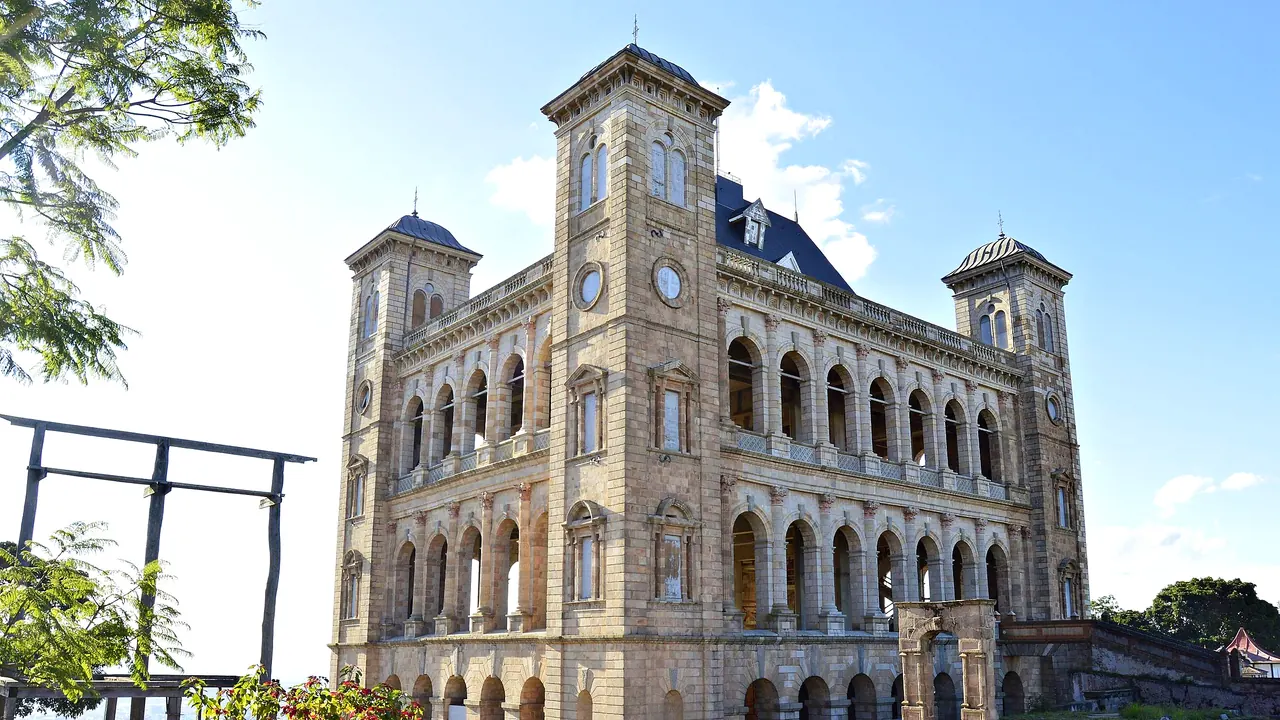
The Manjakamiadana palace in afternoon light
- Affordability86
- Food & drink44
- Culture & sights38
Photo: ApexDynamo, CC BY-SA 4.0, cropped
Match
32
Every category weighted equally
- Beach & sun30
- Culture & arts34
- Food & nightlife33
- Family trip32
- Outdoors33
- Relax & unwind29
- Shopping & style32
- On a budget38
Antananarivo in twelve categories
Our verdict on each, scored 0 to 100 against the same fixed benchmark cities, so a score means the same thing on every page.
Beaches & swimming. Scores 4 out of 100.
Food & drink. Scores 44 out of 100.
Culture & sights. Scores 38 out of 100.
Nightlife. Scores 26 out of 100.
Nature & outdoors. Scores 34 out of 100.
Day trips. Scores 34 out of 100.
Good for families. Scores 20 out of 100.
Getting around. Scores 16 out of 100.
Shopping & style. Scores 36 out of 100.
Affordability. Scores 86 out of 100.
Live music & performing arts. Scores 30 out of 100.
Wellness & relaxation. Scores 14 out of 100.
Antananarivo category by category
Beaches & swimming
4Antananarivo sits high on the central plateau, and the nearest coast is a long road journey east through the mountains, far too far for a day at the sea. Within reach of the city there are only reservoirs and highland lakes, which are for looking at more than swimming, and hotel pools. If beaches matter, plan a separate leg of the trip to the coast or the islands and treat the capital as a stopover.
Food & drink
44Malagasy food is built around rice, eaten in quantity at every meal, with a side dish of meat or greens: romazava, a light broth of zebu and leafy greens, ravitoto made from pounded cassava leaves with pork, and zebu in many forms. Street stalls sell mofo gasy, small rice cakes cooked in round moulds at dawn, along with samosas and fried snacks, and the markets of Analakely are full of tropical fruit, vanilla and spices.
The French legacy shows in the bakeries, the pastries and a handful of good bistro-style dining rooms in the upper town and around Isoraka. Drinking means the local lager and rhum arrangé, rum steeped with fruit, vanilla or spices. The scene is pleasant rather than deep, and a visitor will find a small number of reliable places rather than a city to eat their way through.
Culture & sights
38The city's history is written on its hills. On the highest ridge stands the Rova, the compound of the Merina monarchy, its stone-clad queen's palace visible from almost everywhere in town, and just below it the Andafiavaratra palace of the prime ministers holds a modest collection of royal objects. The Haute-Ville around them is the most rewarding area to wander, with brick houses with wooden balconies, Protestant memorial churches and the cathedral at Andohalo.
Down in the basin, Lake Anosy with its jacaranda trees and war memorial and the long stairways connecting the levels of the city have their own character. Museums are few and small, and much of what makes Madagascar's heritage remarkable lies beyond the capital, so a day or two covers the sights.
Nightlife
26Going out in Antananarivo means a few hotel bars and lounges, local cabarets and a small number of clubs where the dance floor runs on Malagasy salegy and African pop until late at weekends. The crowd is mostly local, with expatriates in the upper-town bars. Streets empty after dark and walking at night is not advisable, so evenings involve taxis from door to door and most visitors settle for dinner and a drink at their hotel.
Nature & outdoors
34The city spreads over a ring of red hills above flooded rice paddies, and the surrounding highlands are a farmed landscape of terraces, eucalyptus, granite outcrops and brick villages rather than wilderness. Within an hour is a small private reserve where several lemur species roam free, the closest a short visit gets to Madagascar's wildlife, and the botanical gardens of Tsimbazaza in town have more.
The forests and national parks that draw people to the island, with their indri lemurs, chameleons and rainforest trails, lie three hours or more away down the eastern escarpment, so they are overnight trips rather than outings from the capital. The dry season from May to October is the best time for walking in the hills.
Day trips
34The best outing is to Ambohimanga, the sacred royal hill north of the city and a World Heritage Site, where a fortified village of stone gateways and wooden royal houses sits among old forest. About an hour and a half south, Ambatolampy is known for its foundries casting aluminium pots and souvenirs, and Lake Mantasoa to the east has a lakeside setting and nineteenth-century industrial ruins.
Beyond that the list thins quickly. The spa town of Antsirabe and the volcanic lakes of Ampefy are further than they look, because the roads are slow and heavily used, and most travellers fold them into a longer road trip rather than return to the capital the same day.
Good for families
20Children will enjoy seeing lemurs up close at the reserve outside town and the animals at Tsimbazaza, and Malagasy culture is warm towards families. Otherwise very little here is made for children. The traffic, steep stairways, broken pavements, exhaust and visible poverty make the city tiring with small ones, and health precautions need thought before travelling. Families usually spend a night or two here on the way to the parks and coast.
Getting around
16Antananarivo is hard work to get around. Traffic in the lower town is among the worst a visitor will meet, the narrow roads wind round the hills and a short distance can take an hour at peak times. The taxi-be minibuses are cheap but crowded, unmarked and hard to follow without local knowledge, so most visitors use the cream-coloured taxis, agreeing a fare first, or hire a car with a driver. The upper town is walkable by day through stairways and lanes, but the climbs are steep and pavements are poor.
Shopping & style
36Shopping here is about Malagasy crafts. The big artisan market on the road towards the airport has long rows of stalls selling raffia baskets and hats, embroidered linen, carved wood, zebu-horn objects, Antemoro paper with pressed flowers, polished minerals and gemstones, and vanilla pods and spices. Bargaining is expected. Analakely market in the lower town is a sprawling everyday market more than a souvenir stop, and worth a look for its scale. Beyond these there is little: a few malls and boutiques, no shopping streets to stroll and no fashion to seek out.
Affordability
86For a visitor, the capital is cheap. Street food, local restaurants, beer and taxis cost very little, and the craft markets are inexpensive even before bargaining. The bills that add up are for things visitors tend to need: hotels of a comfortable international standard are relatively few and charge accordingly, and hiring a car with a driver, the usual way to travel onward, is the biggest daily cost. Planned with that in mind, a stay here is very good value.
Live music & performing arts
30Live performance in Antananarivo is rooted in Malagasy music. Hiragasy, the highland tradition of costumed troupes mixing song, oratory and dance, still draws crowds at open-air events on the city's edges. At weekends, singers of salegy and ba-gasy and players of the valiha, the bamboo tube zither, fill concert halls and stadiums. The city also has a long-established annual jazz festival and cultural centres with regular concerts and film. There is no opera house or symphony orchestra, and programmes are announced locally at short notice, so you will need to ask around to find something on.
Wellness & relaxation
14This is not a place to rest. The capital has no bathing tradition of its own, and relaxation is limited to a few hotel spas and massage rooms. Traffic, fumes and noise fill the lower town, and the calmest spots are the upper-town lanes and the gardens of the better guesthouses. The country's historic thermal baths are in Antsirabe, several hours south, and travellers in need of rest usually find it at the coast or in the national parks.
When should you go?
Pick a month to see what it is like. The climate figures are measured averages, not a forecast.
Antananarivo in July
Daytime high, °C
Rainfall in the month, mm
The whole year
Shaded against this destination’s own year: the deepest cell is its best month for that figure and the palest its weakest.
Temperature and rainfall are climate normals, averaged over the years shown. Antananarivo: 1991-2020 (rainfall 1961-1990) normals, Antananarivo / Ivato (13 km from centre).
Before you go
| Measure | Antananarivo |
|---|---|
| Official language | French, Malagasy |
| Currency | Malagasy Ariary (MGA) |
| Sockets | CEJK50 Hz |
| Driving side | Right |
| Time zone | UTC+3 |
| Emergency number | Police 117, ambulance 124, fire 118 |
| Elevation | 1,276 m |
| Main airport | Ivato International Airport (TNR)13 km from centre18 non-stop destinations |
| Public holidays this year | 10 days |
By the numbers
| Measure | Antananarivo |
|---|---|
| Population | 1,275,207 |
| People per km² | 14,491 |
| Museums within 10 km | 2 |
| UNESCO World Heritage sites within 50 km | 1 |
Compare Antananarivo with
Every comparison with a written verdict behind it.