Photos: Malta by Nsm Photography, CC BY 3.0, cropped; Tunisia by Smailtn, CC BY-SA 4.0, cropped.
Malta or Tunisia?
Our verdict in twelve categories, each scored against the same fixed benchmark cities, and the climate month by month, so you can choose for your trip.
Choose Malta for
- nightlife
- live music and the arts
- getting around
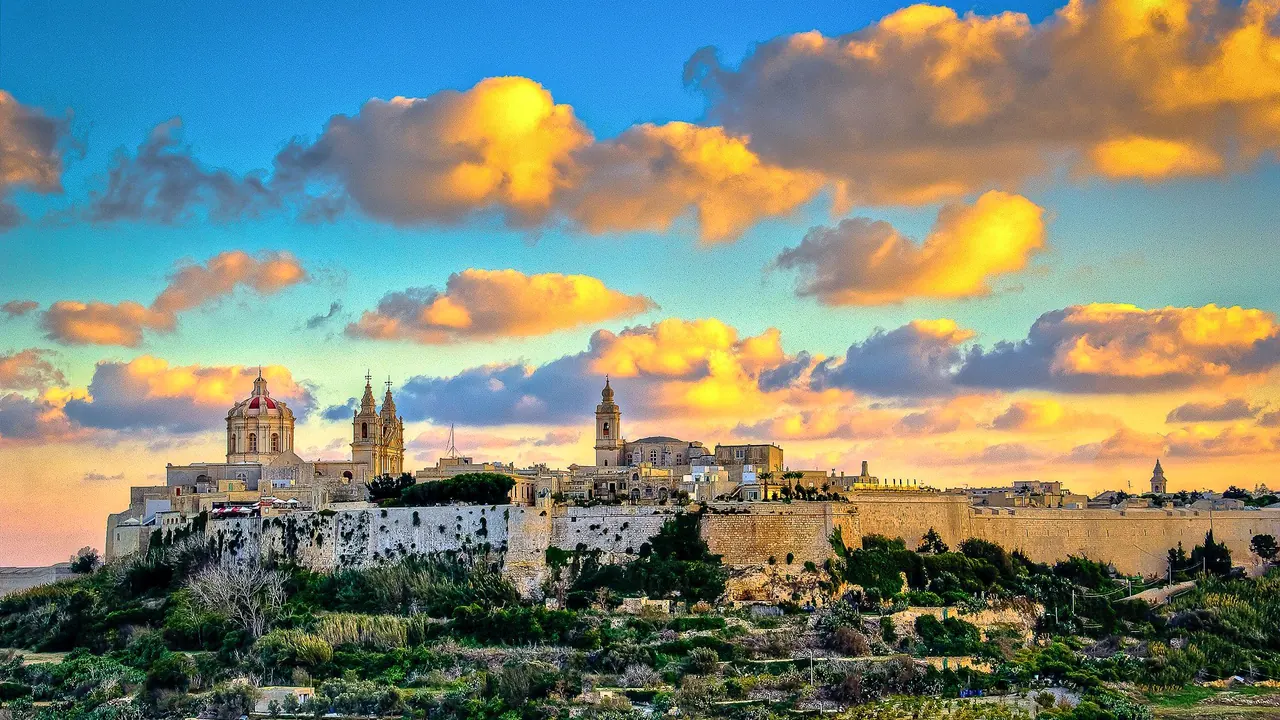
Malta suits a vacation spent in one compact base. Valletta's Baroque streets, prehistoric temples and the walled town of Mdina are all short hops apart, the rocky coast gives clear swimming close to wherever you stay, and Gozo is next door when you want a slower day. English is spoken everywhere, and the evenings are livelier, with wine bars in Valletta and late clubs in St Julian's. Choose it if your nights matter as much as your days.
Choose Tunisia for
- wellness
- prices
- day trips
Tunisia gives you more ground to cover and more for your money. The long sandy beaches of Djerba, Hammamet and the Sousse coast are cheap to stay on, and Roman ruins from Carthage to El Jem and Dougga sit within a day's reach. It also has a real thalassotherapy and hammam culture, and the Sahara waits further south. Nights are quiet and inland travel takes effort, but for a beach-and-sights trip on a budget, or a restful week of treatments, it is the stronger choice.
Scoreboard
Twelve categories on one fixed scale from 0 to 100. The shaded stretch is the gap between the two.
Your match
Pick a travel style or drag the sliders, and both match scores follow your weighting.
Wins on nightlife and live music and the arts with your weighting.
Wins on wellness and prices with your weighting.
What matters to you?
Category by category
What the scores mean for a trip.
Beaches & swimming
The swimming is roughly as good in both, but it takes a different form. In Malta you mostly swim off rocks: limestone shelves and ladders along the Sliema front, St Peter's Pool and the Wied il-Ghasri inlet on Gozo, with only a few sandy bays such as Mellieha, Golden Bay and red-sand Ramla.
Tunisia is the place for sand. Djerba's eastern shore is wide, pale and shallow, Hammamet's bay shelves gently, and Mahdia has clear, quiet water. The trade-off is that its resort strips are flatter and more built up than Malta's cliffs and coves.
Where in Malta: Gozo, Mellieha and the northwest bays, Comino, Sliema and St Julian's
Where in Tunisia: Djerba, Hammamet, Sousse and Monastir, Mahdia
Food & drink
You will eat about equally well in both, though the flavours and the setting differ. Maltese food is Sicilian-leaning: pastizzi from the bakery, ftira, rabbit stew and fish at Marsaxlokk, and wine with dinner is easy to find in Valletta's cellar bars.
Tunisian cooking is hotter and brighter, built on harissa, brik, couscous and lablabi, and Tunis and La Marsa offer the widest choice. Drinking plays a much smaller part, and in both countries the resort hotels serve forgettable food, so you need to go out to eat well.
Where in Malta: Valletta, Marsaxlokk, Gozo
Where in Tunisia: Tunis and La Marsa, Sfax, Mahdia, Cap Bon
Culture & sights
Malta keeps its history within a short drive of wherever you stay. Its prehistoric temples are older than the pyramids, and the Hal Saflieni Hypogeum is cut into the rock below a suburban street. The Knights' Valletta, with its Caravaggios, sits across the harbour from the Three Cities, and Mdina is a short way inland. You can see most of it from one base without packing a bag.
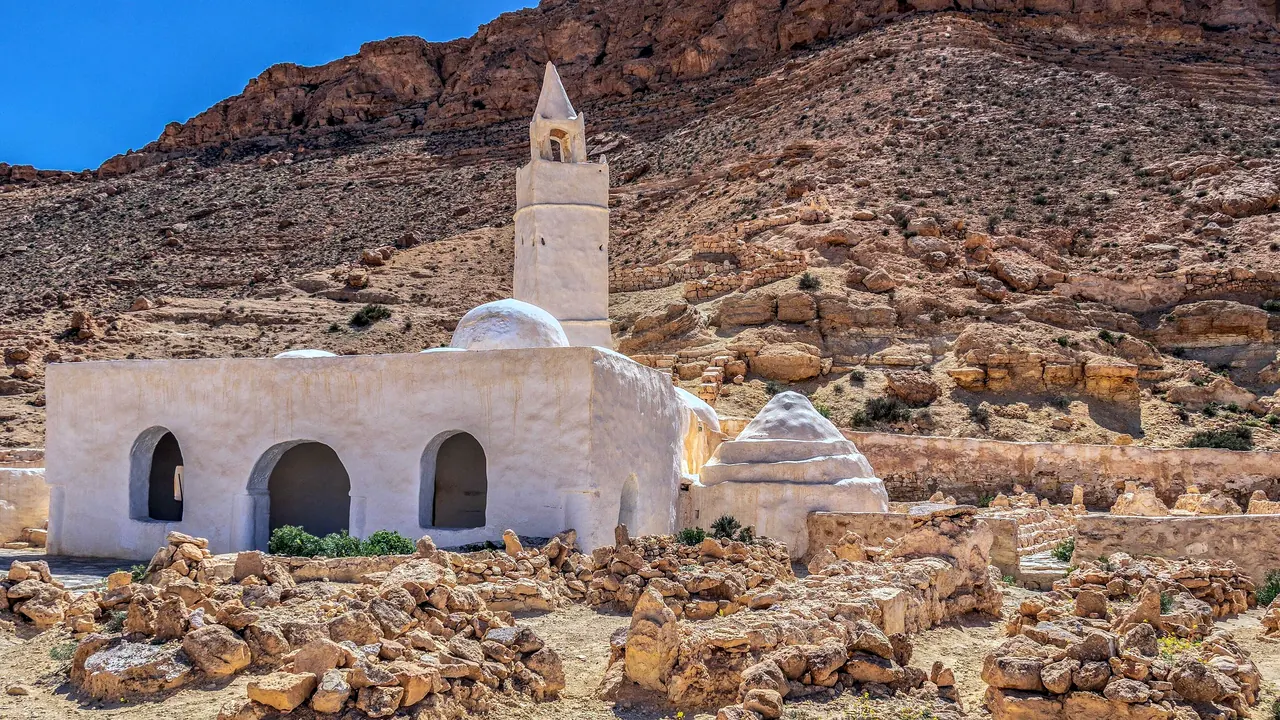
Tunisia's heritage is spread across the country, and seeing it means moving around. The Bardo's Roman mosaics and the ruins of Carthage are near Tunis, Dougga and El Jem lie inland, Kairouan is one of Islam's holy cities, and Matmata's underground houses are far to the south. The range runs from Roman to Islamic to Berber, but it takes several stops.
Where in Malta: Valletta, Mdina and Rabat, The Three Cities, Gozo
Where in Tunisia: Tunis and Carthage, Kairouan, El Jem, Dougga
Nightlife
Malta is clearly the place for going out. Paceville in St Julian's is loud, packed and runs late through the summer, and Valletta's stepped streets and old Strait Street give you a calmer evening over wine or cocktails.
In Tunisia, nights out are limited to the resorts. Hotel discos in Yasmine Hammamet and Port El Kantaoui fill in summer, and Gammarth and La Marsa have lounge bars, but most evenings are spent in cafés and on family strolls.
Where in Malta: St Julian's, Valletta
Where in Tunisia: Hammamet, Sousse and Port El Kantaoui, Gammarth and La Marsa
Nature & outdoors
Malta's outdoors is at sea level and often underwater. Divers come for the wrecks, caves and arches off Gozo and Comino, which are among the best in the Mediterranean, and kayakers come for the cliffs. On land there are walks along the Dingli Cliffs and around Gozo's salt pans, but no mountains or forest.
Tunisia's landscapes are desert and mountain oasis, and getting to them is a trip in itself. There are camel treks into the dunes from Douz, the salt flat of Chott el Jerid, and palm gorges at Chebika and Tamerza. In the green north you find cork-oak forest around Ain Draham and wintering birds at Ichkeul, which are a long way from the beach resorts.
Where in Malta: Gozo, Comino, Dingli Cliffs, Northwest Malta
Where in Tunisia: Douz and the Grand Erg Oriental, Tozeur and the mountain oases, Ain Draham and Tabarka, Ichkeul National Park
Day trips
Tunisia offers far more good outings. From Tunis, the suburban train reaches Sidi Bou Said, and Bizerte, Cap Bon and Dougga are within a day. From Sousse or Monastir, El Jem, Kairouan and Mahdia are each an easy outing.
Malta is so small that its outings are mostly the sights you would see anyway. Gozo is the one day that feels like going somewhere, and Mdina and the Three Cities take half a day each. After those, there is little left.
Where in Malta: Gozo, Mdina and Rabat, Three Cities, Marsaxlokk
Good for families
Malta's advantage with children is ease. English is spoken everywhere and every drive and ferry ride is short. There is plenty to keep children busy: Popeye Village at Anchor Bay, the aquarium at Qawra, the Esplora science centre at Kalkara, and cannon salutes and wartime tunnels in Valletta for older children. Pushchairs struggle on the narrow, busy roads, though.
In Tunisia, a family vacation usually means a week in a resort hotel in Hammamet, Sousse or Djerba, with kids' clubs, splash pools and water parks close by. A camel ride at Douz in the cooler months is the big adventure. Outside the resort, hassle in the souks and long, hot drives make things harder work.
Where in Malta: Mellieha, Qawra, Valletta and the Three Cities
Where in Tunisia: Hammamet, Sousse and Port El Kantaoui, Djerba, Monastir
Getting around
Malta is a little easier, mainly because nothing is far away. There is no railway, though, and its buses crawl through heavy traffic. Harbour ferries between Valletta, Sliema and the Three Cities are the pleasant way to get around, and ride-hailing fills the gaps.
Tunisia has a coastal railway from Tunis through Sousse and El Jem to Sfax, louage minibuses and flights to Djerba, but the distances are real. Dougga, the oases and the desert are best reached by hire car, with a driver or on a tour.
Where in Malta: Valletta, Sliema, Gozo
Where in Tunisia: Tunis, Sousse, Monastir, Sfax
Shopping & style
Tunisia has more to buy, almost all of it craft. There are specialist lanes in the Tunis medina, painted pottery in Nabeul, carpets in Kairouan, and Houmt Souk on Djerba, all with bargaining and some persistent selling.
Malta's crafts are fewer: silver filigree, Ta' Qali glass and lace from Gozo, along with chain stores on Valletta's Republic Street and in the Sliema malls. Neither country has luxury or design shopping.
Where in Malta: Valletta, Sliema, Ta' Qali, Gozo
Affordability
Tunisia is much cheaper. All-inclusive resorts on the Sousse coast and Djerba compete hard for business, and trains, medina lunches and even the major Roman sites cost little. The things to watch are imported alcohol and excursions sold at resort desks.
Malta is mid-range for Southern Europe. Pastizzi and buses are cheap, but summer hotel rooms and waterfront dining in Valletta and St Julian's are not. Bugibba, Qawra and Gozo farmhouses offer the best value, and winter rooms cost far less.
Where in Malta: Bugibba and Qawra, Gozo, Sliema
Live music & performing arts
Neither is a strong place for live performance, but Malta has a little more to see across the year. Valletta's 1730s Manoel Theatre stages plays and a Baroque festival in winter, the Philharmonic plays around the islands, and Gozo's two rival opera houses each put on a full production in autumn.
Tunisia's season is mostly in summer, with singers at the Roman theatre in Carthage and symphonic concerts in El Jem's amphitheatre. Malouf concerts in Tunis are well worth catching, though much of the programme is in Arabic or French.
Where in Malta: Valletta, Victoria (Gozo)
Where in Tunisia: Tunis and Carthage, El Jem, Hammamet
Wellness & relaxation
Tunisia is far ahead here. Its thalassotherapy industry is one of the largest anywhere, with seawater centres in Hammamet, Djerba and Mahdia. There are also neighbourhood hammams with black-soap scrubs and the hot springs at Korbous running into the sea, and Djerba's mild winter suits a week of treatments.
Malta has no bathing tradition, only resort hotel spas, and the main island is busy and noisy. Its restful option is a stone farmhouse with a pool on Gozo.
Where in Malta: Gozo
Where in Tunisia: Djerba, Hammamet, Korbous and Cap Bon, Mahdia
When should you go?
Pick your month, and for a country the place in it. The climate figures are measured averages, not a forecast.
Where in Tunisia
Valletta (Malta) in July
Tunis (Tunisia) in July
Daytime high, °C
Rainfall in the month, mm
Temperature and rainfall are climate normals, averaged over the years shown. Valletta (Malta): 1991-2020 normals, Luqa (5.9 km from centre). Tunis (Tunisia): 1991-2020 normals, Tunis-Carthage (6 km from centre).
Both are summer swimming places from June to October, and in Malta the sea is warmest in August at about 27°C. July and August are hot in both, but Tunis is the harsher of the two, reaching 35°C in August, so that is a poor month for medinas and Roman sites. In Valletta, late spring is the most comfortable time for walking, while the rain returns in September and peaks at 90mm in November.
Winter is where the two differ most. Malta's winters are mild but damp and grey. Djerba, in southern Tunisia, stays dry and sunny, with just 24mm of rain in January. That makes Djerba and the south the better choice from November to March, for a week of treatments or a desert trip from Douz, while Tunis in the north has a wetter winter much like Malta's.
Which traveller are you?
For a food and nightlife trip, Malta is the better pick. Valletta has wine bars in vaulted cellars and along Strait Street, and Paceville runs until dawn in summer. In Tunisia, evenings mostly mean cafés and shisha, with drinking kept to hotels and resorts.
On a tight budget, Tunisia goes much further. All-inclusive resorts on the Sousse coast and on Djerba cost far less, and louage minibuses, the suburban train and entry to the archaeological sites cost very little. Malta's summer hotel rooms quickly eat into a small budget.
For a relaxing and wellness trip, choose Tunisia. Thalassotherapy centres line the coast at Hammamet, Djerba and Mahdia, every medina has its hammam, and Djerba is calm and sunny even in winter. In Malta, rest means a farmhouse on Gozo and a hotel spa.
More comparisons
Each shares a side with Malta or Tunisia.
Where else could you go?
Set Malta or Tunisia against any other country.