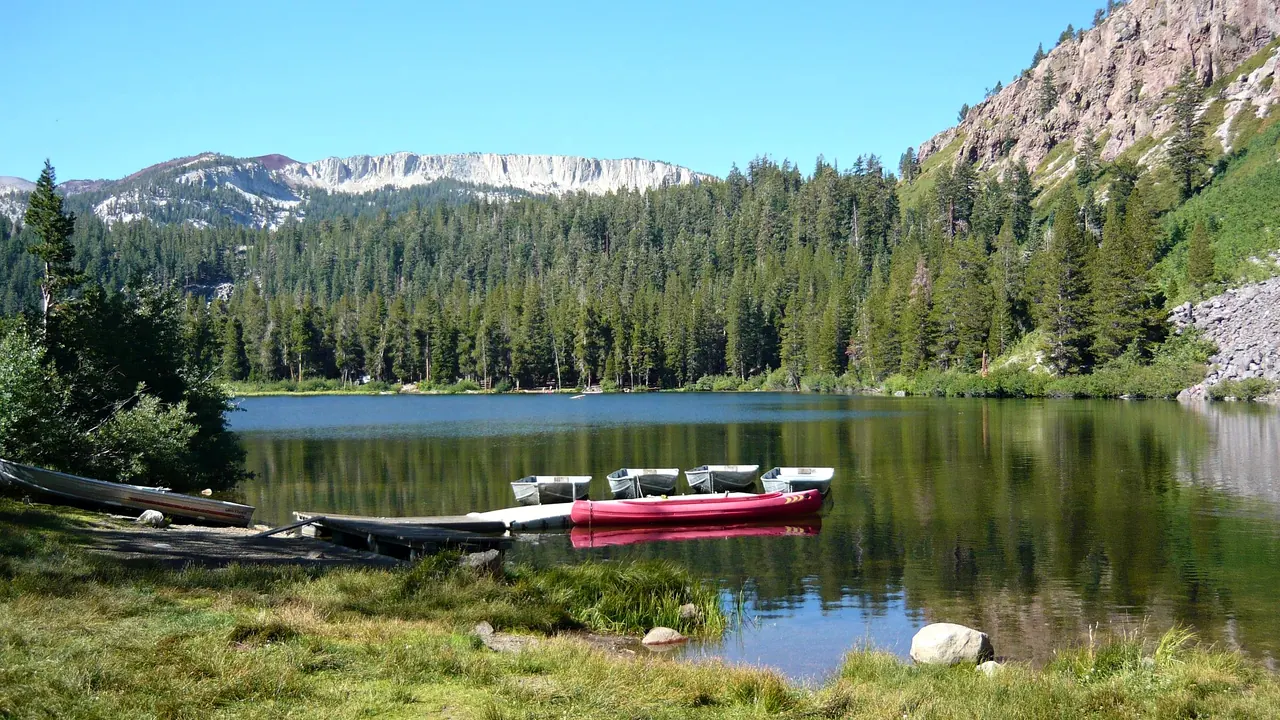
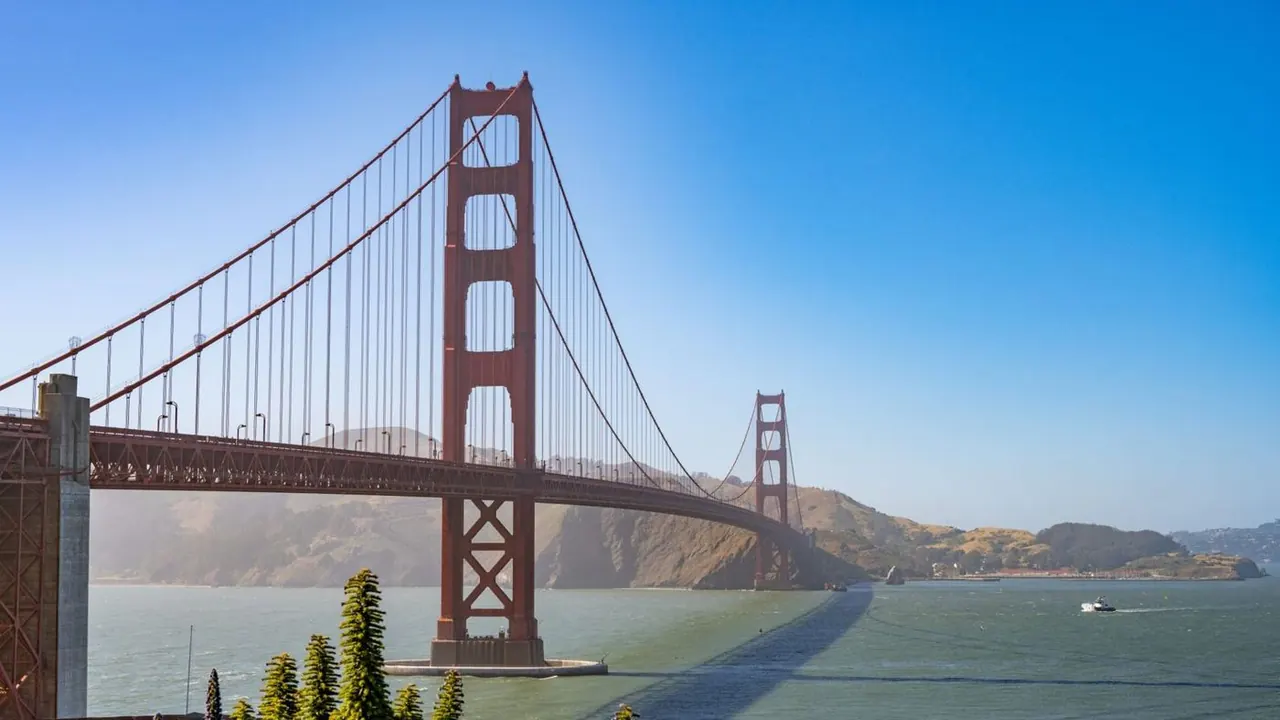
Photos: Mammoth Lakes by Dr. Al. K. Lisch, CC BY-SA 3.0, cropped; San Francisco by Elijah Cobb, Pexels License.
Mammoth Lakes or San Francisco?
Our verdict in twelve categories, each scored against the same fixed benchmark cities, and the climate month by month, so you can choose for your trip.
Choose Mammoth Lakes for
- nature and the outdoors
- wellness
- prices
Mammoth Lakes is for travellers who plan to spend their days outdoors. In winter that means skiing one of North America's largest ski areas. In summer it means hiking the Lakes Basin, riding the bike park and driving the volcanic Eastern Sierra. Evenings are quiet, meals are fuel and you will want a car, but San Francisco has nothing like this high mountain country on its doorstep.
Choose San Francisco for
- culture and sights
- live music and the arts
- food and drink
Choose San Francisco for a city trip with plenty in it. It has strong museums, opera, ballet and jazz, some of the best eating in the country, and nights out across the Mission, North Beach and the Castro. Good nature is still close, from Lands End to Muir Woods, and you can do all of it without a car.
Scoreboard
Twelve categories on one fixed scale from 0 to 100. The shaded stretch is the gap between the two.
Your match
Pick a travel style or drag the sliders, and both match scores follow your weighting.
Wins on nature and the outdoors and wellness with your weighting.
Wins on culture and sights and live music and the arts with your weighting.
What matters to you?
Category by category
What the scores mean for a trip.
Beaches & swimming
Neither city suits a beach vacation. Mammoth Lakes is far inland. The only swimming is a cold summer dip in Horseshoe Lake or the slightly warmer Crowley Lake, and bathing at Hot Creek is banned.
San Francisco does better because it has a real shoreline. Ocean Beach, Baker Beach under the Golden Gate Bridge and the small cove at China Beach are good for walks, bonfires and sunsets. The Pacific is too cold for most swimmers, though, and rip currents make Ocean Beach dangerous, so you come for the sand, not the water.
Food & drink
Food is one of the biggest differences between the two. Mammoth Lakes feeds skiers and hikers well, with big breakfasts, burgers, steakhouses and beer brewed in town. It has no cuisine or markets of its own, though, and some kitchens scale back in the quiet seasons.
San Francisco is worth the trip for food alone. Try Mission burritos, sourdough and cioppino, the Ferry Building market, dim sum in Chinatown and the Richmond, and the Italian bakeries of North Beach. On top of that sits a top fine-dining tier with Napa and Sonoma wines on every list.
Culture & sights
There is almost nothing to visit in Mammoth Lakes itself. The town is mostly lodges and condominiums, the only museum is a small log-cabin history museum, and the region's heritage sites are an hour or more away.
San Francisco has several days of sightseeing. Its landmarks include Alcatraz, the cable cars on Nob Hill, the Golden Gate Bridge and the Victorians of Alamo Square, and its museums include SFMOMA, the Legion of Honor and the Asian Art Museum. The 1906 earthquake left little older architecture, but Chinatown, the Mission's murals and the Castro carry their own history.
Nightlife
In Mammoth Lakes, a night out means après-ski in the Village and a few taprooms. It can run late on winter weekends, but the town is quiet early the rest of the year and has no clubs. San Francisco gives you a real choice: mezcal and cocktail bars on Valencia Street, old saloons in North Beach, the Castro's gay bars and warehouse clubs in SoMa. Its limits are 2am last orders and quiet weeknights.
Nature & outdoors
Both are excellent bases for the outdoors, but Mammoth Lakes comes out ahead because the wilderness starts at the edge of town. Mammoth Mountain has skiing well into spring and summer mountain biking. The Lakes Basin and Reds Meadow lead to granite lakes, Devils Postpile and Rainbow Falls, and the Ansel Adams and John Muir wildernesses lie beyond.
San Francisco's nature is coastal rather than alpine. You have the cliffs of Lands End, the Presidio, the redwoods of Muir Woods, the Marin Headlands and Point Reyes, plus sailing and whale watching on the bay. It is easier to combine with city life, but there is no snow and no high country.
Day trips
From Mammoth Lakes, day trips are few and the drives are long. The options are Bodie's ghost town, Manzanar and Bishop to the south, and Mono Lake at Lee Vining, and in winter the mountain passes close.
San Francisco is much better placed. Napa and Sonoma are about an hour north, ferries cross to Sausalito and Tiburon, and Berkeley is a short train ride away. Down the coast, Santa Cruz's boardwalk and the Monterey aquarium make easy outings.
Good for families
Both work for children, in different ways. Mammoth Lakes suits active families, with a big ski school, snow tubing, rowing boats and trout fishing in the Lakes Basin, and the gondola for older children. There is nothing indoors for a stormy day, though, and the altitude can tire young children for the first day or two.
San Francisco comes out slightly ahead because it also covers bad-weather days, with the Exploratorium, the California Academy of Sciences, the zoo and the sea lions at Fisherman's Wharf. The drawbacks are steep hills with a pushchair and some downtown streets parents may prefer to avoid on foot.
Getting around
In Mammoth Lakes, free shuttles and the gondola make a ski trip possible without driving, and a summer trolley reaches the Lakes Basin. Beyond that, the town is spread out, a car is close to essential and winter roads can need snow chains.
San Francisco is only about 11km across. Muni, BART, the cable cars and the ferries all run on one Clipper card, so a car is more trouble than help. The one catch is the hills, which turn short walks into real climbs.
Shopping & style
One is a place to buy equipment, the other a city to browse. Mammoth Lakes has good ski, snowboard, climbing and fly-fishing shops, plus rental outlets and a few galleries of landscape photography, but there are no fashion streets or markets.
San Francisco has much more choice. There are department stores and flagship brands around Union Square, design boutiques in Hayes Valley, and bookshops and vintage clothing on Valencia Street and in Haight-Ashbury. Along Grant Avenue in Chinatown you can buy tea and ceramics. Shopping here is a pleasant extra rather than a reason to make the trip.
Affordability
Both are expensive, but Mammoth Lakes is a little easier on the budget, depending on the season. In peak ski weeks, lift tickets, rentals and lodging make it as costly as anywhere. Summer and the shoulder months are gentler, because hiking and the lakes cost little and a condominium kitchen cuts down on restaurant bills.
San Francisco stays dear all year, with costly hotels and tax and tipping added to every meal. You save money in the Mission's taquerias and Chinatown's dim sum places, in the free parks and coastal trails, and on museum free days.
Live music & performing arts
Mammoth Lakes has a community theatre on the college campus, plus a summer jazz festival, chamber music and outdoor concerts in a meadow. It all makes for a pleasant, local evening. San Francisco is one of the country's major stages. The War Memorial Opera House is home to its opera and ballet, and the city also has the symphony at Davies Symphony Hall, the American Conservatory Theater, the SFJAZZ Center and the Fillmore for rock.
Wellness & relaxation
Mammoth Lakes is the easier place to unwind. You can soak in simple hot springs out in the sagebrush, with the Sierra across the valley, or use a lodge spa or hot tub after a day on the slopes. Outside the busiest ski weeks, evenings are slow and quiet.
San Francisco has a Japanese-style communal bathhouse in Japantown, plenty of day spas and the Japanese Tea Garden for a quiet hour. The city moves faster, though, and its real hot springs are at Calistoga, about two hours away.
When should you go?
Pick your month. The climate figures are measured averages, not a forecast.
Mammoth Lakes in July
San Francisco in July
Daytime high, °C
Rainfall in the month, mm
Where the figures come from
Mammoth Lakes's station stands 227 m below the city centre, so the centre is likely a little cooler than the figures say.
Mammoth Lakes has no rain gauge within 25 km of the centre, so its rainfall comes from a gridded climate dataset read at the city rather than from a gauge further away.
Temperature and rainfall are climate normals, averaged over the years shown. Mammoth Lakes: 2008-2020 (rainfall 1991-2020) normals, Mammoth / Whitmore Hot Springs (12 km from centre). San Francisco: 1981-2010 normals, Alameda Naval Air Station (9.1 km from centre).
Mammoth Lakes changes completely through the year. From December to March, highs sit around 6°C and the wettest months bring snow to the mountain. That is the ski season, and it is too cold for lingering in the streets. Spring stays cool. June to September is warm and almost dry, with highs near 28°C in July and August. Those two months are the only time a cold lake swim is tempting. October is crisp and good for walking.
San Francisco never gets properly hot or cold. Winters are mild and highs reach about 23°C in late summer and early autumn, so you can walk comfortably in any month. Rain comes from November to March, up to 105mm in January, while summer is almost dry. The sea stays near 12-14°C all year, too cold for a beach trip in any season.
Which traveller are you?
On an outdoors trip, Mammoth Lakes is the clear choice. Mammoth Mountain gives a long ski season and summer mountain biking. Trails run from town into the Lakes Basin, Reds Meadow and two wildernesses, and in summer Yosemite's high country is about an hour away.
For a culture and arts trip, go to San Francisco. You get Alcatraz, the cable cars, SFMOMA and the de Young by day, then opera, ballet, the symphony or jazz at night. Mammoth Lakes has little more than a log-cabin museum and community theatre.
On a food and nightlife trip, San Francisco wins easily. Eat Mission burritos, Chinatown dim sum and Dungeness crab, then try the cocktail bars on Valencia Street or the clubs in SoMa. In Mammoth Lakes, an evening means après-ski and a brewery taproom.
Before you go
| Measure | Mammoth Lakes | San Francisco |
|---|---|---|
| Currency | US Dollar (USD) | US Dollar (USD) |
| Sockets | AB120 V, 60 Hz | AB120 V, 60 Hz |
| Driving side | Right | Right |
| Time zone | UTC-8, UTC-7 in summer | UTC-8, UTC-7 in summer |
| Emergency number | 911 | 911 |
| Elevation | 2,402 m | 16 m |
| Main airport | Reno Tahoe International Airport (RNO)217 km from centre25 non-stop destinations | San Francisco International Airport (SFO)18 km from centre143 non-stop destinations |
| Public holidays this year | 13 days | 13 days |
By the numbers
| Measure | Mammoth Lakes | San Francisco |
|---|---|---|
| City population | 7,191 | 873,965 |
| People per km² | 110 | 1,455 |
| Museums within 10 km | 0 | 51 |
| UNESCO World Heritage sites within 50 km | 0 | 0 |
| Swim season, months above 21 °C | - | None |
Where else could you go?
Every comparison below shares a destination with this one, so you can follow Mammoth Lakes or San Francisco somewhere new.
- Sonomavs San Francisco
- Napavs San Francisco
- San Josevs San Francisco
- Montereyvs San Francisco
- Carmel-by-the-Seavs San Francisco
- South Lake Tahoevs Mammoth Lakes