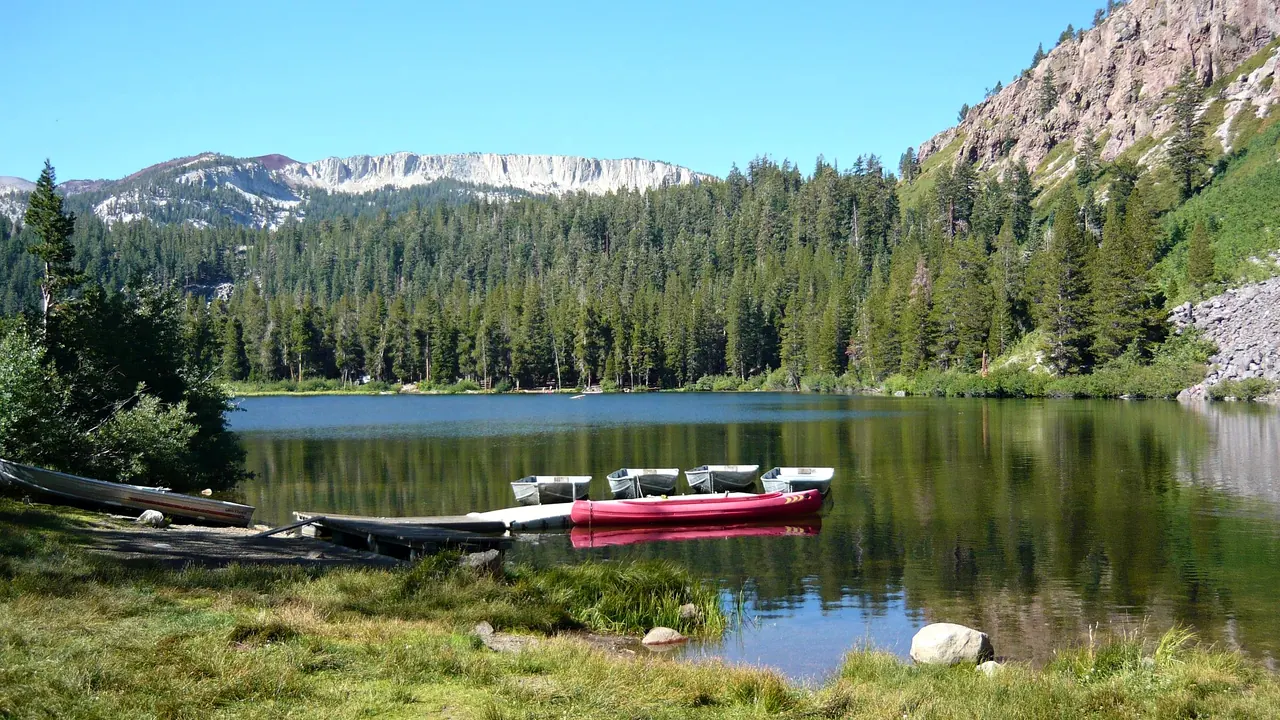
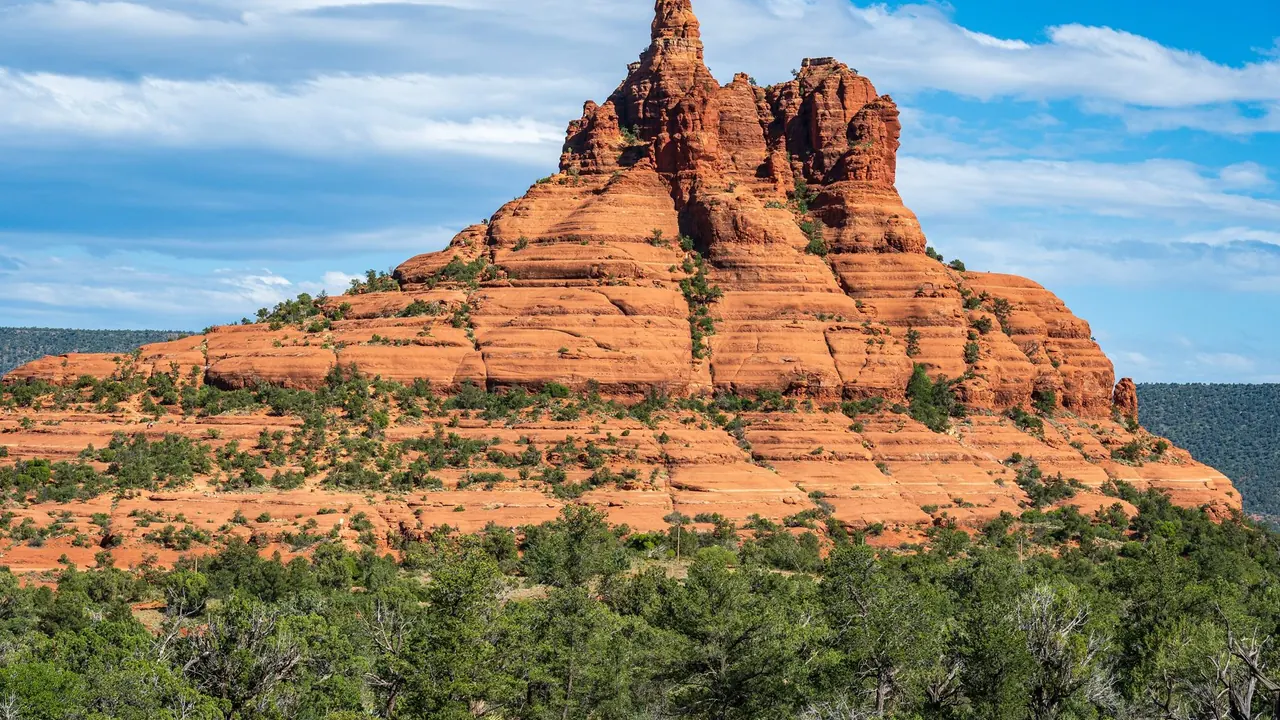
Photos: Mammoth Lakes by Dr. Al. K. Lisch, CC BY-SA 3.0, cropped; Sedona by dconvertini, CC BY-SA 2.0, cropped.
Mammoth Lakes or Sedona?
Our verdict in twelve categories, each scored against the same fixed benchmark cities, and the climate month by month, so you can choose for your trip.
Choose Mammoth Lakes for
- getting around
- families
- nightlife
Mammoth Lakes is the pick for an active mountain vacation built around the seasons: skiing on a big mountain through winter and often into early summer, then lakes, trails and the bike park once the snow is gone. It suits families especially well, with ski school, tubing and easy lakeside walks. The shuttles and gondola mean a ski stay can work without a car, and in winter the evenings are livelier thanks to après-ski.
Choose Sedona for
- wellness
- day trips
- shopping
Sedona is for travellers who want to slow down among the red rocks. Its spas, yoga and sunrise vortex walks make it a true retreat town, and it has more to do between hikes: the Chapel of the Holy Cross, the Sinagua cliff dwellings, Jerome and the Verde Valley tasting rooms, and the galleries at Tlaquepaque. Come in spring or autumn and expect to drive everywhere.
Scoreboard
Twelve categories on one fixed scale from 0 to 100. The shaded stretch is the gap between the two.
Your match
Pick a travel style or drag the sliders, and both match scores follow your weighting.
Wins on getting around and families with your weighting.
Wins on wellness and day trips with your weighting.
What matters to you?
Category by category
What the scores mean for a trip.
Beaches & swimming
Neither town is a swimming destination, but the water is very different. Mammoth Lakes offers cold dips in Horseshoe Lake and the slightly milder Crowley Lake for a few weeks in July and August, and Hot Creek is strictly off limits. In Sedona you swim in Oak Creek: riding the sandstone chute at Slide Rock or dropping into the pools at Grasshopper Point is more of an outing, though these spots are small and crowded on hot weekends.
Food & drink
Both towns eat like resorts, with a limited range and resort prices. Mammoth Lakes serves hearty fuel for skiers: big breakfasts, burgers, steakhouses and beer brewed in town. Sedona leans Southwestern and health-minded, with sunset terraces facing the rocks, and the tasting rooms of the Verde Valley wine country just down the road add a drinking angle that Mammoth lacks.
Culture & sights
Neither is a culture destination, but Sedona has more to fill a morning. The Chapel of the Holy Cross, set into a butte, is a real piece of architecture. The galleries show Western and Native American art, and the Sinagua cliff dwellings at Palatki and Honanki are a short drive into the backcountry.
Mammoth Lakes has little beyond its local history museum in a log cabin and the modern Village. Its real heritage lies an hour or more away, at Bodie and Manzanar.
Nightlife
Mammoth Lakes has the livelier evenings, though only in the ski season. Après-ski fills the Village and the bars by the lifts in the late afternoon, brewery taprooms keep going after that, and long weekends can run late.
Sedona's brewpubs, wine bars and resort lounges are for one drink after dinner, and the better show there is the dark sky overhead. Neither town has clubs.
Nature & outdoors
Both towns exist because of their landscapes, so the real difference is the kind of landscape. Mammoth Lakes is alpine and volcanic, with a huge ski mountain, granite-ringed lakes in the Lakes Basin, Devils Postpile and Rainbow Falls, and the Yosemite high country over Tioga Pass when it opens. At about 2,400m, it suits skiers, anglers and paddlers as much as hikers.
Sedona is red sandstone desert, with trails to Cathedral Rock and Devil's Bridge and up the West Fork of Oak Creek, slickrock singletrack for mountain bikers and jeep roads into the backcountry. It is a place for walking in spring and autumn, and the South Rim of the Grand Canyon is about two hours away.
Day trips
Sedona has the wider choice of outings, all within an easy drive. Jerome's old mining-town streets, the Verde Canyon Railroad, Montezuma Castle and Tuzigoot are all well under an hour away, and Flagstaff opens the way to Walnut Canyon and Wupatki.
From Mammoth Lakes, the towns are few and strung out along the highway. Bodie and Manzanar are both worth the drive of an hour or more, but in winter the passes close and most excursions go into the mountains instead.
Good for families
Mammoth Lakes is the easier base for a family. In winter there is a large ski school, beginner slopes and a tubing hill. Summer brings rowing boats, trout fishing, the gondola and the bike park, and condominium kitchens make the stay simpler. The altitude can tire small children for the first day or two.
Sedona has Slide Rock and the jeep tours, but much of its lodging is aimed at couples and spa guests, and summer heat on exposed trails calls for care. Families tend to pass through on the way to the Grand Canyon rather than stay long.
Getting around
A car helps in both towns, but in Mammoth Lakes you can manage without one on a ski trip. Free winter shuttles reach the lift bases and the gondola runs from the Village. In summer a trolley serves the Lakes Basin and a shuttle runs into Reds Meadow, though winter roads may need chains.
Sedona is harder without your own car. Only Uptown is walkable and a shuttle covers just a few busy trailheads. Weekend traffic backs up around the Y and trailhead parking fills early. Most visitors drive up from Phoenix, about two hours away.
Shopping & style
Sedona is the better place to browse. The courtyards of Tlaquepaque hold galleries and craft studios, the main road sells Native American jewellery, pottery and rugs, and the crystal and metaphysical shops are a local speciality. Mammoth Lakes shopping is for gear: good ski, climbing and fly-fishing shops, rental outlets and a few landscape photography galleries, with nothing worth a special trip.
Affordability
Both are expensive, but the costs fall at different times of year. In Mammoth Lakes winter is the costly season, with lift tickets, rentals and lodging at major-resort rates, while summer and the shoulder months are gentler and condominium kitchens help. Sedona's resorts charge the most in spring and autumn, and jeep tours, balloon flights and spa treatments add up, so the usual saving is to sleep in Cottonwood or Flagstaff and drive in.
Live music & performing arts
Neither is a place to plan a trip around performances. Mammoth Lakes has a resident community theatre with seasons through the year, plus summer jazz, chamber music and outdoor concerts in the meadows. Sedona's highlight is its international film festival in late winter, along with chamber concerts and acoustic and Native American flute sets in resorts and bars.
Wellness & relaxation
Sedona is the retreat town of the two. Destination spas look out on the red rock, yoga, meditation, breathwork and alternative therapies are everywhere, and sunrise walks to the vortexes are a local ritual. What it has no tradition of is bathing.
Mammoth Lakes offers exactly that: simple volcanic hot springs out in the sagebrush with the Sierra behind, plus hotel spas and hot tubs for legs tired from skiing. It is restful, but simpler and less set up for a dedicated wellness stay.
When should you go?
Pick your month. The climate figures are measured averages, not a forecast.
Mammoth Lakes in July
Sedona in July
Daytime high, °C
Rainfall in the month, mm
Where the figures come from
Mammoth Lakes's station stands 227 m below the city centre, so the centre is likely a little cooler than the figures say.
Mammoth Lakes has no rain gauge within 25 km of the centre, so its rainfall comes from a gridded climate dataset read at the city rather than from a gauge further away.
Sedona's station stands 153 m above the city centre, so the centre is likely a little warmer than the figures say.
Sedona has no rain gauge within 25 km of the centre, so its rainfall comes from a gridded climate dataset read at the city rather than from a gauge further away.
Temperature and rainfall are climate normals, averaged over the years shown. Mammoth Lakes: 2008-2020 (rainfall 1991-2020) normals, Mammoth / Whitmore Hot Springs (12 km from centre). Sedona: 2009-2025 (rainfall 1991-2020) normals, Sedona / West Sedona (1.3 km from centre).
Mammoth Lakes has two seasons that matter. November to March is cold and the wettest stretch, with about 80mm in January, and that is when the ski mountain comes into its own. June to September is dry and pleasant, reaching 28°C at the height of summer. That is the time for hiking, the Lakes Basin and a brief, chilly swim in July and August. Spring and autumn are cool and fall somewhere between the two.
Sedona runs on a different calendar. March to May and October are the best walking months, mild and fairly dry. June to August is hot, around 34°C, so hikes need dawn starts, and July and August bring the wettest spell of the year, near 56mm. Winter is mild at about 12°C by day: good for the trails, too cool for the creek. So Mammoth is at its best in midsummer and midwinter, and Sedona in spring and autumn.
Which traveller are you?
For a relaxing and wellness trip, Sedona is the clear choice. Its destination spas, yoga and meditation studios and sunrise walks to the vortexes are made for slowing down. Mammoth Lakes has wild hot springs and hotel hot tubs but little organised retreat.
On a family trip with children, Mammoth Lakes works better. Ski school, beginner slopes and a tubing hill fill the winter, summer brings rowing boats, trout fishing and the gondola, and shuttles help. Sedona's hotels lean towards couples, and its summer trails are hot.
For skiers, only Mammoth Lakes is in the running. One of North America's largest ski areas rises above the town, with a season that often lasts into early summer and après-ski in the Village afterwards. Sedona sees at most a dusting of snow on the red rock.
Before you go
| Measure | Mammoth Lakes | Sedona |
|---|---|---|
| Currency | US Dollar (USD) | US Dollar (USD) |
| Sockets | AB120 V, 60 Hz | AB120 V, 60 Hz |
| Driving side | Right | Right |
| Time zone | UTC-8, UTC-7 in summer | UTC-7 |
| Emergency number | 911 | 911 |
| Elevation | 2,402 m | 1,319 m |
| Main airport | Reno Tahoe International Airport (RNO)217 km from centre25 non-stop destinations | Phoenix Sky Harbor International Airport (PHX)160 km from centre149 non-stop destinations |
| Public holidays this year | 13 days | 12 days |
By the numbers
| Measure | Mammoth Lakes | Sedona |
|---|---|---|
| City population | 7,191 | 9,684 |
| People per km² | 110 | 195 |
| Museums within 10 km | 0 | 0 |
| UNESCO World Heritage sites within 50 km | 0 | 0 |
Where else could you go?
Every comparison below shares a destination with this one, so you can follow Mammoth Lakes or Sedona somewhere new.
- Flagstaffvs Sedona
- Scottsdalevs Sedona
- Phoenixvs Sedona
- South Lake Tahoevs Mammoth Lakes
- Page, Arizonavs Sedona
- San Josevs Mammoth Lakes