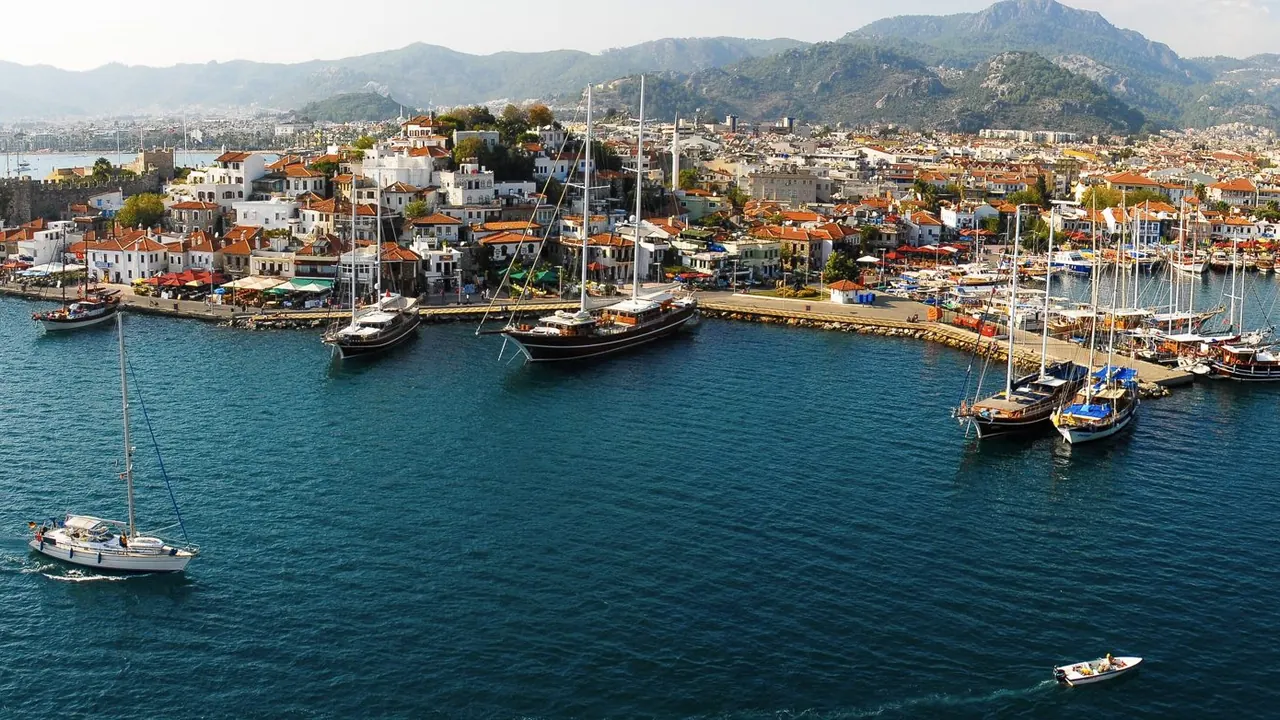
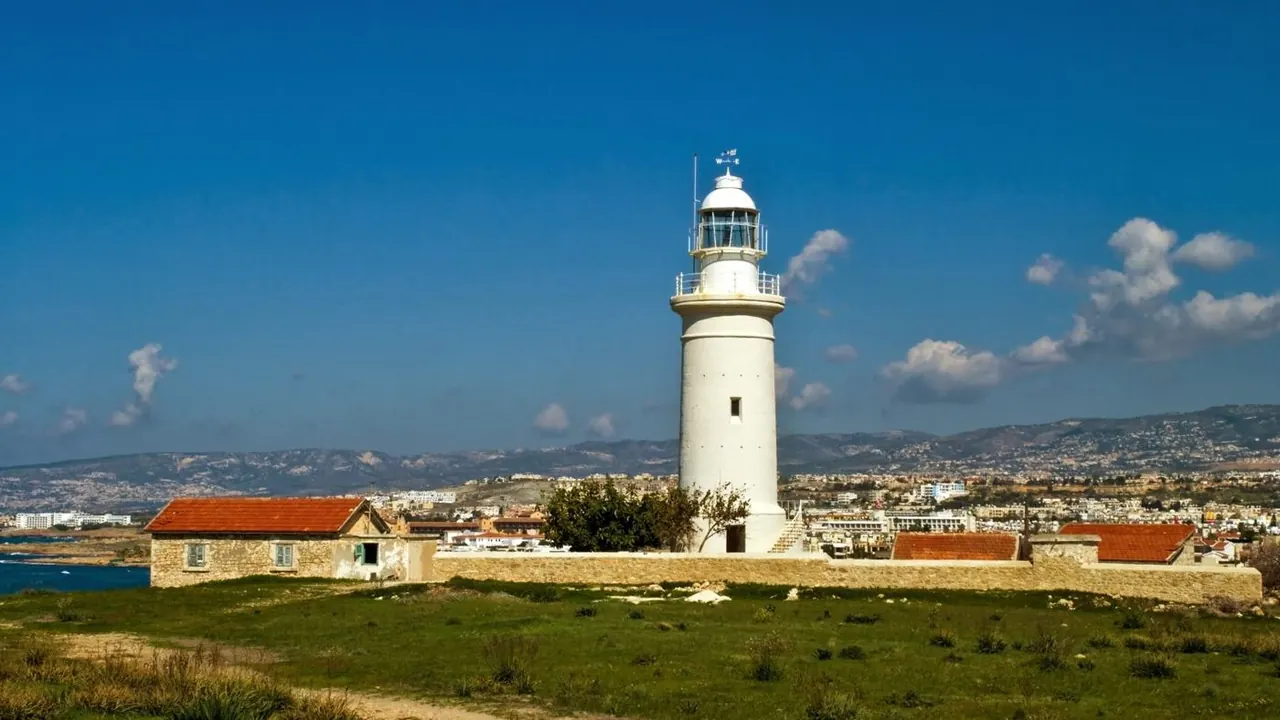
Photos: Marmaris by Mstyslav Chernov, CC BY-SA 3.0, cropped; Paphos by Nikodem Nijaki, CC BY-SA 3.0, cropped.
Marmaris or Paphos?
Our verdict in twelve categories, each scored against the same fixed benchmark cities, and the climate month by month, so you can choose for your trip.
Choose Marmaris for
- nightlife
- getting around
- shopping
Marmaris suits a sun-and-sea week where the evenings matter as much as the days. You get a calm, almost enclosed bay, gulet trips out to a wild peninsula coast, late clubs on Bar Street and a hammam to finish the day. It is also the cheaper and simpler of the two. All-inclusive hotels are keenly priced, and minibuses and water taxis make a car unnecessary inside the bay. Come for the water and the nights, not for monuments.
Choose Paphos for
- culture and sights
- live music and the arts
- families
If you want history alongside the beach, pick Paphos. The Roman mosaics and the Tombs of the Kings give it a depth Marmaris cannot match, and the gentle sand at Coral Bay, plus tavernas that welcome children, make it slightly easier with young ones. Plan on hiring a car, because the best beaches, villages and gorges lie beyond the bus routes, and expect quieter evenings.
Scoreboard
Twelve categories on one fixed scale from 0 to 100. The shaded stretch is the gap between the two.
Your match
Pick a travel style or drag the sliders, and both match scores follow your weighting.
Too close to call, 1 point apart
Wins on nightlife and getting around with your weighting.
Wins on culture and sights and live music and the arts with your weighting.
What matters to you?
Category by category
What the scores mean for a trip.
Beaches & swimming
Both are first of all swimming resorts, and the difference is where you swim. Marmaris has a long town beach of coarse sand and shingle inside an almost enclosed bay, so the water off the promenade is calm. Boat trips reach clearer coves and the fine sand of Sedir Island.
The beaches in Paphos itself are short and often rocky to get into, so a proper beach day means a bus or drive to the sandy crescent of Coral Bay or the wild shore at Lara Bay. In return, its sea stays warm later into the year.
Food & drink
Neither is a place to travel for food, and in both the seafront mostly serves resort menus. The difference is what you find when you leave it. In Marmaris that means Turkish home cooking: stews and olive-oil vegetables in the lokanta, pide and kebab houses, grilled fish by the harbour, and a weekly market piled with cheeses, olives and pine honey.
In Paphos the reward is the Cypriot meze, a long run of halloumi, village sausage and kleftiko lamb. It is best eaten in Ktima or the hill villages with local Laona wine, which usually means a drive inland.
Culture & sights
History is the clearest reason to choose Paphos. Its UNESCO-listed archaeological park by the harbour holds Roman floor mosaics among the finest in the Mediterranean, above all in the House of Dionysus. The rock-cut Tombs of the Kings are a short walk away, and together they fill two or three days.
Marmaris has a small Ottoman castle with a modest museum, and the stepped lanes of its old quarter are worth about an hour. Anyone who wants ruins there has to go on an excursion.
Nightlife
Both towns have a Bar Street, but on a different scale. In Marmaris it is a whole lane of open-fronted clubs with laser shows and foam parties, running until near dawn and aimed squarely at a young crowd. The marina has calmer cocktail bars.
The Paphos version is mostly pubs and karaoke with a few clubs. It is fine for a group, but most evenings there end with a long taverna dinner or a drink by the harbour. Both towns go quiet in winter.
Nature & outdoors
Both sit in fine coastal country, so the choice is between sea and land. Marmaris is the sailor's pick. Its pine-covered bay opens onto the Bozburun and Datca peninsulas, and gulets and yachts leave the marina for day or week-long cruises among inlets and islands, with the Carian Trail for walkers.
Paphos has more variety on foot: the roadless Akamas peninsula, the limestone walls of Avakas Gorge, mouflon in the Paphos Forest and pine-forest hiking in the Troodos. Both have turtle beaches within reach and well-organised diving.
Day trips
The best day out from Marmaris is across the sea. The ferry to Rhodes takes about an hour and lands you in Greece, beside a walled medieval town of knights' palaces and cobbled streets. On the Turkish side, boats at Dalyan run up a reed-lined river past Lycian rock tombs to the ruins of Kaunos, and the long road to Knidos at the tip of the Datca peninsula fills a whole day.
From Paphos every outing goes by road, and the days lean towards history and wine. Clifftop Kourion and the Sanctuary of Aphrodite are within an hour along the coast, and inland the wine villages around Omodos lead up to the frescoed chapels of the Troodos. Nicosia is about an hour and a half away, a walled capital where you can walk across the line into the north.
Good for families
Paphos has a slight edge with children. Coral Bay's shallow sand suits toddlers, and away from the beach there is a water park, a zoo near Peyia and mosaics that hold older children's attention. Tavernas welcome children late into the evening.
Marmaris does the beach-and-pool side just as well, with calm bay water, a water park and boat trips, but has little else for children. Families need to stay in Icmeler or Armutalan to avoid the noise of Bar Street. In Paphos the catch is that most outings need a car.
Getting around
Marmaris is the easier place to manage without a car. The flat promenade runs for kilometres around the bay, dolmus minibuses run constantly between its districts, and water taxis cross to Icmeler and Turunc. You only need a car or a tour for the peninsula and Dalyan.
In Paphos the walkable part is the Kato Paphos seafront, and Ktima is a steep climb uphill. Hotels spread a long way along the coast and buses reach few of the villages and gorges, so most visitors hire a car and drive on the left.
Shopping & style
Neither is a shopping destination, but Marmaris gives you more to browse. Its covered bazaar is a maze of haggling over leather, carpets, spices and copy designer goods, and the weekly market adds textiles. Pine honey, natural sponges and peshtemal towels make good things to take home.
Paphos has the old covered market in Ktima and gift shops along the seafront. Its best buys, such as lace, pottery and carob products, are found in the villages where they are made.
Affordability
Marmaris makes a budget go further. All-inclusive packages are plentiful and keenly priced, dolmus rides cost little and a meal in a lokanta or kebab house is cheap. Watch the mark-up on seafront restaurants, Bar Street drinks and organised trips.
Paphos is priced like a typical eurozone resort. Meze dinners are fair value, but seafront hotels are expensive in summer and a hire car you can hardly do without adds to the bill. Both are noticeably cheaper outside July and August.
Live music & performing arts
Neither town is a place for an evening at the theatre, but Paphos has one event worth timing a trip for. The Aphrodite Festival stages open-air opera in front of the harbour castle in early autumn, and the ancient odeon hosts the odd concert. In Marmaris, performance means hotel shows, Turkish nights with belly dancing and cover bands in bars.
Wellness & relaxation
Marmaris has a bathing tradition to draw on. Hammams across town and in most hotels offer the steam, scrub and foam massage, though they are modern rather than historic. The mud baths near Dalyan make a half-day of soaking, and Turunc, Selimiye and Bozburun are slow places to do very little.
Paphos has no bathing ritual of its own, so relaxing there means a resort spa, walks along the promenade and long lunches in the inland villages.
When should you go?
Pick your month. The climate figures are measured averages, not a forecast.
Marmaris in July
Paphos in July
Daytime high, °C
Rainfall in the month, mm
Where the figures come from
Marmaris's temperatures are measured 49 km from the centre, at Dalaman.
Marmaris has no rain gauge within 25 km of the centre, so its rainfall comes from a gridded climate dataset read at the city rather than from a gauge further away.
Paphos has no rain gauge within 25 km of the centre, so its rainfall comes from a gridded climate dataset read at the city rather than from a gauge further away.
Temperature and rainfall are climate normals, averaged over the years shown. Marmaris: 2000-2020 (rainfall 1991-2020) normals, Dalaman (48.8 km from centre). Paphos: 1991-2020 normals, Paphos Airport (8.4 km from centre).
Both have hot, dry summers and wet winters, but Marmaris swings harder. In July and August it reaches about 32°C, which makes walking the streets at midday hard work. Its winters are properly wet, with more than 230mm of rain in both December and January. Paphos is a degree or two cooler in midsummer, and its winters are milder and far drier, so it is the better choice for walking and sightseeing between December and March.
Both seas are warm enough for swimming from late May. Paphos is slightly warmer, reaching about 28°C in August. Its sea stays swimmable into November under mostly dry skies, while in Marmaris the rain returns in October. For walking in either place, April, May and late September into October are the best months.
Which traveller are you?
On a culture and arts trip, Paphos is the clear choice. The UNESCO-listed mosaics and the Tombs of the Kings are in town, Kourion and the painted Troodos churches make easy day trips, and early autumn brings open-air opera by the castle.
For a food and nightlife trip, Marmaris wins on the nights. Its Bar Street clubs run until near dawn all summer. The eating is roughly level, Turkish lokanta cooking and harbour fish against Cypriot meze, so the late nights tip the balance.
On a tight budget, Marmaris goes further. Cheap all-inclusive deals, dolmus minibuses around the bay and inexpensive kebab houses keep costs down. In Paphos, eurozone prices and a hire car you can hardly do without push the total up.
Before you go
| Measure | Marmaris | Paphos |
|---|---|---|
| Official language | Turkish | Turkish, Greek, Modern Greek |
| Currency | Turkish Lira (TRY) | Euro (EUR) |
| Sockets | CF230 V, 50 Hz | G240 V, 50 Hz |
| Driving side | Right | Left |
| Time zone | UTC+3 | UTC+2, UTC+3 in summer |
| Emergency number | 112 | 112 |
| Elevation | 7 m | 72 m |
| Main airport | Dalaman International Airport (DLM)49 km from centre61 non-stop destinations | Paphos International Airport (PFO)8 km from centre59 non-stop destinations |
| Public holidays this year | 14 days | 17 days |
By the numbers
| Measure | Marmaris | Paphos |
|---|---|---|
| City population | 97,818 | 35,961 |
| People per km² | 111 | 1,987 |
| Museums within 10 km | 1 | 4 |
| UNESCO World Heritage sites within 50 km | 1 | 2 |
| Swim season, months above 21 °C | 6 months | 6 months |
Where else could you go?
Every comparison below shares a destination with this one, so you can follow Marmaris or Paphos somewhere new.