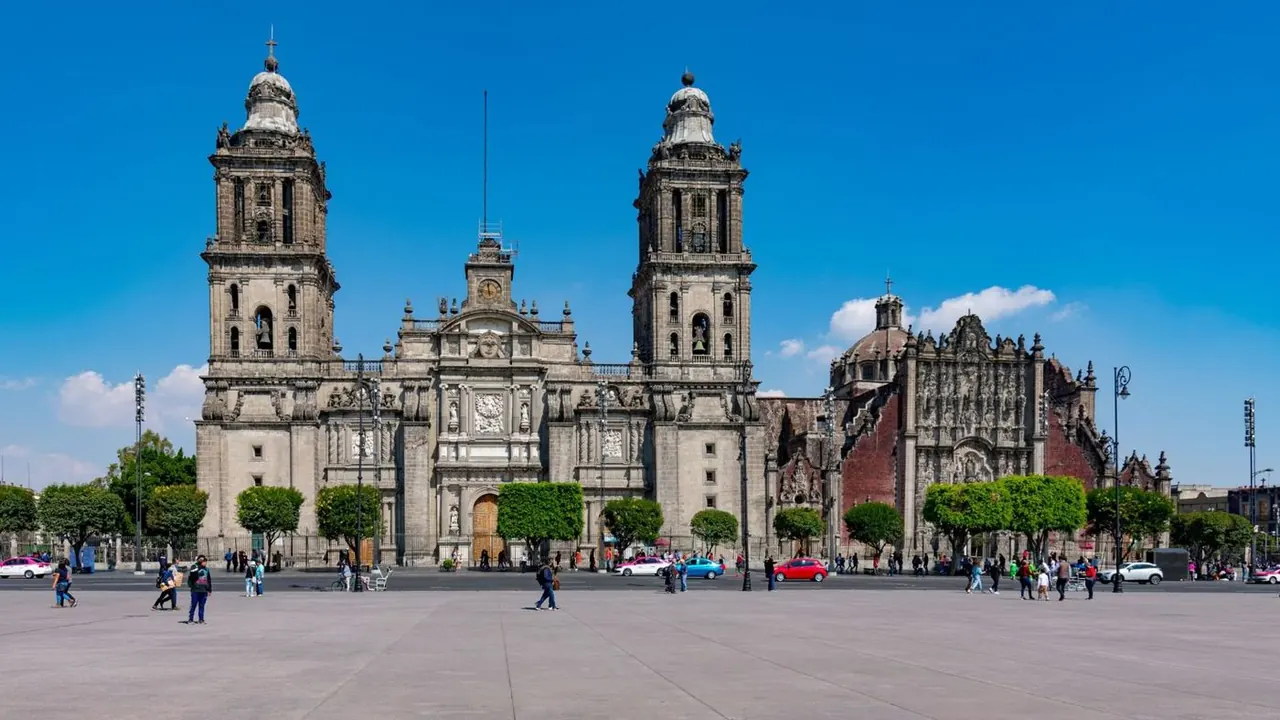
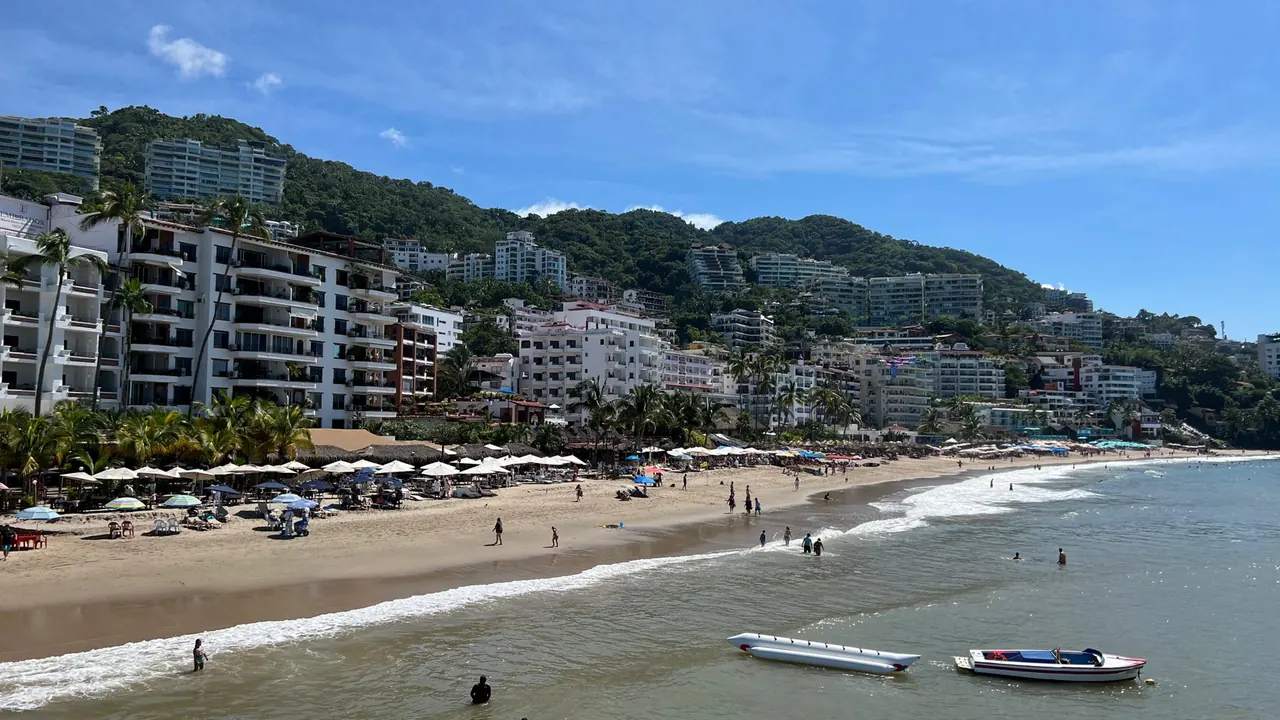
Photos: Mexico City by Oscar Dominguez, Pexels License; Puerto Vallarta by RL0919, CC BY-SA 4.0, cropped.
Mexico City or Puerto Vallarta?
Our verdict in twelve categories, each scored against the same fixed benchmark cities, and the climate month by month, so you can choose for your trip.
Choose Mexico City for
- culture and sights
- live music and the arts
- shopping
Mexico City is the choice for a trip built around eating, museums and evenings out. The Anthropology Museum, the Aztec and colonial layers of the Centro, market counters and taco stands, and late nights in Roma and Condesa add up to a depth of city life the coast cannot match. Teotihuacan and colonial Puebla make strong outings, and it all costs less once you step outside the fashionable districts.
Choose Puerto Vallarta for
- beaches
- nature and the outdoors
- wellness
Travellers who want sea, warmth and a slower pace will be happier in Puerto Vallarta. Banderas Bay, jungle-covered mountains dropping to quiet coves, whales in winter and snorkelling at Los Arcos make it the easier vacation for families and for anyone who wants to spend the day outdoors and the evening on the Malecón. There is little sightseeing, and that is part of the appeal.
Scoreboard
Twelve categories on one fixed scale from 0 to 100. The shaded stretch is the gap between the two.
Your match
Pick a travel style or drag the sliders, and both match scores follow your weighting.
Wins on culture and sights and live music and the arts with your weighting.
Wins on beaches and nature and the outdoors with your weighting.
What matters to you?
Category by category
What the scores mean for a trip.
Beaches & swimming
On beaches the two could hardly be further apart. Mexico City sits on a plateau at about 2,240m, several hours from the Pacific, and swimming there means a hotel pool.
Puerto Vallarta is built around Banderas Bay. Playa Los Muertos has loungers and grilled fish, Conchas Chinas has rock pools, there are coves such as Mismaloya by road or water taxi, and the flat, calm sands of Nuevo Vallarta lie to the north. The sand is coarse and golden rather than white, and summer rain can cloud the water.
Food & drink
Both cities eat well on the street, but Mexico City has far more depth. Its late-night taco stands, breakfast tamales and the markets of Medellín, San Juan and La Merced lead on to cantinas, pulquerías, mezcal bars and some of the most respected tasting menus in the Americas, in Roma, Condesa and Polanco.
Puerto Vallarta's strength is narrower: Pacific seafood, from wood-grilled pescado zarandeado to fiery aguachile, plus evening taco carts and the mountain spirit raicilla. Along the Malecón much of the food is tourist fare, so the good meals are found a few streets back.
Culture & sights
After the beach, culture is where the gap is widest, and here it runs the other way. Mexico City has the Zócalo, the excavated Templo Mayor, Rivera's murals in the National Palace, the Palacio de Bellas Artes, the National Museum of Anthropology in Chapultepec and Frida Kahlo's house in Coyoacán, which is enough to fill a long stay.
Puerto Vallarta offers a pretty old fishing town of whitewashed, red-tiled streets, the crown-topped Guadalupe church, the bronze sculptures along the Malecón and a couple of small museums. That fills an afternoon.
Nightlife
Mexico City has the bigger and more varied night out. In Roma and Condesa an evening is a walk between cocktail bars, mezcalerías and rooftops. Old cantinas in the Centro keep the traditional evening alive, and salsa halls and electronic clubs run until morning.
Puerto Vallarta is lively for a beach town. Open-fronted clubs on the Malecón fill after midnight, and the Zona Romántica has one of the most established gay scenes in Latin America. The mood is relaxed vacation fun rather than cutting-edge, and it quietens in the summer.
Nature & outdoors
Mexico City has a green side, but reaching it takes effort. Chapultepec and the Xochimilco canals are pleasant, and the volcano pass of Paso de Cortés and the crater lakes of Nevado de Toluca are worth a full day, but traffic eats into the time and the air can be poor in the dry season.
In Puerto Vallarta the landscape is right on the doorstep. The jungle ridges of the Sierra Madre fall into the bay, humpback whales calve offshore from December to March, and boats run to Los Arcos and the Marietas Islands for snorkelling. Coastal trails follow the roadless south shore.
Day trips
Outings from the capital lead into history, while those from the bay mostly lead to more coast. From Mexico City, the pyramids of Teotihuacan are about an hour away, Puebla's tiled centre and the church-topped pyramid at Cholula about two, and the colonial towns of Cuernavaca, Tepoztlán and silver Taxco lie to the south. Leaving early gets you ahead of the traffic.
From Puerto Vallarta, most trips follow the shore to Bucerías, surfing Sayulita and quieter San Pancho, or go by boat to Yelapa. The main inland drive climbs to the old mining town of San Sebastián del Oeste, among coffee farms in the pines. These make pleasant days out, but there are fewer of them, and Guadalajara is too far for a comfortable return.
Good for families
With children, the difference comes down to effort: the capital needs careful planning, while the coast is easy from the first day. Mexico City offers more than its reputation suggests, from the zoo and the hands-on Papalote museum in Chapultepec to trajinera rides at Xochimilco and the spectacle of lucha libre. Still, long rides in traffic, crowded trains and the altitude make for tiring days.
Puerto Vallarta is the simpler choice because the day revolves around the beach. Resorts have kids' clubs and shallow pools, and there are water parks, the small jungle zoo at Mismaloya, turtle releases in nesting season and evening ice cream on the Malecón. Steep cobbled streets and the summer heat are the drawbacks.
Getting around
Neither is effortless, and they differ in kind. Mexico City has a large, cheap metro and Metrobús lines linking walkable districts such as the Centro, Roma, Condesa and Coyoacán, though the trains are packed at rush hour and distances are long.
Puerto Vallarta has no metro. Its compact but steep core gives way to a long strip around the bay, served by cheap but confusing buses, taxis, ride-hailing and water taxis. A hire car helps there for the Riviera Nayarit, whereas in the capital a car is more trouble than help.
Shopping & style
For shopping, Mexico City is the far stronger stop. La Ciudadela gathers textiles, pottery and alebrijes from across the country, La Lagunilla's flea market and San Ángel's bazaar are good for a long browse, and Polanco's Avenida Masaryk and Roma's designer shops cover fashion.
Puerto Vallarta's most distinctive buys are Huichol yarn paintings and beadwork, along with gallery art in the old centre. Beyond the Mercado Municipal, a few boutiques and the malls near the marina, there is little fashion or luxury.
Affordability
Mexico City is the cheaper stay overall. Metro rides, market lunches and museum entry cost little and ride-hailing is affordable, although hotels and restaurants in Roma, Condesa and Polanco charge close to European prices.
Puerto Vallarta sets many prices for foreign visitors, especially for beachfront hotels, boat tours and dining on the Malecón in the winter high season. It is still cheaper than a beach resort in the United States or the Caribbean, and taco stands and guesthouses in the old centre keep costs down.
Live music & performing arts
Formal against informal sums up the difference on stage. In Mexico City, Bellas Artes holds the opera, the symphony and the Ballet Folklórico, the university orchestra plays in the modernist Sala Nezahualcóyotl, and the Auditorio Nacional takes major concerts. Most theatre is in Spanish, but mariachis at Plaza Garibaldi and lucha libre at Arena México need no translation.
Puerto Vallarta's evenings bring drag and cabaret revues in the Zona Romántica through the winter, bands and Latin jazz in the bars, folkloric dance shows and the Papantla flyers on the Malecón. Classical music and serious theatre barely feature, and much of the programme slows down in summer.
Wellness & relaxation
Mexico City is not a restful place. Noise, traffic and the altitude set the pace, calm comes from Coyoacán's shaded plazas or a hotel spa, and many people head south to Cuernavaca for a proper retreat.
Puerto Vallarta lends itself to a slower rhythm, with sunsets over the bay, spas in the resorts and hillside hotels, and yoga retreats in the south-shore villages. Both offer the temazcal steam-bath ritual, so the difference lies in the setting rather than the treatments.
When should you go?
Pick your month. The climate figures are measured averages, not a forecast.
Mexico City in July
Puerto Vallarta in July
Daytime high, °C
Rainfall in the month, mm
Where the figures come from
Puerto Vallarta has no weather station within reach, so its figures come from a gridded climate model rather than a measured record, and read a broad area rather than the city itself.
Temperature and rainfall are climate normals, averaged over the years shown. Mexico City: 1991-2020 normals, Mexico Central, D. F. (7.9 km from centre). Puerto Vallarta: 1991-2020 normals, TerraClimate 4 km grid at the town, no weather station within 90 km.
Because Mexico City is so high, it stays mild all year. Daytime highs rarely pass 28°C, so the streets are comfortable to walk in any month and never too hot. Rain is what changes through the year. November to April is dry and bright, while June to September is the wet season, with rain peaking in August at 186mm. The warmest and sunniest stretch runs from March to May.
Puerto Vallarta is hot all year. The dry months from November to May are the time to go, with the sea around 25°C in winter, warm enough for long swims. From June the rains set in and highs reach 34°C, and September brings nearly 300mm of rain. That makes walking and hiking sticky work, even though the sea is at its warmest. Winter suits both cities. In the wet summer the mild capital is the easier of the two.
Which traveller are you?
On a beach and sun trip, Puerto Vallarta is the obvious pick. Mexico City is hours from any sea, while Puerto Vallarta offers the warm water of Banderas Bay, coves reached by water taxi, snorkelling, and long, gentle sands for lazy days.
For a culture and arts trip, Mexico City wins clearly. The Anthropology Museum, the Templo Mayor, Rivera's murals, Frida Kahlo's house and the Ballet Folklórico at Bellas Artes can fill days and evenings, while Puerto Vallarta's sights take an afternoon.
On a food and nightlife trip, Mexico City is the stronger choice. Its street stalls, markets and tasting menus go far deeper than Puerto Vallarta's seafood grills, and late nights in Roma, Condesa and the old Centro cantinas outlast the Malecón clubs.
Before you go
| Measure | Mexico City | Puerto Vallarta |
|---|---|---|
| Official language | Spanish, Nahuatl, Yucatec Maya | Spanish, Nahuatl, Yucatec Maya |
| Currency | Mexican Peso (MXN) | Mexican Peso (MXN) |
| Sockets | AB127 V, 60 Hz | AB127 V, 60 Hz |
| Driving side | Right | Right |
| Time zone | UTC-6 | UTC-6 |
| Emergency number | 911 | 911 |
| Elevation | 2,240 m | 101 m |
| Main airport | Mexico City Benito Juárez International Airport (MEX)7 km from centre109 non-stop destinations | Puerto Vallarta International Airport (PVR)5 km from centre52 non-stop destinations |
| Public holidays this year | 9 days | 9 days |
By the numbers
| Measure | Mexico City | Puerto Vallarta |
|---|---|---|
| City population | 9,209,944 | 224,166 |
| People per km² | 6,202 | 4,311 |
| Museums within 10 km | 108 | 2 |
| UNESCO World Heritage sites within 50 km | 6 | 1 |
| Swim season, months above 21 °C | - | 12 months |
Where else could you go?
Every comparison below shares a destination with this one, so you can follow Mexico City or Puerto Vallarta somewhere new.